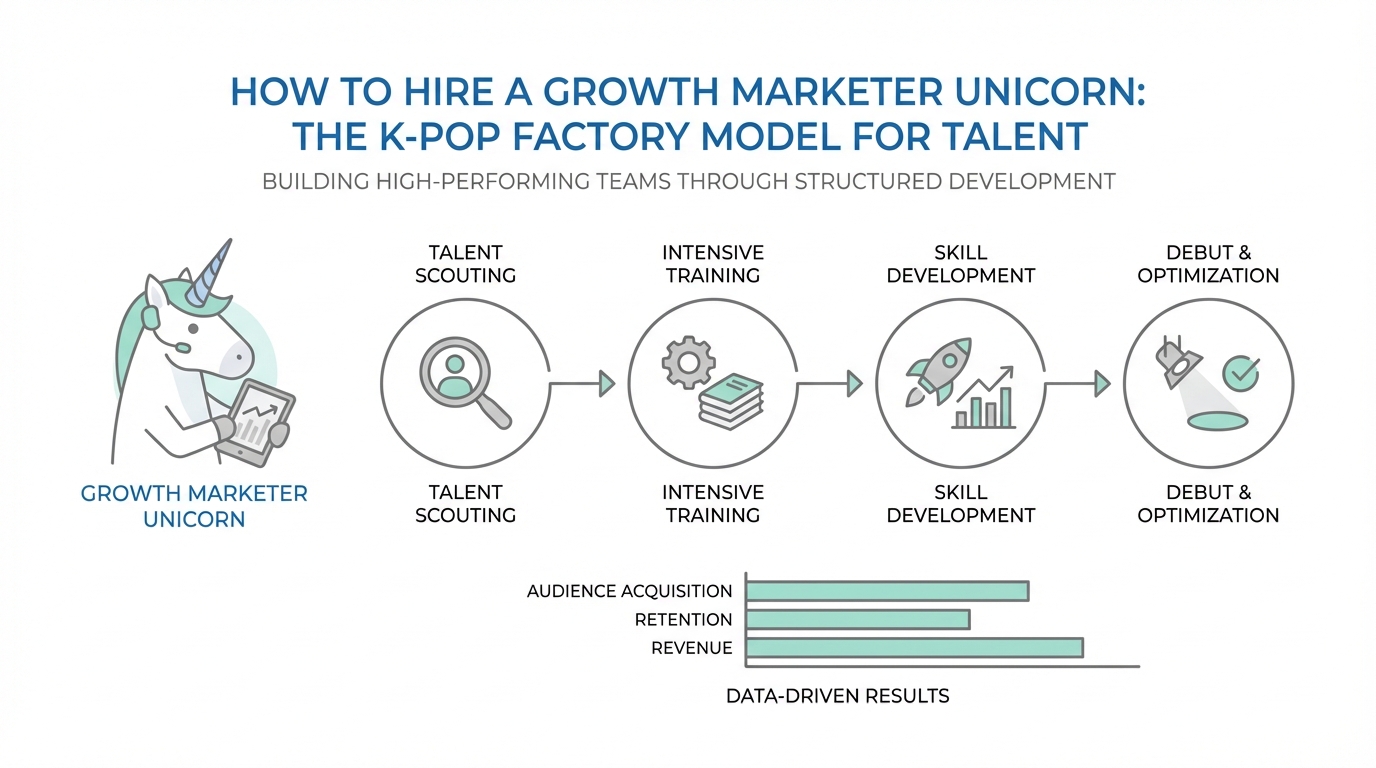
Every founder eventually hits the same wall: the search for the "unicorn" hire. You know the one. It is that first growth marketer or dev evangelist who is supposed to unlock your distribution and turn your product into a household name. You post the job description, you hire a recruiter, and then you wait. And wait. In many cases, early-stage startups spend eight to ten months searching for a single specialized hire, only to end up with a generalist who doesn't quite fit the culture or the specific technical needs of the role.
The problem is that our current approach to specialized talent acquisition is broken. We are treating rare, high-leverage roles like commodity positions. To win in the current market, founders need to move away from the traditional "search and find" recruitment model and toward a "manufacture and train" model—what we call the K-Pop Factory for talent. This strategy focuses on identifying specialized skills early and building systems that churn out experts rather than waiting for them to appear on LinkedIn.
Why Traditional Recruiters Fail to Find Unicorn Hires
Traditional recruiters operate on a commission-based model that is fundamentally at odds with the search for a unicorn. When you tell a recruiter you need a growth marketer with a very specific set of skills, they often see a high-risk, high-effort project. Their model relies on volume: sifting through a wide net of candidates and placing them quickly to earn a fee. A search for a truly specialized role—one that might take hundreds of calls to find the right person—doesn't align with their incentives.
As noted in recent discussions on startup growth and SEO strategies, the roles that actually move the needle for modern companies are increasingly niche. Recruiters often lack the deep network or the technical understanding to vet for growth marketing skills like user psychology, rapid experimentation, and technical data analysis. They are nervous to do the upfront work for a search where they have no history of success. This leaves founders stuck in a cycle of interviewing mediocre candidates while the clock ticks on their runway.
The K-Pop Factory: Training Specialized Experts
The K-Pop Factory model flips the standard education and hiring model on its head. For the last decade, the industry has focused on coding bootcamps designed to take people from zero to "junior developer." These programs are built for generalized roles at big companies. The K-Pop Factory, however, is about taking people with raw potential and making them extremely senior and extremely specialized for high-leverage, high-paying startup roles.
Think about the first dev evangelist a company hires. That person needs star power; they need to be great at speaking, building, and writing simultaneously. You don't find these people by trolling through LinkedIn; you find them by identifying those who are already building in public and giving them the specific framework to scale. Instead of a 10-month search, you create a "factory" environment where these specific skills—whether it is growth marketing, community management, or design engineering—are taught through intensive, high-stakes application.
How to Identify High-Growth Roles Early

A key part of a startup hiring guide is knowing which roles to hire for before they become mainstream. If you wait until a job title is common, the talent is already too expensive and too hard to find. Founders should use tools like Google Trends and social listening to spot emerging titles. When you start hearing a new role name—like "Design Engineer" or "Growth Designer"—twice or three times in a month, that is your signal.
For example, Community Managers were once considered a luxury, but as platforms moved toward Discord and private circles, they became essential. By tracking the rise of these titles early, you can start building a pipeline before the competition. If the trend line is going up, the monetization strategy is clear: be the person who knows how to vet and train for that specific niche. This allows you to build a moat around your talent acquisition before the rest of the market catches on.
A Vetting Framework for Specialized Hires

Vetting for a growth marketer requires looking past the resume and into the candidate's "idea maze." You aren't just looking for someone who can run ads; you are looking for someone who understands user psychology and the technical constraints of the product. A great resource for understanding this level of vetting is Growth.design, which uses case studies to break down UX flows and psychology. A unicorn hire should be able to perform this kind of deep-dive analysis on your own product during the interview phase.
For roles like Dev Evangelists, the vetting is even more public. You should be looking for people who are already creating tutorials, writing documentation, or building starter repos. If you are a founder and you find yourself doing all the heavy lifting for developer relations, you might consider a bounty program. This allows you to pay for high-quality work—like a "Getting Started" guide or a Zapier integration—to vet potential hires in a real-world setting before committing to a full-time role.
Building an Internal 'Talent Factory'
The goal for any high-growth startup should be to reduce the hiring cycle from ten months to near-zero. This is achieved by building an internal talent factory. Instead of starting a search when you need someone, you should always be in a state of "passive manufacturing." This involves building your own distribution and platform to attract the right people. As second-time founders often realize, product is rarely the hardest part—distribution is. This applies to hiring just as much as it applies to customer acquisition.
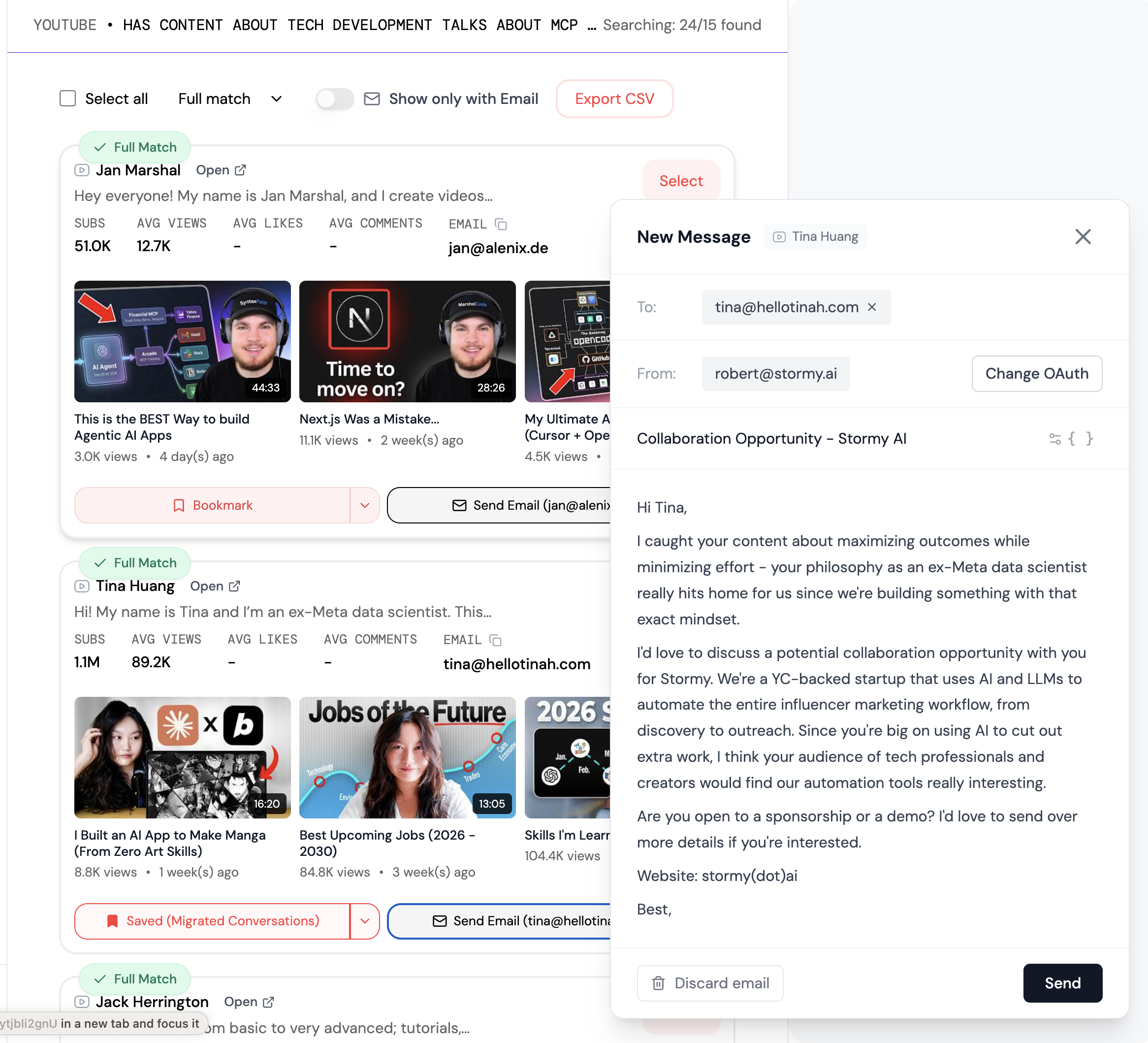
When you build a brand that stands for a specific category, the talent comes to you. If you occupy enough mental space, no one is searching for an alternative. For founders looking to hire growth marketers who specialize in creator-led distribution, tools like Stormy AI can help source and manage these specialized creators at scale. By using AI to vet for audience quality and engagement, you can effectively build a roster of "growth partners" that functions as a specialized extension of your team, bypassing the traditional recruitment headache entirely.
Using Distribution as a Hiring Magnet

To attract the best, you have to be the best-known in your niche. This is why founders are increasingly becoming creators. Whether it is a podcast, a newsletter, or a daily presence on LinkedIn, building trust as a person who truly understands the role you are hiring for is essential. If you are hiring a growth marketer, you should be sharing growth tactics publicly. This builds inbound interest from the exact type of person you want to hire.
Consider the power of transparency. Sharing your company's journey, like the original pitch deck for Jam, creates a level of authenticity that attracts high-signal candidates. It shows potential hires the "why" behind the business, not just the "what." When candidates can see your thought process and your goals, they are much more likely to opt-in to the mission. This transparency, combined with automated outreach tools like Stormy AI for identifying the right creators to amplify your message, creates a powerful recruitment engine.
The Future of Startup Hiring: From Search to Software
As we move further into the age of AI, the cost of producing software is declining. This means that the value of a single specialized hire is actually increasing, as they are the ones who will be leveraging AI tools like v0.dev to build products faster than ever before. In the future, we may see the rise of autonomous talent marketplaces where reviews are tailormade to the platform and the bar for entry is incredibly high.
For now, the best strategy for founders is to stop hunting for unicorns and start building the environment that attracts them. Focus on the roles that are just beginning to trend, vet them through real-world work samples, and use your brand as the primary moat to keep them. By adopting the K-Pop Factory mentality, you can stop the 10-month hiring cycles and start building the team that will carry your company for the next decade.
Conclusion: Your Talent Acquisition Playbook
To summarize, specialized talent acquisition in 2024 requires a shift in perspective. First, acknowledge that traditional recruiters are not optimized for unicorn searches. Second, look for roles that are on the rise by monitoring social signals. Third, use a vetting framework that prioritizes user psychology and technical depth. Finally, leverage your company's brand and distribution to create a talent magnet. Whether you are looking to hire a growth marketer or a dev evangelist, the most successful founders will be those who treat hiring as a manufacturing process, not a game of chance.