In the modern business landscape, the ability to scale a remote team is no longer just an advantage—it is a survival requirement. The old model of limiting your talent search to a 30-mile radius of your office is fundamentally broken. As business becomes more competitive and margins tighten, the most successful entrepreneurs are realizing that global talent acquisition is the ultimate cheat code for growth. Whether you are building an e-commerce empire or scaling a mobile app, the ability to find, vet, and integrate international workers allows you to build a 24/7 operation with high-caliber talent at a fraction of the cost of local hires. This guide provides a tactical, battle-tested playbook for an offshore recruitment strategy that actually works.
Why the Traditional Interview is Dead: Moving to Production-Based Hiring
Most business owners make a fatal mistake: they hire based on "vibes." They jump on a Zoom call, have a pleasant conversation, and decide that because the candidate is friendly and well-spoken, they must be competent. This is how you make expensive hiring mistakes. To hire global talent effectively, you must realize that the traditional interview is dead. It is too easy to fake a personality for thirty minutes; it is much harder to fake high-quality work output. Just as you would use Stormy AI to run an AI-powered quality report and detect fake followers before a campaign, you must implement a remote hiring process centered on task-based assessments to ensure you are hiring for production, not just presentation.
At platforms like Somewhere.com, the philosophy is simple: don't tell me what you can do; show me. When you stop looking for the best talker and start looking for the best doer, the quality of your team skyrockets. This shift requires a rigorous filtering system that removes the noise before you ever spend a minute on a call. By the time you actually interview a candidate, you should already have objective proof of their ability to execute the specific tasks required for the role.
The 85% Filter: Using Typing Speed and English Proficiency


When you post a remote job on a global scale, you don't get ten applicants; you get thousands. Managing this volume requires an immediate, brutal filter. One of the most effective heuristics for global talent acquisition is the "85% Filter." Research from high-volume recruiters shows that 85% of applicants cannot type 35 words per minute. While typing speed might seem trivial for a high-level role, it serves as a critical proxy for technical literacy and professional maturity in a remote environment.
If a candidate cannot navigate a keyboard efficiently, they will likely struggle with the dozens of digital tools—from Slack to Meta Ads Manager—that your business relies on. Along with a typing test, you must implement a standardized English proficiency assessment. If you are running a remote hiring process for a Western market, communication is the foundation of every task. By automating these two filters, you can immediately narrow down 60,000 applicants to a manageable pool of the top 5,000 who possess the baseline skills to even be considered for the job. Use tools like LinkedIn to promote your postings in specific regions, but never manually review an application until it has passed these automated hurdles.
The Video Introduction Hack: Gauging Maturity in 60 Seconds
Once a candidate passes the technical baseline, the next step in your offshore recruitment strategy is the video introduction. Instead of scheduling a screening call, ask the candidate to submit a one-minute video introducing themselves and explaining why they are a fit for the role. This simple request acts as a secondary filter: 80% of applicants will not complete the task, immediately identifying the 20% who are actually serious about the position.
Watching these videos allows you to gauge a candidate's professional maturity, communication style, and energy level in less than a minute. You aren't looking for a polished Hollywood production; you are looking for clarity and the ability to follow instructions. This is particularly useful when hiring for roles that require external communication or creative input. For example, if you are looking to use Stormy AI to find creators via natural-language search for your mobile app, you would prioritize those who can speak confidently and clearly to a camera. The same logic applies to your internal team. If they can't sell themselves in a 60-second video, they won't be able to sell your vision to your customers or partners.
Global Talent Hotspots: Where to Look for Specific Skills
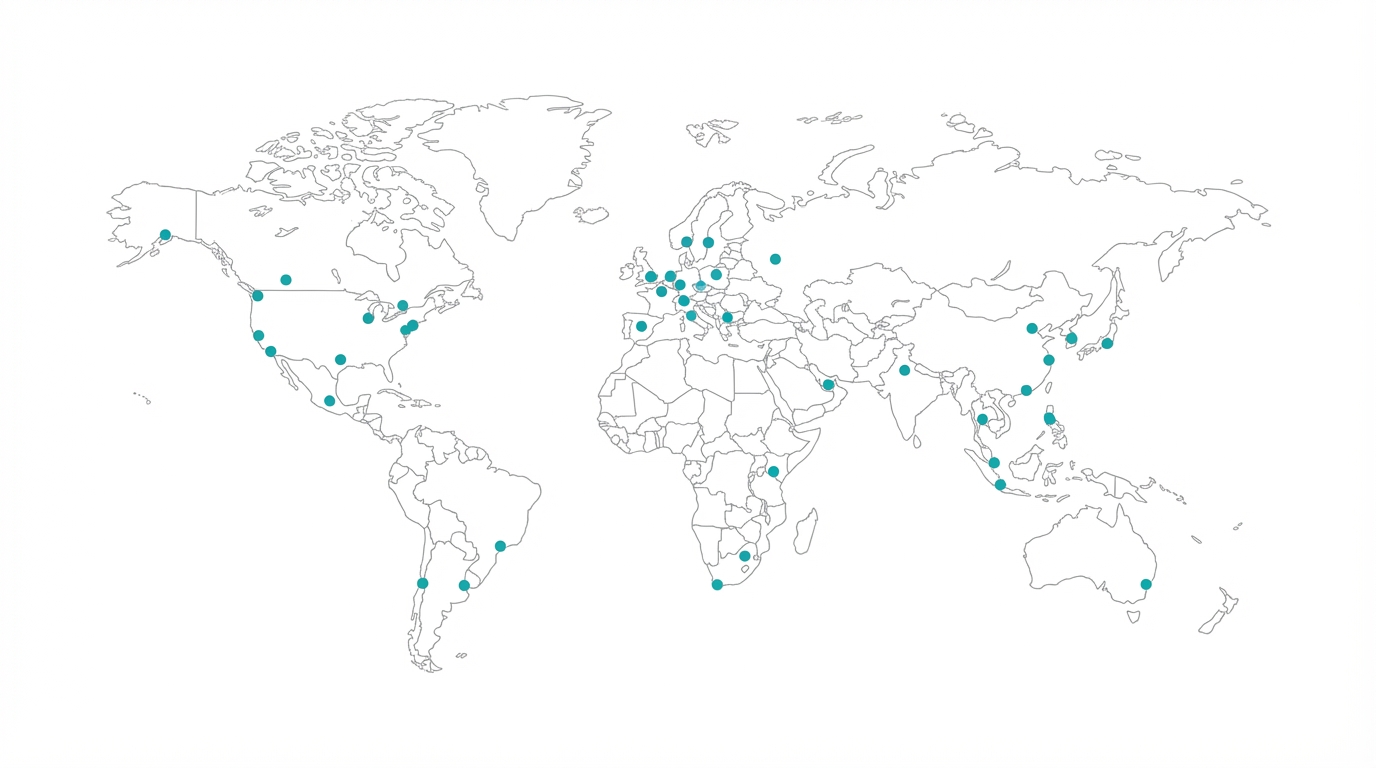
To outsource business operations effectively, you have to know which parts of the world excel in which disciplines. Treating "the world" as one giant labor pool is a mistake; specific countries have developed unique talent hubs based on their education systems and economic history.
- Egypt for Finance and Data: Cairo has become a global hotspot for finance talent. You can find high-level accountants and data analysts who are wizards in Microsoft Excel and PowerBI for a fraction of the cost of a domestic hire. Many of these professionals are trained to work with Western financial standards and can serve as controllers for small to mid-sized businesses.
- Colombia and Brazil for Operations: Latin America is incredible for operational roles because of the time zone alignment with North America. If you need a project manager or a head of operations who needs to be online during your core business hours, Colombia and Brazil offer a deep pool of talent with high professional maturity.
- South Africa for Sales: South Africa is a goldmine for sales and executive leadership. With a culture deeply ingrained in English and a history of producing talent for the "Big Four" consulting firms, South African hires often possess the high-ticket closing ability that is difficult to replicate in other regions.
- The Philippines for Support: With over 30 million Filipinos already working for international companies, the infrastructure for executive assistants and customer support is world-class. It is a culture that understands the nuances of Western business communication.
Just as Stormy AI provides deep audience demographics and engagement analysis to vet influencers, knowing these geographic hotspots allows you to target your global talent acquisition efforts where the supply of high-quality labor is highest.
The Paid Trial Playbook: Steps to Ensure Production Quality
The final and most important phase of the remote hiring process is the paid trial. You should never make a permanent hire based on an interview alone. Instead, take your top three candidates and put them through a standardized task-based assessment that simulates a real day on the job.
Step 1: Define the Deliverable
Identify a task that takes 60-90 minutes and reflects the core responsibility of the role. For an executive assistant, this might be booking a complex travel itinerary or drafting emails from a fuzzy voice note. For a marketer, it might be analyzing a campaign on Google Ads or Apple Search Ads. The goal is to see how they handle imperfect instructions and whether they can get you to a "90% finished" state without constant hand-holding.
Step 2: Use Loom for Process Transparency
Ask the candidate to record their screen using Loom while they complete the task. This is a critical step because it allows you to see their thought process, not just the final result. You can see how they navigate software, how they research problems, and how they communicate their reasoning. This transparency is the best way to vet for remote work competency.
Step 3: Run a Paid Trial Period
Before signing a long-term contract, run a 1-2 week paid trial. Pay the candidate for their time—this ensures they are committed and gives you a risk-free window to see if their "production matches expectations." During this period, focus on their consistency and reliability. As the saying goes, "The tortoises win in life." You aren't looking for a one-time sprint; you are looking for the person who can put one foot in front of the other every single day.
Scaling Executive Talent: Beyond Junior Roles
A common misconception in offshore recruitment strategy is that global talent is only for junior-level data entry or admin tasks. In reality, you can rebuild your entire C-suite with international talent. High-level roles such as COO, Head of Finance, or Head of Performance Marketing can all be filled by global professionals who have MBAs, years of experience with multinational corporations, and a hunger to work for fast-growing Western companies.
By hiring a financial controller in South Africa or a operations lead in Colombia, you aren't just saving on salary; you are often getting lower-maintenance, higher-output talent than what is available in the domestic market. This approach allows you to move away from the "Owner-Operator" trap where the CEO is solving every problem, and toward a Holding Company (HoldCo) model where you have competent executives running each business unit. When you find one distribution channel that works—whether it is referrals or paid traffic—you can deploy these global executives to hammer that one play for five to ten years, which is how monster businesses are actually built.
AI and the Future of Global Work

While AI-powered creator search and automation tools are changing how we find talent, we must remain grounded in the reality of business operations. There is a lot of hype surrounding AI, but the long-term value still lies in human judgment and execution. Many AI tools are currently subsidized and may face sustainability challenges as energy costs rise. Therefore, the most resilient offshore recruitment strategy combines the efficiency of AI for filtering and discovery with the reliability of a high-performing global team.
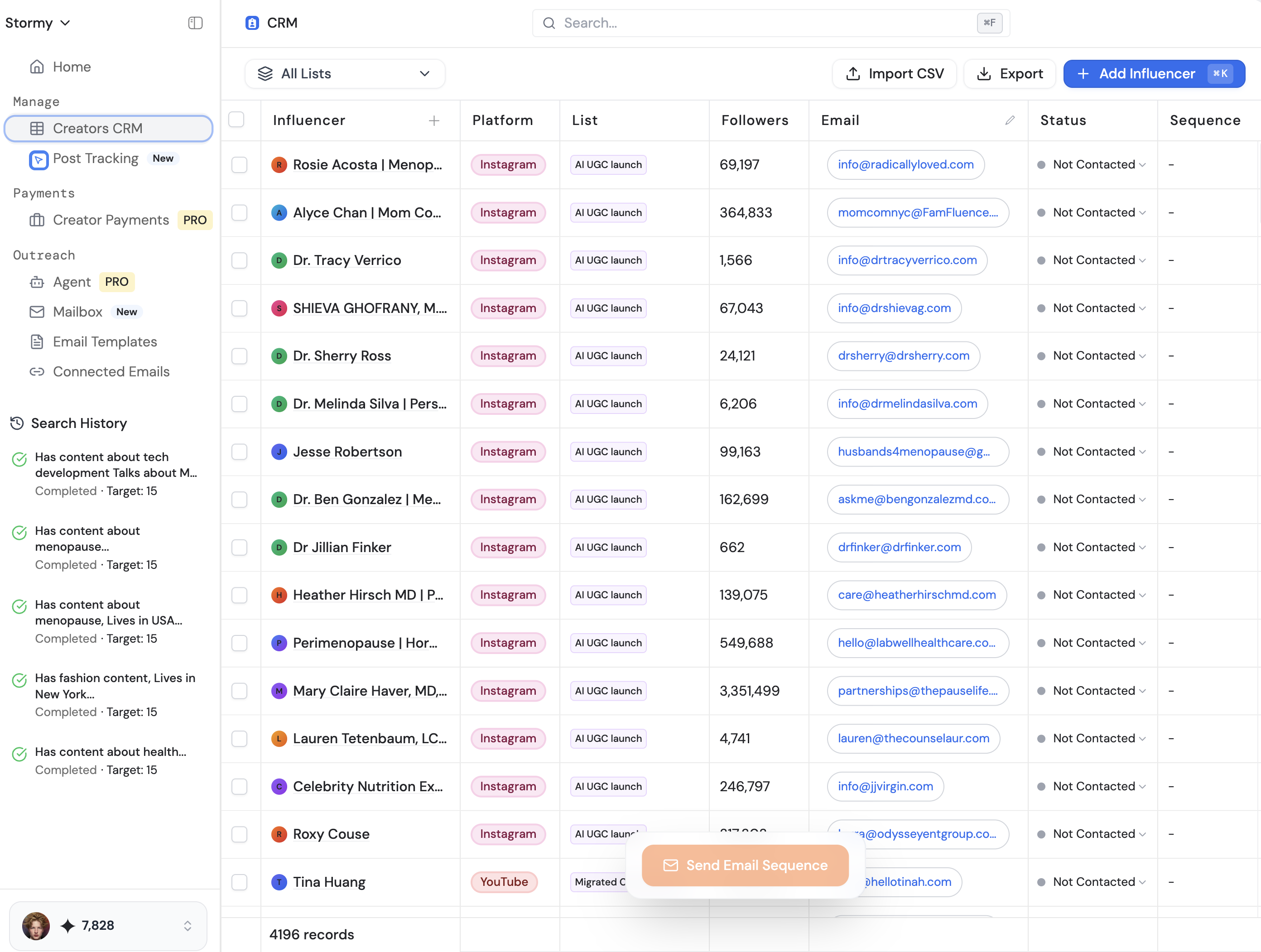
Don't get distracted by "sprint-to-revenue" numbers or low-quality AI hacks. Instead, focus on building a durable foundation. Use AI to assist your team, but rely on the proven methodology of task-based hiring to find the people who will actually drive your business forward. Whether you are using Stormy AI to handle creator outreach and automated email follow-ups or building a finance team in Egypt, the principle remains the same: Production over personality. Systems over vibes.
Conclusion: The Global Advantage
Scaling a remote team using global talent is the most significant leverage point available to the modern entrepreneur. By moving away from traditional interviews and implementing a rigorous, task-based remote hiring process, you can access the world's best workers. Start with the 85% filter for technical basics, use video intros to gauge maturity, and always run paid trials before committing. The world is full of incredible talent waiting for the opportunity to help you scale—your job is to build the system that finds them. If you're ready to start scaling your marketing with specialized talent, you can use Stormy AI to track post performance and analyze campaign ROI across all platforms.