Finding the first 100 customers for a new software product is often the steepest hill a founder will ever climb. In an era where customer acquisition costs (CAC) on platforms like Meta and Google are skyrocketing, traditional distribution channels are becoming less accessible for bootstrapped startups. However, a new wave of founders is bypassing the ad wars entirely by tapping into highly-engaged, niche communities. One of the most effective, yet frequently misunderstood, channels for this is Discord. By moving away from transactional marketing and toward genuine community-led growth, founders are seeing explosive results without spending a dime on traditional advertising.
Why Discord is the Untapped Channel for Gen Z and Niche SaaS
For a long time, Discord was viewed solely as a platform for gamers. Today, that perception is outdated. Discord has evolved into a global hub for creators, developers, traders, and hobbyists who find traditional social media too noisy or algorithm-dependent. Unlike the broad reach of Twitter or the professional stiffness of LinkedIn, Discord offers deep-seated intimacy and real-time interaction. This makes it an ideal saas distribution channel for products that solve specific, technical, or creative pain points.
Research into successful modern founders, like Sam from Algrow, shows that Discord can be the primary engine for reaching $14,000 in monthly revenue in as little as six months. Sam, who built his first SaaS with zero coding background using vibe coding and AI, managed to acquire his first 400 users entirely on Discord. The reason this works is simple: Gen Z and younger millennials are increasingly abandoning email in favor of real-time messaging. If you want to reach a younger demographic or a niche creator community, you have to meet them where they live. On Discord, you aren't just a logo; you are a person participating in a shared interest.
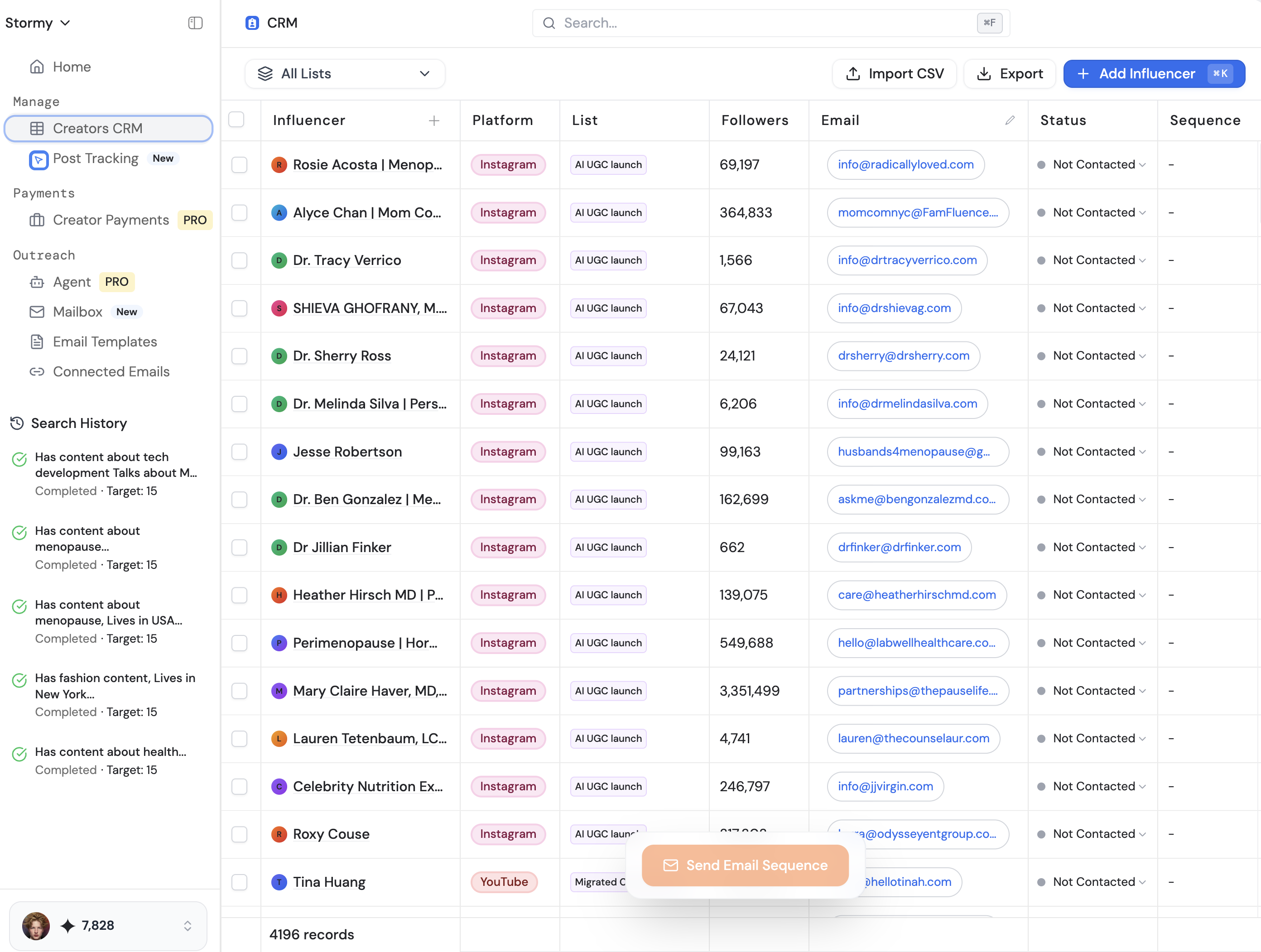
Platforms like Stormy AI are already helping brands identify where these niche audiences congregate using an AI search engine across TikTok, Instagram, and YouTube, but for a founder just starting out, the manual process of community discovery is where the real gold lies. Discord allows for a level of direct validation that simply isn't possible through a landing page alone.
Step 1: Locating Your ICP with Discboard.org


The first step in any discord marketing strategy is identifying exactly where your Ideal Customer Profile (ICP) hangs out. You cannot simply join random servers and hope for the best. You need to find high-density communities where the members are already discussing the problem your SaaS solves. This is where Discboard.org becomes your most valuable asset.
Discboard is a public directory that allows you to search for Discord servers by keywords, categories, or popularity. If you are building a tool for 3D artists, you should search for terms like "Blender," "Cinema 4D," or "Unreal Engine." If you are targeting creators, search for "YouTube automation" or "influencer marketing." The goal is to join every relevant community that has active chat logs and a significant member count. To ensure you're targeting the right creators within these niches, you can use Stormy AI to vet creator profiles and analyze audience demographics to ensure they match your ICP.
Step 2: The "Listening" Phase and Pain Point Discovery
Once you’ve joined these communities, the biggest mistake you can make is immediately pitching your product. Discord communities have strict rules against self-promotion, and being banned early will kill your momentum. Instead, use the "Listen Before You Build" strategy. Discord's search functionality is a goldmine for market research. You can search for keywords like "how do I," "problem," "annoying," or "is there a tool for."
A sophisticated way to do this, as suggested by successful founders, is to copy and paste days' worth of chat history into an AI tool like Google Gemini or ChatGPT. Use a prompt like: "List the top 5 recurring pain points these users are discussing regarding video editing workflows." This allows you to identify actual demand before you write a single line of code. By identifying what people are searching for—for example, "how to find a niche"—you can tailor your MVP to solve that exact friction point.
Step 3: The 'Screen Share' Validation Technique

One of the most innovative ways to find first customers for saas is what we call the "Silent Demo" or the Screen Share technique. Many Discord servers have active Voice Channels (VCs) where members hang out while they work. Instead of jumping in and talking, you can simply join a voice channel, mute your mic, and share your screen while you use your own tool.
This creates a natural curiosity loop. As members see you using a unique interface or achieving a result faster than they can, they will inevitably ask: "Hey, what are you using?" This is the ultimate "pull" marketing. Because they asked you, responding with "Oh, it's just a tool I'm building to solve [X problem]" doesn't count as spam. It’s a genuine conversation. This method allowed the founder of Algrow to validate his idea for a week straight, eventually catching the eye of server owners who began promoting the tool organically. This type of community-led growth is far more powerful than any cold DM.
Step 4: Rules of Engagement—How to Build Rapport
To succeed with discord for business, you must understand the cultural nuances of the platform. If you look like a corporate entity, you will be ignored. If you look like a spammer, you will be banned. To build real rapport, you should focus on being a helpful community member first.
- Provide Value First: If someone asks a question that your tool could solve, don't just link to your site. Use your tool to solve the problem for them and then share the result. For example, if they need a specific data point, generate it and post it in the chat.
- Direct Message with Permission: Only DM people if you have interacted with them in the public channels first. A good approach is to say, "I saw you were struggling with [X], I’m building something to fix that—mind if I send over a quick 30-second video of how it works?" For larger scale operations, Stormy AI can help you manage these relationships with an AI-powered email inbox and hyper-personalized outreach tools.
- Leverage Loom: Instead of long text explanations, send a quick, sped-up Loom recording. It’s personal, visual, and proves the tool actually works.
Building rapport isn't just about avoiding bans; it's about word of mouth. In tight-knit communities, if one person loves a tool, they will tell their friends. This organic referral loop is how products scale from 100 to 1,000 users without an ad budget.
Step 5: Converting Community Members into a Private Brand Server
While engaging in external communities is great for discovery, your ultimate goal should be to own the relationship with your customers. You don't want to be at the mercy of another server’s moderators forever. As you gather interest, you need to funnel those users into your own ecosystem.
The standard play is to use a waitlist. You can collect emails using a tool like MailerLite to ensure you have a way to reach users outside of Discord. However, an even more effective strategy for modern SaaS is to launch your own private Discord server for your product. This allows you to "build in public" with your most dedicated users. By giving early users a special "Early Access" role, you turn them into advocates. They can help you debug the product, suggest features, and onboard their friends. This creates a feedback loop that is significantly faster than traditional support tickets or email surveys.
The Tech Stack for Rapid SaaS Deployment
The speed at which you can go from a Discord conversation to a working MVP is what defines success in the current market. You no longer need a six-month development cycle to test an idea. Founders are now using "vibe coding"—the process of using AI to generate code based on natural language descriptions—to ship products in days. If you are looking to build and launch quickly, your stack might look like this:
- Cursor: An AI-powered code editor that allows non-technical founders to build complex applications. Using the pro tiers of Cursor allows the AI to understand the context of your entire codebase, which is essential for scaling to 100,000 users.
- Heroku: For easy hosting and deployment of your MVP. Heroku remains a favorite for founders who want to focus on the product rather than server management.
- AI Compute: For specialized features, tools like Nano Banana for image generation or Sora for video generation are becoming standard. These costs can range from $300 to $500 a month as you scale.
When you combine this rapid development with a tool like Stormy AI to track accounts, monitor views, and analyze performance across all social platforms, you create a powerful growth engine that spans multiple channels.
Conclusion: Betting on Yourself and Your Community
Finding your first 100 customers on Discord is not about automation or "growth hacks"; it is about radical empathy for your users' problems. By identifying where your ICP lives via Discboard, listening to their recurring pain points, and validating your solution through organic interactions like screen sharing, you build a foundation of trust that paid ads simply cannot buy.
The most important takeaway for any aspiring founder is to build for scale from day one. Tell your AI tools to write code that can handle 100,000 users, even if you only have one. Use the intimacy of Discord to build a product that people actually care about, and then empower your early users to become your marketing team. Whether you are vibe coding your first app or managing a seasoned dev team, the community-led growth model on Discord is a proven playbook for sustainable SaaS success. Start by joining one server today, listen to the struggles of the members, and see how your software can make their lives easier. Your first 100 customers are already there—they’re just waiting for a solution that actually works.