The tech world is currently obsessed with 'sexy' industries—generative AI agents, decentralized finance, and the latest hardware moonshots. While these fields attract massive venture capital and headlines, they also carry immense risk. For the solo founder or the lean team looking for consistent growth, the path to a high-revenue software company doesn't lie in reinventing the wheel. It lies in the 'boring' businesses. We are talking about tools for digital signage, feedback widgets, and social media aggregators—unflashy utilities that solve specific, painful problems for established markets. By focusing on profitable SaaS ideas that have already been proven by competitors, you can bypass the 'valley of death' and build a company with a high probability of reaching significant monthly recurring revenue (MRR).
The 'Can't Fail' Philosophy: Why Proven is Better than Novel


In a recent interview on Starter Story, founder Mike revealed how he built five different SaaS applications that generate over $200,000 in monthly recurring revenue. His secret isn't a proprietary algorithm or a lucky break; it is a repeatable framework designed to minimize risk. Mike’s core belief is simple: build ideas that can’t fail. This means ignoring the urge to be 'first to market' and instead entering spaces where demand is already high, competition is healthy, but the user experience (UX) of incumbent tools is severely lacking.
When researching how to find SaaS opportunities, the first instinct for many is to look for 'gaps' in the market. However, a gap often exists because there is no demand. A safer bet is to look for crowded markets where existing players have stopped innovating. For example, Curator.io, one of Mike’s successful ventures, functions as a social media aggregator. It’s a tool that has existed for years, yet by focusing on a better design and a simpler implementation, it captured a significant share of the market. This approach is similar to how brands use tools like Stormy AI—an AI-powered platform for creator discovery—to streamline their influencer discovery; they aren't looking for a new way to market, but a faster, more efficient way to execute an existing strategy.
The Boring Business Advantage: Stability Over Hype
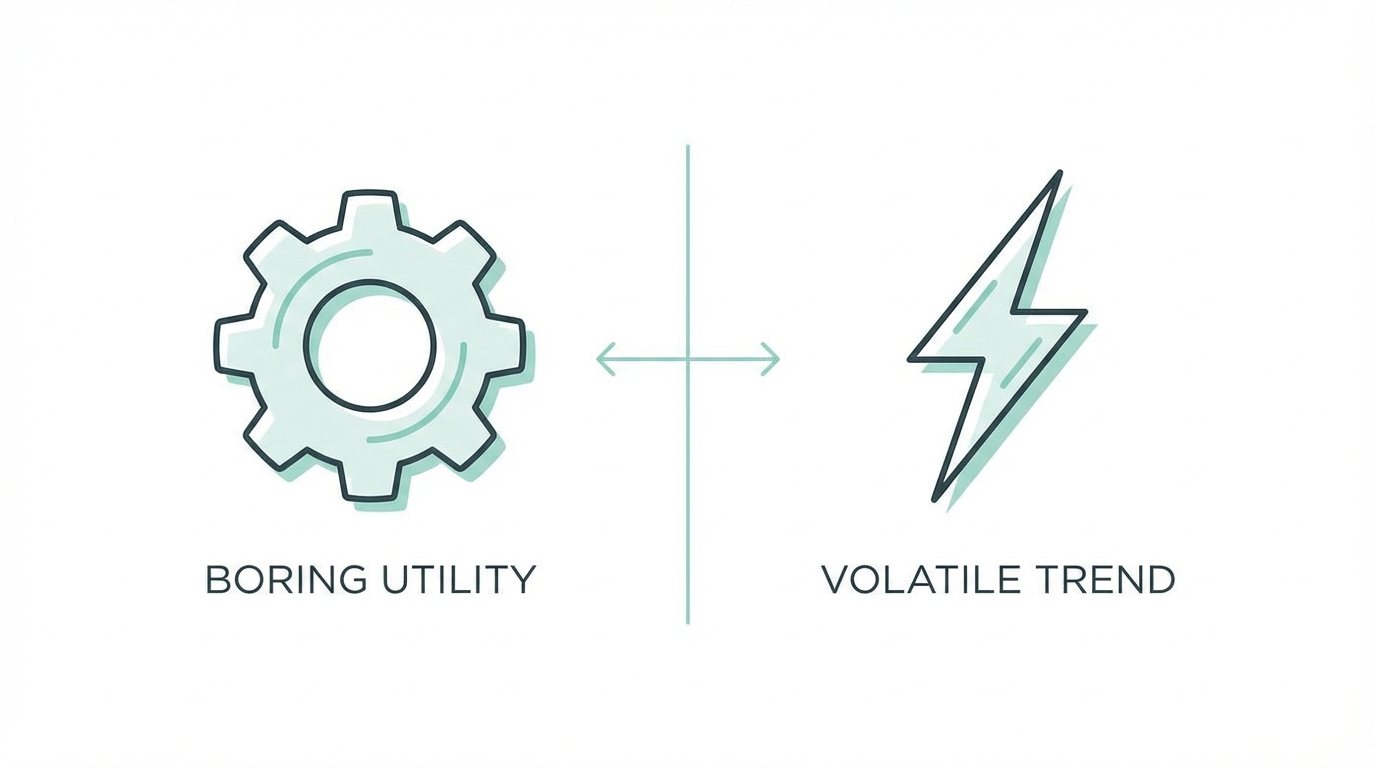
Why do 'boring' businesses like feedback tools or digital signage outperform 'sexy' AI startups in the long run? The answer is market maturity and stability. When you build a tool like Frill.co, a customer feedback and roadmap platform, you are entering a niche where businesses already have a line item in their budget for that service. You don't have to educate the customer on why they need feedback; you only have to show them why your tool is easier to use or better designed than the one they currently pay for. While many businesses start with basic feedback tools, scaling teams often graduate to Stormy AI to consolidate their creator CRM and campaign tracking in one place.
Consider these micro-SaaS niches that Mike has successfully entered:
- Digital Signage: Juno.co targets gyms, cafes, and schools. It’s a hardware-adjacent software play that is essential for physical business operations.
- Product Tours: Fluke.co allows non-technical users to build onboarding flows. Every SaaS company needs this, and they are willing to pay for a tool that doesn't require developer time.
- B2B Cards: His newest venture, Smile.co, handles group e-cards for corporate environments. It sounds simple, even trivial, but for a HR manager in a 500-person company, it’s a specific pain point worth a subscription.
By targeting these profitable software ideas, you avoid the volatility of tech trends. While AI companies are currently fighting over tokens and API costs, these boring businesses are quietly collecting subscription fees from customers who aren't going anywhere.
The 10-Step Playbook for a Profitable SaaS Launch
Building a successful software business requires more than just a good niche; it requires a tactical execution plan. Mike follows a 10-step playbook to ensure every launch has the best possible chance of success. This process focuses on generating immediate cash flow and building long-term SEO authority.
Step 1: Pick an Idea That Has Been Done Before
Innovation is expensive. Validation is free when you look at what people are already buying. Start your SaaS market research by looking at high-performing apps on marketplaces or review sites like G2. If a tool has thousands of reviews but a 3.5-star rating, you’ve found your opportunity. The demand is there, but the satisfaction is not.
Step 2: Define a 'Good Enough' MVP
Don't try to build every feature on day one. Audit your top three competitors. Identify the core 'must-have' features that customers mention in every positive review, and ignore the 'nice-to-haves.' Use prototyping tools like v0 or Figma to nail the UX before writing a single line of backend code. Strong design sells, especially in uncrowded boring niches.
Step 3: Offer a Lifetime Deal (LTD)
Early-stage SaaS companies need cash, not just users. Offer a lifetime deal for a one-time payment of $59 to $150. This provides the initial capital to fund development and marketing without needing outside investors. It’s a strategy used by many founders to bootstrap their way to the first $10k MRR.
Step 4: Never Give Away Accounts for Free
Free users don't provide the same quality of feedback as paying users. If someone is willing to pay even a small amount, they are invested in your success. They will tell you exactly why your product is 'crap' and what you need to fix to keep them. High-signal feedback is the lifeblood of a new SaaS.
Step 5: Sell Through Private LTD Groups
Before hitting the major marketplaces, go where the 'early adopters' hang out. Leverage Reddit, private Facebook groups, and X (formerly Twitter). Raising $30,000 from a small, dedicated group—as Mike did with Frill.co—can provide the runway needed to perfect the product.
Step 6: Start Writing Content Immediately
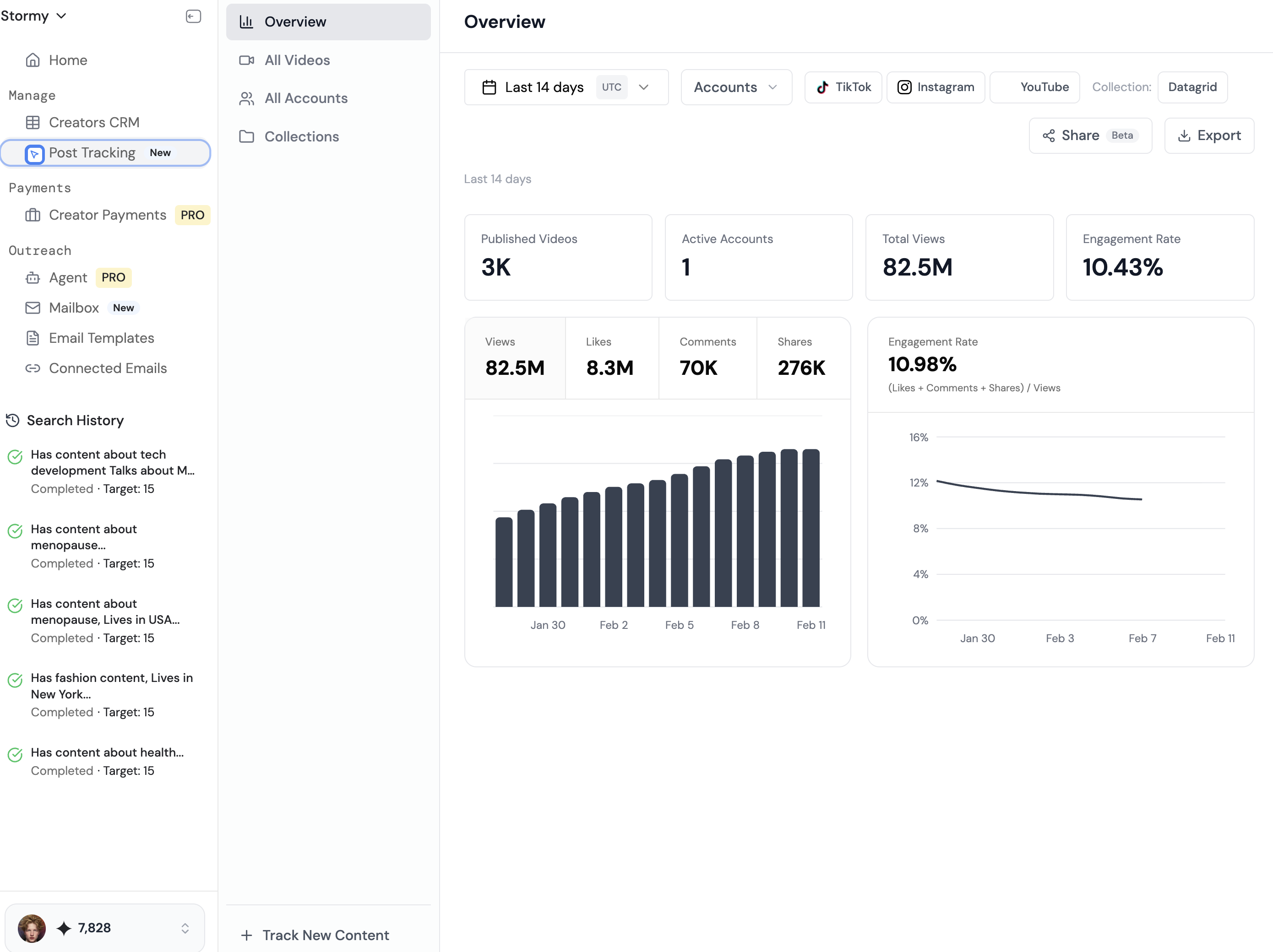
SEO takes time to kick in. Start writing landing pages, 'Alternative to [Competitor]' pages, and blog posts from week one. This builds the foundation for organic growth and ensures that when your LTD ends, you have a steady stream of traffic ready to convert to monthly subscriptions. Using Stormy AI for finding UGC creators and influencers can help you identify which creators in your niche are already talking about these problems, allowing you to align your content with existing conversations.
Step 7: Launch on AppSumo
AppSumo is a powerhouse for SaaS discovery. Whether you choose their marketplace or the 'Select' program, the goal is to reach a massive audience quickly. Aim to put $100,000 in the bank from this launch. This 'war chest' will fund your content team for the next two years.
Step 8: The 'Last Chance' Private LTD
Once your AppSumo campaign ends, run one final private deal. Use the 'fear of missing out' (FOMO) to capture the remaining prospects on your list. Close the lifetime deal forever after this. From this point forward, you are a 100% recurring revenue business.
Step 9: Leverage Your Early Ambassadors
Your LTD customers are your biggest fans because they want you to survive so their 'lifetime' access remains valuable. Ask them for honest reviews on Trustpilot and G2. These reviews are critical for domain authority and building trust with future enterprise clients. You can also use Stormy AI to automate your email outreach and follow-ups to these early power users.
Step 10: Transition to Reddit and MRR Growth
With your initial capital secured, shift your focus to community engagement. Scan subreddits where people are complaining about your competitors. Be authentic and helpful—don't just spam links. If you've built a micro-SaaS niche tool that genuinely solves the problem better, the community will do the marketing for you.
Managing Platform Risk: Why to Avoid AI-Dependency
One of the most provocative parts of Mike's framework is his refusal to build AI-focused businesses. While AI is a powerful tool for productivity—using things like Framer for rapid web design or granola for meeting notes—relying on a third-party AI API as your core product creates massive platform risk. If your entire business is just a 'wrapper' around an API you don't control, you can be wiped out by a single update from a provider like OpenAI.
Instead, look for SaaS business ideas that use AI as a feature, not the product. For instance, a documentation-heavy tool that uses AI to help users find information faster is far more resilient than a tool that only generates AI text. Good documentation is becoming the 'new SEO' because AI models need structured data to recommend products effectively. Building tools that help companies organize their internal knowledge is a massive opportunity in the coming years.
Conclusion: Building for Salaries, Not Exits
The 'Boring Business' framework isn't about building the next unicorn to sell to Google; it’s about building a high-margin, lean machine that pays the founders significant salaries. By splitting equity equally among a tech-heavy founding team (usually four people), you minimize founder fallout and ensure that everyone is incentivized to maintain a high-quality product. This model, supported by resources like the Stormy AI platform for creator management, proves that you don't need millions in VC funding to achieve a million-dollar MRR. Focus on the boring, fix the UX, and leverage the early-adopter community to fund your growth. The path to a profitable SaaS business is often the one that everyone else is too distracted to see.