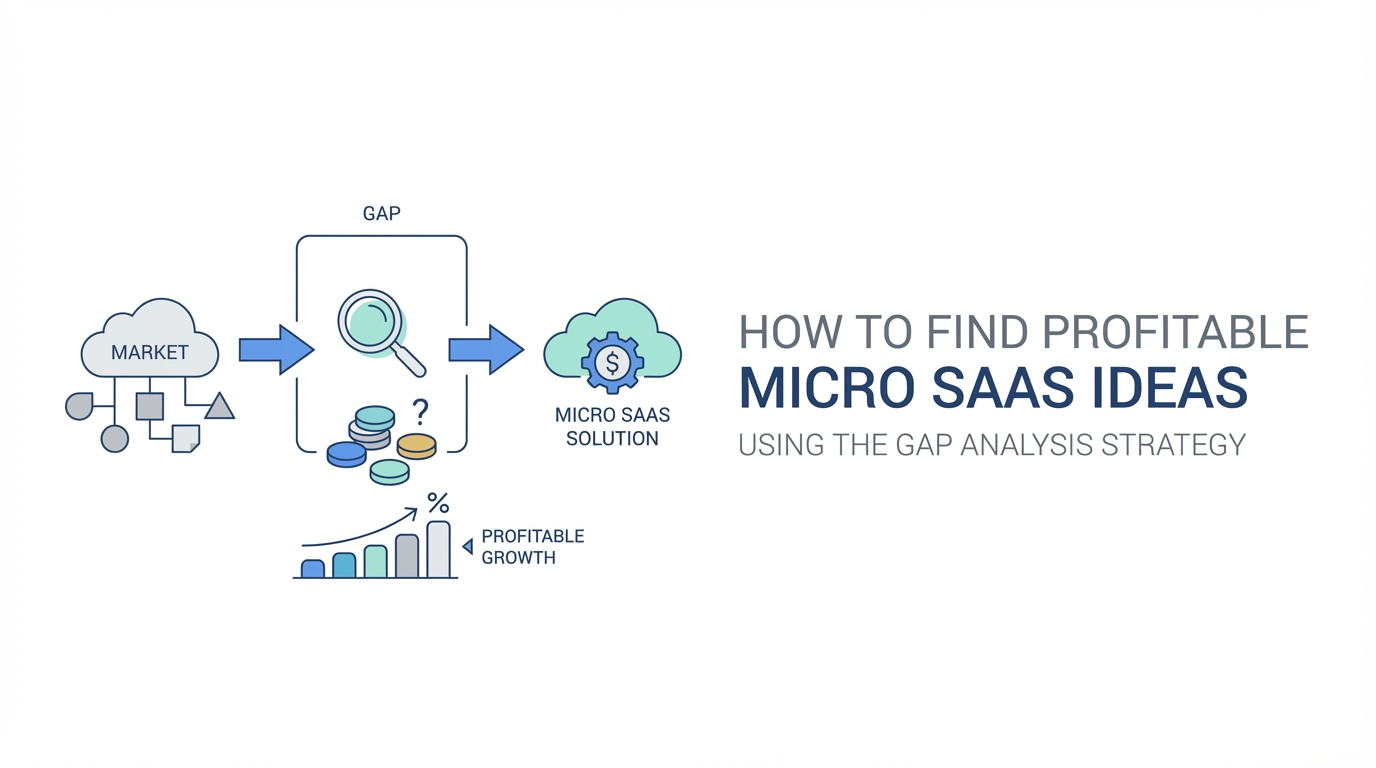
The dream of the indie hacker is often painted as a lone genius struck by a lightning bolt of innovation, building the next digital empire from a garage. However, for most successful bootstrapped founders, the reality is far more calculated. The most direct path to a $10,000 monthly recurring revenue (MRR) business doesn't involve inventing a new category; it involves finding an existing, validated market and exploiting the cracks left by aging giants. This is the essence of the gap analysis strategy, a systematic approach to identifying profitable software business ideas by looking at what the market leaders are doing wrong.
The Bootstrapped Founder Trap: Why You Should Never 'Invent' a New Category
One of the most common mistakes early-stage founders make is trying to build something entirely new. While the allure of being a "category creator" is strong, it is also incredibly expensive. To create a new market, you must educate your customers, convince them they have a problem they didn't know existed, and then prove your solution works. For a bootstrapped founder without millions in VC funding, this is often a recipe for burnout and failure. As Abhishek, the founder of uform, notes, you cannot expect to build the next Uber or Facebook as an indie hacker. Those companies required massive capital to subsidize growth and change consumer behavior.
Instead, the smarter move is to enter a market that is already validated. If people are already paying for a solution, you know the demand is real. Your job is not to invent the demand, but to capture a portion of it by providing a more focused, affordable, or user-friendly alternative. By performing thorough saas market research with Stormy's AI search, you can find established products where users are actively looking for a way out. This is where the gap analysis strategy begins.
What is Gap Analysis? Identifying the 'Sweet Spot'


Gap analysis is the process of comparing the current performance or features of market leaders with the actual needs and desires of their users. In the SaaS world, these gaps typically manifest in three ways: high pricing, feature bloat, or poor customer support. When a company grows too large, they often move "up-market" to serve enterprise clients, leaving behind the small businesses and individual users who helped them grow in the first place.
Take the example of uform, which recently scaled to $11,000 MRR. The founder didn't reinvent the wheel; he identified that Typeform had raised its prices and added complexity that many users didn't need. By offering a leaner, more affordable conversational form builder, he filled a gap that the market leader had created. To find these gaps effectively, you need tools that can help you understand market sentiment. For example, Stormy AI’s search and discovery across TikTok, YouTube, Instagram, and LinkedIn allows you to find influencers and creators in specific niches who are often the first to voice frustrations with existing software tools.
Step 1: Using Social Listening to Find 'X Alternative' Search Intent

The most powerful signal that a market gap exists is when users start searching for an alternative. You can find these signals by monitoring social platforms like Twitter and Reddit. Start by making a list of popular SaaS tools in a niche you understand. Then, search for keywords like "Typeform alternative," "Canny alternative," or "Why is [Product Name] so expensive?"
On Reddit, subreddits like r/SaaS and r/SideProject are goldmines for how to find saas ideas. Look for threads where users are complaining about a recent UI update, a price hike, or a lack of responsiveness from the support team. These threads aren't just complaints; they are your future feature list. When you see a recurring pattern of users asking for a specific alternative, you have found a validated gap. For instance, many small startups are currently looking for a Canny alternative because Canny has moved up-market, leaving a void for a simpler, more affordable feedback management tool.
Step 2: The Criteria for a 'Valid' Gap
Not every complaint represents a viable business opportunity. To ensure you are pursuing profitable software business ideas, your gap analysis must meet specific criteria. A valid gap usually involves one or more of the following red flags in the incumbent software:
- Prohibitive Pricing: The market leader has increased prices to the point where small businesses or solo users are priced out.
- Feature Bloat: The software has become so complex and cluttered that it is difficult to use for basic tasks.
- Neglected Segments: The company is focused on enterprise features (like SSO or advanced permissions) while ignoring the core needs of their original user base.
- Poor Technical Health: Checking the latest reviews on app stores or G2 can reveal a sudden drop in quality. For example, the "Forest" productivity app recently saw a surge in one-star reviews, signaling a potential opportunity for a competitor to step in with a more stable product.
When you find a product with declining review scores, you've found an MVP roadmap. Once you have identified a potential gap, you can use Stormy AI for influencer vetting and fake follower detection to find creators who are talking about these products. Seeing which influencers are moving away from a tool can give you a head start on where to focus your marketing efforts later.
Step 3: Researching Competitor Pain Points and Feature Requests
Once you’ve identified a target competitor, it’s time to go deep into their own ecosystem. Browse their public feature request boards, community forums, and help center comments. Look for "planned" features that have been sitting in the backlog for years. These are the specific pain points that the incumbent is unwilling or unable to fix.
In the case of uform, the founder searched Typeform’s own forums and found specific features that users were begging for. By building those features into his MVP, he created an immediate reason for users to switch. He didn't need to match Typeform feature-for-feature; he only needed to solve the specific problems that Typeform was ignoring. This hyper-focus is what allows a Micro SaaS to compete with a hundred-million-dollar company.
Step 4: Identifying 'Red Flags' to Build Your MVP Roadmap
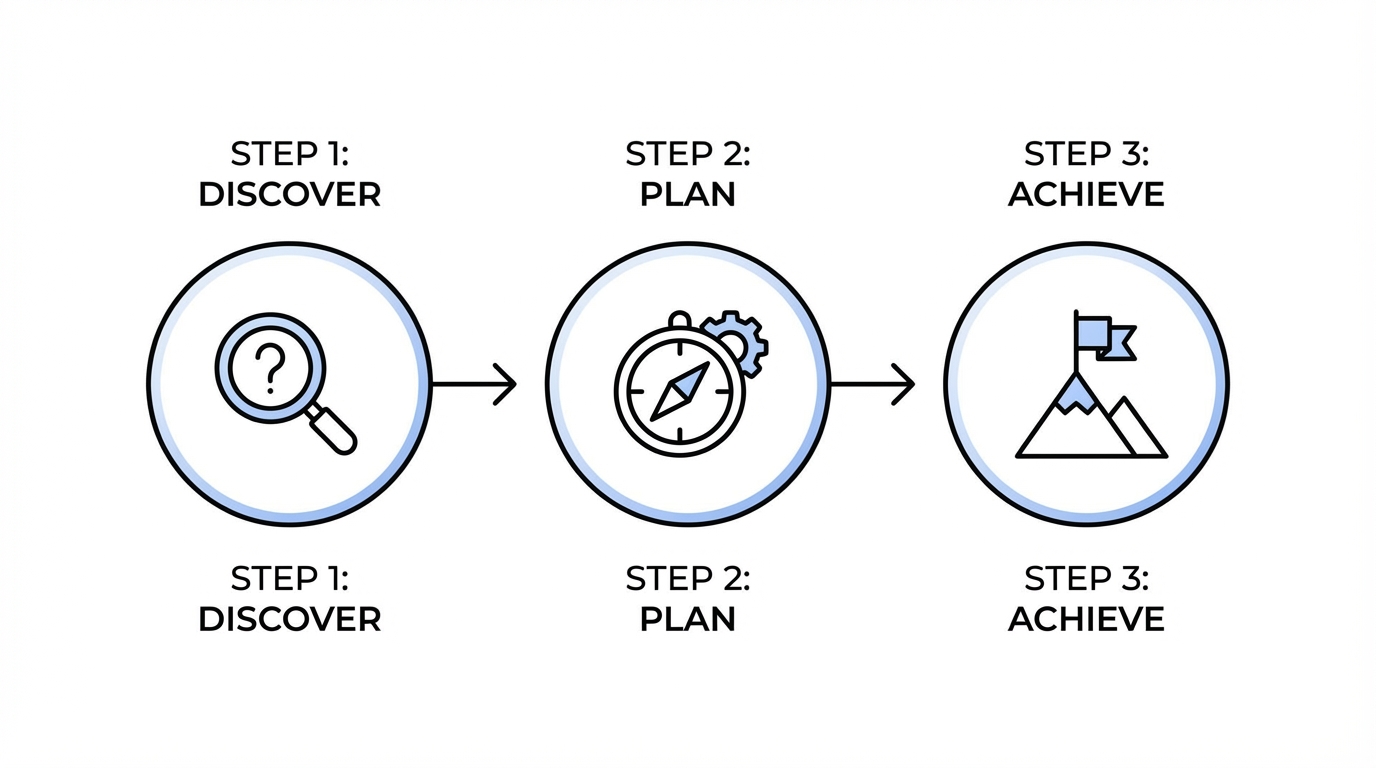
Your Minimum Viable Product (MVP) should be the absolute smallest version of the software that solves the primary pain point you identified. For uform, the first version was incredibly basic: users could collect data with simple fields like name and email and download it as a CSV. There were no integrations with Stripe or Google Sheets initially. The goal was simply to provide a working alternative to the conversational form experience at a better price point.
Your MVP roadmap should include:
- The core functionality that solves the "Red Flag" pain point.
- A clean, simplified UI that avoids the "bloat" of the competitor.
- A "migration hook" to make switching painless.
The migration hook is a critical component of competitor gap analysis. Abhishek implemented a feature where users could simply paste their Typeform URL, and uform would automatically generate a matching form in seconds. This eliminates the friction of switching, which is often the biggest hurdle for new SaaS products.
Step 5: Reaching Out and Validating Without Building
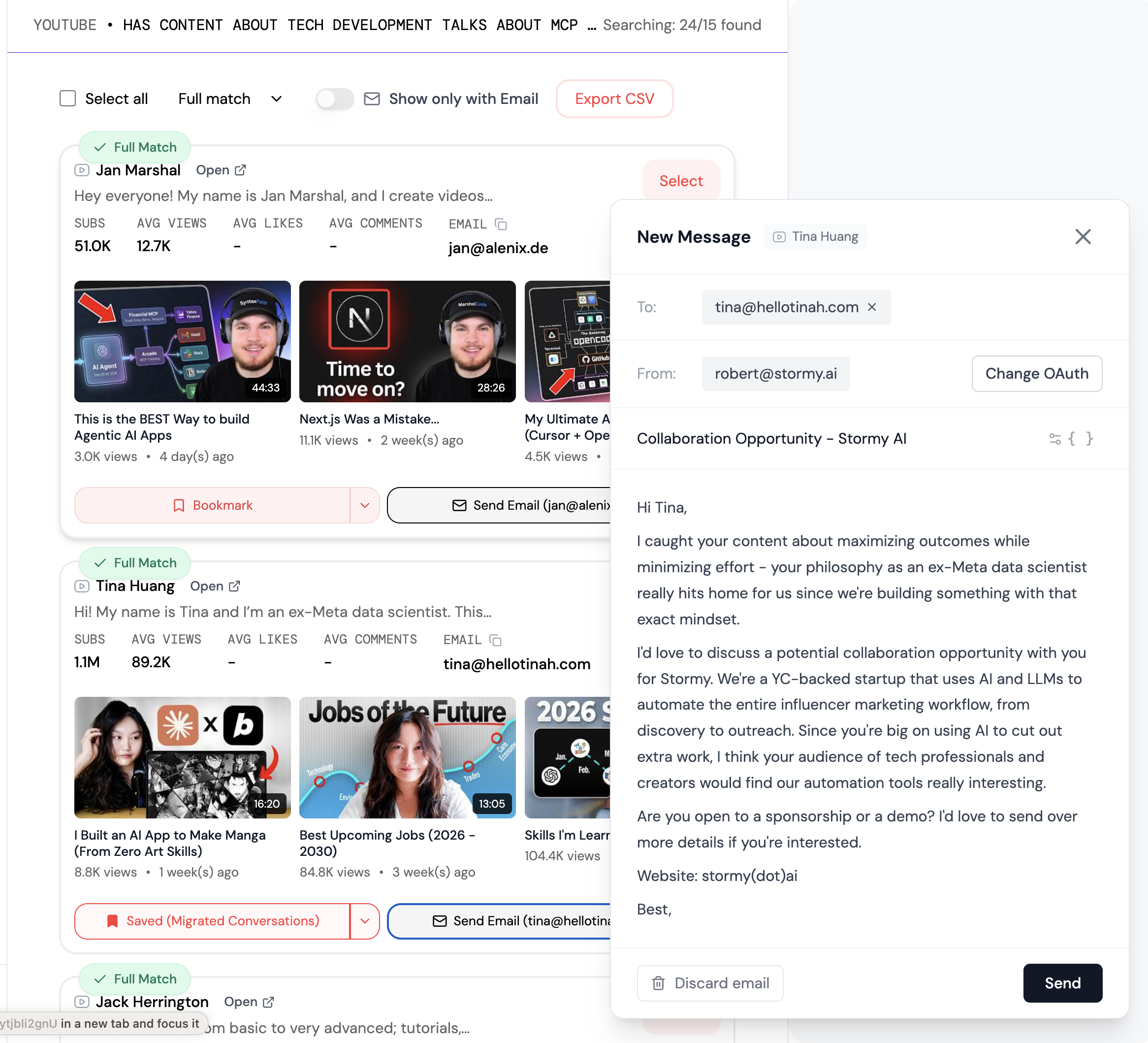
Before spending months on code, you should validate your gap analysis by talking to the very people who were complaining. This is where personalized outreach becomes your most powerful tool. You can find these users on social media or by identifying creators who serve that specific audience. Instead of a generic sales pitch, your messaging should be: "I saw you were frustrated with [Competitor's] pricing/bloat, so I built a simpler version called [Your Product]. Would you like to try it?"
Managing this outreach manually is a grind. You can leverage Stormy’s AI outreach and email agent to automate this process. Stormy can discover relevant creators and influencers, find their email addresses automatically, and send hyper-personalized emails generated for each individual. Because the AI handles follow-ups and inbox management, you can focus on refining the product based on the feedback you receive from these early adopters. Connecting multiple Gmail accounts through a platform like Stormy ensures your outreach doesn't hit spam filters while you scale your validation efforts.
Step 6: Scaling Through Customer Support and Better CRM
Once you have your first 100 users, the strategy shifts from discovery to retention. In the Micro SaaS world, your biggest advantage over a giant corporation is your ability to provide exceptional, personal customer support. When users feel like they are building the product with you, they are much less likely to churn. This is also the time to implement a robust creator CRM to manage your relationships with early adopters and influencers who can help spread the word.
Abhishek's stack for uform includes tools like Laravel for the backend and Mailgun for transactional emails, but the real growth lever was listening to his 500+ paying customers. By keeping his monthly expenses under $1,200, he was able to maintain high margins while scaling his $11,000 MRR business. He also uses OpenAI for fraud detection, ensuring that his freemium model isn't exploited by bad actors.
Conclusion: Your Playbook for $10k MRR
Finding micro saas ideas doesn't require a creative epiphany; it requires a disciplined look at the market's failures. By utilizing the gap analysis strategy, you move away from the high-risk world of "innovation" and into the high-probability world of "optimization." Identify a validated market, listen to the users on social media, find the red flags in existing software reviews, and build a lean MVP that solves one specific problem better than the giant competitors. You can even use Stormy AI for post tracking and campaign analytics once you start working with creators to promote your new tool.
Success in SaaS is rarely about who had the idea first—it’s about who solved the user’s pain most effectively. If you're ready to start your journey, begin by searching for your first "alternative" keyword today. With the right gap and a commitment to solving user frustrations, a profitable software business is well within your reach.