The Myth of the Original Idea: Why Being a Fast Follower Wins
Many founders paralyze themselves waiting for a lightning bolt of inspiration. However, history shows that the "first-mover advantage" is often a disadvantage in disguise. First movers have to educate the market, spend millions on category awareness, and stumble through the trial-and-error of product-market fit. By the time the market is ready, a "fast follower" can enter with a more refined product strategy framework and capture the lion's share of the value. Success in 2025 is less about being original and more about being observationally superior.
Consider the story of Will Cannon, who built UpLead and Signaturely to massive scale. He didn't invent B2B databases or electronic signatures. Instead, he looked at billion-dollar companies like DocuSign and ZoomInfo and asked a simple question: "What are people complaining about?" By studying the market leaders, you can see the roadmap they’ve already built. You don't need to reinvent the wheel; you just need to make it roll smoother. This mindset is the bedrock of effective business growth advice for those looking to scale without the astronomical risks of venture-backed moonshots.
Defining 'The Twist': Moving Beyond Price


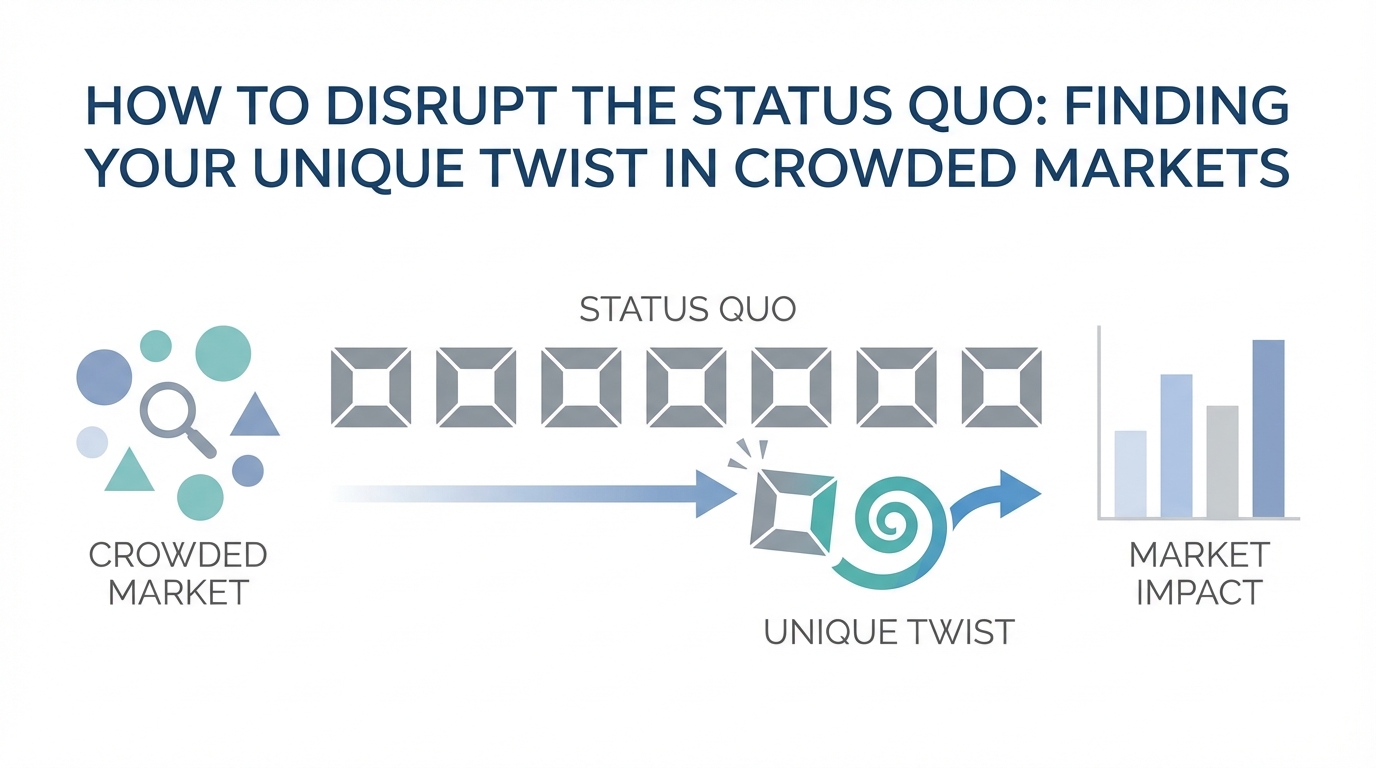
When entering a crowded market, your first instinct might be to compete on price. This is almost always a mistake. Competing on price is a race to the bottom that destroys margins and attracts the most fickle customers. A true market disruption tactic involves finding a "twist" that addresses core usability and complexity issues. In many cases, the twist is simplification. As enterprise tools grow, they inevitably suffer from "feature bloat," becoming so complex that they require a certification just to use. This creates a massive opening for a streamlined alternative.
Platforms like Stormy AI understand this dynamic well. Stormy AI is an AI-powered platform for creator discovery, offering a natural-language search engine that simplifies finding UGC creators for mobile app marketing and campaigns across TikTok, Instagram, and YouTube. In the creator economy, while many platforms overwhelm users with endless, unorganized data, the real value lies in AI-powered tools that simplify the discovery of UGC creators for mobile app ads. Whether you are building an analytics tool or a marketplace, your twist should be the reduction of friction. If you can take a process that currently takes ten clicks and make it take two, you have a business.
The Grandma Test: Simplification as a Strategy

One of the most powerful ways to implement competitive differentiation is what Will Cannon calls the "Grandma Test." When he built Signaturely, he wasn't trying to out-feature DocuSign. He was trying to build a version of DocuSign that was so simple his grandmother could use it. This focus on the user experience (UX) allowed him to capture the segment of the market that felt alienated by enterprise-grade complexity. They didn't need complex workflow automation; they just needed a document signed legally and quickly.
By applying this product strategy framework, you can identify fragmented markets where the incumbents have become too big to care about the "simple" user. For instance, if you are running Google Ads campaigns, you know how daunting the interface can be for a small business owner. A tool that simplifies that specific workflow for a niche audience is instantly more valuable than a generic, all-in-one platform. This is how you win in 2025: you don't go broad; you go deep on usability.
The Playbook: A 4-Step Framework for Market Disruption
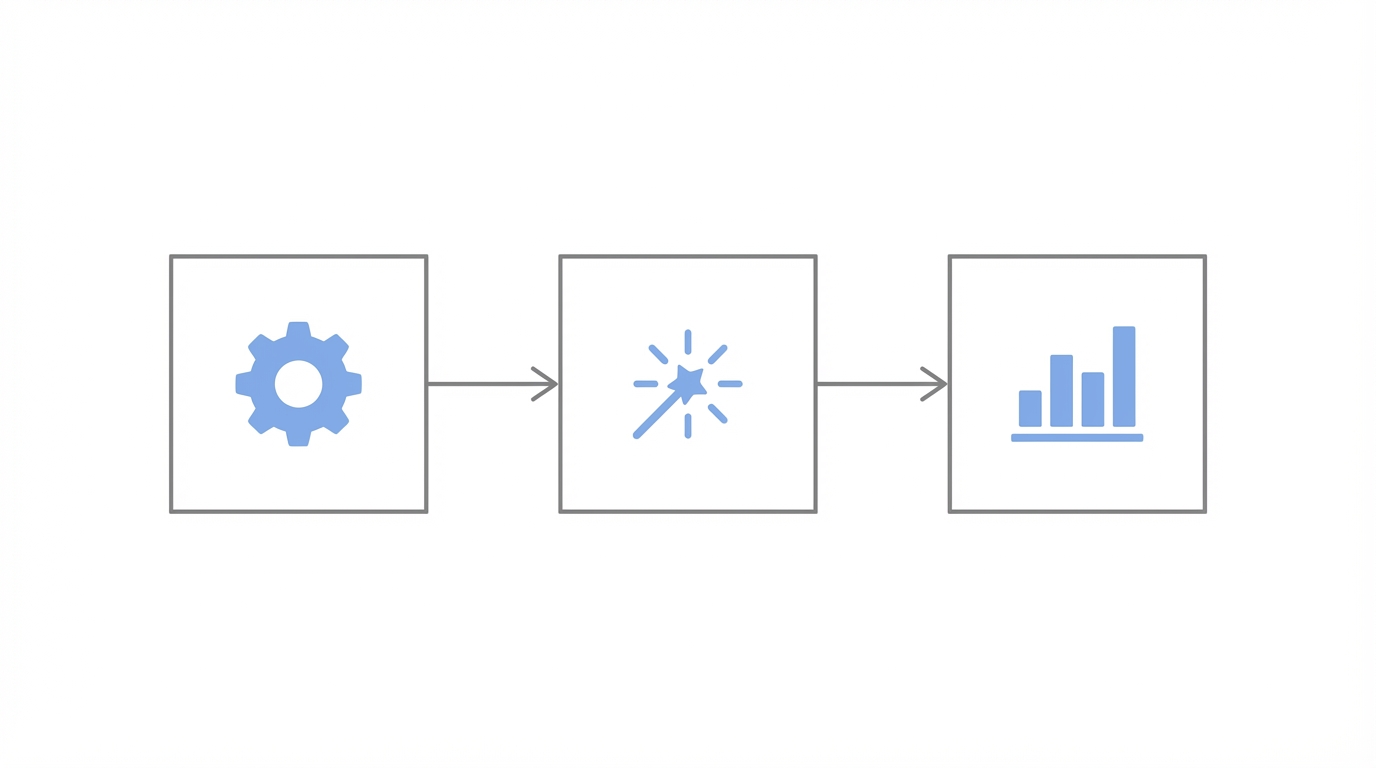
If you want to replicate this success, you need a repeatable SaaS product development process. Here is the playbook for identifying and disrupting a proven market:
Step 1: Identify Proven Product-Market Fit
Stop looking for problems that haven't been solved. Look for problems that are being solved by companies doing $100 million or more in revenue. If a company is that large, it means the demand is massive and the market is validated. You aren't guessing if people want the product; you know they do.
Step 2: Find the Friction (The 1-Star Review Method)
Go to review sites like G2, Capterra, or Trustpilot. Filter for one-star and two-star reviews of the market leader. What are the recurring themes? Are users complaining about the price? The interface? The lack of customer support? These complaints are your product roadmap. Your "twist" is simply the solution to their most common frustrations.
Step 3: Build a Profitable Acquisition Engine
A great product is useless if nobody knows it exists. You must master at least one acquisition channel. Whether it's SEO, cold email, or paid social, you need a way to reach customers where they already are. For mobile app developers, using a tool like Stormy AI for finding UGC creators and influencers can be a game-changer for driving low-cost installs through authentic UGC content and automated AI outreach.
Step 4: Execute with Speed
Most people talk about building; few actually do it. In the world of SaaS product development, speed is a competitive advantage. You don't need a perfect product to start; you need a product that solves the "twist" better than the incumbent. Use modern tools to get to market faster. For those who don't code, programs like Starter Story Build teach founders how to use AI and no-code tools to go from idea to working app in weeks.
The Cold Email Framework That Generates Millions
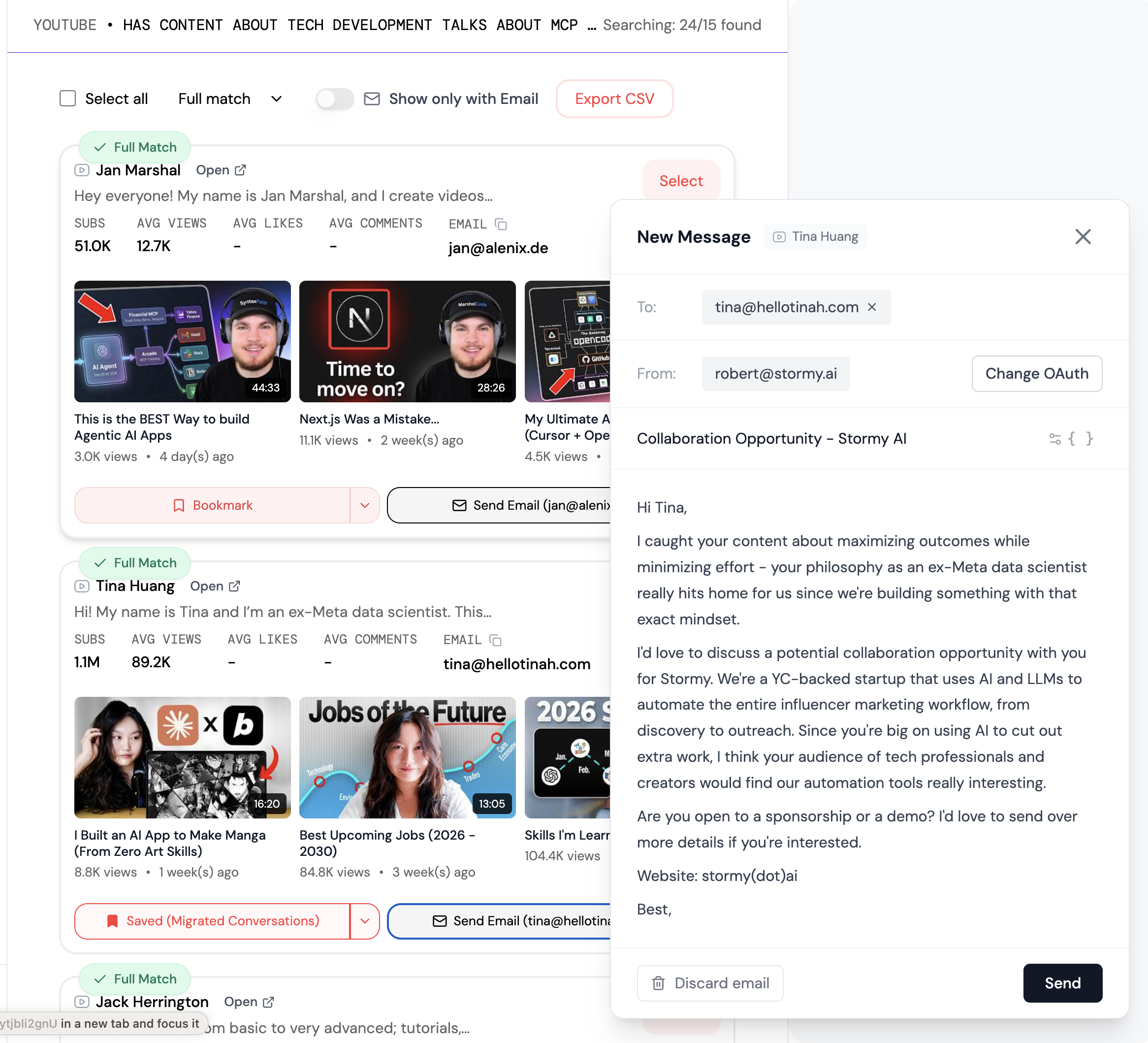
One of the most effective ways to validate your twist is through direct outreach. Will Cannon used a specific cold email framework to get UpLead to its first $1 million in ARR. The key is to be human, direct, and offer an immediate value proposition that contrasts your product with the expensive or complex incumbent.
The structure is simple: Use a subject line that looks like it came from a real person (e.g., "Hi [Name]"). Keep the intro neutral—avoid the hype. State your value proposition by framing it against the market leader: "We built a tool that is like [Big Competitor] but with [Your Twist]." Finally, make the ask as low-friction as possible, such as offering a no-cost trial. This approach works because it addresses the prospect's existing pain points without requiring a massive commitment. For those scaling this process, Stormy AI can even automate these conversations with an autonomous AI agent that handles outreach and follow-ups on a schedule.
SEO as a Scalable Growth Strategy
While cold email works for high-ticket B2B, SEO is the engine for mass-market tools. For Signaturely, the growth to 1.6 million users was driven largely by ranking for high-intent keywords like "free online signature tool" or specific document templates. By providing free value upfront—such as marketing agreements or construction contracts—you capture users at the exact moment they have a need.
This "Template + Tool" strategy is a classic business growth advice staple. It allows you to build a wide top-of-funnel that naturally leads into your paid product. If you are struggling with organic reach, consider how you can provide a "miniature" version of your solution for free. This builds trust and positions your brand as the expert in the space.
Managing Security and Compliance at Scale

As you grow and start targeting enterprise clients, your "twist" in usability won't be enough. Large companies have strict security requirements. In 2025, security expectations hit earlier than ever. If you can't prove you are secure, you will lose the deal before it even starts. Instead of getting bogged down in manual compliance, smart founders use automated platforms to stay audit-ready.
Tools like Vanta help startups automate the complex process of SOC 2 compliance. By getting ahead of security hurdles, you ensure that your market disruption tactics aren't slowed down by red tape. This allows you to focus on product and growth while the platform handles the heavy lifting of monitoring and updates.
Future Opportunities: Where to Disrupt in 2025
If you are looking for a market to enter today, look for industries that are fragmented and bloated. The software landscape is currently shifting due to AI, and there are several areas ripe for a "twist":
- Super Simple CRMs: Salesforce is a powerhouse, but it is incredibly complex. For those in the influencer space, Stormy AI provides a specialized Creator CRM that focuses on streamlined relationship management rather than enterprise bloat.
- Payroll for Small Businesses: Despite players like Gusto, the market remains fragmented. Applying an SEO strategy around templates and tools can help a new player gain ground.
- Niche Analytics: With the rise of AI agents, businesses need to track more than just web clicks. Analytics that track LLM mentions or AI-driven attribution are the next frontier.
When launching these products, don't forget the power of paid acquisition. Using Meta Ads Manager or Apple Search Ads to test your "twist" against a live audience can provide faster feedback than any focus group. In the mobile app space, pairing these ads with high-quality content from creators found on Stormy AI ensures that your marketing feels authentic and native to the platform.
The Mindset: Hairy Audacious Goals and Resilience
Finally, disrupting the status quo requires a specific psychological makeup. You must be willing to set Hairy Audacious Goals (BHAGs)—goals that feel slightly out of reach. When you are starting out, aiming for $5,000 a month might feel like the finish line, but once you hit it, you'll realize it was just the beginning. At the same time, you must develop a thick skin for failure. Most successful founders fail at 15 to 20 businesses before finding the one that sticks.
Don't sweat the small stuff. Daily failures are just data points in your product strategy framework. If a feature doesn't work, pivot. If an ad campaign fails, iterate. The only true failure is stopping before you find your twist. The playbooks for success are already out there; you just have to study them, apply your unique perspective, and execute relentlessly.
Conclusion: Your Path to Disruption
Disrupting a market doesn't require a genius-level IQ or a revolutionary invention. It requires the discipline to look at what is already working and the creativity to find a way to make it simpler, faster, or more accessible. By focusing on competitive differentiation through the "Grandma Test," utilizing proven SaaS product development frameworks, and mastering acquisition channels like SEO and cold email, you can build a highly profitable business in even the most crowded markets.
Start by identifying a market leader, reading their bad reviews, and defining your twist. Whether you are building the next great B2B tool or using Stormy AI to scale your mobile app through UGC, the path is the same: find the friction and eliminate it. The status quo is waiting to be disrupted—are you ready to be the one to do it?