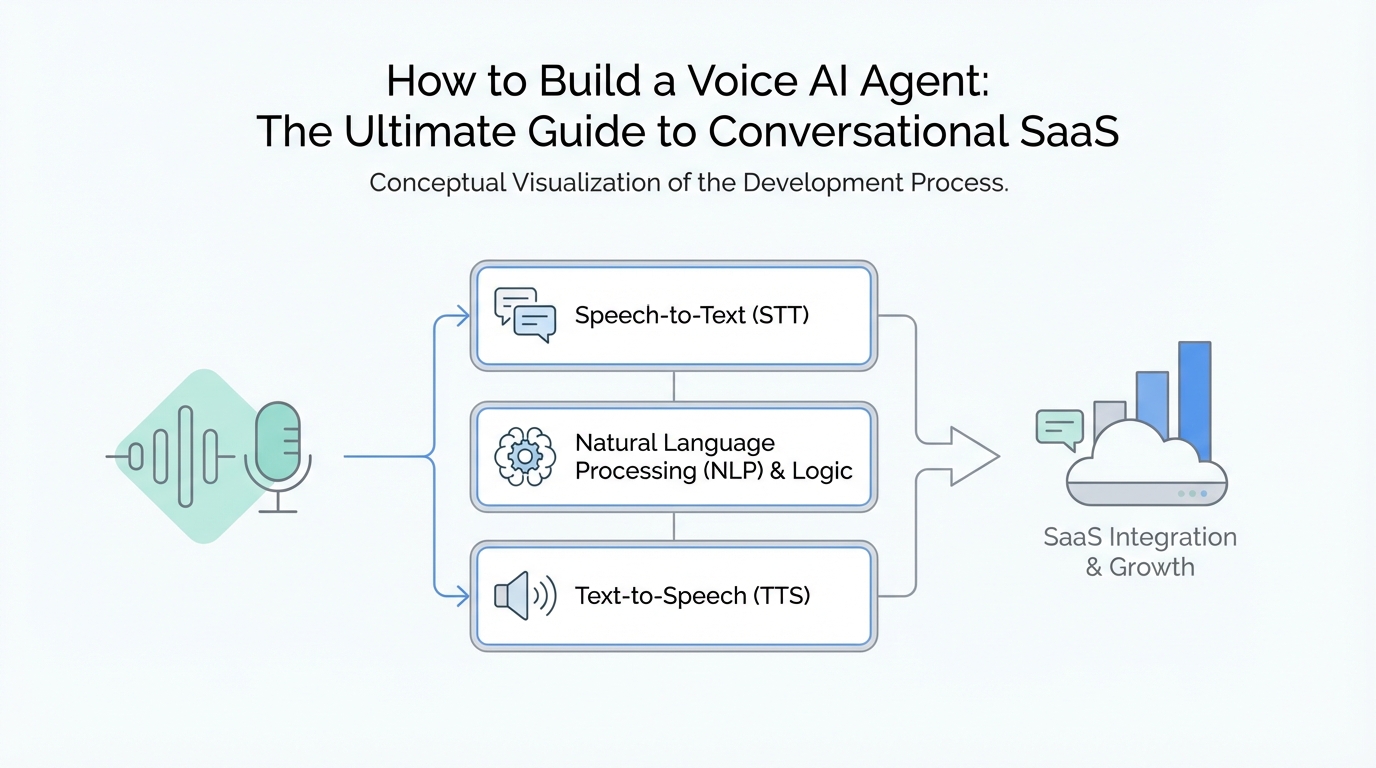
For years, the phrase "voice assistant" evoked frustrating memories of clunky automated phone trees and robotic voices that couldn't understand a simple request. But the landscape has shifted. We are entering the era of the conversational AI SaaS, where digital employees can hold fluid, human-like conversations, solve complex problems, and perform real-world actions like updating a CRM or booking an appointment. For entrepreneurs and developers, learning how to build a voice AI agent is no longer just a technical curiosity—it is a massive business opportunity to replace antiquated systems with high-margin, automated solutions, a market projected to grow significantly according to Grand View Research.
The Three Superpowers of a Voice AI Agent
To understand how does voice ai work, you have to look at it as a system with three distinct "superpowers" that must work in perfect harmony. When one of these layers lags or fails, the illusion of a human conversation breaks. To build a truly effective agent, you must master the following components:
- Listen and Understand (STT): The agent must capture raw audio and convert it into text instantly. High-performance speech-to-text (STT) models like Deepgram or OpenAI Whisper are the industry standard here.
- Think and Reason (LLM): This is the "brain." Once the speech is converted to text, it is sent to a Large Language Model (LLM) such as GPT-4 or Claude. The brain determines the intent, decides on a response, and triggers necessary business actions.
- Speak and Act (TTS): The final step is converting the brain's text response back into a human-sounding voice. Modern providers like Eleven Labs allow for hyper-realistic vocal output that includes natural intonation and emotion.
The Core Voice AI Technology Stack
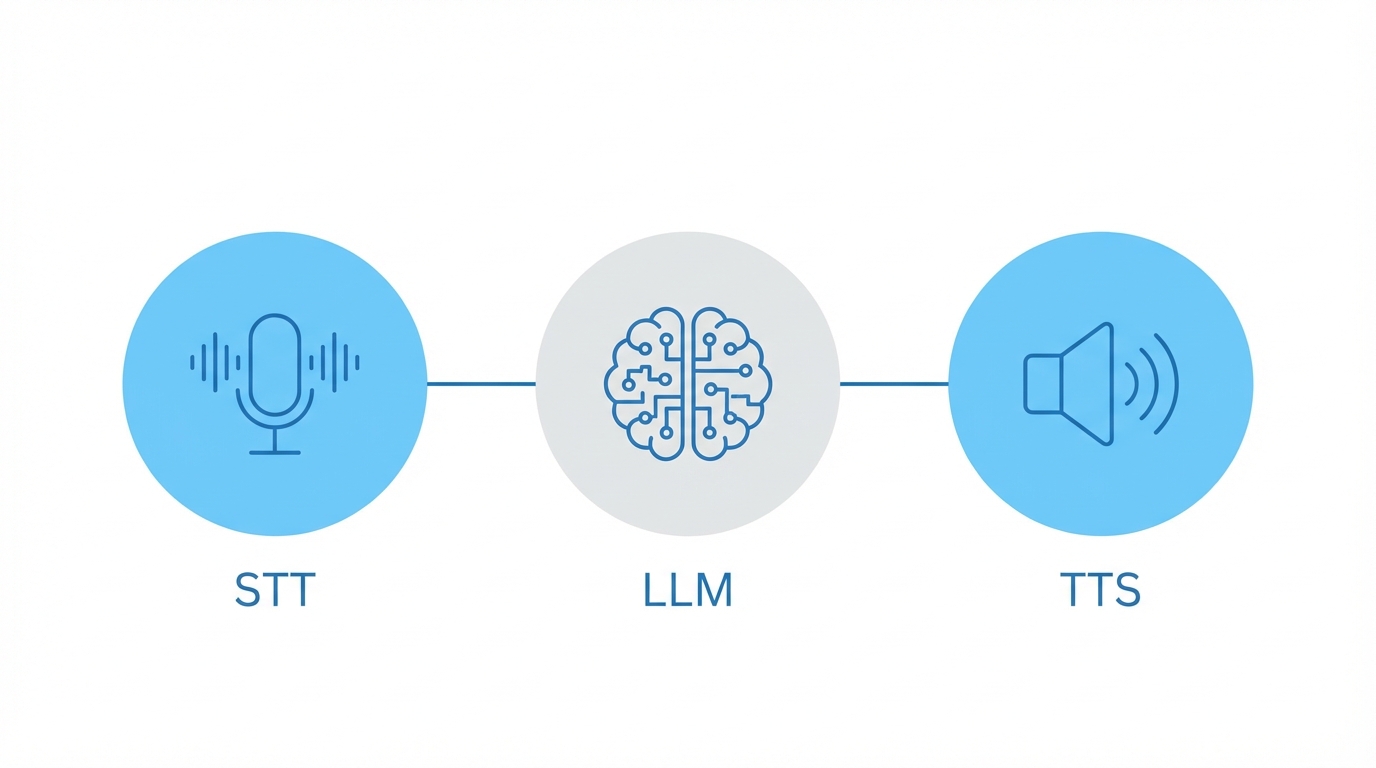
Building a conversational AI SaaS requires a specific set of tools that prioritize low latency and high accuracy. In a voice conversation, every millisecond counts. If the delay between a human speaking and the AI responding is more than 500-800ms, the conversation feels unnatural. Here is the modern voice ai technology stack used by top-tier developers:
1. Transcription (Speech-to-Text)
The foundation of any voice agent is how well it "hears." Tools like Deepgram are preferred because they offer ultra-low latency transcription. Other options include OpenAI’s Whisper or Assembly AI, though speed is the primary metric to optimize for in a live phone environment.
2. The AI Brain (Reasoning Engine)
Once you have the text, you need an LLM to process it. While GPT-4o is a popular choice for its reasoning capabilities, many developers are moving toward "mini" models like GPT-4o-mini or Gemini Flash to reduce costs and response times. The goal is entity extraction—identifying specific details like names, dates, or issues from a stream of dialogue.
3. Vocal Synthesis (Text-to-Speech)
To provide a premium experience, the voice must sound human. Eleven Labs has become the go-to for high-fidelity voice synthesis. Alternatives like Cartesia or OpenAI’s TTS models are also gaining traction for their balance of speed and quality.
4. Orchestration Platforms
Connecting these layers manually can be complex. Orchestration platforms like Vapi, Retell AI, or Synthflow act as the "glue," managing the WebSocket connections between the STT, LLM, and TTS providers while handling telephony via services like Twilio.
The Four Main Types of Voice AI Agents

Not every ai voice automation guide applies to every business. You must categorize your agent based on its primary function. Most successful voice SaaS products fall into one of these four buckets:
- Customer Service Agents: These handle inbound complaints, returns, and order status updates. They are designed to resolve issues without human intervention.
- Sales and Lead Qualification: These agents make outbound calls or answer inbound inquiries to qualify prospects. They gather requirements and determine if a lead is worth passing to a human closer.
- Appointment Scheduling: Optimized for booking meetings, managing calendars, and sending reminders. This is highly effective for medical offices and home services.
- Information and Support: These act as a dynamic FAQ. They answer questions about business hours, policies, or specific technical details based on a knowledge base.
Step-by-Step Workflow: From Audio to Action
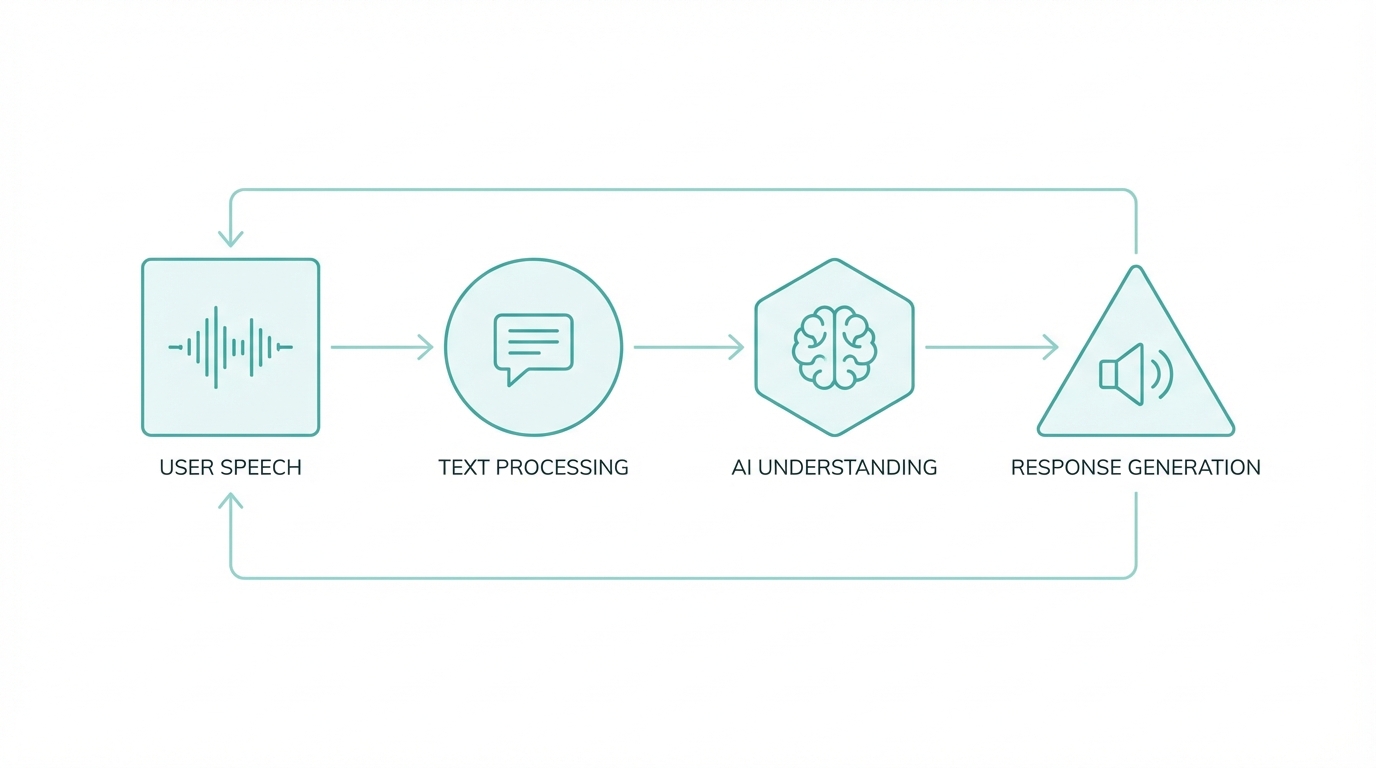
If you want to build voice ai agent solutions that actually drive ROI, you need a robust operational flow. Here is a 5-step playbook for how a typical voice AI call moves through a business system:
Step 1: The Inbound Trigger
The call is received via a VoIP provider. The system immediately initiates a streaming connection. For example, if a tenant calls a property management line, the agent greets them using a pre-configured prompt.
Step 2: Real-Time Transcription & Intent Classification
As the user speaks (e.g., "My water heater is leaking"), the STT layer converts this to text. The LLM then classifies the category (Maintenance) and the urgency (High).
Step 3: Business Logic & Tool Use
The agent doesn't just talk; it acts. It can query a database or an API. In the water heater example, it might check Appfolio for the tenant's record and then check Google Calendar for an available plumber.
Step 4: Conversational Response
The brain generates a response: "I see that’s urgent. I can have a technician there between 2 PM and 4 PM today. Does that work?" This text is synthesized into audio and played back to the caller in milliseconds.
Step 5: Post-Call Automation
After the call ends, the agent summarizes the conversation, updates the CRM, sends a confirmation SMS via Twilio, and notifies the manager. For brands working with creators to promote these services, platforms like Stormy AI can help find and manage UGC creators to record authentic-sounding "customer testimonials" for the AI agent's marketing campaign.
High-Value Startup Ideas for Voice AI

The true power of conversational AI SaaS lies in verticalization. By focusing on a specific niche, you can build deeply integrated agents that solve unique industry pain points. Here are five vetted ideas from current market trends:
1. AI Patient Intake for Dentists
Dental offices are notoriously busy. An AI agent can handle the intake of new patients, verify insurance providers, and query software like Dentrix to offer appointment slots. This 24/7 availability ensures no lead is lost, even after hours.
2. The AI HOA Hotline
Homeowners Associations (HOAs) are often bogged down by simple questions about trash pickup or parking rules. By connecting a voice agent to an Airtable knowledge base, you can provide instant answers and log maintenance tickets automatically.
3. Trade Contractor Answering Service
Plumbers, HVAC technicians, and electricians lose money every time they miss a call while on a job. A voice AI can perform an urgency check, collect photos via an SMS link, and even take deposits through Stripe before a technician is even dispatched. Managing these complex workflows is similar to how a specialized CRM like Stormy AI handles creator relationships for marketing agencies.
4. School Absence Line
Instead of a staff member manually listening to voicemails and typing names into a database, an AI agent can transcribe names and grades, validate student records, and generate a daily report for platforms like PowerSchool.
5. Compassionate Funeral Home Intake
This is a high-sensitivity niche where tone is everything. An AI agent using a soft, empathetic vocal profile from Eleven Labs can handle preliminary information gathering, providing grieving families with immediate checklists and ETAs for directors.
Choosing the Right Platform: Vapi vs. Retell vs. Synthflow

When you decide to build voice ai agent infrastructure, your choice of platform depends on your technical expertise. For those who want a visual, no-code experience, Synthflow offers a 30-minute setup and a simple monthly fee, making it perfect for an MVP.
If you have some technical knowledge and prioritize conversation quality, Retell AI provides a more premium experience with usage-based pricing. For developers who want full control over the tech stack—choosing their own LLMs and TTS providers—Vapi is the gold standard. It allows for complex configurations and is generally the most cost-effective at scale.
Regardless of the platform, the hybrid approach is often best. If the AI detects a complex or highly emotional request, it can be programmed to say, "Let me connect you with a specialist," and transfer the call to a human. This ensures a safety net for the business while still capturing the benefits of automation.
The Future of Voice AI Automation
Voice AI is finally ready for prime time because the underlying models have reached a tipping point in latency and natural language understanding. We are no longer limited to "Press 1 for Sales." We can now build agents that listen, reason, and act with the same efficiency as a trained employee.
Whether you are building a tool for property managers or a dental intake assistant, the goal is the same: create a seamless bridge between human speech and business systems. As you scale your conversational AI SaaS, remember that the most successful agents are those that offer a human-like experience while solving a boring, repetitive problem. The opportunity is early, the tech is here, and the market is wide open for those ready to build.