Imagine building a digital platform that reaches 50 million members without spending a single dollar on traditional advertising. In an era where user acquisition tactics are often dominated by rising CAC (Customer Acquisition Cost) on platforms like Meta Ads Manager, the dream of organic, self-sustaining growth feels more like a myth than a viable strategy. Yet, pioneers of viral growth loops like Michael Birch have proven that by focusing on simple, user-centric features, you can turn your product into its own marketing engine. This approach, often categorized under product led growth, relies on engineering mechanics that force organic sharing rather than relying on the brute force of a marketing budget.
The Birthday Alarm Philosophy: Identifying What Users Actually Want
The story of Birthday Alarm provides a masterclass in referral marketing strategies. Originally, Michael Birch didn't set out to build a reminder service; he was working on a product called Lemonlink, which was intended to be a self-updating address book. It was a sophisticated idea: when one person changed their contact info, it would automatically update in all their friends' books. Despite the technical elegance, users didn't care. They didn't have a burning desire for a dynamic address book, but they were desperate for one tiny side-feature Birch had included: birthday reminders. This is a classic example of how organic social media growth often stems from solving a "boring" but universal problem.
By listening to customer service feedback, Birch realized that the reminders were the only reason people were staying. He stripped away the complexity and launched Birthday Alarm, which scaled to 10,000 members in weeks. This success highlights a critical lesson in user acquisition tactics: your users will tell you what the "million-dollar feature" is if you are willing to listen. While many developers try to scale complex AI tools, sometimes the highest retention comes from solving simple, recurring pains like those found on Whop, where creators sell access to specific, high-value communities and simple digital goods.
Engineering Viral Loops: The Friendster and Bebo Method

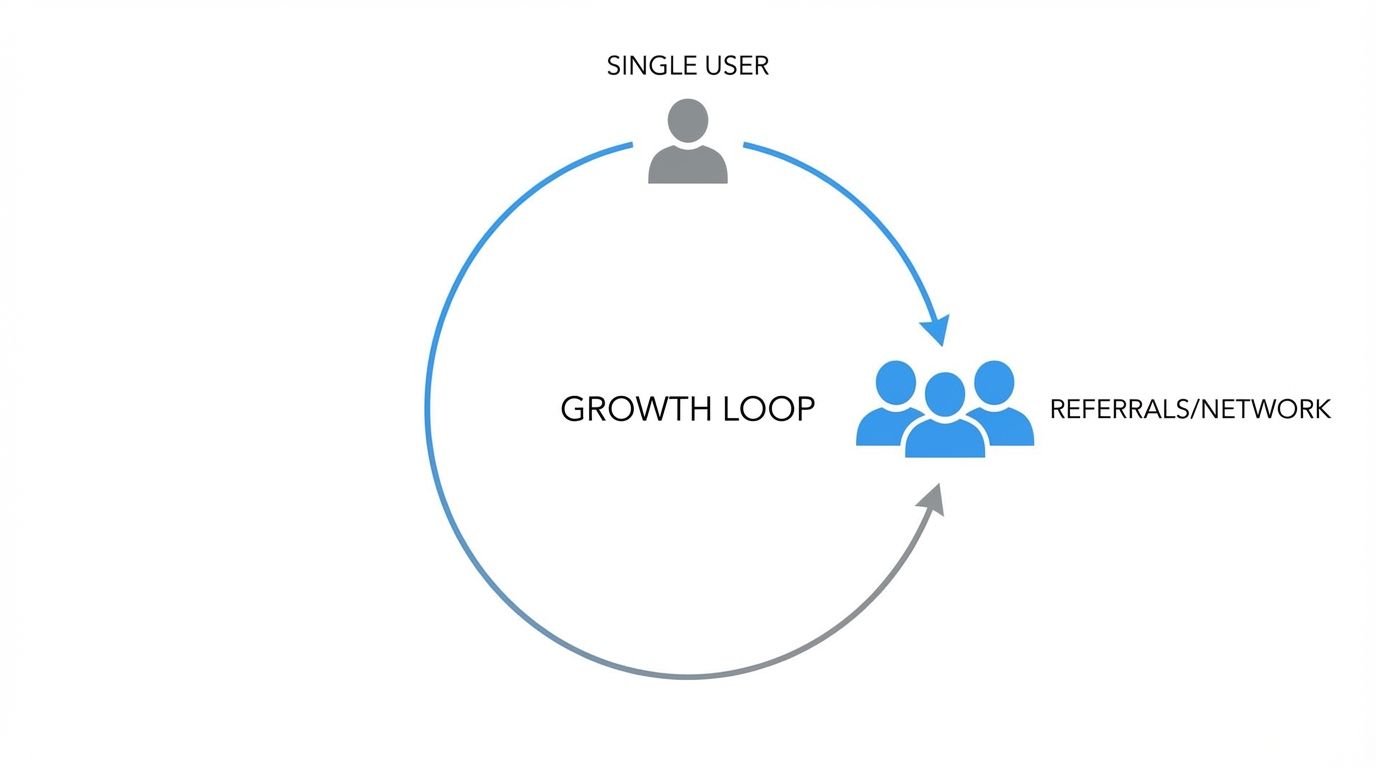
Building a viral growth loop is an engineering challenge as much as it is a marketing one. After the success of his early ventures, Birch turned his attention to social networking with Bebo. The goal was to create mechanics that incentivized users to invite their entire contact list. Unlike paid acquisition on Google Ads, where every new user has a fixed cost, a viral loop creates a scenario where each new user brings in 1.1 or more additional users, leading to exponential growth. This is the holy grail of organic social media growth.
To achieve this, Birch leveraged the "address book importer," a feature that was controversial but undeniably effective. By making it seamless for a user to invite their friends to join them on the platform, Bebo grew from nothing to an $800 million exit in just a few years. This success wasn't about having the most features; it was about having the lowest friction for sharing. When platforms like Stormy AI use an AI-powered search engine to find creators across TikTok and Instagram using natural-language prompts, they are essentially looking for the human spark that can ignite these pre-engineered loops. The content created by these influencers acts as the fuel, but the product's internal mechanics are the engine.
Pivot Psychology: Why Customer Service Is Your Best R&D
Most entrepreneurs are too proud to pivot. They fall in love with their original vision and ignore the data. Birch’s ability to move from Lemonlink to Birthday Alarm, and eventually to the social media giant Bebo, was rooted in a lack of ego. He functioned as the programmer, designer, and customer service rep simultaneously. This direct line to the user is essential for product led growth. If you aren't reading your support tickets, you are missing the signal in the noise. For instance, the creator of the 10-hour fireplace video on YouTube likely didn't expect 157 million views from a simple loop, but the market's demand for ambient content signaled a massive opportunity that many "clever" creators missed.
This same psychology applies to the referral marketing strategies used by niche businesses. Consider the case of Foam Party Hats. They didn't start with a viral sports product; they made custom hats for local parties. But when they saw a specific meme moment—like the Chicago Bears fans wearing cheese graters to mock the Packers—they pivoted their production to fast-follow that trend. By moving with the speed of social media, they generated $500,000 in sales in a single week. This is the essence of modern user acquisition tactics: being fast enough to capture a cultural moment before the big retailers even realize it's happening.
Why 'Boring' Problems Lead to the Highest Retention

In the world of viral growth loops, we often chase the shiny and the new. However, the most sustainable businesses often solve mundane problems. Address books, birthday reminders, and white noise are "boring," but they are integrated into the fabric of daily life. This utility creates a moat. A product like Brain.fm succeeds because it solves the very basic problem of focus through science-backed ambient sound. It isn't trying to be a social network; it’s trying to be a utility. This focus on utility is a cornerstone of product led growth.
When a product solves a boring problem perfectly, the user has no reason to leave. This is why referral marketing strategies work so well for utilities—users want their friends to have the same "life hack" they just discovered. Whether it's a productivity tool or a simple way to use Stormy AI to vet creators for fake followers and audience quality, the value is clear and immediate. If the value proposition requires a 10-minute explanation, it’s not going to go viral. The viral growth loop requires a "wow" moment that happens in seconds, not minutes.
Playbook: How to Audit Your Product for Viral Friction


If your organic social media growth has stalled, it’s likely because you have too much friction in your loop. You can use tools like Apple Search Ads to test which keywords convert, but the real growth happens inside the product. Use the following steps to identify and remove the bottlenecks in your growth engine.
Step 1: Identify the Invitation Trigger
At what point in the user journey does it make the most sense for a user to invite someone else? In the Birthday Alarm model, it was when the user realized they didn't know their sister's birthday. The product didn't just ask for an invite; it offered to solve a problem (finding the date) by sending a request to the contact. Your trigger must be a logical extension of the user's current task, not an annoying pop-up.
Step 2: Optimize the Onboarding Velocity
How many screens does a new user have to see before they experience your product’s value? If your user acquisition tactics bring people to a landing page with a long sign-up form, your viral growth loop will break. Aim for "one-tap" value. If you are using a platform like Stormy AI to find creators, show them the value of the collaboration immediately. If you are a utility, let the user use the tool before asking for an email.
Step 3: Engineer Social Proof into the Loop
When someone receives an invitation, why should they trust it? Viral successes like International Star Registry leveraged the power of sentiment and "official" looking certificates to create value where none technically existed. By associating your product with existing social norms—like gift-giving or official recognition—you lower the psychological barrier for the recipient to join.
Step 4: Reward the Inviter and the Invited
The best referral marketing strategies offer a double-sided incentive. However, the incentive doesn't always have to be monetary. In Michael Birch’s loops, the reward was social utility—knowing the birthdays of your inner circle. For a brand, this could mean using Stormy AI to automate personalized outreach and manage creator relationships in a centralized CRM, creating a win-win scenario for the creator, the brand, and the end user.
Pure Marketing: Lessons from the Star Registry
One of the most fascinating examples of growth mentioned by Birch is the International Star Registry. This is a business that effectively has no tangible product—you don't own the star, and the name isn't recognized by any astronomical body. It is a pure play marketing product. It sells an emotion: the feeling of giving a permanent, sentimental gift. They legitimized this by placing their "official" books in the Library of Congress and Swiss bank vaults. This is a masterclass in using referral marketing strategies to create value through prestige and storytelling.
By understanding that people buy the "story" of a product rather than the product itself, you can create organic social media growth even in competitive niches. Whether you are selling a star or a foam hat, the viral element is the story the user gets to tell their friends. "I named a star after you" or "I bought this hat to shred the cheeseheads" are compelling narratives. When building your viral growth loops, ask yourself: what story does my user get to tell when they share this?
Conclusion: The Discipline of Viral Growth
Building a viral growth loop isn't about one lucky break; it’s about the discipline of product led growth. It requires the persistence of a salesman like Larry Jolton, who became the top shoe salesman in America by never getting bored of the process. It requires the cultural discipline of a company like Rakuten, where every employee cleans their own desk to maintain a "clean mind" and focused execution. To scale with zero marketing spend, you must be willing to do the unglamorous work of auditing every screen, reading every customer complaint, and relentlessly removing friction.
Start by identifying that one "boring" feature your users can't live without. Build a seamless loop around it. And if you need help finding the right voices to kickstart that loop, platforms like Stormy AI are there to help you discover creators and track every post's performance automatically, turning your product's mechanics into a viral sensation. Stop trying to buy your way to growth and start engineering it.