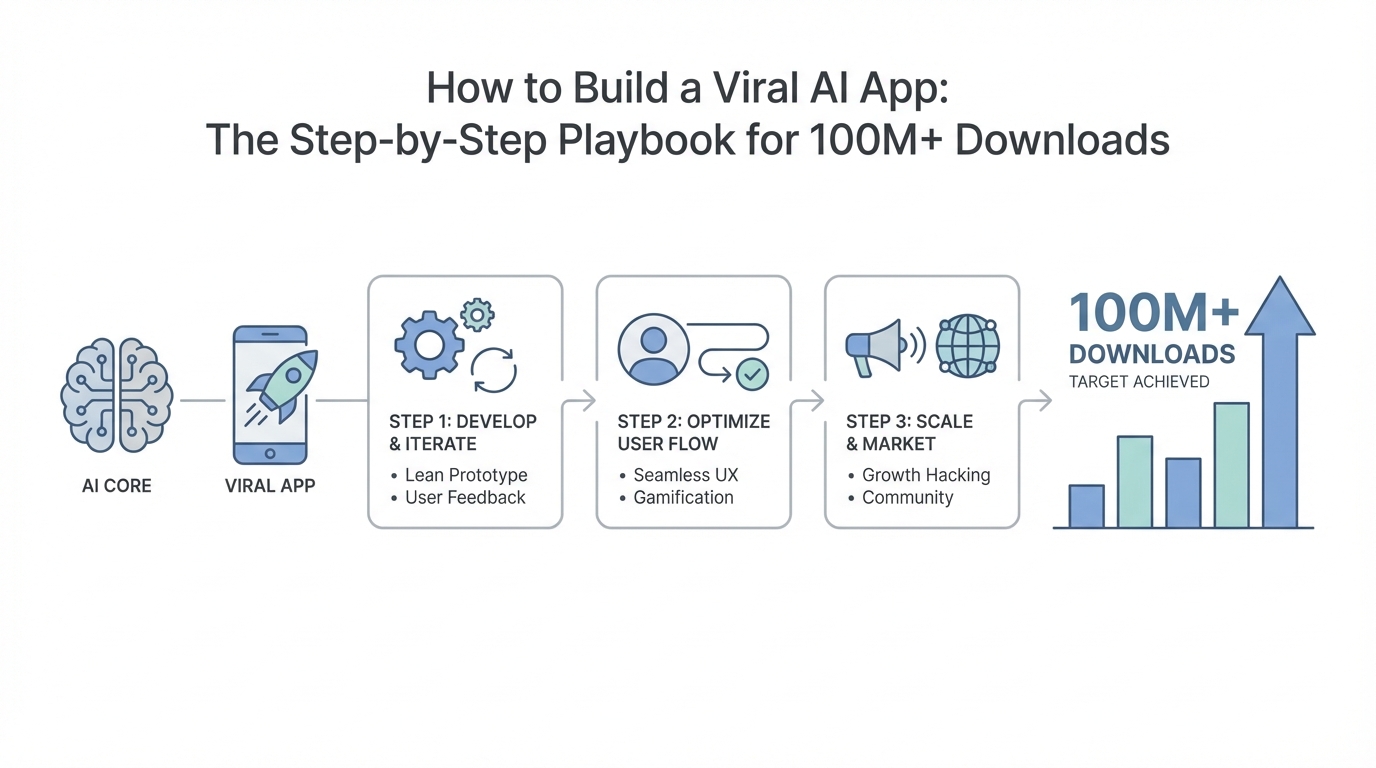
We are officially living in the era of the "idea guy." As Sam Altman, co-founder of OpenAI, recently noted, the barrier to entry for building world-class software has collapsed. But while anyone can generate a line of code, very few know how to build an AI app that actually commands attention in an increasingly crowded marketplace. The difference between a failed project and a viral sensation often comes down to a strategy known as mimesis—the art of identifying what is already working and refining it for a new audience. If you want to achieve 100M+ downloads in record time, you don’t need to reinvent the wheel; you need to find the right wheel and add a jet engine to it.
The Mimesis Strategy: Why Copying is the Fastest Path to Growth
The core philosophy behind some of the most successful generative AI mobile apps isn't pure invention—it’s mimesis. This concept, popularized in tech circles by founders like Ben-Zion Benkhin of Wombo, suggests that if a specific concept or content format is already working, you can copy the fundamental mechanic, put your own unique spin on it, and likely see similar success. This isn't about theft; it’s about understanding the underlying human desire for a specific type of entertainment or utility and delivering it more effectively than the incumbent.
Think of it like a professional gamer watching high-level streams. In League of Legends, a jungle main might study the pathing of a platinum-level player to improve their own 60th-percentile performance. By mirroring successful patterns and then adding personal intuition, they leapfrog the slow, painful process of trial and error. In the world of mobile apps, this means looking at leaders like Reface—which secured a massive investment from Andreessen Horowitz after hitting the top of the App Store—and asking: "What did they miss?"
When Reface went viral for face-swapping selfies into music videos, it signaled a massive appetite for personalized, AI-generated content. The "spin" for the next big winner was simple: instead of just swapping faces, what if we made the faces sing? That insight led to the creation of Wombo, which achieved 100 million downloads by focusing on a different open-source model and a simpler user experience. The lesson for 2025 is clear: don't overthink the concept. Look for successful seeds and prepare to plant them in fresh soil.
Step 1: Identifying 'Seed' Signals in Technical Circles
To build a viral app, you need to develop an ear for "seed signals." These are early indicators that a specific technology is ready for prime time but hasn't yet been productized for a mass audience. A great place to start is IdeaBrowser, which uses AI agents to track what people are searching for and where the current market gaps exist. But for true technical seeds, you need to go deeper into the trenches of GitHub and Google Colab.
A seed signal often looks like a clunky, difficult-to-use piece of code that produces a result so impressive it goes viral despite the UX. For example, before image generation became a household term, models like VQGAN+CLIP were being played with by a handful of artists on Twitter. They were stitching together complex prompts in Python notebooks to create dream-like imagery. If a technical person is willing to spend 14 hours a day on a Google Colab notebook to produce one image, you can bet a layperson would pay $3 to do the same thing in three seconds on their phone.
Watch for content that gains traction in "hardcore" Discord communities or niche subreddits. If you see a specific meme format—like the Baka Mitai singing face meme—being generated by people using complex Telegram bots, you have found your seed. This is exactly how the first-order motion model was identified as a potential goldmine. The tech was there, the demand was proven by the memes, but the bridge to the average consumer was missing. Your job as a founder is to build that bridge.
Step 2: The 'Stupid Simple' UX Rule
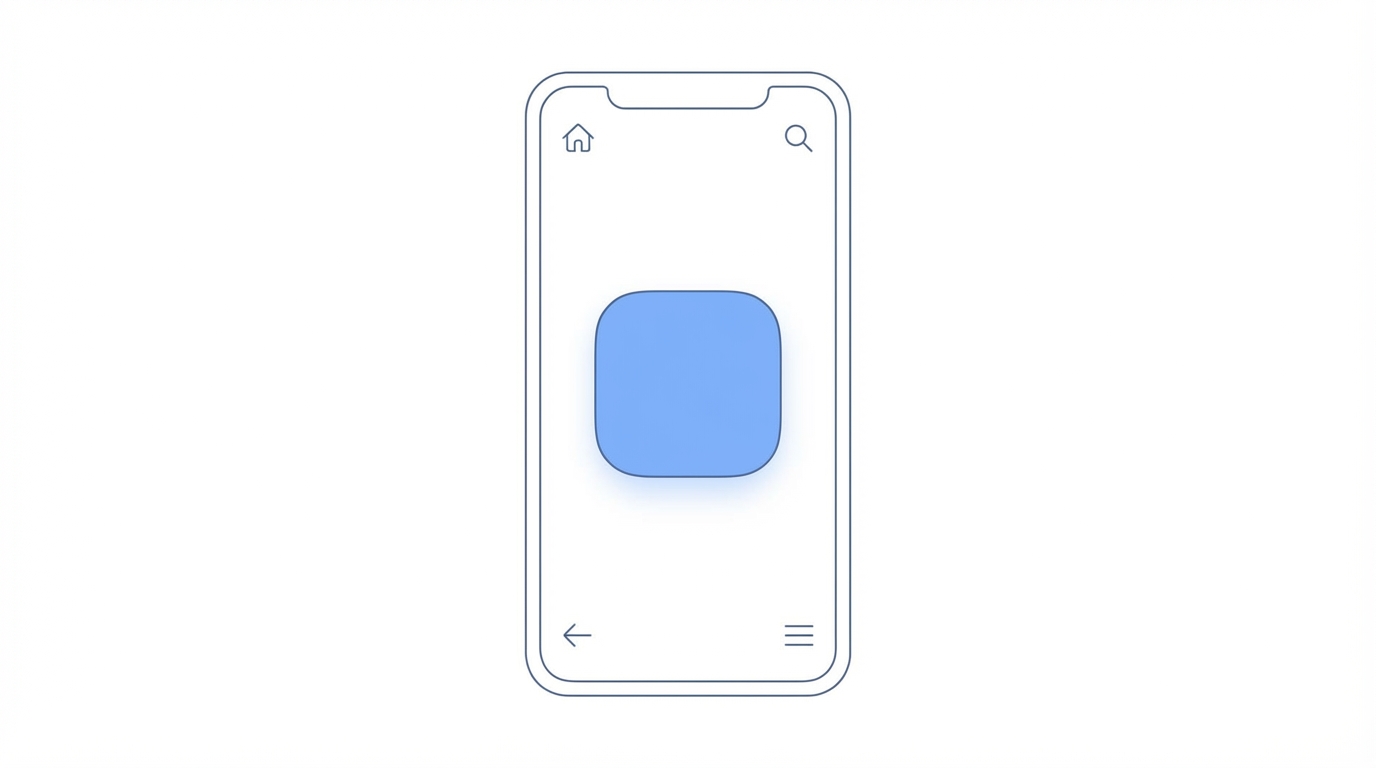
One of the most effective mobile app growth hacks is radical simplicity. Most developers make the mistake of adding too many features, filters, and settings. In the viral AI world, we follow the "Grandmother Rule": If a five-year-old or a grandmother can’t figure out the app in under ten seconds, you’ve already lost. The goal is to provide a "bite-sized piece of candy" rather than a full steak dinner.
The winning formula for how to build an AI app usually involves a 4-screen flow: Input, Selection, Loading, and Output. In Wombo’s case, it was: 1. Take a selfie. 2. Pick a song. 3. Watch a loading screen. 4. Get a singing video. This simplicity removes all friction, allowing the user to reach the "Aha!" moment—the generated content—almost instantly. Apps like Mixi are currently winning the music category by applying this exact same logic to song mashups [source: NN/g Usability Heuristics].
When designing your interface, prioritize attention over features. Users are distracted by a million different notifications. To capture their focus, your app must deliver a joke or a result as quickly as possible. Don't try to explain the complexity of the neural network or provide infinite customization options. Just give them the result. High-growth apps often spend zero dollars on traditional viral app marketing strategy and instead funnel every cent into inference costs, ensuring that every user gets a high-quality, shareable output for free.
Step 3: Engineering the Share Loop
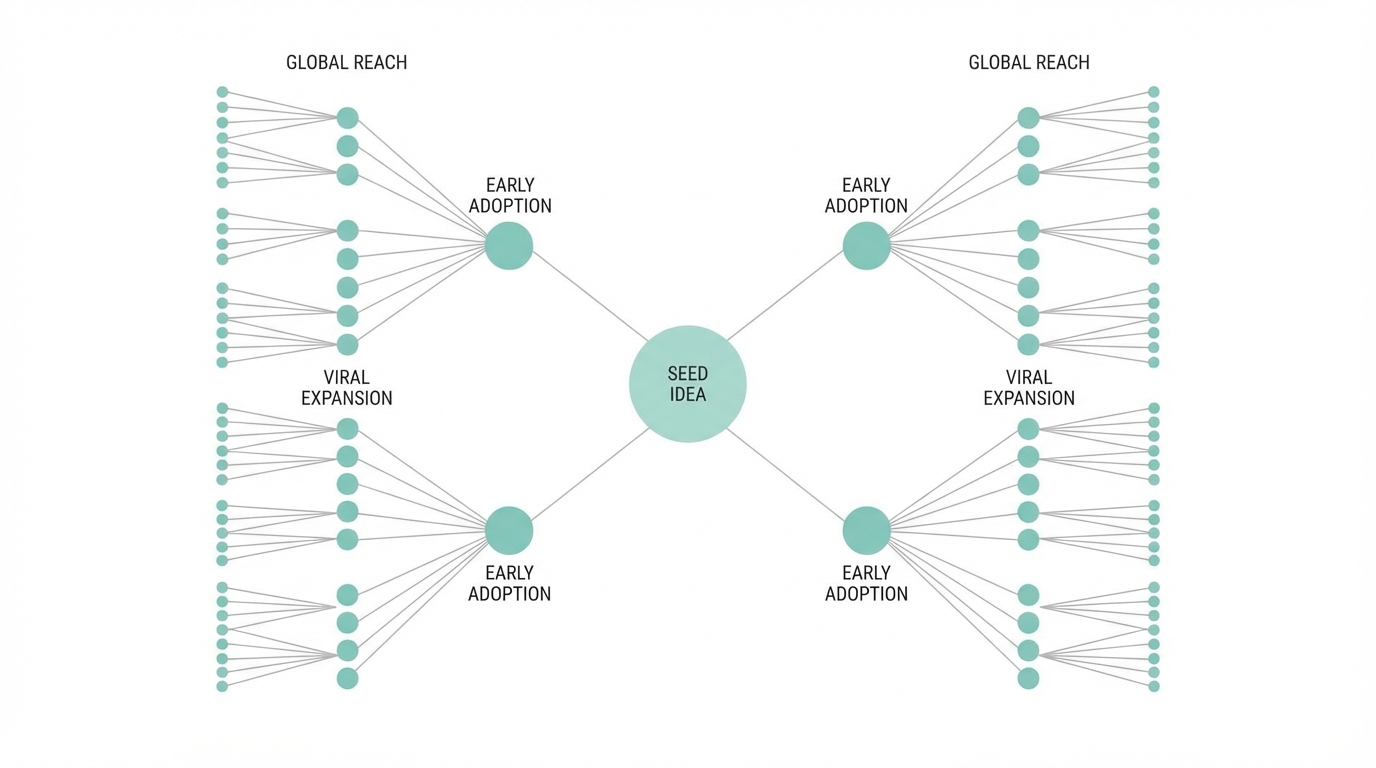

True virality doesn't happen by accident; it’s engineered into the content output. You must design your app so that the natural inclination after seeing the output is to share it. This requires understanding the algorithmic feeds of TikTok, Instagram Reels, and YouTube Shorts. The battlefield of attention is full-screen, vertical, and fast-paced. Your app's output should be perfectly formatted for these platforms.
To seed these viral loops, many founders look to platforms that help them identify the right creators to showcase their tech. For example, tools like Stormy AI allow you to search for influencers who already have a high engagement rate in your specific niche. By identifying these creators early, you can provide them with your tool to create content that naturally fits the TikTok algorithm, effectively turning them into your primary acquisition channel.
Think about the "watermark strategy." Every time someone shares a video generated by your app, your brand name should be visible. This creates a content creation loop where one viral video leads to thousands of new users who want to replicate the same effect. Whether it's a "babyfied" celebrity or a "pregnant cat" meme, the format must be so shocking or funny that it demands a share. If you can productize a content format that is already trending—like using ChatGPT to create a base image and Hedra.ai to animate it—you can capture millions of views with minimal effort.
Step 4: Pre-processing for Consistent Quality
One of the biggest hurdles in generative AI mobile apps is the variability of user input. A bad selfie or a poorly worded prompt will lead to a bad output, which kills the viral loop. To solve this, you must implement "pre-processing." This involves wrapping the user's input in your own stylistic keywords or "driving videos" to ensure the result is consistently high-quality.
In the case of Wombo's Dream app, users would type a simple prompt, but the app would secretly append complex stylistic keywords behind the scenes. This ensured that even a one-word prompt like "forest" would result in a stunning, professional-looking piece of art. For video apps, this might mean using a driving video—a pre-recorded choreography that dictates how the AI should animate the user's selfie. By controlling the motion and the style, you guarantee that the user feels like a creative genius, regardless of their actual skill level.
This pre-processing also allows you to productize specific memes. For instance, if you notice that celebrities turned into babies is a trending format, you can create a one-tap scenario in your app that handles the transformation automatically. The user doesn't need to know how to prompt an LLM or use an image-to-video tool; they just click a button, and the app does the heavy lifting. This consistency is what builds trust and keeps users coming back to create more content.
Step 5: Monetizing 'Popcorn Apps' and Managing Costs


A common critique of the "popcorn app" model—apps that go viral quickly and might be short-lived—is that they are hard to monetize. However, the data suggests otherwise. If you capture 100M downloads, even a 2% conversion rate to a paid subscription can result in tens of millions of dollars in revenue. The 98% of free users are not "lost" revenue; they are your viral marketing engine, driving the app to the top of the Apple App Store.
The most successful monetization strategy for these apps is the weekly subscription model. Charging anywhere from $3 to $20 a week for "pro" features—like faster generation times, higher resolution, or exclusive styles—can lead to massive cash flows. Many successful founders, including the likes of Nikita Beer, have perfected this "killer" monetization style. You can also utilize Meta Ads through the Meta Ads Manager to retarget users who have downloaded the app but haven't yet subscribed.
However, you must be careful with your inference efficiency. Viral apps can rack up million-dollar server bills on Amazon AWS or Google Cloud in a single month. To survive, you need to either raise venture capital—though it's not strictly necessary for "popcorn apps"—or reach profitability quickly. Modern developers are now looking toward on-device inference, leveraging the powerful NPU in the iPhone 16 Pro to run models locally, or even exploring decentralized compute networks like w.ai to reduce infrastructure costs.
Looking Ahead: AI Startup Ideas 2025
The opportunity for AI startup ideas 2025 is infinite because human attention is the ultimate commodity. As long as people are glued to their phones and seeking entertainment or utility, there is room for a new viral sensation. We are moving toward a world where the "Wombo Mafia" and a new generation of 18-year-old "killers" are building multi-million dollar businesses from their bedrooms. They aren't worrying about complex B2B sales cycles; they are productizing the current moment.
If you are looking to build the next big thing, start by being "brain rotted." Scroll through TikTok and Instagram, save every AI-generated video that stops you in your tracks, and look for the underlying pattern. Can you make that format accessible with a single tap? Can you improve the quality? To scale your outreach and manage the creators who will make your app famous, leveraging a CRM and discovery tool like Stormy AI can give you the edge needed to maintain momentum after the initial spark of virality.
The journey from a Google Colab notebook to 100 million downloads is shorter than it has ever been. It requires a mix of mimesis, technical curiosity, and a commitment to stupid-simple design. Don't wait for a revolutionary, never-before-seen idea. Find a seed that is already growing, build a beautiful bridge for the masses, and get ready for the ride. The era of the idea guy is here—it’s time to see if yours can go viral.
Conclusion: Your Path to 100M Downloads
Building a viral AI app is a marathon of sprints. You must be quick to identify signals, faster to deploy a simple UX, and relentless in optimizing your monetization. By following the mimesis strategy and focusing on high-shareability content, you can bypass the traditional struggles of app growth. Remember: the goal isn't just to build a tool; it's to create an experience that people can't help but share with their friends. Start small, keep it simple, and use the tools available to you to capture the world's attention. The next 100M-download app is already out there, hidden in a Python notebook—you just have to be the one to find it.