In the fast-moving landscape of 2026, the barrier to entry for software entrepreneurship has effectively vanished. We have moved past the era of the "AI cocktail"—where founders had to juggle three or four different tools to build a single feature. Today, a new breed of agentic AI, led by platforms like Manus AI, is allowing non-technical creators to build, deploy, and scale multi-billion dollar ideas with little more than a natural language prompt. Whether you are looking to disrupt industry giants or build a lean influencer-focused tool, the playbook has changed.
The Shift to Agentic AI: Beyond the 'AI Cocktail'
Understand the power of agentic AI frameworks and how they manage complex multi-step tasks.
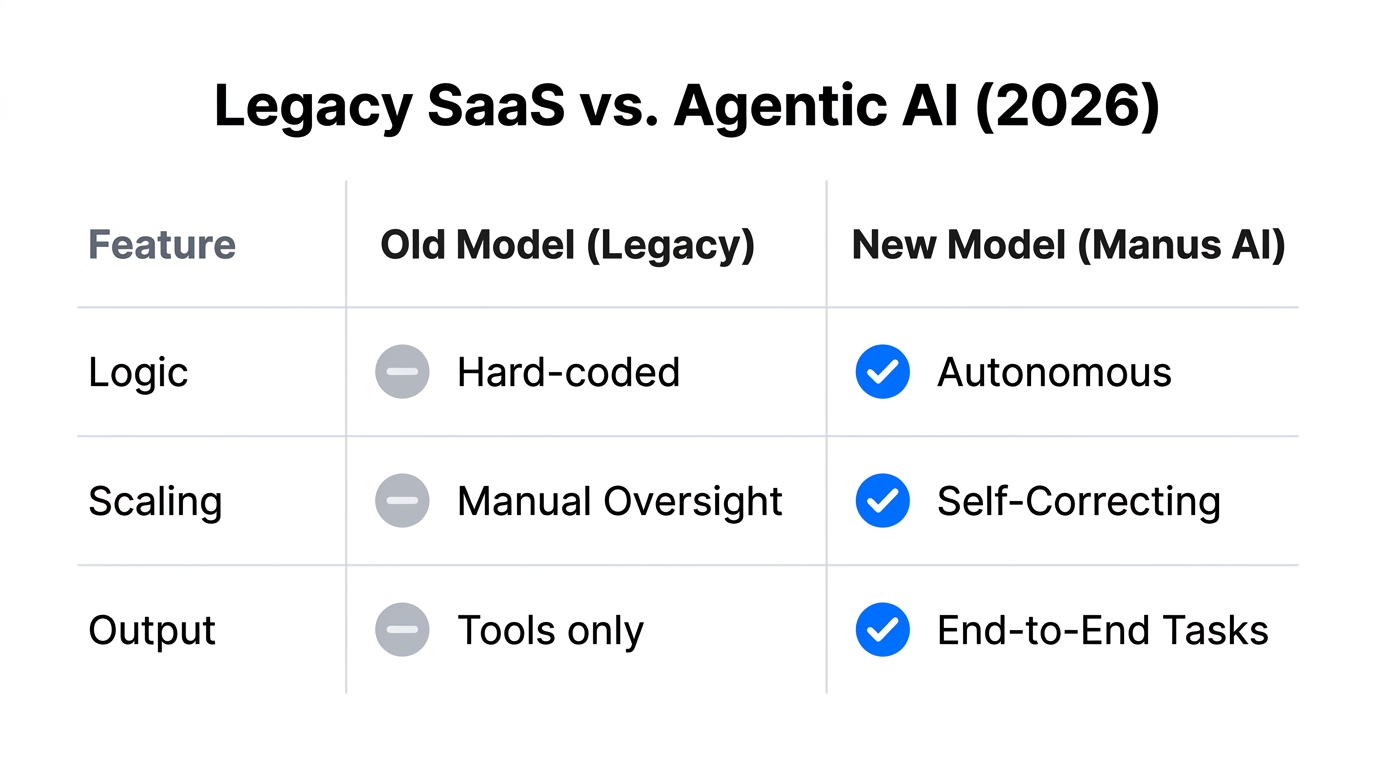
Just a year or two ago, building a SaaS required what many called the "AI cocktail approach." You would go to ChatGPT or Grok 3 to ideate and create a Product Requirements Document (PRD). Then, you would move to V0 to design the UI, and finally, you would hop into Cursor or Replit to actually write the code. It was a manual, fragmented process that required a significant amount of "copy-paste" work.
In 2026, agentic AI for startups has simplified this into a single, autonomous workflow. Tools like Manus AI operate as a multi-agent system under the hood, utilizing planners, executors, and researchers that work in tandem. Instead of you being the bridge between tools, the AI agent handles the entire lifecycle of the product. It doesn't just write code; it researches the competition, plans the architecture, and even handles the deployment hurdles.
"Manus AI is more than just a wrapper; it's a glimpse into the next stage of AGI, where the AI doesn't just think—it executes tasks and runs tools autonomously."
The 'DocuSign Killer' Playbook: Step-by-Step
Learn how to use Manus AI to disrupt legacy SaaS giants like DocuSign efficiently.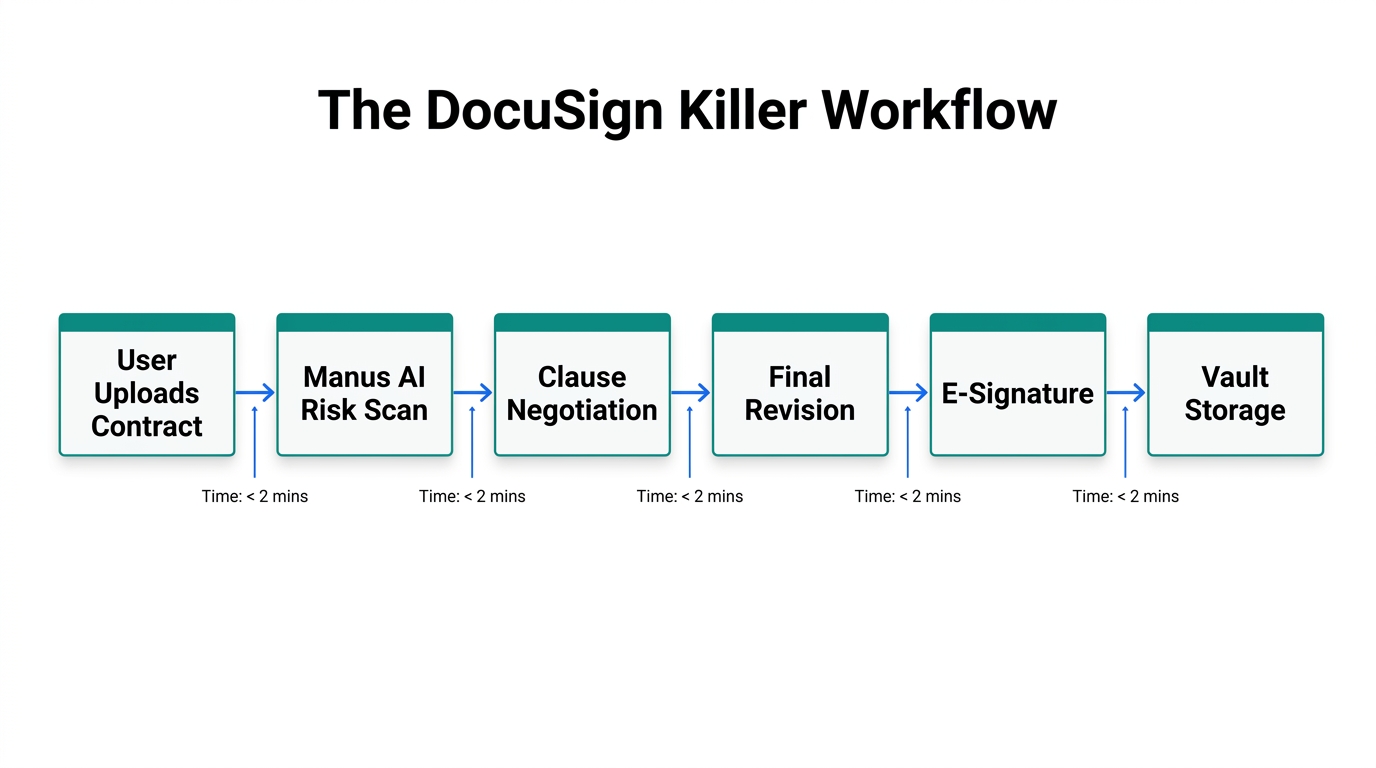
To understand the power of automated business builders, let's look at the "DocuSign killer" experiment. DocuSign is a multi-billion dollar company with thousands of employees, yet its core functionality—electronic signatures—can now be replicated by a single entrepreneur using Manus AI business automation.
Step 1: The Initial Prompt and Research
Start by giving Manus a simple but bold request: "Create a DocuSign clone." Because Manus is an agentic system, it won't just start coding. It will first utilize tools like Puppeteer to browse the live DocuSign site, scrape data on their feature sets, and identify core functionalities like e-signatures, payment integration, and identity verification.
Step 2: Refining with Human-in-the-Loop
One of the most powerful features of Manus is the ability to interrupt the agent without stopping its progress. If the AI starts planning a complex multi-product suite, you can steer it: "Only focus on the e-signature core functionalities." This ensures the MVP (Minimum Viable Product) remains lean and focused on the $1,000/day revenue goal rather than feature creep.
| Feature Layer | Legacy DocuSign Cost | Manus AI SaaS Cost |
|---|---|---|
| Infrastructure | High (Server farms, thousands of staff) | Low (Serverless, AI-managed) |
| Customer Acquisition | Enterprise Sales Teams | Viral UGC & AI Search |
| Subscription Model | $10-$40 per seat | Free or $1 Flat Fee |
Navigating Deployment and Local Testing
Explore the current limitations and technical hurdles when deploying AI-generated software projects.While we are closer to AGI than ever, 2026 technology still has its friction points. During the build process, you may encounter deployment errors or "terminal errors" while the agent tries to zip files or push to a public network. This is where the founder's mindset is critical.
If Manus fails to deploy to a public URL due to beta limitations, you should pivot to a local environment test. Ask the agent to zip the entire Next.js project structure for download. For security-conscious founders, running the code in a cloud sandbox before going live is a best practice. As highlighted by Min Choi, always be mindful of data privacy when using tools that operate on external servers.
Beyond Code: AI-Driven Growth and SEO
Discover how Manus AI can optimize your website SEO to attract high-level executive clients.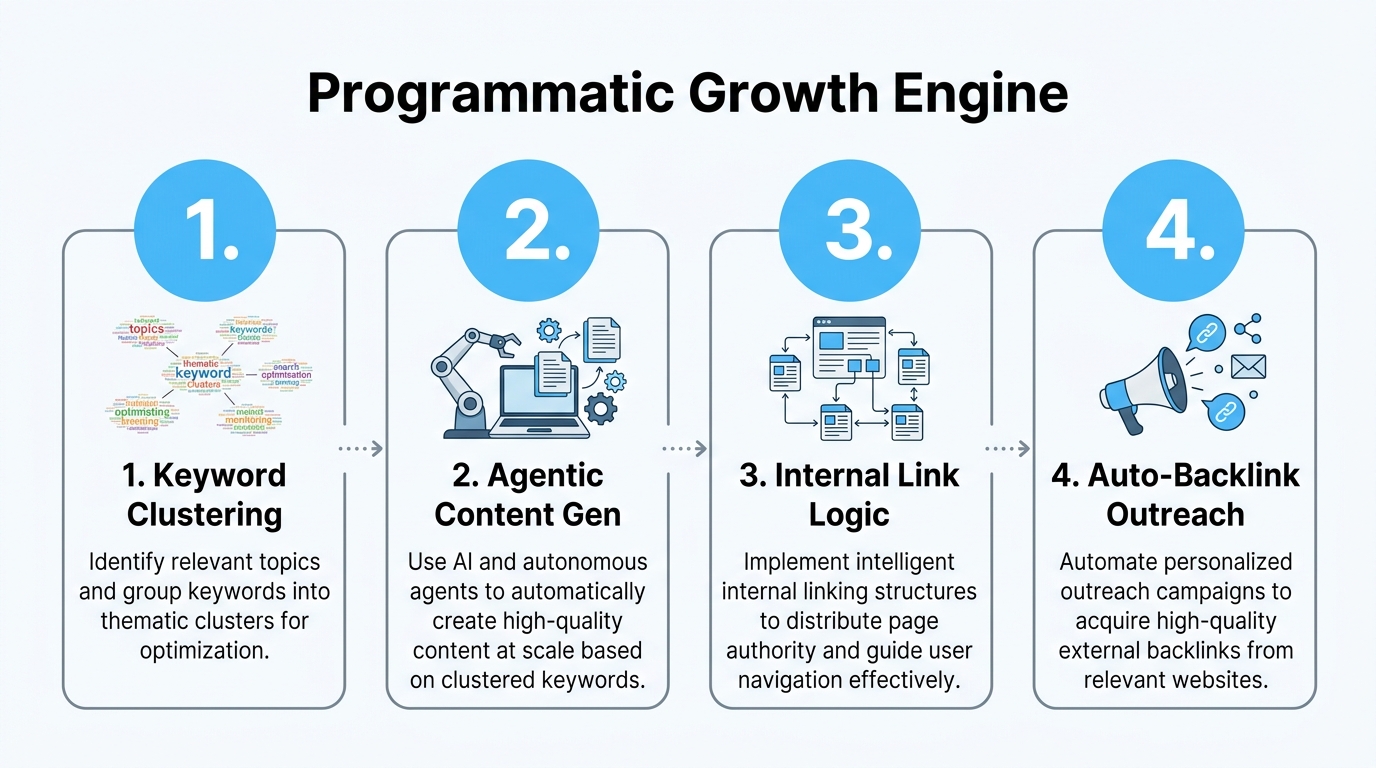
Building the SaaS is only 20% of the battle. To hit $1,000 per day, you need a distribution engine. Manus AI isn't just a developer; it's a marketing strategist. You can prompt the agent to perform an SEO audit on your landing page or your competitors' sites. For example, if you are targeting executives at tech companies, you can ask Manus to "Identify the SEO keywords that high-level AI executives are searching for and optimize my landing page to rank for them."
In 2026, many successful founders are pairing their AI-built tools with Stormy AI to discover creators who can promote their new SaaS. By using an AI search engine to find TikTok or YouTube creators in the "productivity" or "startup" niches, you can launch a UGC (User-Generated Content) campaign that drives app installs and subscriptions overnight.
"The most successful SaaS businesses in 2026 aren't the most complex—they are the ones that leverage AI to out-market the incumbents."
Monetization Strategies for the 2026 Market
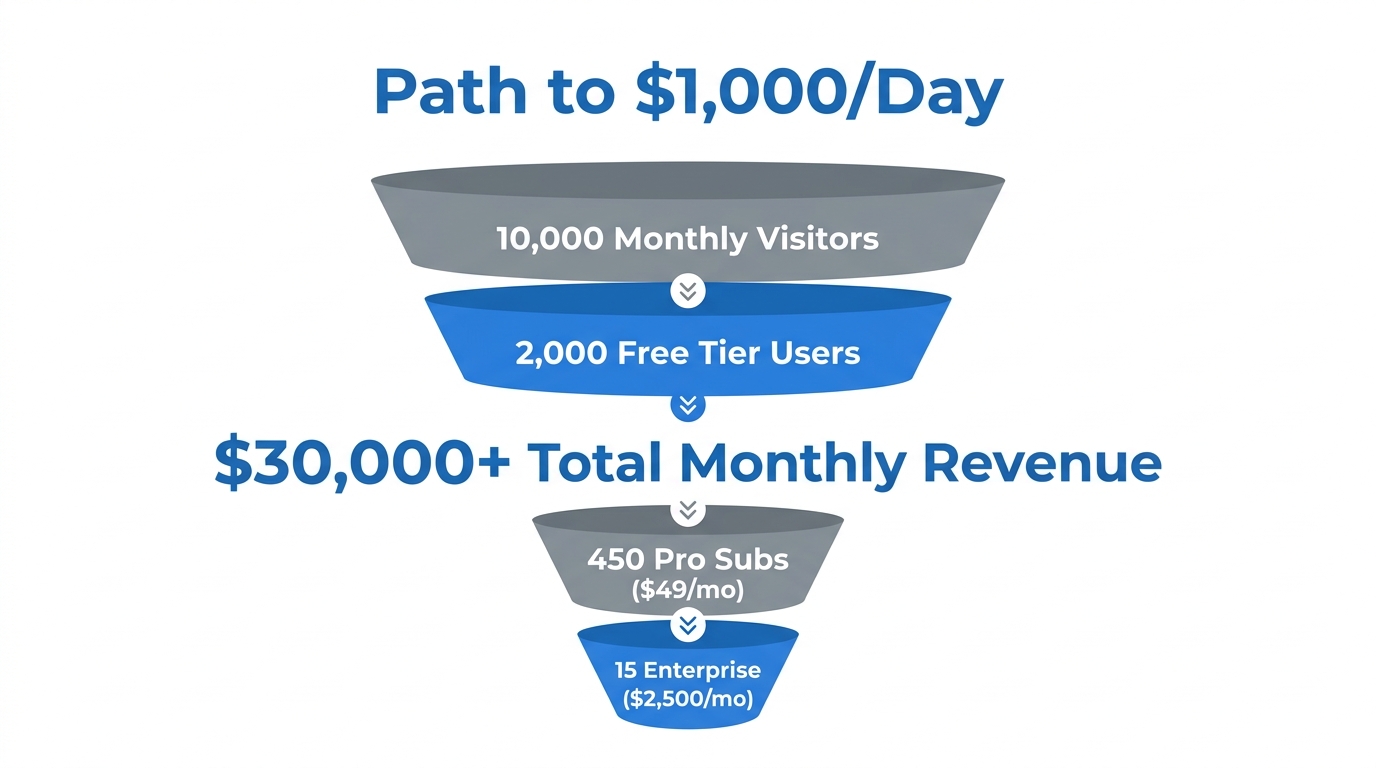
The 2026 market is saturated with AI-generated tools. To stand out and reach that $1,000/day milestone, you must choose a winning monetization model. Here are three strategies that are crushing it this year:
- The 'Free-to-Paid' Utility: Offer the core service (like e-signatures) for free to build a massive user base, then charge a premium for AI-driven features like "Automated Contract Review."
- The Micro-SaaS Model: Solve one very specific problem for a niche audience (e.g., e-signatures for Shopify store owners) and charge a flat monthly fee.
- The Usage-Based Credit System: Use Stripe to implement pay-per-document or pay-per-use billing, lowering the barrier to entry for small businesses.
Conclusion: The Future is Agentic
Building a SaaS that generates $1,000 a day no longer requires a six-month roadmap and a team of engineers. By mastering Manus AI for startups, you can go from an idea in the morning to a deployed product by the afternoon. Whether you're building a simple flying game like Fly Peter or a complex disruptive tool, the key is to start small, iterate fast, and let the agents do the heavy lifting.
Are you ready to build? Start by defining your "killer" idea today, and use the power of agentic workflows to turn your thoughts into a revenue-generating reality. For those looking to scale their distribution, platforms like Stormy AI are ready to help you find the creators who will put your software in front of millions.