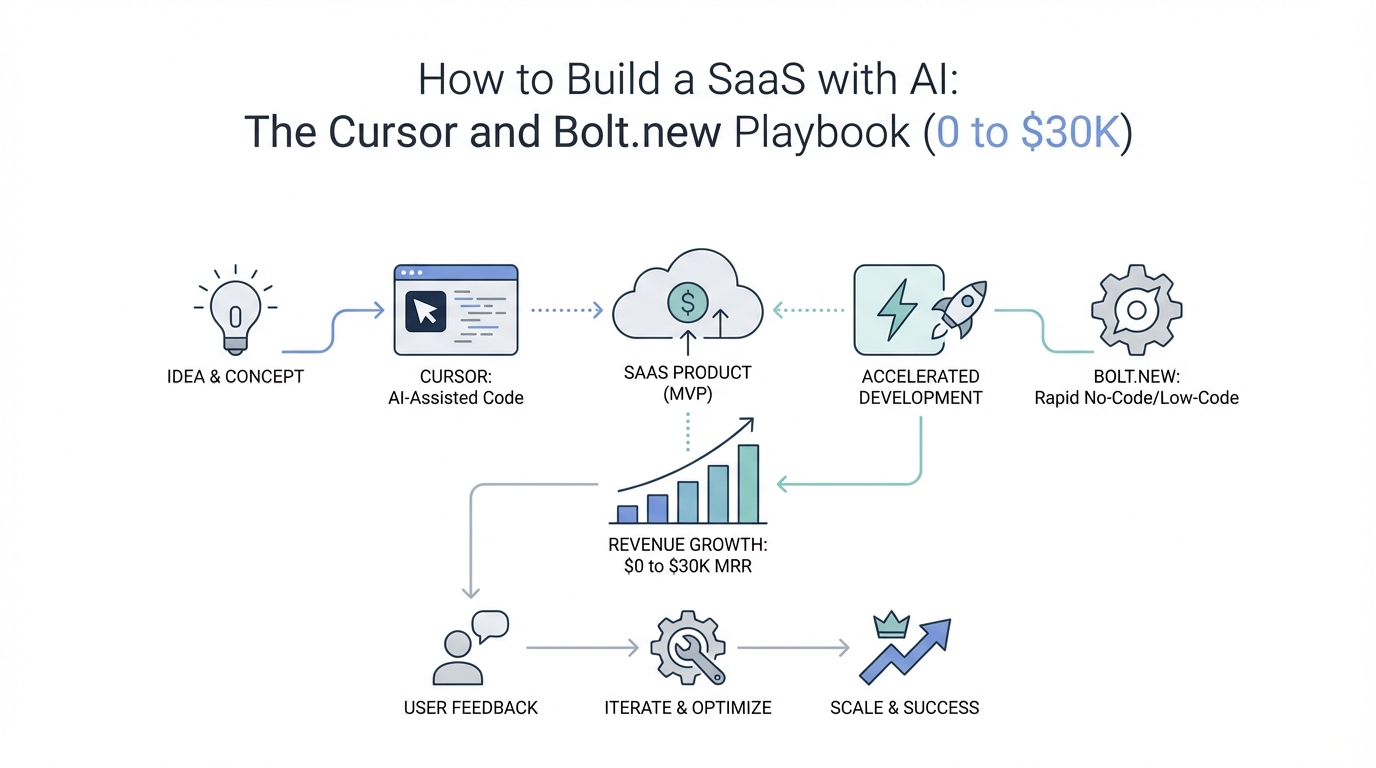
Imagine building a production-ready software application during your morning commute, launching it, and watching as it generates $30,000 in revenue within a matter of months. For Polius, a solo founder who admitted he once "completely sucked at code," this isn't a pipe dream—it is his reality. By leveraging a modern stack of AI-powered tools, he bypassed the years of traditional computer science education usually required to ship a profitable product. The barrier to entry for ai app development has effectively vanished, replaced by a new skill set: the ability to prompt, iterate, and deploy with precision.
This guide breaks down the exact playbook used to take a SaaS idea from zero to a 90% profit margin business. Whether you are a non-technical founder or a seasoned developer looking to move 10x faster, understanding how to build saas with ai is the ultimate competitive advantage in 2025. We will explore the shift from deep research to scaffolding, and finally, to production-level debugging using the industry’s most powerful tools: Perplexity, Bolt.new, and Cursor.
The AI-First Mindset and Validation
Before touching a single line of code, the most successful AI founders focus on domain expertise. Polius's success with Creator Hunter, a platform matching startups with influencers, came from his background in creator-led services. He didn't just build for the sake of building; he solved a personal pain point. According to research from Starter Story, many founders fail not because they can't code, but because they build in the wrong direction. To avoid this, use tools like Semrush to identify high-intent keywords and unsolved problems in your niche.
Phase 1: Deep Research and Roadmap Generation
The first mistake beginners make is jumping straight into a code editor. Instead, start with Perplexity AI. Because Perplexity has access to real-time documentation and the latest library updates, it serves as the perfect project architect. Tell the AI that you are a "complete noob" and need a step-by-step roadmap for your specific app idea. This phase should result in a clear technical document that outlines your database schema, chosen libraries (like Clerk for auth), and UI components.
If your SaaS idea involves the influencer space, such as a discovery tool, you can significantly accelerate your market research by using Stormy's AI search. Instead of manually scouring social media to see if your niche has enough creators, Stormy allows you to type natural-language prompts to instantly see the landscape. This data can then be fed back into your Perplexity roadmap to refine your product's core features.

Phase 2: Scaffolding the Functional MVP using Bolt.new
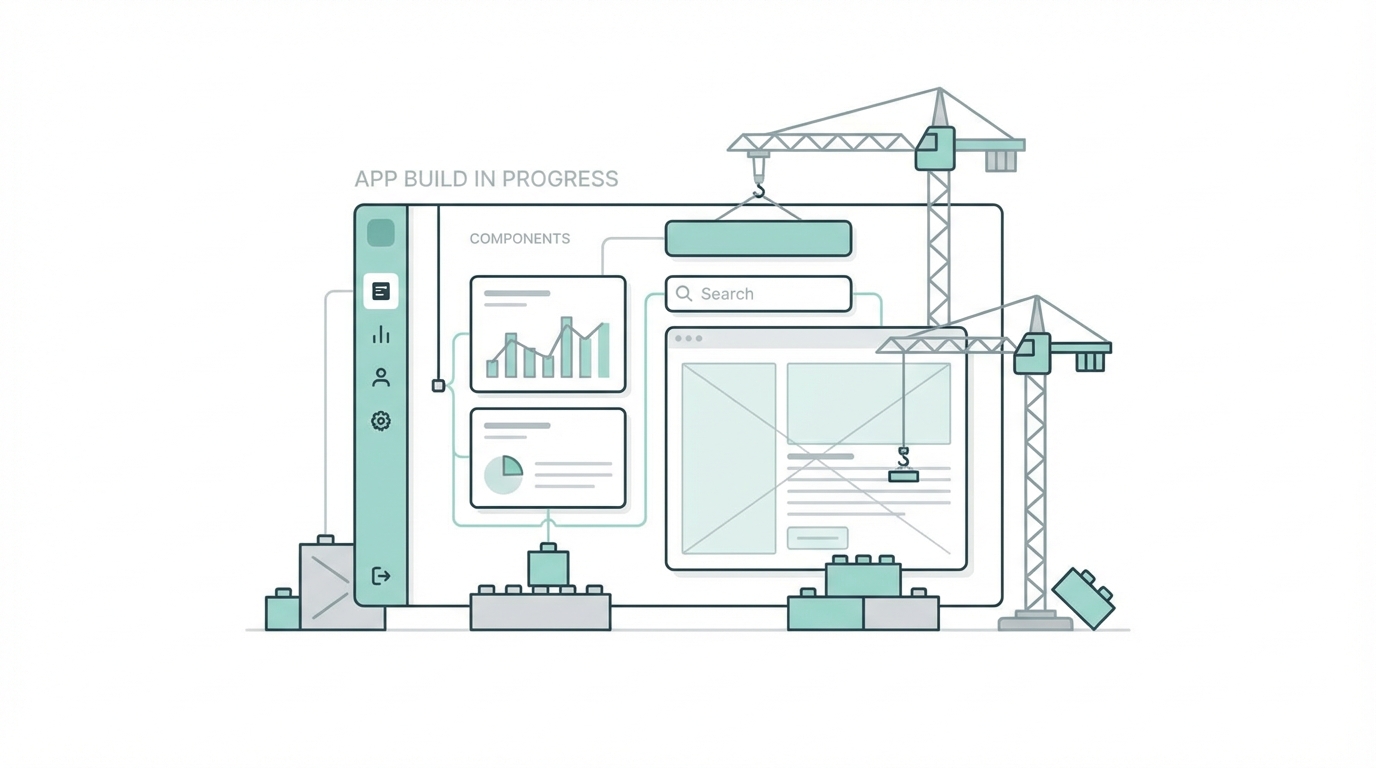
Once you have your roadmap, it's time to move to Bolt.new. This tool is a browser-based no code saas builder that allows you to prompt an entire application into existence. Polius recommends using Bolt.new to handle the initial heavy lifting of the front-end and core logic. You can describe your dashboard, the primary user flow, and the visual style you're aiming for.
The 'Error-Loop' Method
One of the most powerful strategies in this bolt.new guide is the "Error-Loop" method. When the AI generates code that results in a terminal error, do not panic. Simply copy the error message and paste it back into the AI. Whether you are in Bolt or Cursor, the AI can usually diagnose and fix the bug instantly. This iterative process allows non-technical founders to maintain momentum without getting stuck on syntax errors for hours.
Phase 3: Moving to Cursor for Backend Integration
While Bolt is excellent for scaffolding, Cursor AI is where your app becomes a professional, production-ready product. This cursor ai tutorial step involves downloading your project from Bolt and opening it in Cursor. This is where you implement critical backend services:
- Database: Use Supabase for a scalable, AI-friendly database that offers a generous free tier.
- Authentication: Plug in Clerk to handle user logins and security with minimal configuration.
- UI Components: Use shadcn/ui components to ensure your app looks modern and cohesive.
If your application requires deep data insights—for example, if you are building a tool that needs to analyze engagement for marketing purposes—you should look at how Stormy's influencer analysis handles vetting. By observing how professional platforms detect fake followers and engagement fraud, you can prompt Cursor to build similar validation logic into your own SaaS, increasing the value of your data to end-users.
Designing for Conversion: The 80/20 Rule
Polius attributes much of his success to his visual focus. A SaaS that looks like it was built in 2005 won't convert, no matter how good the AI code is. His playbook suggests using Framer to pick a clean, free template for your landing page. Focus 80% of your effort on the "hero section"—the area above the fold. It must clearly state the value proposition, solve a painful problem, and have a bold call to action (CTA).
Marketing and Launch: The Build in Public Strategy
With an MVP ready, the next step is monetization. Polius’s strategy relied heavily on X (formerly Twitter). One of his tweets reached 500,000 impressions by tapping into a trending conversation: "Is AI coding actually good enough to build a full SaaS?" By showing a raw, human reaction and a simple visual demo, he validated the product with 20-30 sales on launch night.
To sustain growth, you need consistent outreach. Managing creator relationships or B2B leads can be daunting for a solo founder. This is where Stormy's AI outreach becomes a game-changer. Instead of manual emailing, you can set up an autonomous AI agent that discovers prospects and sends hyper-personalized emails while you sleep. This allows you to maintain the 90% profit margins Polius achieved by not needing a large sales or marketing team.
Deployment and Long-Term Operations

To keep costs low, deploy your application using Vercel. Vercel’s integration with GitHub makes it easy to push updates, and their free tier is robust enough to handle your initial influx of users. By combining Vercel, Supabase (for data), and Stripe (for payments), your overhead remains negligible. Polius notes that he was able to quit his 9-to-5 job because his operating costs were so low that almost every dollar of revenue was pure profit.
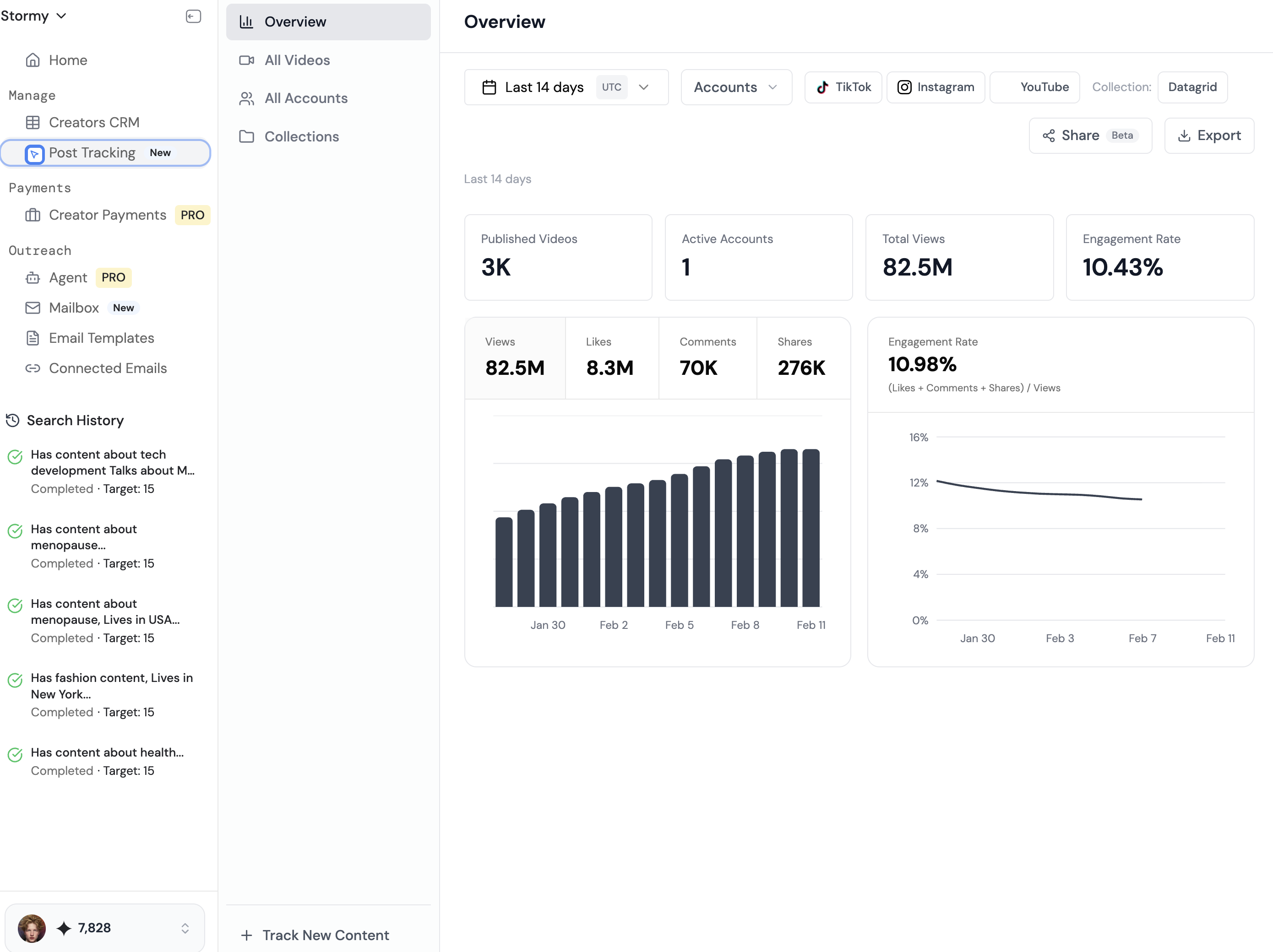
As your user base grows, you will need to track the performance of your marketing efforts and the engagement within your app. Using Stormy's post tracking features, you can monitor how influencers or users are interacting with your content across social platforms, providing you with the data needed to pivot or scale your features based on real-world usage.
Conclusion: Stop Waiting, Start Shipping
The story of Polius and his $30,000 SaaS is a testament to the power of the current AI moment. You no longer need a team of developers or a massive capital investment to build something world-class. By following the Perplexity-Bolt-Cursor stack, you can transition from a "noob" to a founder in a single weekend. The tools are ready; the only thing missing is your willingness to start prompting and "throwing things at the wall" until they stick.
If you're ready to build your own creator-focused SaaS or marketing tool, don't waste time on manual research. Start by using Stormy AI to find your niche, vet your data, and automate your outreach. The era of the solo AI founder is here—it's time to build your first 30k app.