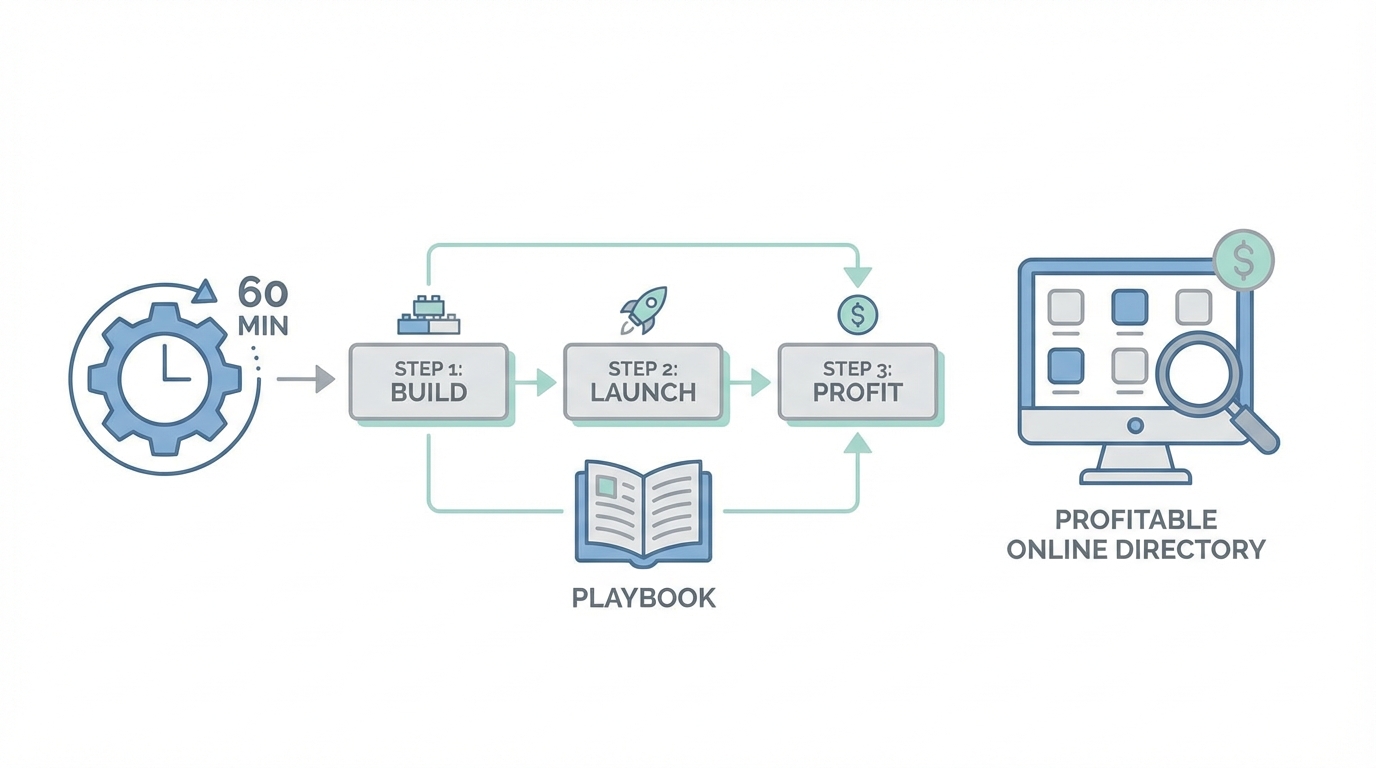
Most entrepreneurs overcomplicate the path to passive income. They spend months building complex, programmatic SaaS applications with intricate backends, only to find that Google favors simplicity. What if you could build a cash-flowing asset in less than an hour using nothing but a basic WordPress installation and some clever data enrichment? This isn't just a theory; it is a proven model used by directory experts to generate anywhere from $2,000 to $10,000 per month in actual mailbox money, according to passive income research. In this playbook, we are breaking down the exact workflow to launch an online directory business that ranks fast and stays resilient against Google’s core updates.
The Logic of Static Pillar Pages vs. Complex Builds

When most people think of an online directory, they imagine a high-tech interface with search bars, filters, and dynamic maps. However, some of the most profitable directories on the internet are "hideous" by modern design standards. Take Roadside America, for example. Despite using what looks like legacy 1990s styling, it pulls in roughly 85,000 monthly visitors. Another titan in the space, Find A Grave, attracts over 1.4 million monthly visitors by solving a morbid but highly specific search intent.
The secret weapon of these sites is the static pillar page model. Instead of thousands of thin, programmatic pages that Google might flag as spam, you build comprehensive, high-utility pages that cluster keywords effectively. This structure is more resilient to algorithm shifts because it focuses on user utility and depth of information. By putting all relevant listings for a specific city or category on a single long-form page, you maximize your ad placements and increase the time users spend on your site.
Step 1: Finding and Validating Your Niche
Building a successful directory starts with finding a niche that is evergreen and location-based. You want a topic where the data doesn't change every week. To find these goldmines, use the "near me" hack in Ahrefs. Type "near me" into the Keyword Explorer and look for queries with high search volume (30,000 to 100,000+) and Keyword Difficulty (KD) under 30.
A perfect example is the "dog park near me" niche. It gets 73,000 monthly searches and has a KD of 27. More importantly, the search intent is fragmented. People aren't just looking for "a dog park"; they are looking for indoor dog parks, off-leash dog parks, and dog water parks. When you see this level of multi-dimensional search intent, you’ve found a niche where you can provide more value than a generic Google Maps search.
What to Avoid:
- Seasonal Niches: Stay away from "pumpkin patches near me" unless you want to make $0 for eleven months of the year.
- Branded One-Dimensional Queries: Keywords like "Taco Bell near me" have zero fragmentation. People want Taco Bell, and they already have an app for that.
- Hard-to-Source Data: If you can’t easily scrape or verify the information, maintenance will kill your margins.
Step 2: Competitive Research & Social Listening
Before you build, you must identify your targets. Search for your primary keyword (e.g., "dog park Los Angeles") and look for the existing leaders. You’ll often find sites like Nylaborne or BringFido. If the top-ranking site is basic and lacks depth—like a site that only lists names and addresses without photos or amenities—it's time to set a bounty on their traffic.
Use Reddit for social listening. Searching for "dog park Los Angeles Reddit" might reveal users complaining that "not all dog runs are created equal" and wishing for better descriptions. These comments are your feature roadmap. If users are begging for info on shade, benches, or water fountains, those become the data columns in your directory.
Step 3: Scraping and Enriching Your Data
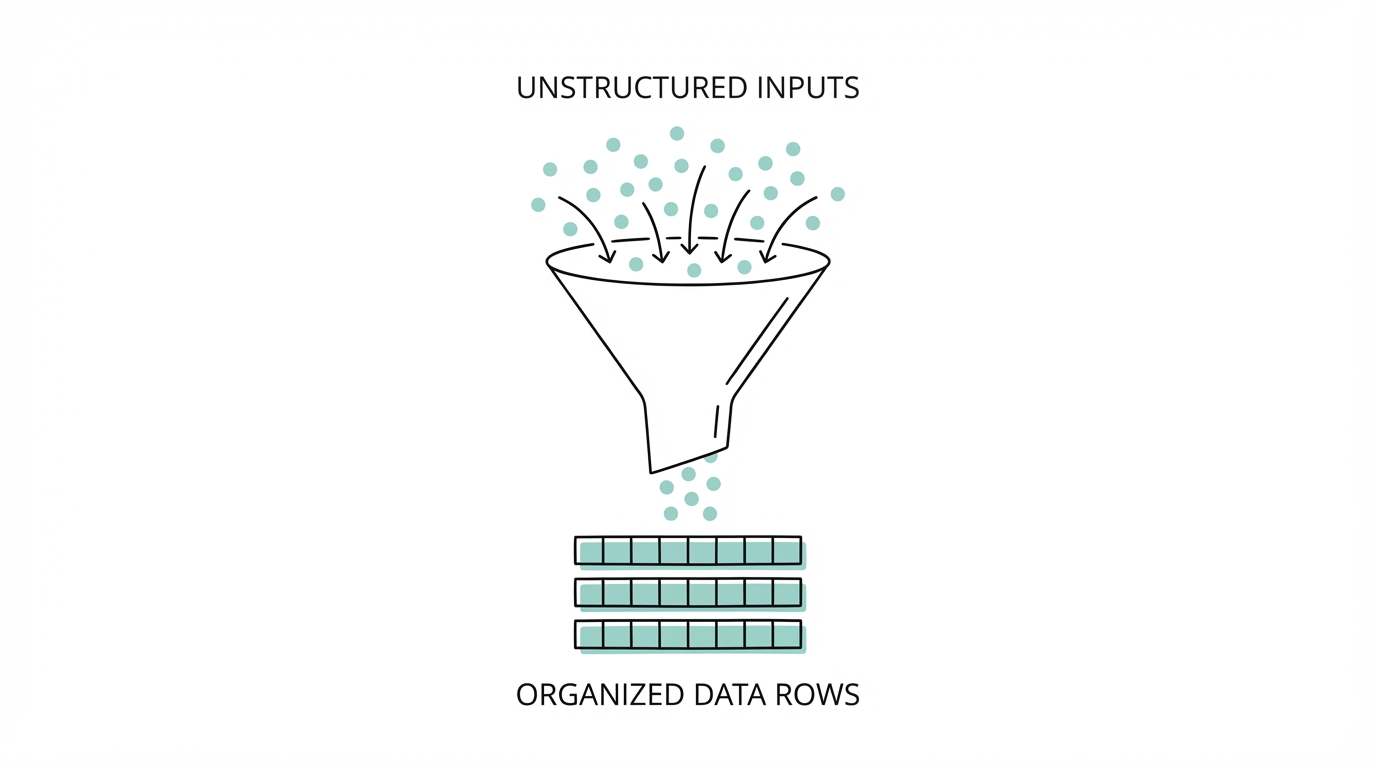
To populate your online directory business, you need raw data. Tools like Outscraper allow you to scrape Google Maps listings by category. For the dog park niche, you would select the "Dog Park" category and use an "Exact Match" filter to avoid junk data like Walmarts or gas stations that happen to mention dogs in their reviews.
Raw data isn't enough to rank. You need data enrichment. This involves adding value that isn't easily visible on a map. You can use AI agents or tools like ChatGPT to parse reviews and identify specific features. For example, if you have 6,000 listings, you can't manually check each one for "shade." Instead, prompt an AI to scan the review text for keywords and create a true/false column for each amenity. This depth of information is what will make your directory a superior resource for users and search engines alike.
Step 4: The 54-Minute WordPress Deployment
You don't need a custom-coded platform to get started. A standard WordPress installation with a lightweight theme and a page builder like Elementor Pro is sufficient for a level-one directory build. The goal is to create a Pillar Page for each major city or state.
The Pillar Page Structure:
- H1 Header: Include your primary keyword (e.g., "The Best Dog Parks in Long Beach").
- Table of Contents: Essential for user experience and jump-link SEO.
- City-Specific Subsections (H2s): Target local long-tail keywords.
- Rich Listings: For each park, include a high-quality photo, enriched data (shade, water, bags), address, phone, and hours.
- Google Maps Embeds: High utility for mobile users.
- Internal Linking: Add a section at the bottom linking to other states or cities to build topological authority.
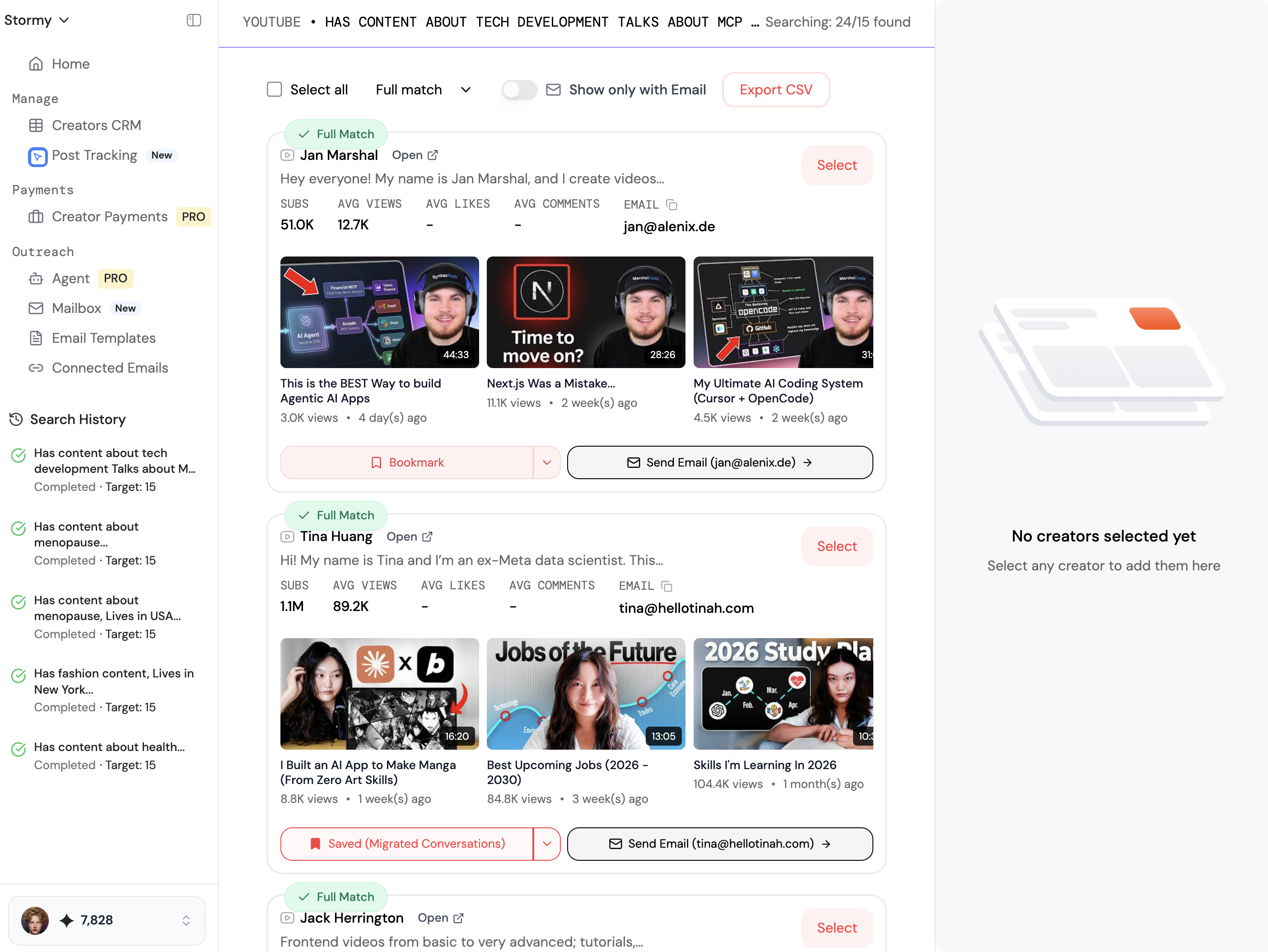
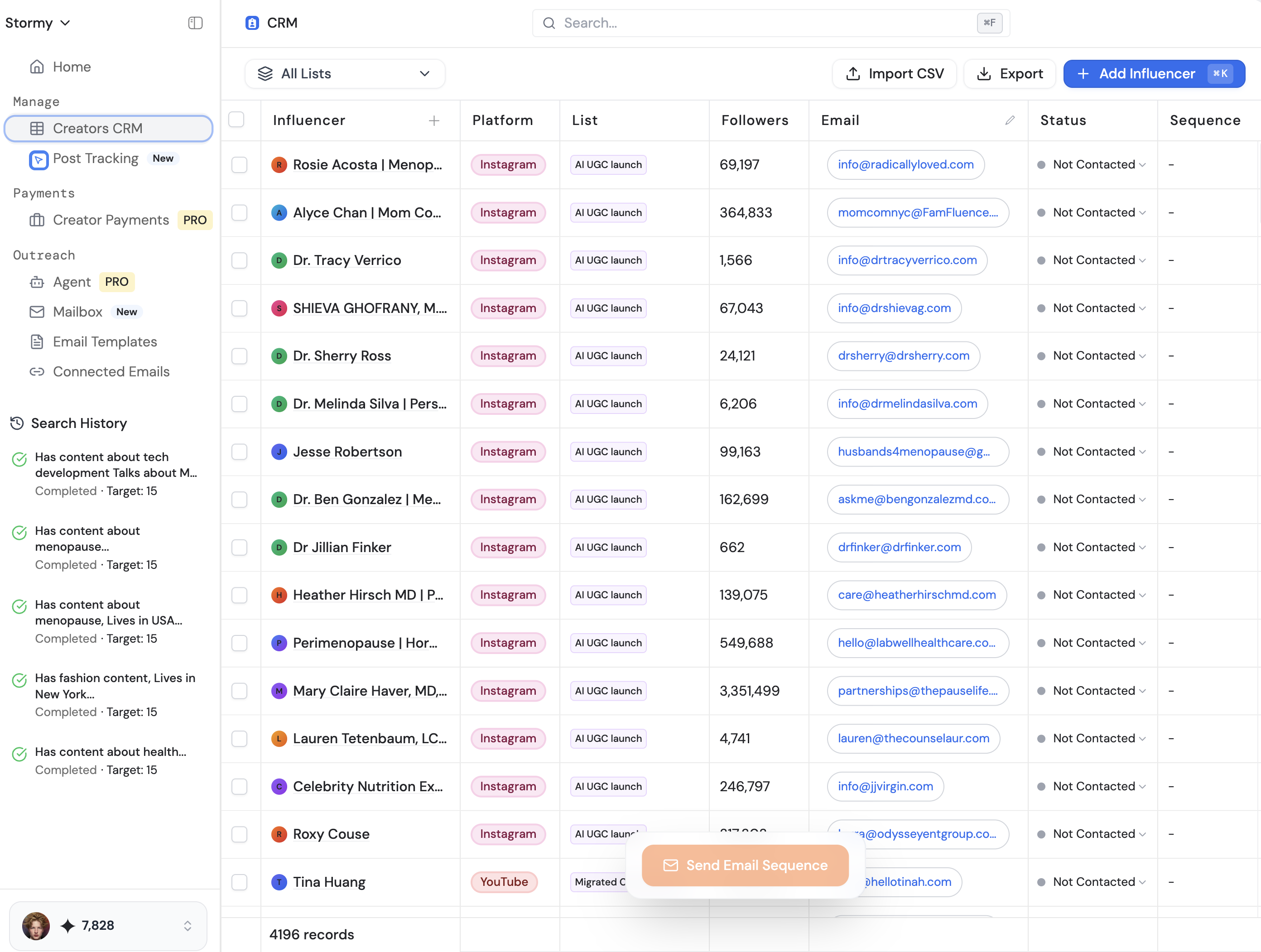
If you are building a directory in a niche that requires high-quality visuals or social proof, tools like Stormy AI can help you source UGC creators to provide authentic photos and videos for your listings. Managing these relationships through an AI-native creator CRM ensures your directory looks lived-in and professional from day one.
Step 5: Monetization and Scaling

Once you reach 2,000 to 10,000 monthly visitors, you have several ways to turn that traffic into passive income website ideas. The simplest is display ads via Google AdSense. Because static pillar pages are long, you can fit multiple ad units without ruining the user experience, similar to how long-form YouTube videos generate more revenue.
Beyond ads, consider these higher-margin plays:
- Affiliate Marketing: In the dog niche, you could link to services like BarkBox or pet health kits.
- Lead Generation: Sell leads to local service businesses (e.g., dog trainers or groomers).
- SaaS Integration: Use the directory as a top-of-funnel for a software tool. For example, a directory for farms could funnel traffic to a specialized farm-management SaaS.
- Email Newsletters: Collect emails of dog owners to build a valuable list for future product launches.
Conclusion: Building for the Long Term
Building a profitable online directory isn't about having the most sophisticated code; it's about having the best data and the clearest structure. By focusing on evergreen, location-based niches and utilizing the static pillar page model, you can create an asset that requires as little as 15 minutes of maintenance a week. Start by finding your niche on Ahrefs, scrape your initial data, and get your first page live on WordPress today. As your traffic grows, you can always "add the lipstick" later, but the foundation of mailbox money is built on utility and SEO resilience.