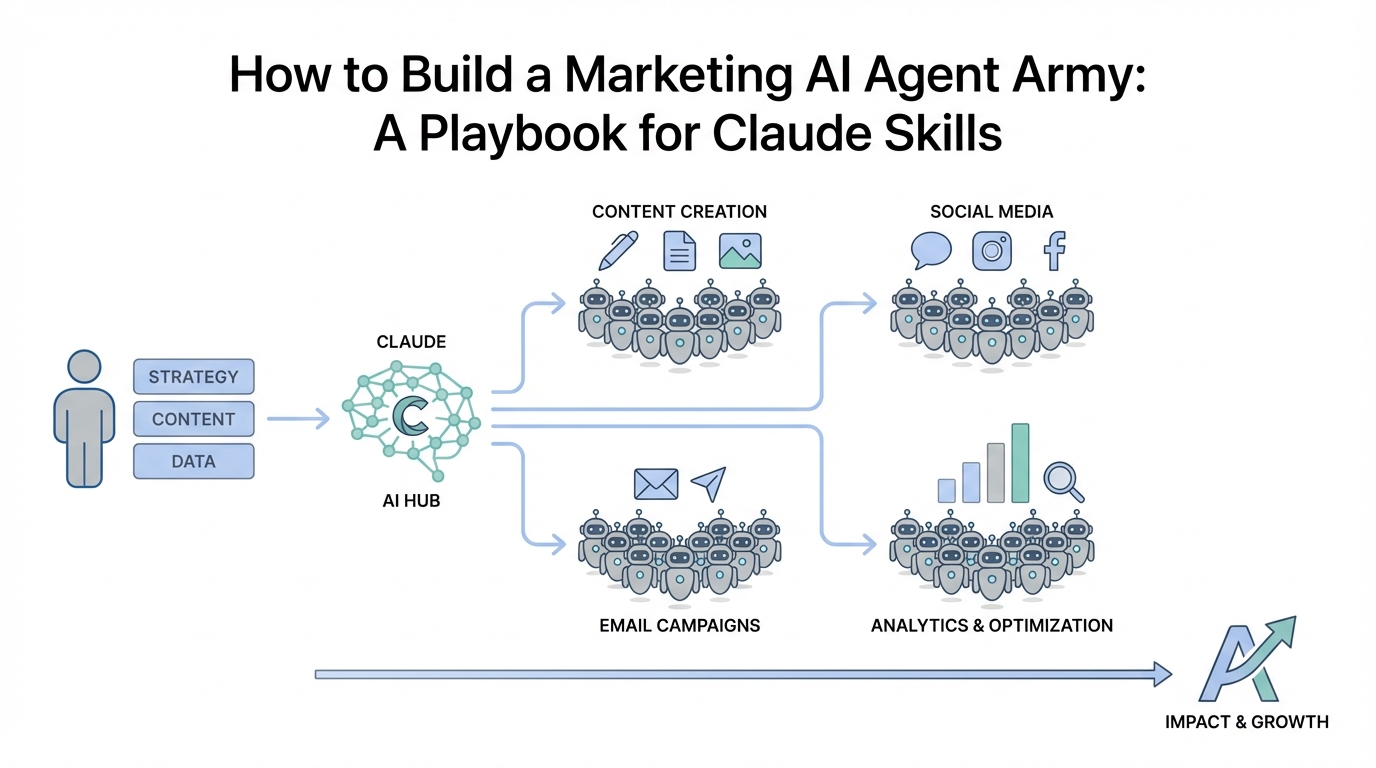
The landscape of marketing is shifting from managing tools to managing agents. As Sam Altman, co-founder of OpenAI, recently noted in his vision for the "era of the idea guy," the technical barriers to execution are crumbling, replaced by the ability to orchestrate intelligent workflows. But for many marketing teams, the promise of AI has felt like a moving target—impressive in demos, but inconsistent in daily operations. The "hallucination problem" and "context rot" often make generic AI interactions feel like more work than they save. Enter Claude Skills: a new architecture from Anthropic that allows you to build a specialized marketing AI agent army that is deterministic, repeatable, and highly specialized.
The Architecture of AI Teammates: Projects vs. Agents vs. Skills
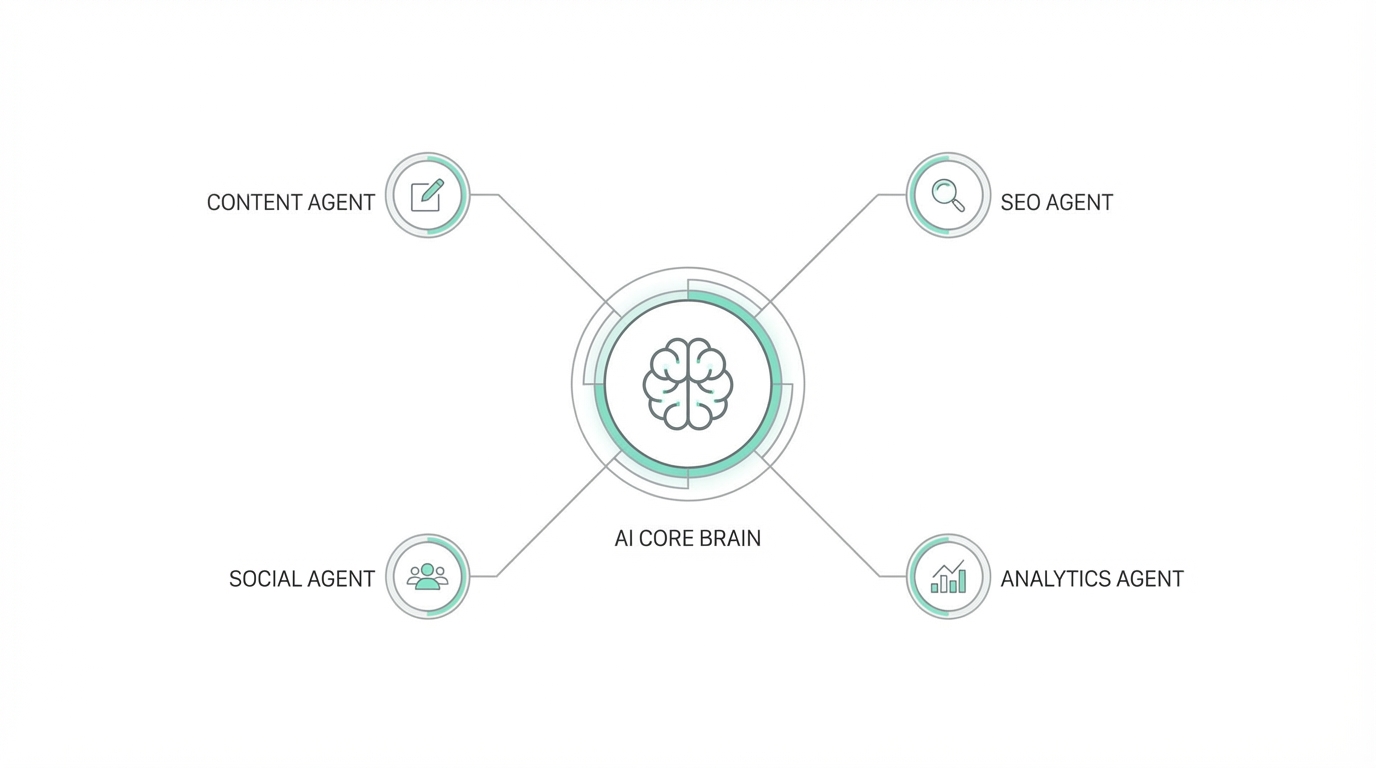
Before building your army, you must understand the ranks. Many marketers are familiar with Claude Projects, which serve as localized workspaces with custom instructions and context files. However, the limitation of a standard Project is that the Large Language Model (LLM) often decides which context to pull and how to process it, leading to non-deterministic results. Skills are different.
Skills are automated workflows and tasks that can be applied globally. Think of them as the "hard-coded" expertise of your digital employee. While a Project provides the knowledge base, a Skill provides the functional ability to run scripts, analyze data using Python, and generate functional web apps (Artifacts). As Andrej Karpathy, former Director of AI at Tesla, famously suggested, we should treat AI as a coworker or a junior report. You wouldn't just give a junior employee 500 documents and say "market this." You would provide clear constraints, guidelines, and repeatable steps.
One of the biggest hurdles in AI adoption is context rot. Research indicates that as you add more context to a conversation, LLM performance can actually degrade. Skills solve this by only loading context when it is relevant to the specific task. This keeps the "brain" of your agent sharp and focused on the immediate deliverable, whether that is generating a newsletter or calculating CPC trends from Google Ads data.
Step 1: Building a UTM Link Generator Artifact
Every marketing campaign requires precision in attribution. Manually creating UTM links is a repetitive chore prone to human error. Using the Artifacts builder skill, you can create a custom, functional web app within Claude that lives in your sidebar and generates links instantly using standard UTM parameters.
To start, activate the Artifacts builder within your Claude capabilities. Provide a prompt like: "Create a UTM link generator for my marketing team. It should include fields for Website URL, Campaign Source, Medium, Name, and Term. Include a 'copy to clipboard' button."
Claude won't just give you text; it will generate a fully functional React-based web app. You can then refine this by adding your internal naming conventions. For example, you can script the skill to automatically append "Black_Friday_2024" to every link generated during November. This ensures that every link used in Meta Ads Manager or Apple Search Ads follows your exact data governance rules.
Step 2: How to Use the 'Skill Creator' for Custom Automated Workflows

The most powerful feature of the new architecture is the Skill Creator—a "meta-skill" that helps you build other skills. If you find yourself doing a task more than three times, it should be a skill. For instance, many growth teams struggle to turn viral social hooks into long-form newsletters.
By using the Skill Creator, you can build a "Ghostwriter Agent." You would upload reference files of your past newsletters (e.g., from Substack or beehiiv) to establish your "tonal voice." The skill then follows a specific markdown instruction set to take a 280-character tweet and expand it into a 1,000-word structured newsletter.
For teams managing high-volume creator partnerships, this automation is vital. When you discover creators on Stormy AI, you can use a custom skill to take their profile data and instantly generate a hyper-personalized outreach email that sounds exactly like your brand head, rather than a generic bot.
Step 3: Setting Up an A/B Test Generator Using the ICE Framework
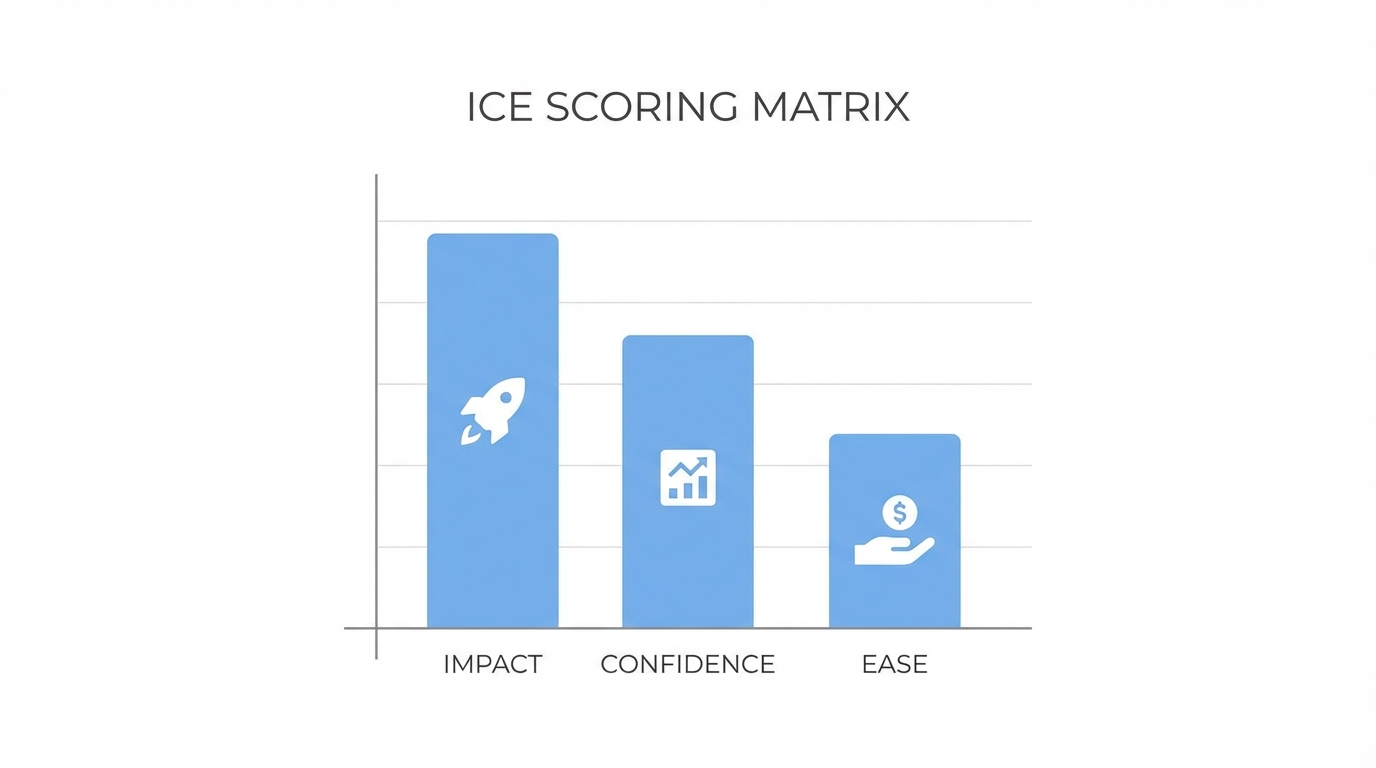
Conversion Rate Optimization (CRO) often fails not because of bad ideas, but because of poor prioritization. You can build an A/B Test Generator skill that utilizes the ICE (Impact, Confidence, Ease) scoring framework to rank your experiments.
Using a tool like Humbolitics or an MCP (Model Context Protocol) like Firecrawl, you can have your AI agent scrape your landing page. The skill then analyzes the page structure and proposes variants. For example, it might suggest: "Move the social proof section above the fold. Impact: 8, Confidence: 7, Ease: 9."
By defining the ICE framework within the skill.md file, you ensure the AI isn't just "guessing" what's good—it is applying a systematic marketing methodology to your data. This is particularly useful for mobile app developers running experiments on Google Play Console or the App Store, where tiny variations in screenshots or copy can lead to massive swings in install rates.
Step 4: Best Practices for Training Your 'AI Teammate' Through Drip-Fed Context
One of the most common reasons AI adoption fails in marketing teams is that the output "just doesn't look right." This usually stems from overwhelming the model with too much information at once. The secret is drip-fed context.
Instead of one massive PDF of brand guidelines, break your context into modular reference files within the skill folder:
glossary.md: Specific industry terms and internal jargon.voice_samples.md: Examples of "good" vs. "bad" copy.metrics_definitions.md: How your team calculates LTV, CAC, and Churn based on standard business formulas.
When you run a data analysis skill on your campaign performance, the agent pulls from metrics_definitions.md only when it needs to calculate a specific column in your CSV. This modular approach prevents the model from getting "lost" in the noise of your brand history.
Step 5: How to Share Functional 'Artifact' Web Apps Across Your Marketing Org
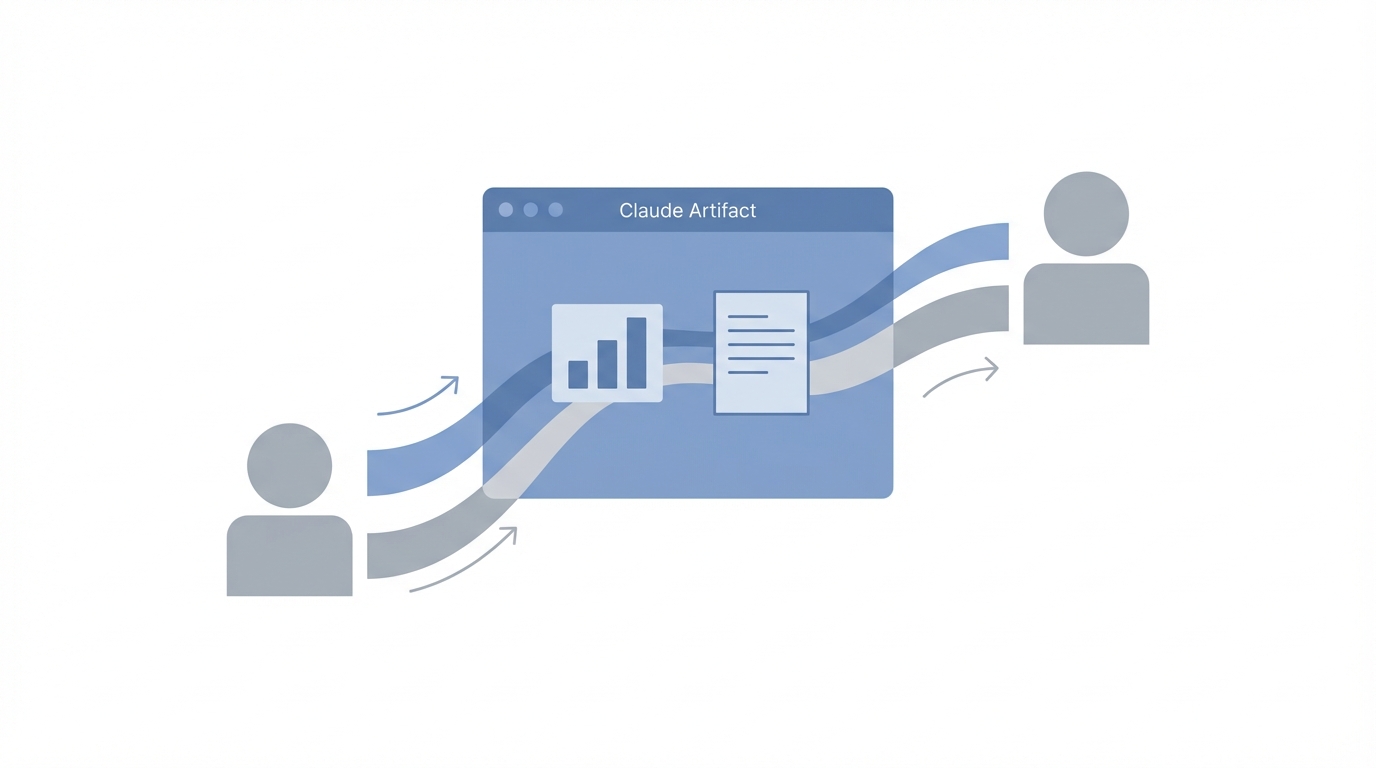
The true power of a Marketing AI Agent Army is realized when the tools are democratized across the team. Once you have built a "Marketing Insight Agent" that can analyze a raw CSV of traffic data and produce a profit-and-loss summary, you don't keep it to yourself. Claude allows you to share these Artifacts and skills via URLs.
Your social media manager can use the UTM Generator you built. Your growth lead can use the A/B Test Generator. Your RevOps director can use the Data Analysis Skill. Because these are built with scripts, the results are consistent regardless of who is prompting the model. This eliminates the "prompt engineering gap" between team members with different levels of AI fluency.
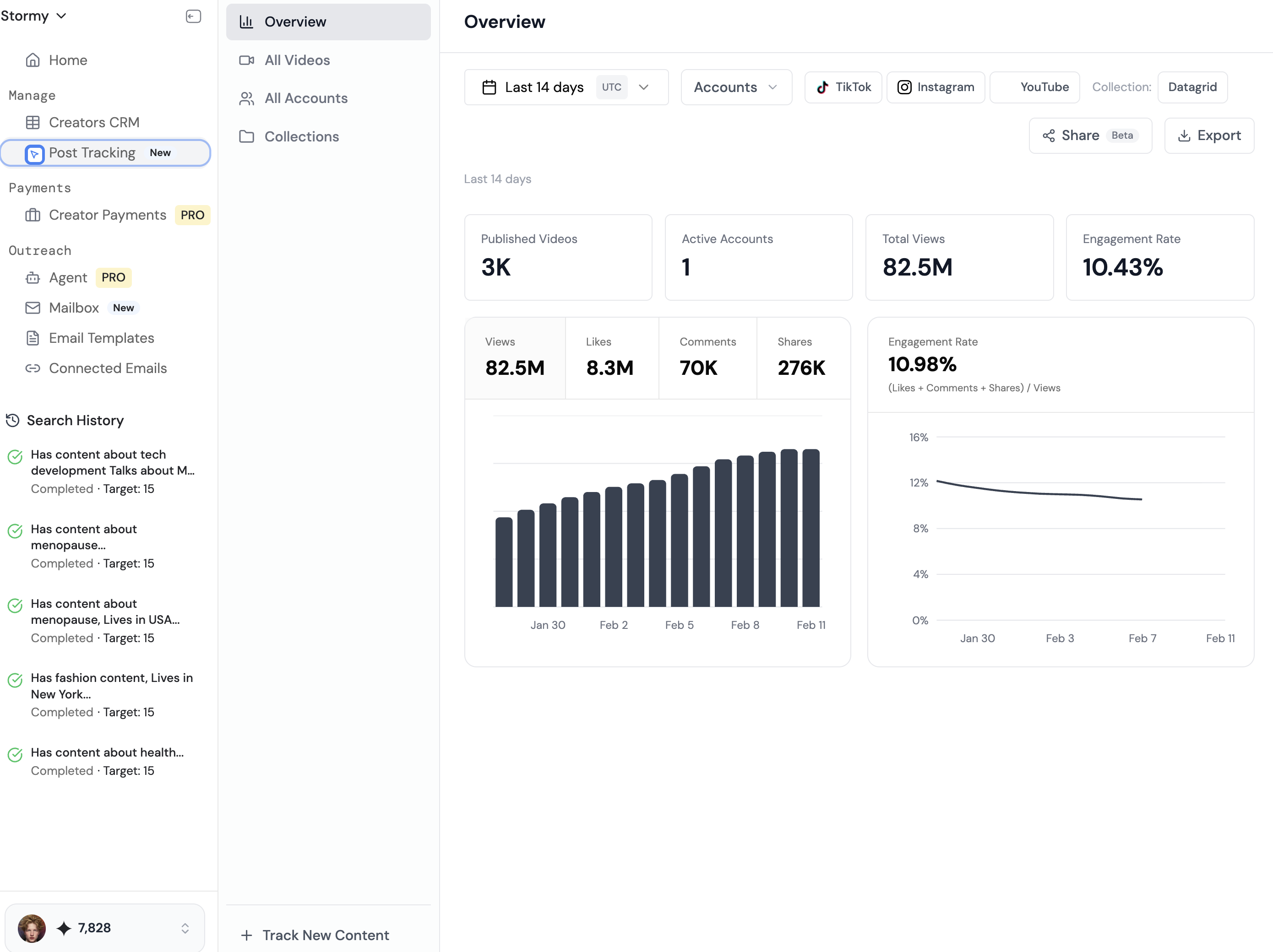
When monitoring these cross-platform campaigns, platforms like Stormy AI provide the necessary post-tracking and analytics to feed back into your Claude skills for even deeper optimization. By combining the discovery and tracking power of Stormy with the specialized automation of Claude Skills, you create a closed-loop marketing machine.
The Future of Marketing AI: Closing the Productivity Gap
A recent report from Ramp suggested a slight dip in AI tool subscriptions, hinting that the initial "hype" phase is ending and the "utility" phase is beginning. Companies are realizing that simply having a ChatGPT or Claude subscription isn't enough; they need AI enablement.
The productivity gap exists because most users lack AI fluency. They expect the model to be a mind-reader. By building a library of skills, you provide the "instruction manual" the AI needs to be truly useful. Whether you are searching for startup ideas on ideabrowser.com or managing a multi-million dollar ad spend, the winners will be those who stop "chatting" with AI and start programming it with skills.
Conclusion: Building Your First Agent
Building an AI agent army doesn't require a computer science degree; it requires a clear understanding of your marketing processes. Start by identifying your most repetitive tasks. Is it cleaning data? Formatting newsletters? Generating UTMs? Pick one, use the Skill Creator to define the guardrails, and build your first Artifact.
As you refine these skills, you'll find that your AI teammates become more "sticky" and indispensable. You aren't just using a tool; you're building a proprietary asset for your company. The era of the idea guy is here—it’s time to give those ideas the automated army they deserve.