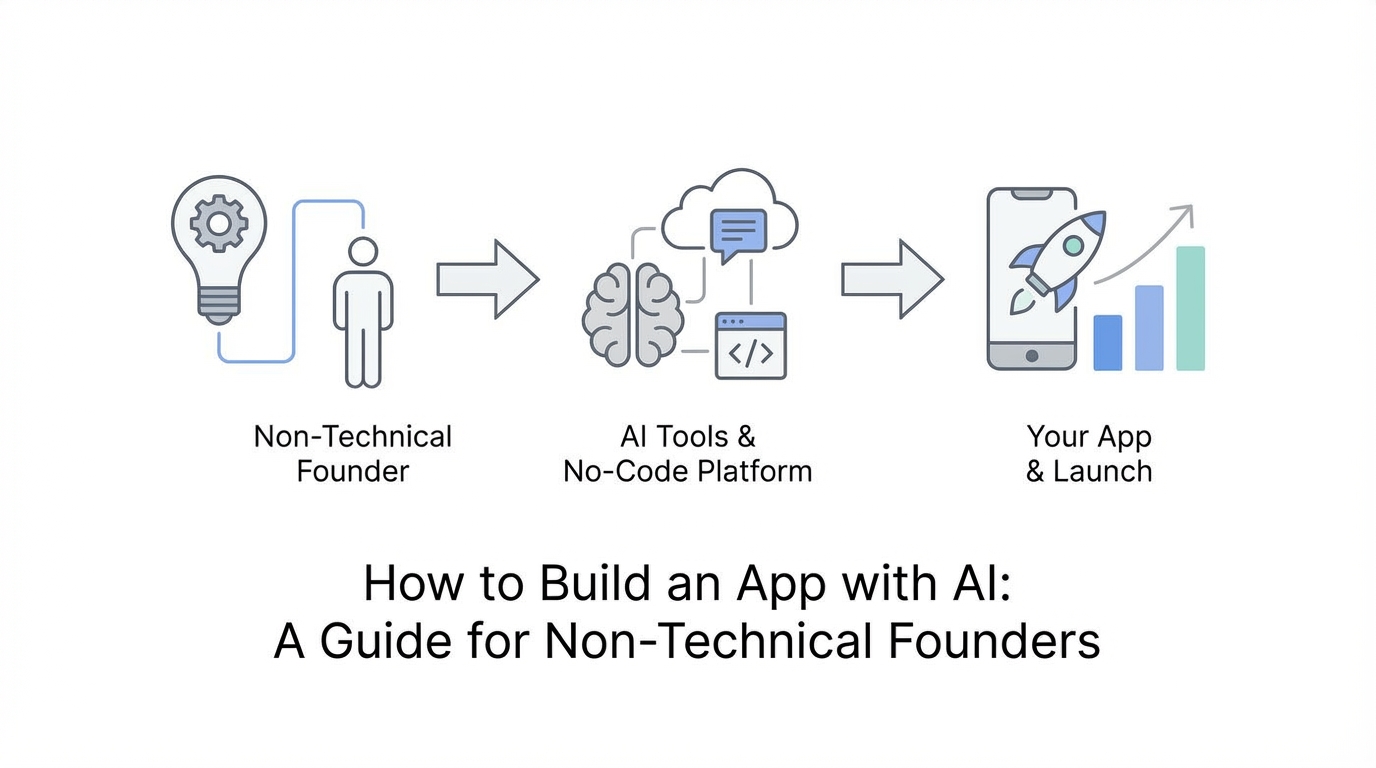
In the past, launching a software-as-a-service (SaaS) business required either a computer science degree or a massive budget to hire a technical co-founder. Today, that barrier has vanished. We have entered the era of the "AI-first founder," where the ability to articulate a problem and prompt a solution is more valuable than the ability to write syntax by hand. Take the story of Samuel Rondon, a former optician with zero background in engineering who used modern tools to build three apps generating $35,000 per month in recurring revenue. By following a structured AI coding framework, you can transition from a non-technical dreamer to a shipping founder in a matter of weeks, not years.
The AI-First Framework: From Coding to Prompting

The traditional path to building an app involved months of tutorials on variables, loops, and data structures. For most founders, this is a trap known as "tutorial hell." As Samuel explains in his interview with Starter Story, learning to code the old-school way often results in losing focus on the actual product. If you want to know how to build an app with AI today, you must shift your mindset from writing code to orchestrating AI agents, a trend highlighted in recent Forbes tech analysis.
Instead of mastering a language, you are mastering the SaaS tech stack for founders by using AI as your 24/7 senior developer mentor. This approach relies on a simple three-step loop:
- Pick a real project: Never learn in a vacuum. Choose a specific tool you want to build and let that be your curriculum.
- Ask the right questions: Use tools like ChatGPT to map out the architecture. For example, ask: "I want to build a tool that generates AI videos for TikTok. What technologies should I use for the frontend and backend?"
- Build step-by-step: Break your app into tiny, digestible pieces—like a login button or a database entry—and ask the AI to write the specific code for that single task. You can also use GitHub Copilot to assist in real-time as you assemble these pieces.
The Strategy: Find What Works and Make it 1% Better
One of the biggest mistakes solo founders make is trying to invent a completely new category. Innovation is expensive and risky. A much more effective strategy for AI coding tools for beginners is to find a product that is already making money and build a slightly better, more niche version of it. Validation is the ultimate risk mitigator.
When searching for your next app idea, look for proof of traction. This often happens in public forums like X (formerly Twitter), where "build in public" founders share screenshots of their Stripe dashboards. If you see an app in a growing niche (like AI video or LinkedIn automation) gaining users despite having a complex UI, that is a prime opportunity for a simpler, cleaner alternative. To see what types of products are currently capturing the market's attention, you can use Stormy's AI search to discover which creators are promoting specific types of software across TikTok, YouTube, and Instagram, giving you instant insight into trending niches and high-demand categories.

Selecting a Manageable Tech Stack: The Industry Standards
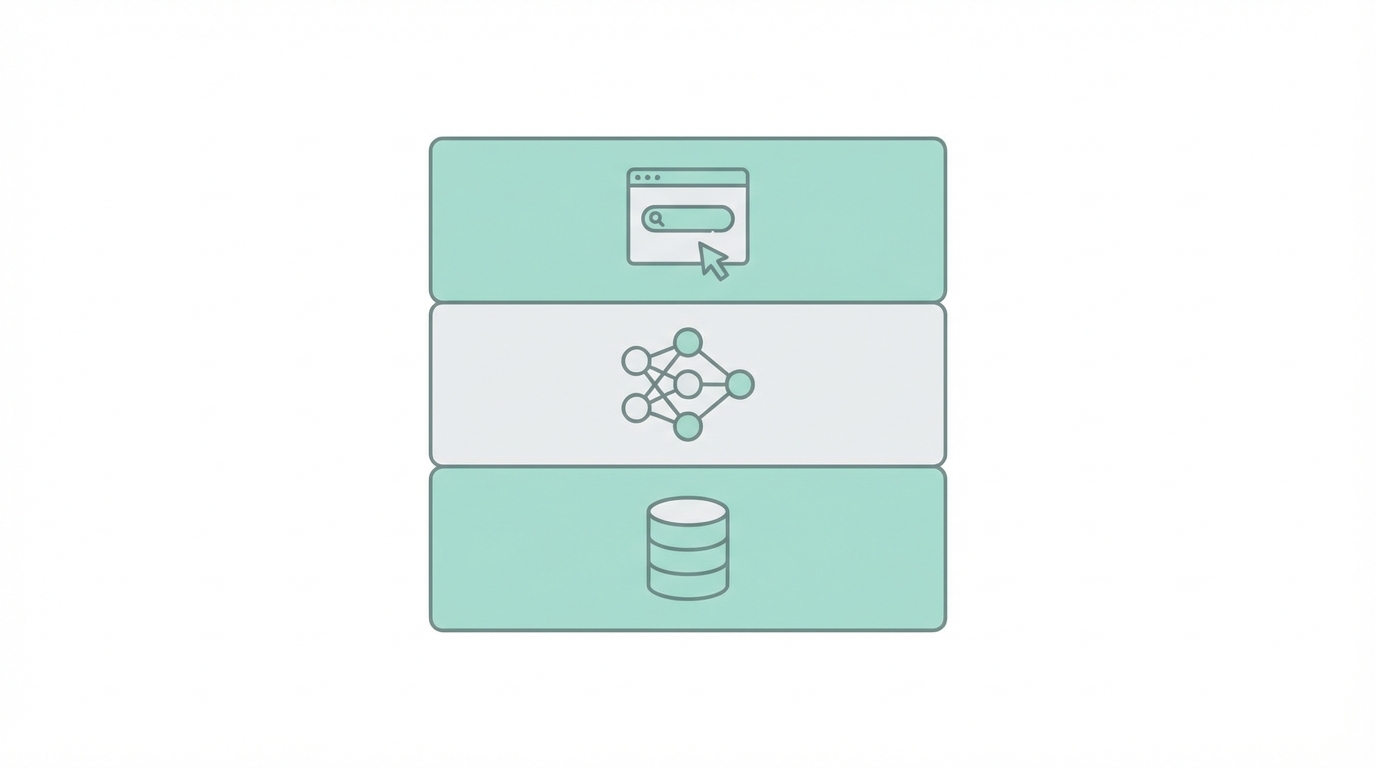
To move fast, you need a tech stack that is well-supported by AI. Choosing obscure languages will make your AI-generated code buggy and hard to debug. The current gold standard for SaaS tech stack for founders is the combination of Next.js and Node.js.
Why is this the favorite for solo founders? Because the AI models have been trained on millions of lines of Next.js code, making them highly accurate when generating your app's structure. Here are the core components you should use:
- Frontend & Framework: Next.js allows you to build both the visual interface and the backend logic in one place.
- Deployment: Vercel is the industry standard for hosting. It connects to your code and launches your app to the web in seconds.
- Payments: Don't try to build your own billing system. Use Stripe to handle subscriptions and payouts safely, following PCI compliance standards.
- Design Inspiration: Use Mobbin to see how successful apps like Airbnb or Notion structure their onboarding and user flows.
By sticking to these tools, you ensure that if you hit a technical roadblock, there are thousands of existing solutions that your AI assistant can reference to fix the issue instantly.
Step-by-Step Playbook: Building from Screenshots
If you have zero design skills, you can still build a beautiful app. This is the build an app without coding secret: leverage visual AI. Many modern AI models can now "see" images and convert them into functional code.
Step 1: The Visual Reference
Go to a site like Mobbin and take a screenshot of a dashboard or landing page you admire. Upload this screenshot to ChatGPT or a similar multimodal AI and ask: "Write the Tailwind CSS and Next.js code to replicate the layout and styling of this image."
Step 2: Database and Logic
Once you have the visuals, you need the "brains." Ask the AI to create a schema for your database. If you are building an AI video tool, you might say: "I need a database table that stores user IDs, video titles, and S3 storage URLs. Provide the code for a Prisma schema."
Step 3: Integrating AI Features
Since your app likely uses AI (like Samuel's StoryShort.ai), you will need to connect to an API like OpenAI. Ask the AI to write a function that sends a prompt to the API and returns a result to your frontend. This is often the most complex part, but with AI-to-AI communication, it becomes a simple matter of copy-pasting the right configuration.
Once your app is functional, you need to ensure it's actually reaching the right audience. Before you spend a dollar on ads, use Stormy AI's influencer analysis to vet creators who are already talking about your competitors. This allows you to identify which influencers have authentic audiences and detect fake followers automatically, ensuring your initial launch hits a receptive market.
Shipping Fast: Skipping the 'Boring Parts'
The death of many startups is getting bogged down in non-core features. You don't need a perfect password reset flow, a complex settings page, or a custom-built analytics dashboard to launch. Samuel's advice is clear: launch the minimal basic product and skip the boring parts.
Use "boilerplates" or starter kits like ShipFast that come with authentication (login), database connections, and billing already set up. This allows you to focus 100% of your energy on the unique value proposition of your app. If your tool generates AI videos, spend your time on the video generation logic, not the "Forgot Password" email template. Most successful founders ship their first MVP (Minimum Viable Product) in less than two weeks.
Scaling Your AI App: From 0 to $35k/Month

Building the app is only half the battle. To reach the revenue levels of successful solo founders, you need a growth stack. Samuel recommends starting with paid acquisition to validate the market quickly. By running Google Ads or Meta Ads, you get instant traffic. If people pay for the app, you know you have a winner. If they don't, you haven't wasted months on SEO for a product nobody wants.
Once you have initial traction, move to organic growth:
- SEO (Search Engine Optimization): Use tools like Ahrefs to find keywords your competitors are ranking for. Automated tools like Outrank can help generate content to capture this traffic.
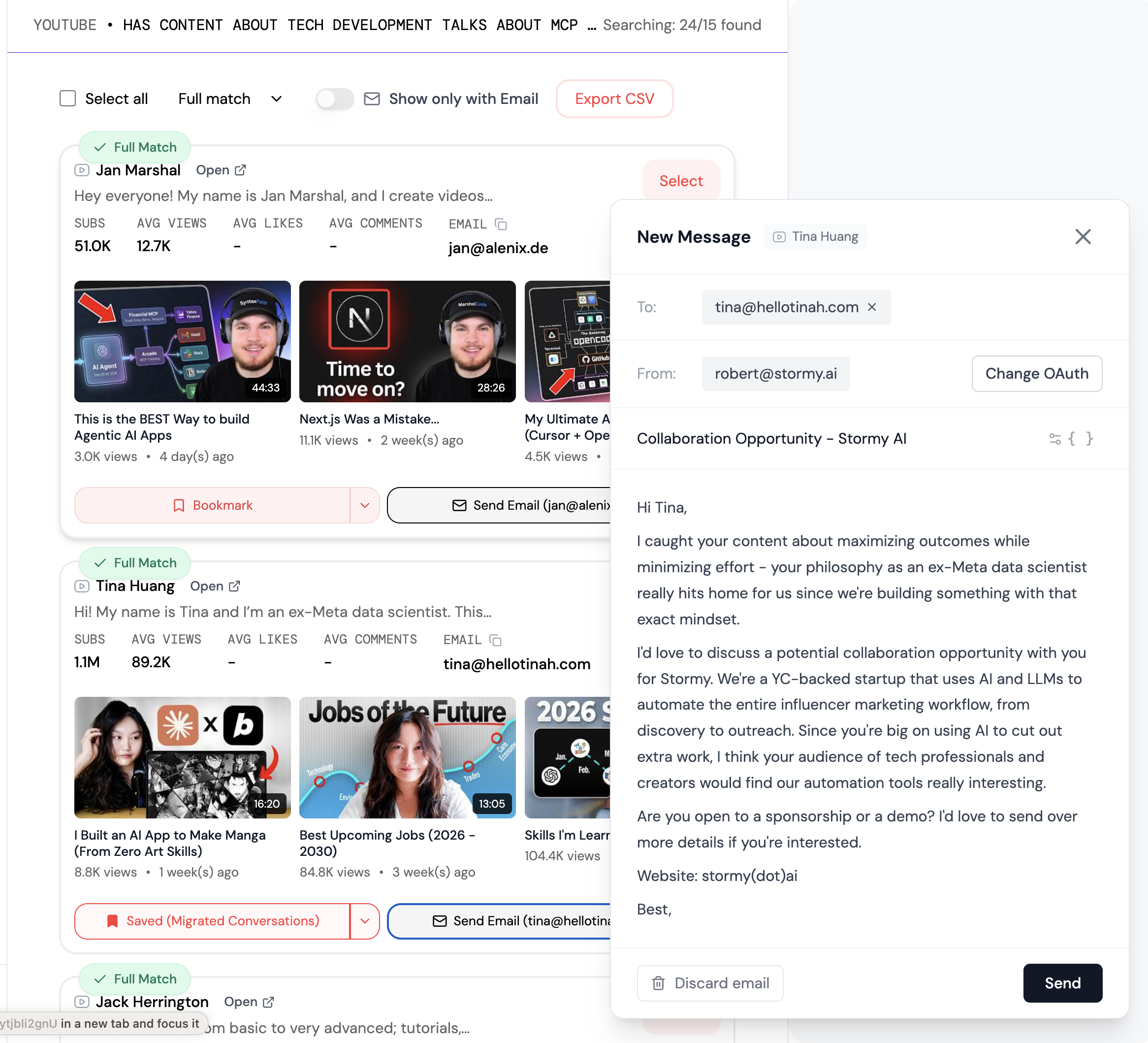
- UGC and Influencer Marketing: This is the secret sauce for modern apps, with the industry projected to reach $24 billion in 2024. To handle this at scale, use Stormy's AI email outreach to automatically find and contact hundreds of niche creators. Stormy's AI handles the personalized emails and follows up automatically while you sleep, allowing you to build an army of advocates for your app without manual labor.
- Affiliate Programs: Encourage others to sell for you by offering a commission via platforms like Rewardful. This creates a viral loop where satisfied users become your marketing team.
As your campaign grows, you'll need to keep a close eye on what’s working. Stormy's post tracking allows you to monitor exactly how many views, likes, and engagement your creator collaborations are generating in real-time across all social platforms. This level of data is essential for deciding where to double down on your marketing spend.

Conclusion: Your First App is Just a Prompt Away
Building an app in the age of AI is no longer about how much you know, but about how fast you can execute. By using a modern stack like Next.js, leveraging AI coding tools for beginners, and focusing on validated ideas, you can build a profitable SaaS even as a solo, non-technical founder. Remember the playbook: find a working idea, build the MVP in two weeks, run ads to validate, and then use Stormy's creator CRM to manage your relationships, negotiations, and payments in one place. The tools are here, the barrier is gone, and the only thing left to do is start prompting. Your first $1,000 month is closer than you think.