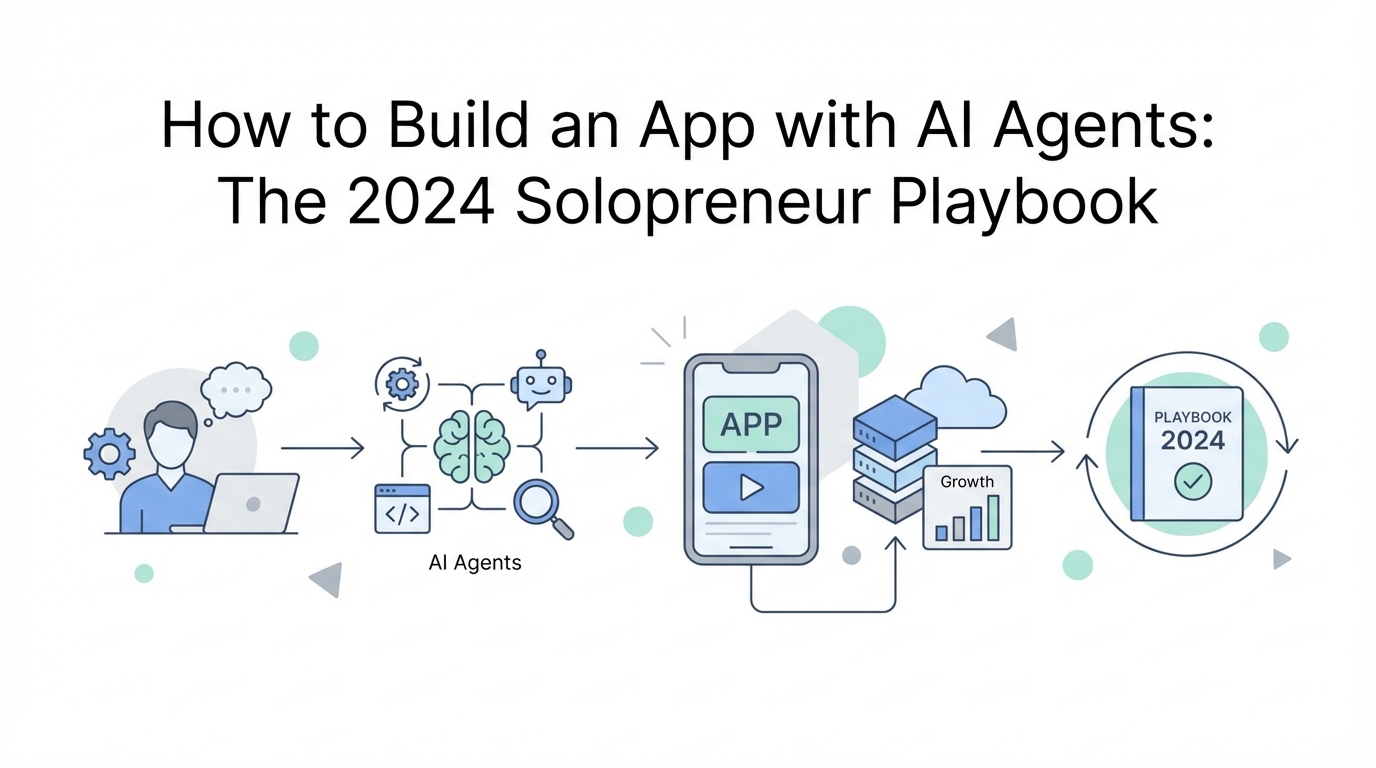
In 2024, the definition of a "technical founder" has been completely rewritten. We have entered an era where the barrier between a brilliant idea and a working product is no longer a six-month development cycle, but a sixty-minute conversation with an autonomous agent. For the modern solopreneur, the goal is no longer to learn how to code line-by-line; it is to master ai agent orchestration. By shifting your mindset from a pair programmer to an AI CEO, you can manage a fleet of digital employees that handle everything from market research to backend deployment while you focus on high-level strategy.
The Shift: Moving from 'Pair Programmer' to 'AI CEO'
Most beginners approach AI as a "Google search on steroids" or a simple assistant. However, to truly build an app with ai agents, you must adopt the mindset of a Chief Executive Officer. In a traditional corporate structure, the CEO doesn't write the marketing copy, debug the server, and design the logo simultaneously. They hire specialists, provide them with a clear vision (the Product Requirements Document), and manage their output. Tools like OpenAI Codex now allow you to replicate this structure with zero overhead.
When you use an ai software development workflow, you aren't just "using" an AI; you are hiring interns. You might have one agent working locally on your core logic, another cloud-based agent drafting a competitive analysis, and a third agent designing a marketing roadmap. This parallel processing is the secret to moving at lightspeed. Remember the stories of Instagram starting as Burbn or Twitter emerging from Odeo; their success came from rapid iteration. AI allows you to perform these "pivots" in hours rather than months.
Step 1: Data-Driven Idea Validation

The most common mistake solopreneurs make is building something nobody wants. Before you write a single line of code, you need to find a "winning" idea by looking at where the market is already spending money or complaining. Using tools like Exploding Topics is a powerful way to scrape social sentiment from Reddit and Facebook groups to find underserved niches. For example, search for "email deliverability" or "wellness apps" to see real-time growth trends and pain points.
Once you've identified a trend—such as a "Biorhythm Coach" or an "Adaptive Habit Tracker"—you need to flesh it out. Instead of guessing the features, use a professional model like ChatGPT to generate high-quality app concepts. The goal here is to find a intersection between a growing industry, low competition, and your personal interest. Even if the app doesn't become a million-dollar business, building something you would personally use ensures that the project provides value from day one.
Step 2: Drafting a PRD That AI Agents Can Execute
AI agents are only as good as the instructions they receive. If you give a vague prompt, you get a buggy, incomplete app. The solution is to create a Product Requirements Document (PRD) in a format that AI understands: Markdown. Markdown is the native language of AI agents; it provides a clear hierarchy of headings, bullet points, and code blocks that prevent the agent from getting lost in the "context window."
Your PRD should include:
- Concept Overview: A high-level summary of the app's purpose.
- User Personas: Who is this for? (e.g., 25-40 year old professionals).
- Core Features: The absolute essentials for a Minimum Viable Product (MVP).
- Tech Stack: Be specific. Using Next.js for the frontend and Supabase for the database is a industry-standard solopreneur ai tech stack that agents handle exceptionally well.
- Monetization: How will the app eventually make money?
Step 3: Setting Up OpenAI Codex in VS Code
To begin the actual build, you need a bridge between your ideas and your computer. Visual Studio Code (VS Code) is the gold standard, and the OpenAI Codex extension is the engine. Once installed, you can feed your Markdown PRD directly into the agent. Codex offers two primary modes of operation: Local and Cloud. Understanding the difference is vital for ai agent orchestration.
The local agent works within your IDE, seeing your files and writing code directly into your project. This is perfect for the heavy lifting of the MVP. Interestingly, even the head of product at OpenAI has demonstrated that using a "Low" model tier (which uses fewer tokens) can often handle complex builds just as well as the high-tier models, provided the instructions are clear. As your local agent generates hundreds of lines of code, your job is to monitor the terminal and ensure dependencies are installing correctly via npm install.
Step 4: The 'Sleep-and-Build' Workflow

This is where you truly become an AI CEO. While your local agent is building the front end of your app, you can spin up Cloud Agents. These agents run asynchronously on OpenAI's servers, meaning they don't stop when you close your laptop. A pro-level ai software development workflow involves assigning three major tasks to cloud agents before you go to bed:
- A Marketing Plan: Ask an agent to research competitors and define KPIs.
- A Product Roadmap: Let an agent plan Phase 2 and Phase 3 features.
- Content Strategy: Have an agent draft landing page copy and social media scripts.
Because these agents are cross-platform, you can check their progress on your iPhone via the ChatGPT app or through a web browser. You wake up to a project that has advanced significantly while you slept, effectively hiring a team of 24/7 employees for the price of a twenty-dollar monthly subscription.
Step 5: Debugging Without the Over-Engineering
Many "gurus" will tell you that you need complex Model Context Protocol (MCP) setups or expensive debugging tools to fix AI coding errors. In reality, the most effective ai software development workflow for a solopreneur is much simpler: Copy and Paste. When you encounter a terminal error or a browser crash, simply copy the entire error log and paste it back into your Codex chat with the instruction: "Please solve this error."
Don't waste time over-engineering your debugging process. If the AI gets stuck on a specific dependency (like a database connection with Supabase), try a "surgical" approach. Ask the AI to save data locally first to get the MVP working, then implement the complex database logic once the UI is stable. This "Vibe Coding" approach—staying in the flow and not letting minor bugs stop your momentum—is essential for finishing an app in under an hour.
Step 6: Launching and Sourcing UGC Content

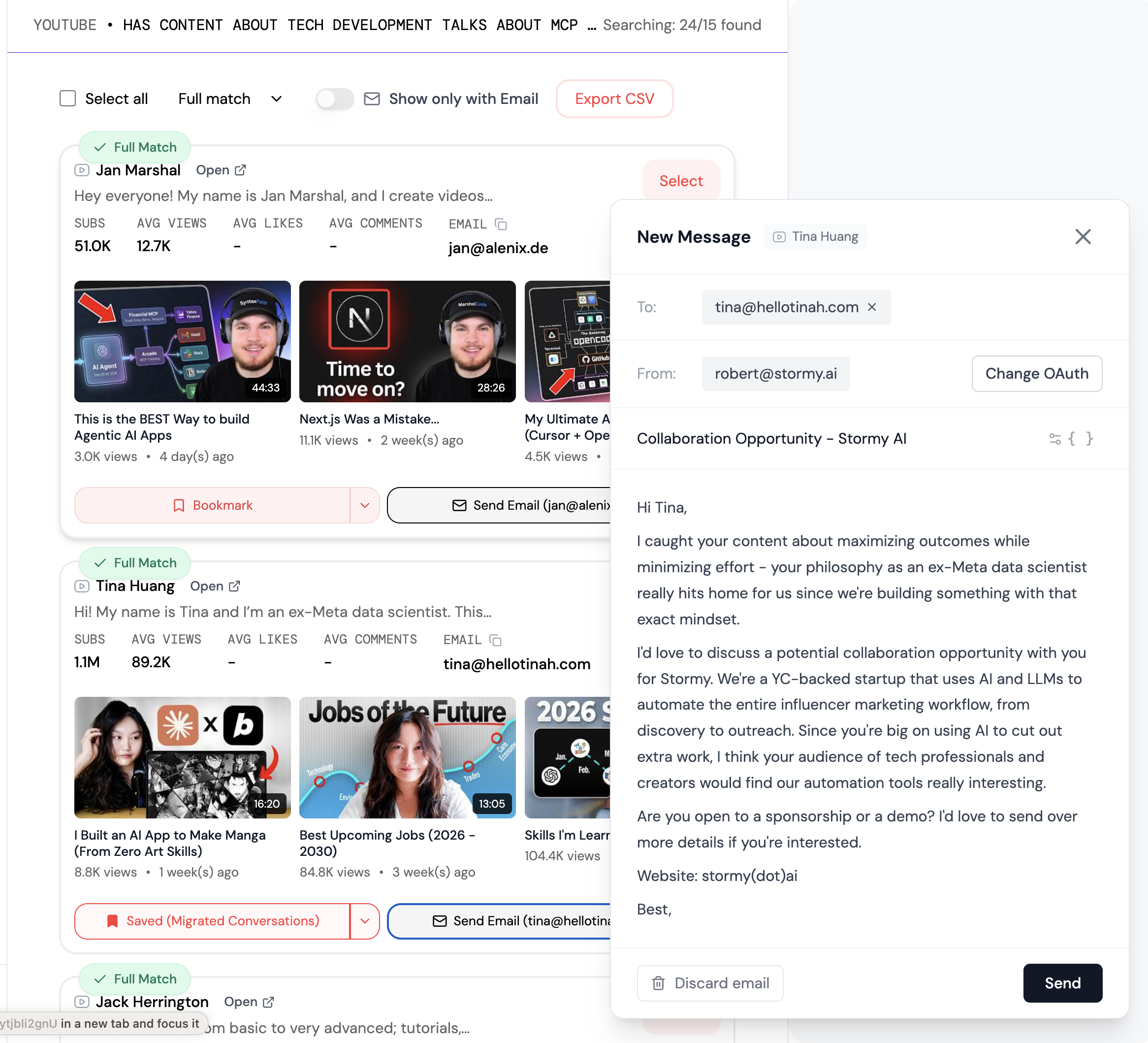
Once your MVP is live, the work shifts from building to growth. Organic marketing on platforms like X (Twitter) is the fastest way to get your first 100 beta testers. Share your build progress, document your "AI CEO" journey, and DM anyone who shows interest. This unscalable manual outreach is how massive apps often find their initial traction in the creator economy.
To take your growth to the next level, you'll need User-Generated Content (UGC). This is where ai-powered creator discovery becomes your unfair advantage. Platforms like Stormy AI streamline creator sourcing and outreach by helping you find influencers who fit your niche—like fitness creators for a wellness app—and automating the outreach process. While your code is being maintained by AI agents, you can use Stormy's AI agents to discover, vet, and contact creators who will film the ads that drive your app installs.
Conclusion: From Idea to App Store
The 2024 solopreneur playbook is built on leverage. By using data tools to find validated trends, ChatGPT to draft the blueprint, and OpenAI Codex to orchestrate a fleet of cloud agents, you can build software at a speed that was once reserved for venture-backed teams. Don't let the fear of "not being a coder" stop you. The tools have caught up to your imagination. Spend five minutes today experimenting with an agent, and by this time tomorrow, you could have a live app with its first paying customers. The only thing standing between you and a one-person billion-dollar business is the willingness to stop doom-scrolling and start orchestrating.