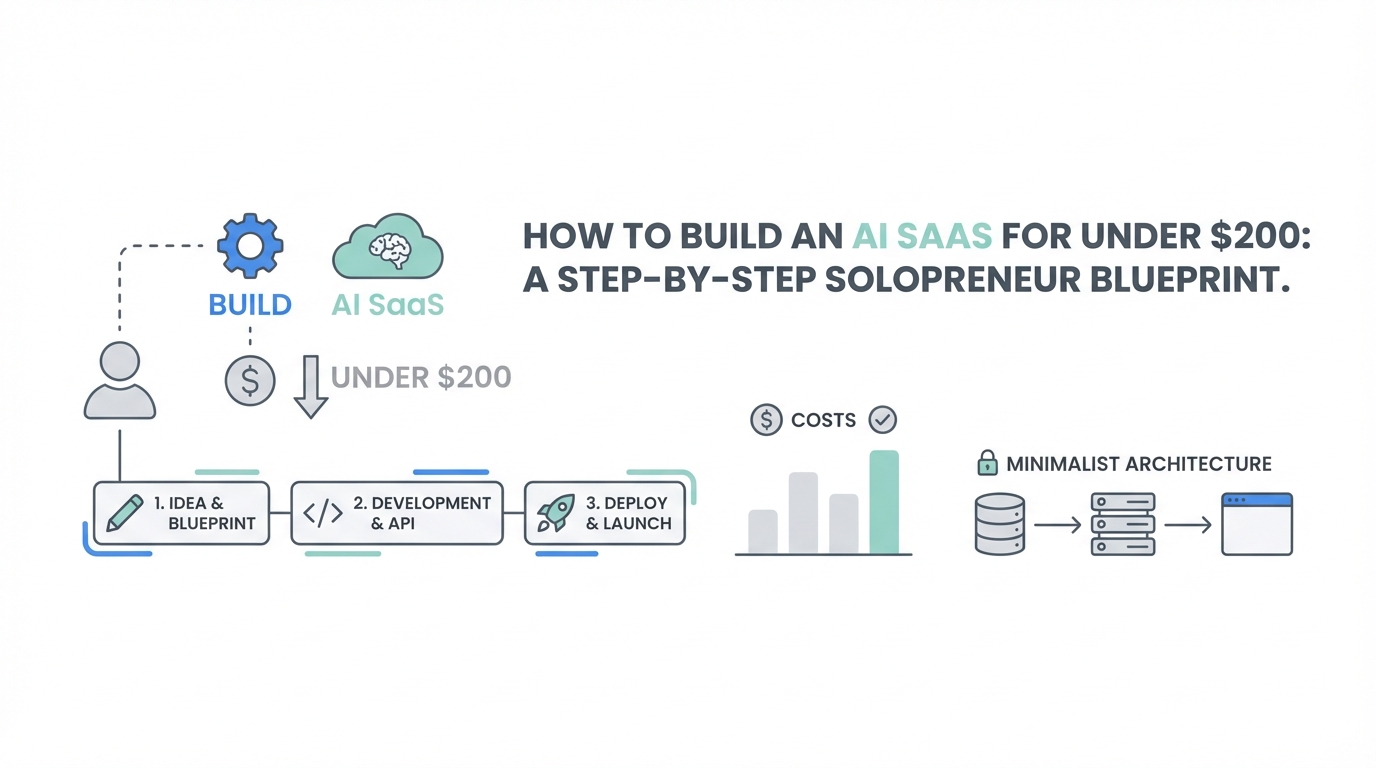
In early 2023, a solopreneur named Joseph purchased a domain for $150. He didn't have a formal computer science degree, and he wasn't backed by a venture capital firm. Instead, he relied on YouTube tutorials and a simple curiosity about how AI-generated text worked. Within 15 months, that $150 investment blossomed into a $2 million AI application generating nearly $200,000 in Monthly Recurring Revenue (MRR). This is not a fairy tale; it is the tactical blueprint of StealthGPT, a product that solved a massive, burgeoning problem using a lean, modern tech stack. For anyone looking at solopreneur business ideas, the path to building a profitable AI SaaS has never been more accessible.
Identifying the 'Reverse Engineering' Opportunity

The first step in any successful micro-saas development guide is not to build a product, but to find a friction point. Joseph's journey began with observation. As ChatGPT started to dominate online content in late 2022, he anticipated a natural pushback: the rise of AI detectors. He saw a TikTok video about GPTZero, an AI detector claiming 99% accuracy in identifying machine-written text.
Instead of building a detector himself, he identified the counter-opportunity. He spent days reverse-engineering how detectors identify neural network patterns. Once he found a way to consistently bypass these filters—making AI text indistinguishable from human writing—he knew he had a product. This "counter-tool" strategy is one of the most effective ways to how to build an ai app that users actually need. You aren't creating a market from scratch; you are solving a problem created by another popular tool.
The $150 Startup Budget Breakdown
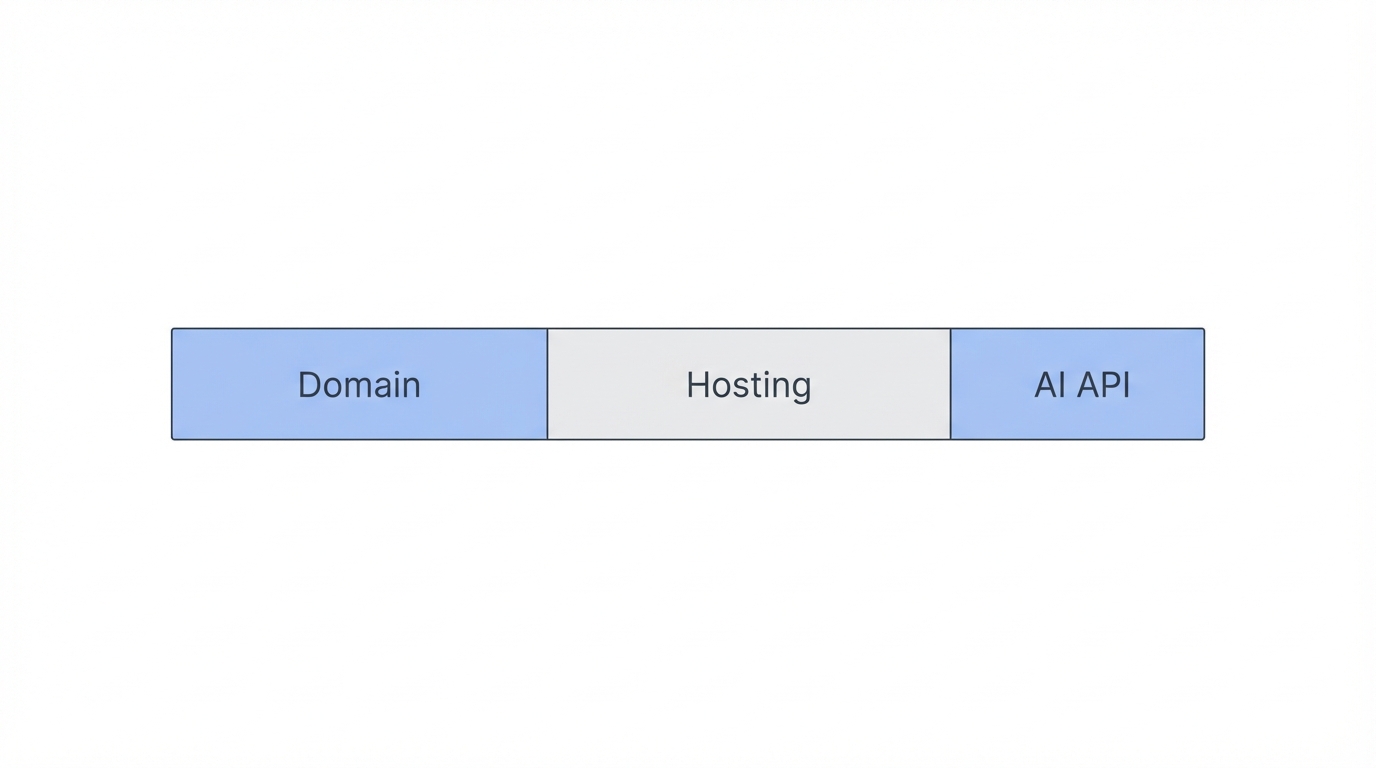
Many aspiring founders think they need thousands of dollars to launch. The StealthGPT story proves that a low cost saas startup is entirely possible if you leverage the right tools. Joseph’s initial investment was strictly focused on assets that provided immediate legitimacy and infrastructure:
- Domain Acquisition: $150 for stealthgpt.ai (a $75/year domain with a two-year minimum requirement purchased via a registrar like Namecheap).
- Hosting: Leveraged the free tiers of cloud platforms like the AWS Free Tier to keep initial overhead at zero.
- Database: Used free-tier managed databases during the MVP phase to handle API calls and user data.
The core of this strategy is ruthless prioritization. Don't spend money on high-end logos, legal incorporations, or complex software licenses until you have your first customer. By keeping the burn rate near zero, you give yourself the "runway of patience" required to iterate on the product until it clicks with the market.
The Modern AI SaaS Tech Stack
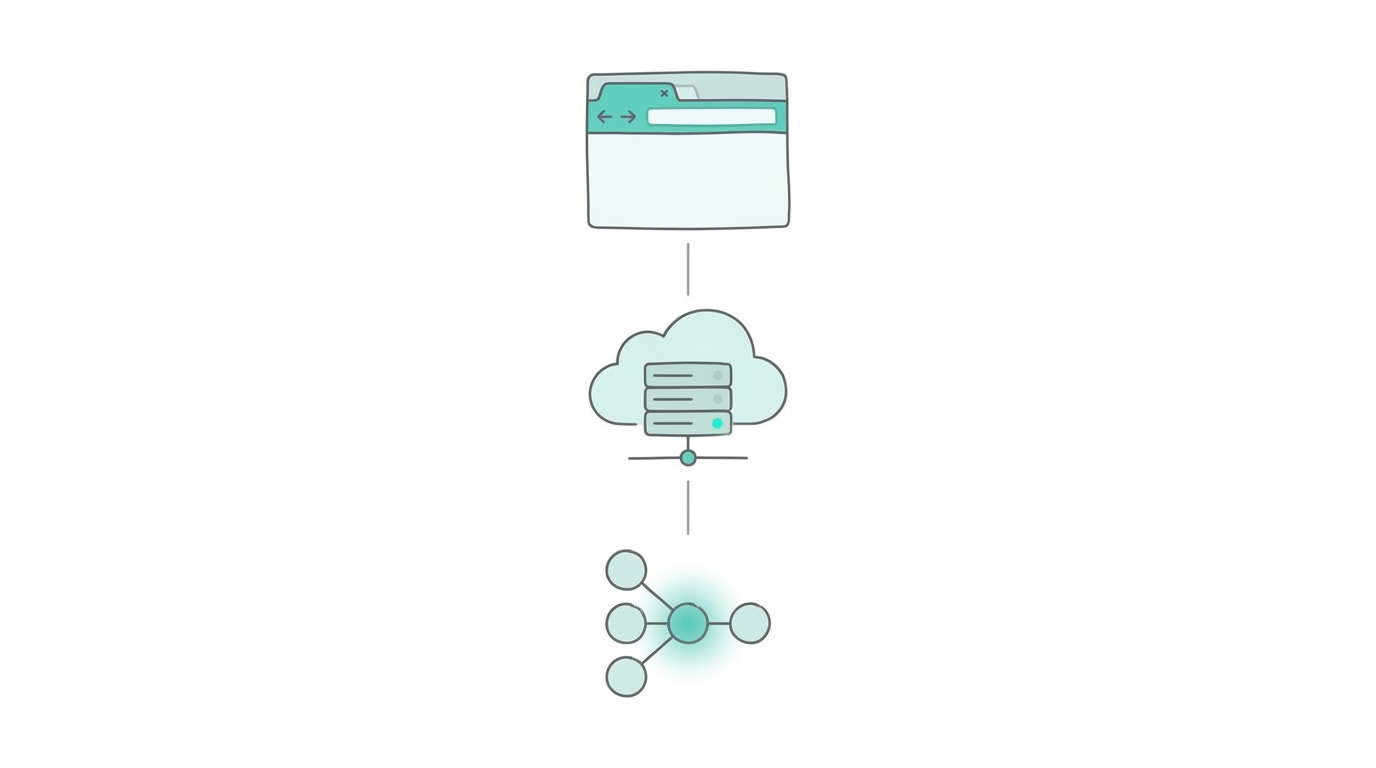
To build at this speed and cost, you need a lean ai saas tech stack. StealthGPT was built using a combination of frameworks that allow for rapid deployment and easy scaling. If you are learning how to build an ai app, this is the industry-standard foundation:
- Frontend & Framework: Next.js and React. This allows for fast, SEO-friendly web applications.
- Deployment: Vercel. Joseph emphasizes that Vercel was critical because it allowed him to push updates in minutes and roll back instantly if a user encountered a bug.
- Database: Supabase. An open-source Firebase alternative that handles authentication and database management seamlessly.
- Learning Resources: Joseph didn't have a CS degree. He started with Harvard’s CS50 class and supplemented his knowledge with specific YouTube tutorials for every technical hurdle he faced.
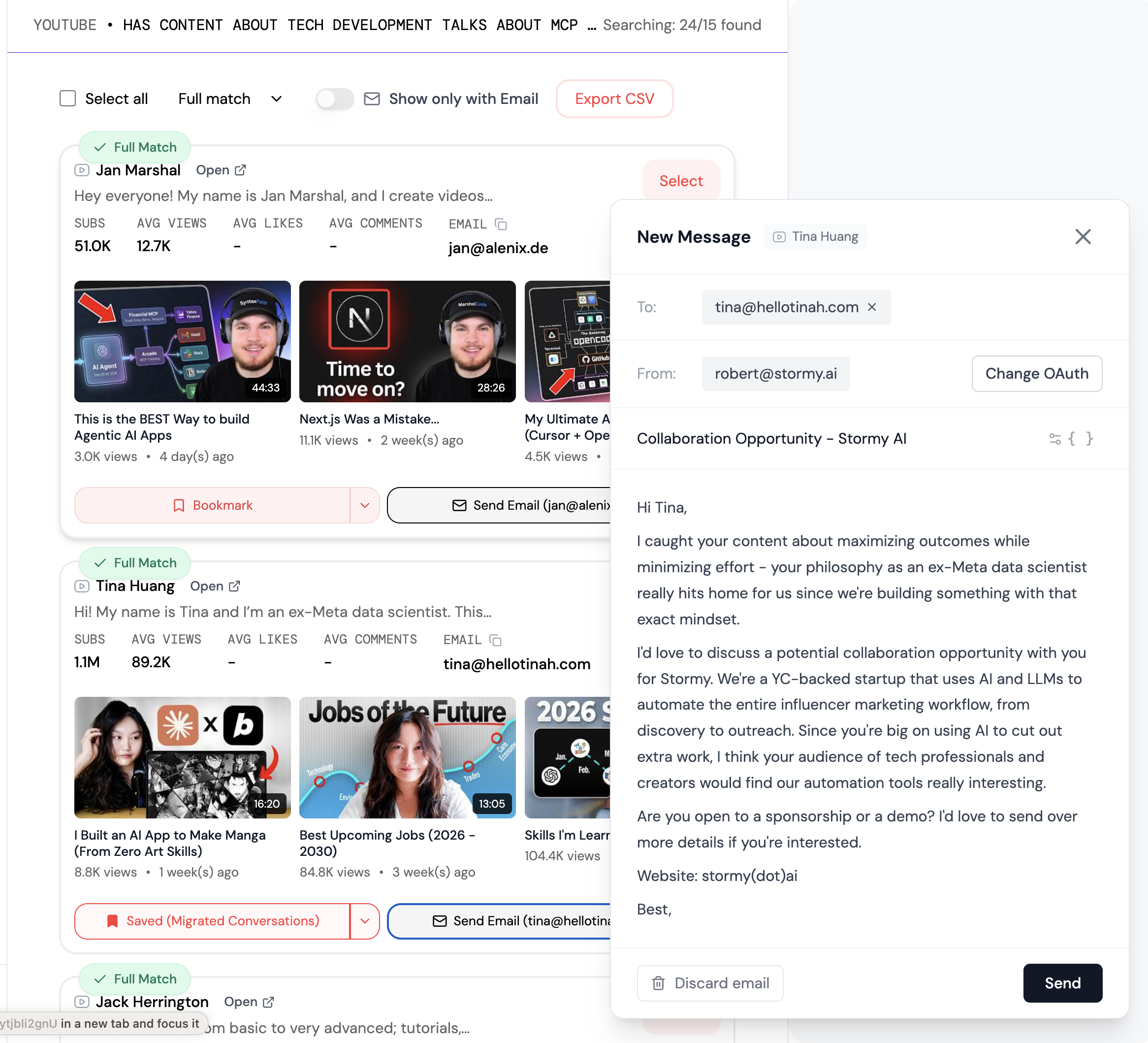
While the tech stack provides the engine, your distribution strategy provides the fuel. Finding the right creators to showcase your tool is essential. Using Stormy’s AI search for discovery across TikTok, YouTube, Instagram, LinkedIn, TikTok Shop, and newsletters, solopreneurs can instantly find influencers who specialize in "AI tools" or "productivity hacks," allowing them to skip the manual search and get straight to building awareness.
The 'One-Click Solution' Philosophy
One of the biggest mistakes in micro-saas development is over-engineering. Engineers often want to provide the user with maximum freedom and dozens of complex features. Joseph argues this is actually a deterrent for the average user. Most people use the internet with a specific problem in mind, and they want the fastest path to a solution.
StealthGPT succeeded by focusing on a single, high-value action: paste text, click one button, and get undetectable content. This "one-click" mindset reduces friction and increases user retention. When building your MVP, ask yourself: "What is the one core problem I am solving, and can I solve it for the user in a single interaction?" If the answer is yes, you have a product worth selling.
The Distribution and Marketing Playbook
You can have the best AI tool in the world, but as Joseph notes, "If you cannot get distribution, you're toast." StealthGPT's growth was fueled by three primary channels:
1. Product Discovery Directories
The first customers for StealthGPT came from a listing on Futurepedia, a popular directory for AI tools. These platforms act as a watering hole for early adopters. By listing your product here, you gain immediate, high-intent traffic for free.
2. The Power of UGC and TikTok
The real explosion happened when influencers began featuring the tool. A TikTok creator named Phil, who obsessively covers new tech, found StealthGPT on a directory and made a video about it. This highlights why managing relationships with creators is the ultimate growth lever. Before collaborating, it's vital to use Stormy AI for influencer vetting to detect fake followers and engagement fraud. Once verified, you can use Stormy’s creator CRM to track every conversation and negotiation with influencers who are mentioning your app, ensuring no partnership opportunity falls through the cracks.
3. Scaling with Google Ads
Once the product was validated, Joseph poured "gasoline on the fire" using Google Ads. In the early days, they achieved a cost-per-conversion of just $10 to $20. By reinvesting profits back into ads, they scaled to 15,000 to 20,000 total subscribers and over 400,000 total signups. For a mobile app or a SaaS, combining high-performing UGC content with targeted paid ads is a winning formula for rapid customer acquisition [source: Influencer Marketing Hub].
Scaling from Solopreneur to System
As the business grew to $190,000 MRR, Joseph had to transition from doing everything himself to managing a team. Today, StealthGPT employs 6 to 7 people with monthly salary costs of $50,000 to $60,000. Surprisingly, he hired his entire developer team through Twitter posts, focusing on skill and drive rather than academic pedigrees.
Even as a solo founder, you can automate much of the heavy lifting. For example, if you are running outreach to hundreds of creators for UGC for mobile app marketing, you don't need to send those emails manually. You can set up an autonomous AI agent through Stormy that discovers, outreaches with personalized emails, and follows up with creators daily while you sleep. This allows you to maintain the "solopreneur" efficiency while achieving the scale of a much larger agency.
Joseph’s daily routine now focuses on system monitoring and ad performance. He checks that all systems are "green," analyzes the previous day’s ad spend, and spends a significant amount of time on Twitter (X) and Discord to stay ahead of market trends. This constant learning ensures the product evolves before the market shifts.
Conclusion: Your Turn to Build
The story of StealthGPT, as detailed in his interview with Starter Story, is a testament to the power of the modern solopreneur business idea. You don't need a massive team or deep pockets. You need a domain, a willingness to learn Next.js and React, and a problem that can be solved in one click.
Whether you are building a tool for AI detection, a productivity app, or a niche utility, the tools to succeed are at your fingertips. By leveraging platforms like Stormy’s post tracking to monitor your marketing success and campaign performance across all social networks, and staying disciplined with your budget, you can turn a small investment into a life-changing business. There has never been a better time to build. Grab a laptop, find a problem that "pisses you off," and start your journey toward $200k MRR today.