Content marketing has historically been a game of resources. If you wanted to produce a high-quality, Disney-style animation for your brand, you needed a team of illustrators, animators, voice actors, and a significant six-figure budget. But the rules have changed. We are entering the era of the solopreneur content engine, where a single individual can leverage a technical workflow called sequential prompting to produce Pixar-level visual storytelling from a laptop.
This isn't about just asking a chatbot to write a script. It is about building a production line where multiple AI models—each specialized in a specific task—are stitched together like Lego bricks. By the end of this guide, you will understand how to move beyond basic conversational AI and build a robust AI content automation system that can drive revenue for your business or startup.
What is Sequential Prompting?
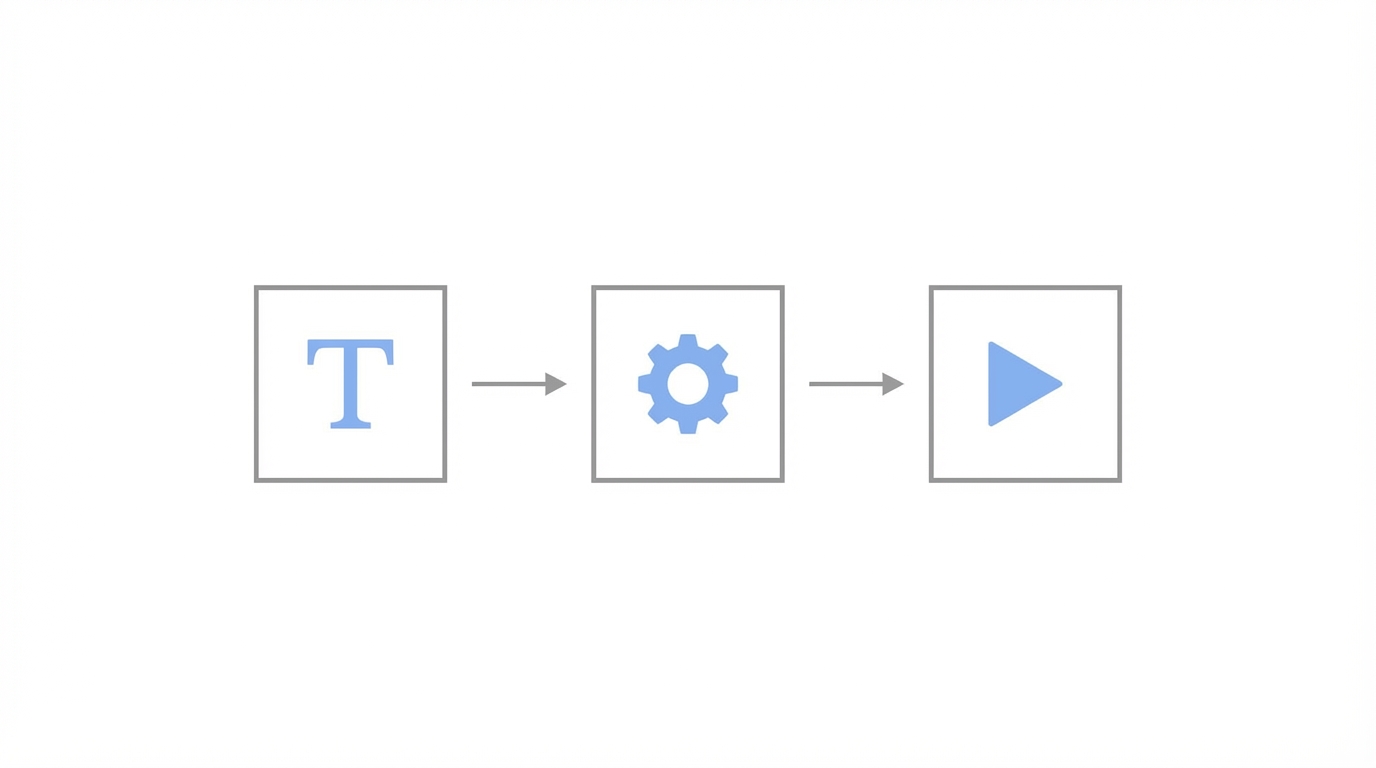

Most people interact with AI tools like ChatGPT or Claude conversationally. You ask a question, you get an answer. Some advanced users use "master prompts"—one large block of text designed to produce a specific, complex output. However, to build a truly professional AI video workflow, you need the third layer: sequential prompting.
Sequential prompting is the process of using one AI to generate optimized prompts for another. In this workflow, ChatGPT isn't the final destination; it is the orchestrator. You use it to generate highly technical, descriptive prompts that you then feed into specialized image and video models like Leonardo AI and Kling AI. This chain allows you to maintain character consistency and high visual fidelity across multiple scenes, something that a single prompt simply cannot achieve.
The Technical Shift: Why Now?
Marketing is essentially storytelling. Traditionally, businesses operated on a playbook that required VC capital, years of development, and massive creative teams. As highlighted in recent discussions at Startup Empire, the combination of cultural shifts (remote work) and technical breakthroughs (generative AI) has created a cultural shift in operations. You no longer need to hire for productivity; you hire for creativity and the ability to manage AI agents.
Today, the cost of high-end production has dropped to near zero. We are seeing solopreneurs like Pieter Levels and Danny Postma build massive SaaS products with zero employees by mastering these workflows. The goal is to move from campaign-based marketing to always-on storytelling, engaging your audience behind the curtain on a daily basis.
Step 1: Defining Character Consistency and Visual Identity
The biggest hurdle in AI content automation is making sure your character looks the same in every frame. If you just ask an AI to "create a boy in a treehouse," you'll get a different boy every time. To solve this, you must build a character reference prompt in ChatGPT.
Start by uploading a reference image (for example, a photo of your son or a specific avatar design). Give the character a name and age. Then, use a specific prompt structure to ask ChatGPT to describe every physical trait: hairstyle, skin tone, outfit, and accessories. This description becomes your "anchor." Every future scene you generate will start with this exact description, ensuring that your character remains recognizable whether they are sipping a cup of coffee or exploring a magical forest.
Step 2: Leonardo AI Tutorial: Generating Still Frames
Once you have your descriptive prompt from ChatGPT, the next step in our Leonardo AI tutorial is generating the high-fidelity still image. While ChatGPT’s DALL-E is great for quick sketches, it lacks the professional control needed for a high-end "Disney Pixar" aesthetic.
Copy your character prompt into Leonardo AI and follow these technical settings for the best results:
- Aspect Ratio: Set to 16:9 for a cinematic, widescreen feel.
- Prompt Enhance: Switch this OFF. You want the AI to follow your specific sequential prompt exactly, rather than adding its own interpretations.
- Style: Select a 3D animation or illustrative model to get that polished, high-resolution look.
Within seconds, you will have a 3D character that looks like it stepped out of a blockbuster movie. This image serves as the "keyframe" for your entire video sequence.
Step 3: From Still to Motion: The Kling AI Video Guide
Now that you have a high-quality still, it's time to add movement. This is where most creators get stuck, but our Kling AI video guide makes it simple. Kling AI is currently one of the most powerful tools for image-to-video generation.
Upload your Leonardo image into Kling. You can then add an "additional prompt" to describe the action. For example, if your character is holding a cup, you might prompt: "The character slowly takes a sip from the glowing golden cup, eyes widening in wonder." While a 5-second clip can currently take about 4 minutes to generate, the output is significantly higher quality than legacy tools. As models like Sora become more accessible via API, these generation times will plummet, making real-time AI video workflows a reality.
Step 4: Adding the Human Element: Voice and Lip-Sync
A video is only as good as its audio. To complete the synthetic avatar, you need to integrate ElevenLabs for voiceovers. You can generate a custom voice that matches your character’s personality—whether it's an excited child or a wise narrator.
Kling AI also features a lip-sync (dubbing) function. By uploading your audio file and your generated video, the AI will automatically animate the character’s mouth to match the words perfectly. This transforms a simple animation into a talking, breathing brand mascot.
Monetizing the Engine: Turning Workflows into Revenue
Building these workflows is fun, but the real power lies in monetization. There are several million-dollar business ideas that can be built on this exact stack:
- The AI-First Moonpig: Moonpig generates over $400 million annually in personalized greeting cards. An AI version could allow users to upload a photo and instantly generate a 3D animated story or a personalized card starring themselves.
- Custom Educational Content: Use the British or US curriculum to generate engaging, character-led animated lessons for kids that make historical topics like the Romans feel like a Pixar movie.
- Personalized Sticker Businesses: Using tools like remove.bg to strip backgrounds from Leonardo AI images, you can create custom "kiss-cut" stickers.
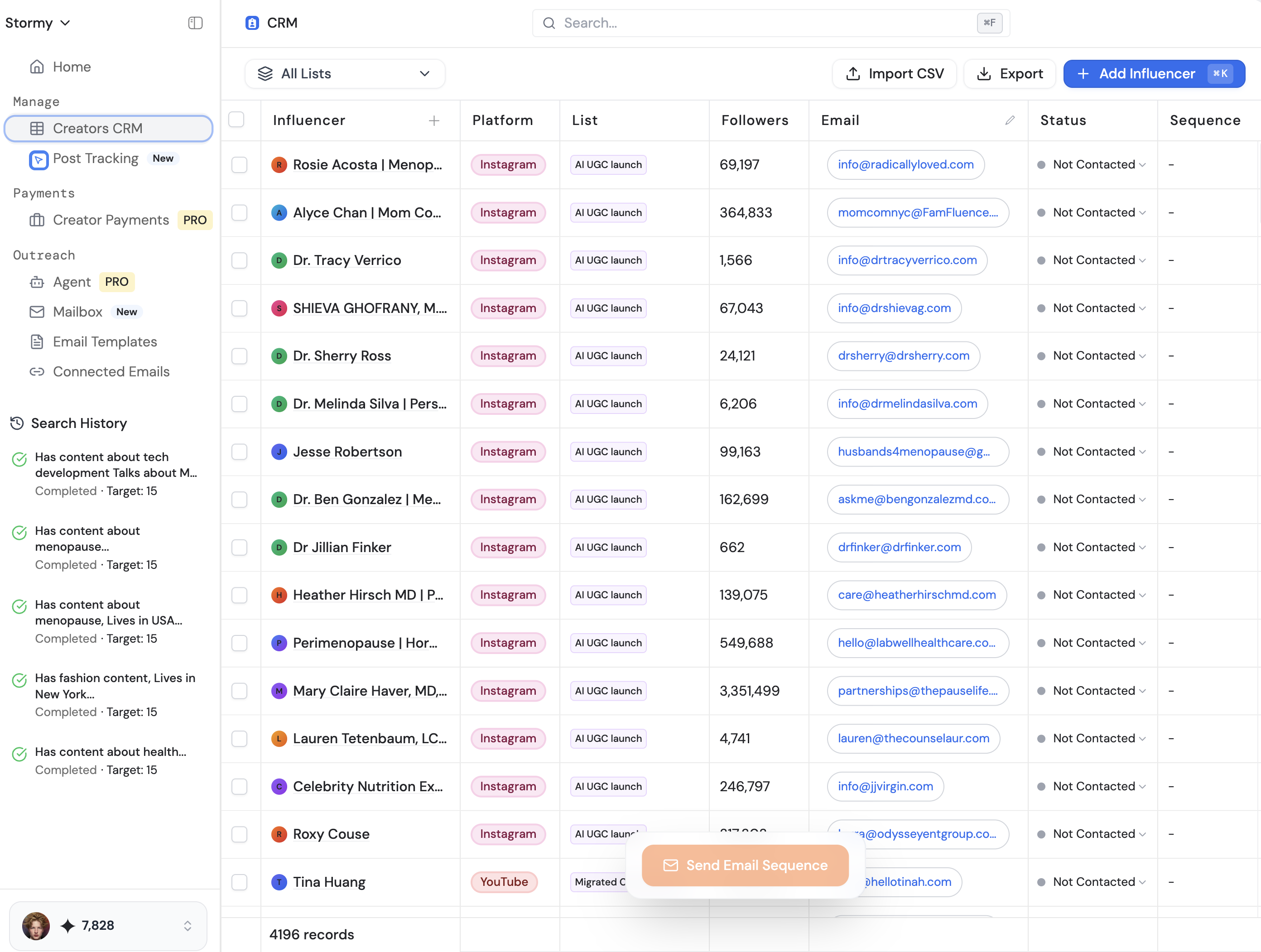
If you are building a brand based on these characters, you'll eventually need to scale your reach. This is where tools like Stormy AI come into play. Once you have your content engine running, you can use Stormy AI’s influencer discovery to find creators who align with your brand's aesthetic and manage the entire outreach process through their Creator CRM.
Step 5: Scaling the Workflow: APIs and Automation

Doing this manually is great for testing, but AI content automation at scale requires APIs. Tools like Zapier or Make can connect your front-end (built on Webflow or Framer) to the back-end APIs of OpenAI, Leonardo, and Kling.
For physical products, you can integrate with the Printful API. This allows you to automate the entire fulfillment process: a user uploads a photo, your AI engine generates the character, and Printful prints and ships a custom t-shirt or sticker sheet without you ever touching the product. This is the ultimate "cash-printing" SaaS model—low overhead, high personalization, and fully automated.
Conclusion: The Era of the Individual Studio
We are no longer limited by our ability to draw or animate; we are only limited by our ability to prompt and orchestrate. Sequential prompting allows you to build a sophisticated content engine that rivals professional agencies. Whether you are building an AI-powered greeting card business or a educational platform, the tools are now available to anyone with a browser and a vision.
Start by doing it manually. Master the hand-off between ChatGPT and Leonardo. Once you see the magic of a static photo turning into a living 3D character, you’ll realize that the barrier between an idea and a high-revenue business has finally disappeared. It’s time to start building.