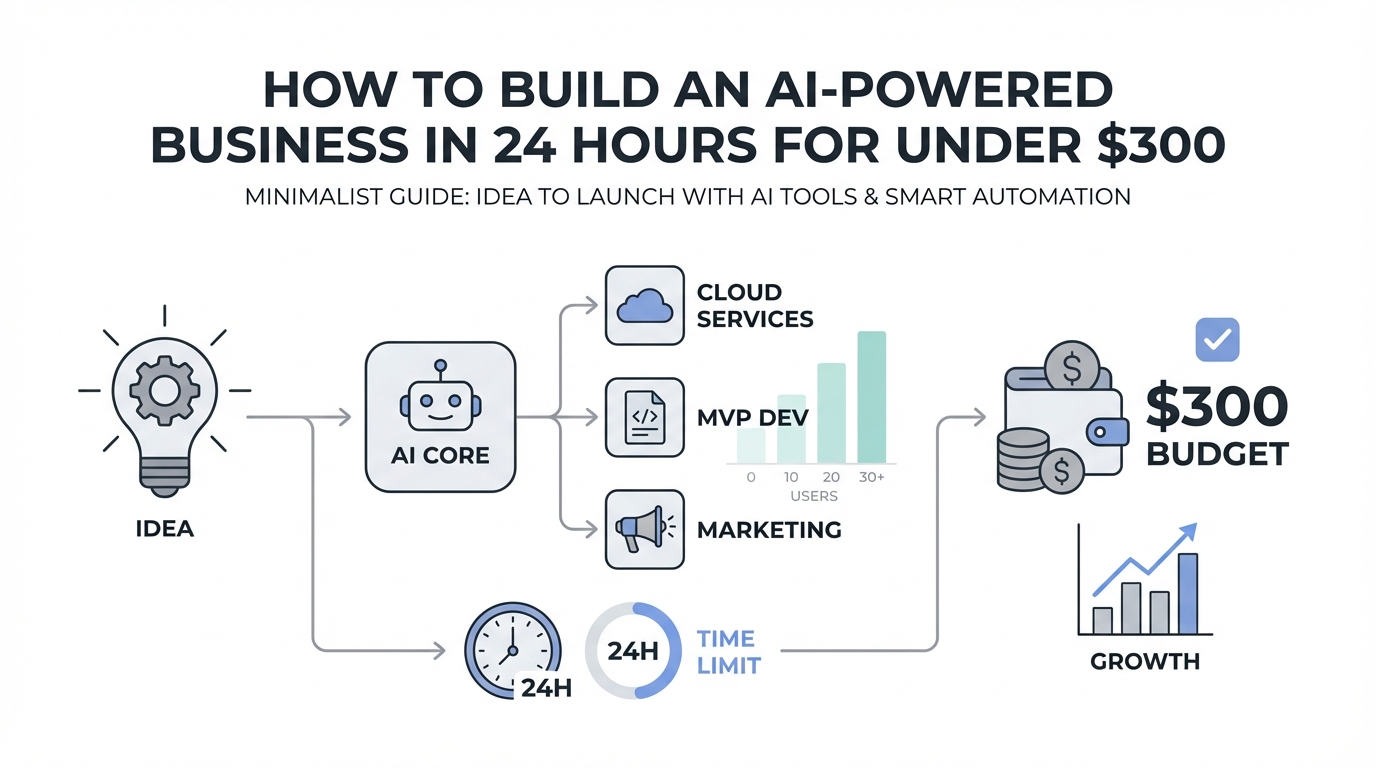
In the past, launching a legitimate business required months of planning, thousands of dollars in initial capital, and a team of specialists. Today, the barrier to entry has vanished. We are living in the era of the rigged slot machine, where solopreneurs can use generative artificial intelligence to build, brand, and launch a profitable venture in a single day. If you have ever wondered how to start a business with ai without a technical degree or a massive bank account, this guide is your blueprint. By leveraging a specific stack of solopreneur ai tools, you can move from an idea to a live, revenue-generating product for less than the cost of a new smartphone.
Identifying High-Value Niches with Market Gaps

The first step in an automated business startup is not picking a product, but identifying a high-leverage market gap. Most entrepreneurs flock to crowded spaces like fitness or wealth building. However, the real opportunity lies in analyzing massive industries and finding the underserved inverse of those markets. A prime example is the 'Divorce Bible' concept. While the wedding industry is a multi-billion dollar juggernaut with countless planners and services on platforms like Canva, the divorce market—which statistically represents 50% of those same participants—is often ignored by digital product creators. This is a classic ai business ideas 2024 strategy: find a painful, high-intent problem where the existing solution is either an expensive professional service (like a lawyer) or nothing at all.
When you target a niche like this, your goal is to reduce friction. An info-product, such as an e-book or a digital starter kit, serves as the perfect low-friction vehicle. By using ChatGPT to analyze market sentiment, you can quickly discover that people going through a divorce often feel overwhelmed and untrusting of their legal counsel. They aren't just looking for legal advice; they are looking for a strategy to protect their children and their financial future. This specific insight allows you to craft an offer that resonates far more deeply than a generic guide.
Generating a 200-Page Info Product with AI
Once you have identified the gap, the next step is content creation. You no longer need to spend six months writing a book. Instead, you can use ChatGPT to build a robust, high-quality info product in a matter of hours. The secret lies in iterative prompting. Do not simply ask the AI to "write a book about divorce." Instead, ask it to generate a comprehensive table of contents for a book called 'The Divorce Bible.' Once you have the structure, you prompt the AI chapter by chapter. For each section, provide specific instructions: "Write Chapter 2, focusing on financial protection, include a case study, and ensure the tone is supportive yet authoritative."
By managing the AI this way, you can produce a 197-page book that includes in-depth strategies and practical examples. To make the product feel like a premium purchase, you can format the text in Google Docs as a 5x7 PDF. To complete the professional look, use a template from Canva to design the front and back covers. A quick PDF merge of your AI-generated content and your professional covers results in a finished product that is ready for sale. This process transforms a simple solopreneur ai tools workflow into a tangible asset that carries significant perceived value in the eyes of the consumer.
Building an AI-Powered E-commerce Store
With your product ready, you need a storefront. An ai powered e-commerce store on Shopify is the industry standard for a reason. For a single-product or info-product business, the theme you choose is critical for conversion. Themes like Solo Drop or Elixir are specifically designed for high-conversion, single-item funnels. They come pre-built with essential features like multi-tiered discounts, countdown timers, and mobile-optimized layouts. Since 90% of your traffic will likely come from mobile devices, choosing a theme that prioritizes the smartphone experience is non-negotiable.
Your automated business startup needs to look established from day one. This is where high-quality visual assets come in. You can use Envato Elements to find professional product mockups. By downloading a book mockup and dropping your Canva-designed cover into Photoshop, you create photorealistic product shots that make your digital e-book look like a physical product someone could hold. These visuals are the key to building trust quickly. If your store looks like a multi-million dollar brand, customers will be much more comfortable entering their credit card details via a secure processor like Stripe.
Maximizing Conversion with AI Copywriting
The success of your store hinges on the quality of your copy. How to start a business with ai successfully often comes down to how well you prompt your AI for marketing materials. You can take your Shopify URL and feed it into ChatGPT, asking it to generate benefit-driven headlines based on the content of your book. Focus on the major value props: protecting kids, securing assets, and navigating legal jargon. A powerful tactic is to create an emoji-based benefit list. Keep each point under 75 characters so it doesn't eat up too much screen real estate on mobile devices.
To push your Average Order Value (AOV) higher, you should bundle your main product with digital "bonuses." These are essentially free gifts that cost you nothing to fulfill but increase the customer's desire to buy. For a divorce product, bonuses might include a "Divorce Evidence Checklist" or a "Custody Preparation Template." These are easily generated by AI and added to your ai powered e-commerce store as digital downloads. By framing these as a limited-time starter kit, you can justify a higher price point, moving your product from a $29 e-book to a $58 comprehensive bundle. This shift in pricing strategy is what often makes the difference between a failing ad campaign and a profitable one.
Testing the Math and Sourcing UGC Creators

Once the store is live, it's time to test the math. Every automated business startup is essentially a mathematical equation: your Customer Acquisition Cost (CAC) must be lower than your AOV. You can launch a campaign on Meta Ads Manager with a modest budget of $50 to $100 per day. Your goal isn't to build a brand yet; it's to validate that people will actually click and buy. Use static ad creatives from Canva and pair them with AI-generated headlines like "The Book Your Lawyer Won't Hand You." If your conversion rate sits between 3% and 5%, you are in a healthy position to scale.
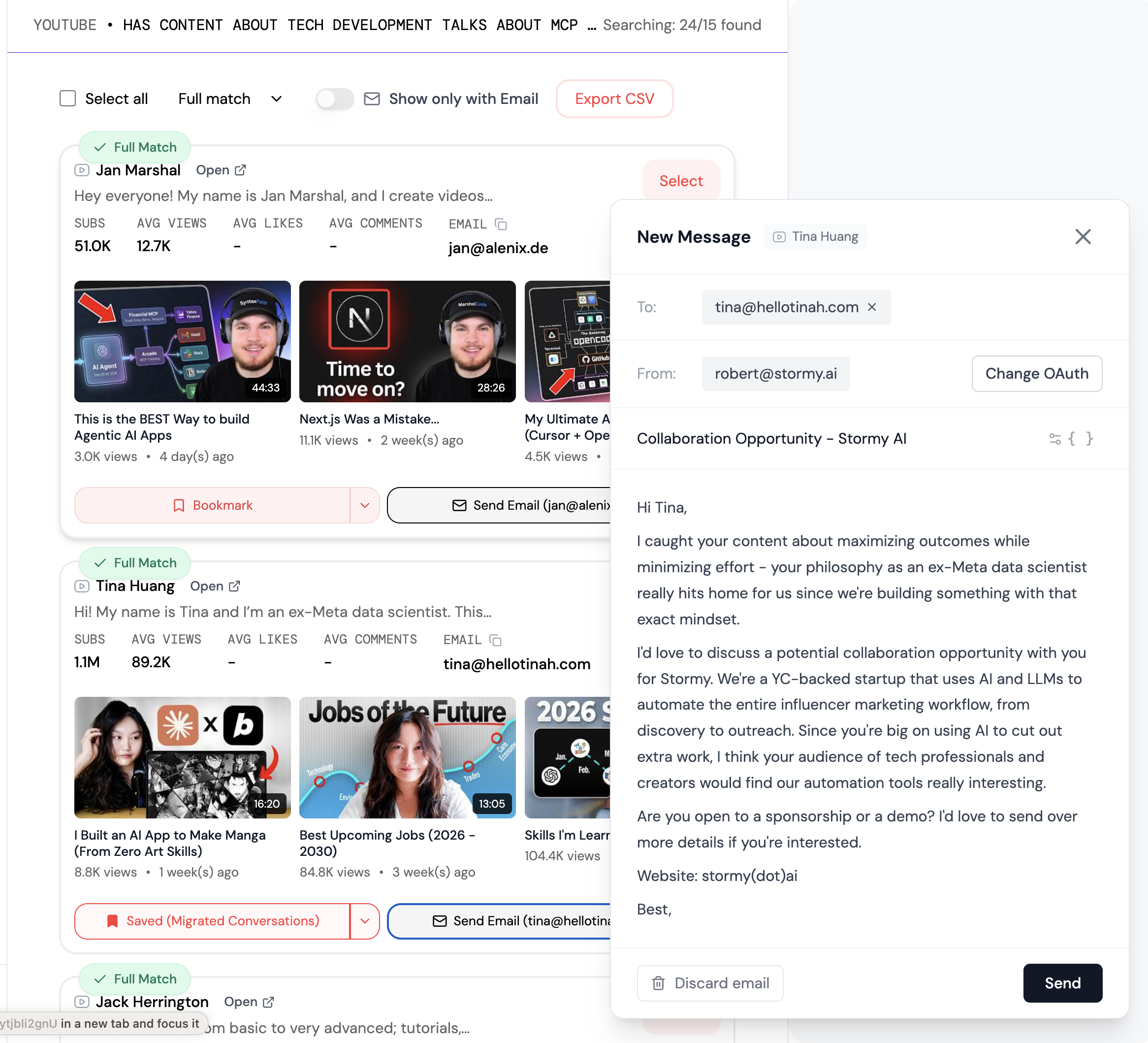
As you begin to see traction, the best way to scale is through User-Generated Content (UGC). Consumers trust other people more than they trust brands. Tools like Stormy AI can help source and manage UGC creators at scale. You can use Stormy's AI search engine to find creators in the parenting, legal, or wellness niches and reach out to them instantly with personalized emails. Instead of manually vetting dozens of influencers, you can use Stormy AI to detect fake followers and analyze audience quality in seconds, ensuring that your ad spend is only going toward creators who can actually move the needle for your new business.
Scaling with White-Label and Physical Products
If you find that your info-product is a winner, you can expand your ai powered e-commerce store into physical goods. For those interested in ai business ideas 2024 that involve physical products, platforms like Suppleful or Anoxa offer white-label supplements and skincare. This allows you to test physical product offers without committing to a massive Minimum Order Quantity (MOQ) at a factory. You can apply the same AI-driven branding and marketing principles to these products, using solopreneur ai tools to handle everything from label design to automated email follow-ups.
The ultimate goal is to reach a point of break-even or better on your initial ad spend. If you spend $40 to acquire a customer who buys a $58 bundle, you have a profitable business that you can run in your sleep. From there, you can implement an AI agent to handle customer outreach and follow-ups, further automating your operations. Whether you stay in the info-product niche or transition into a larger brand, the ability to build and test ideas rapidly is the greatest competitive advantage a modern solopreneur can have.
The 24-Hour Business Playbook
Building a business in 24 hours for under $300 is no longer a pipe dream—it is a repeatable process. By combining ChatGPT for content, Shopify for commerce, and Canva for design, you can launch a professional brand that would have cost tens of thousands of dollars just a decade ago. Remember, the key is to start small and test fast. Don't worry about building a billion-dollar empire on day one. Focus on finding a profitable math equation, validating your offer with real customers, and using solopreneur ai tools to remove the friction from your growth. The era of the AI-powered solopreneur is here; the only thing left to do is to get your first ad live and start your journey.