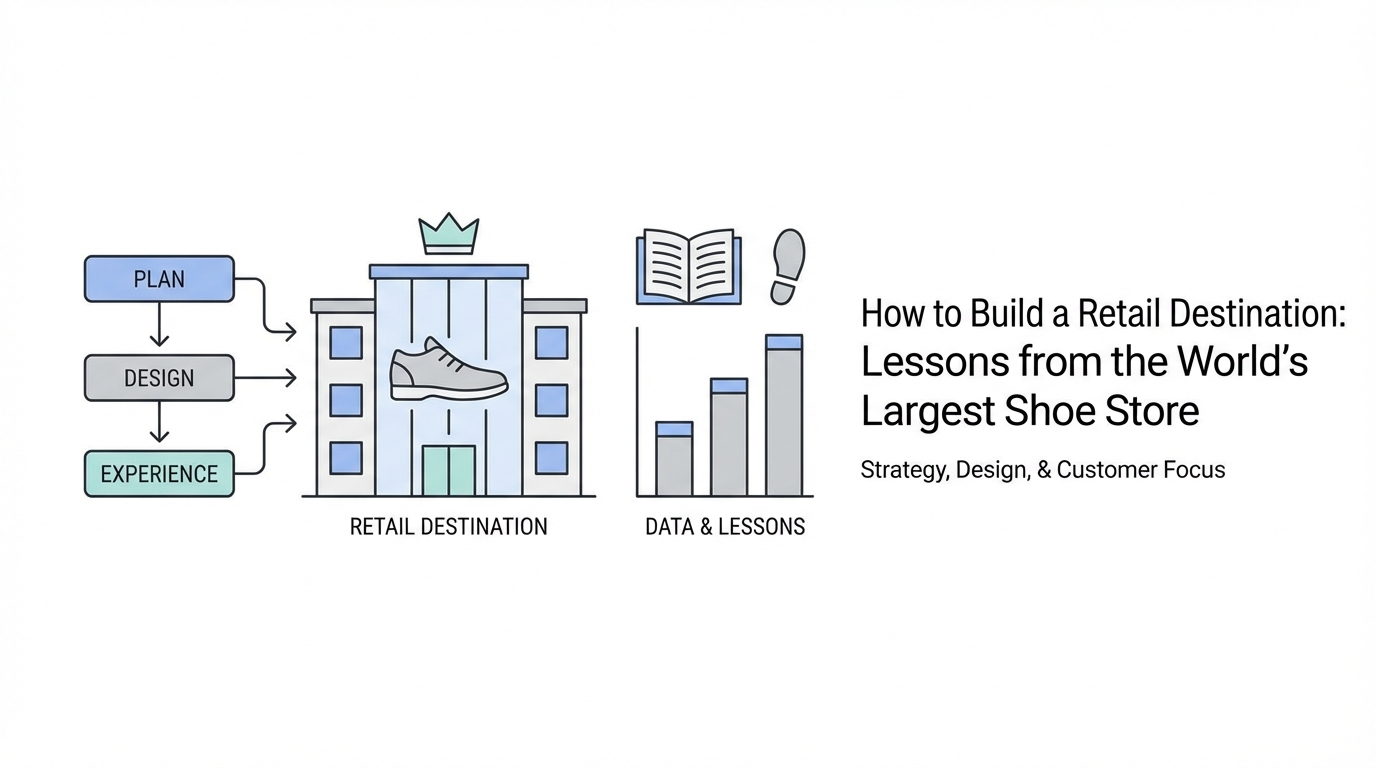
In the quiet town of Sharon, Pennsylvania—a community of roughly 20,000 people—one business managed to defy the gravity of modern commerce for decades. It wasn't a tech startup or a global conglomerate; it was a family-owned shoe store. At its peak, Reyer’s Shoe Store became a national phenomenon, dubbed the "World’s Largest Shoe Store," and served as a masterclass in destination retail marketing. By drawing customers from a 75-mile radius, including major hubs like Pittsburgh and Cleveland, Reyer’s proved that a superior retail business strategy can turn a small-town shop into a regional powerhouse. This article dives deep into the pillars of their success—inventory depth, niche expertise, and sales psychology—and how modern brands can adapt these lessons for today’s competitive landscape.
The Selection Pillar: Inventory as a Competitive Moat
In the world of retail, the phrase "you can't sell from an empty wagon" is more than just a proverb; it’s a fundamental law of inventory management for retail. The Jubelirer family, the owners of Reyer’s, understood that their primary competitive advantage against larger department stores and eventually online giants was inventory depth. At any given time, the store housed over 125,000 pairs of shoes. While most retailers aim for high turnover with a lean stock, Reyer’s built a moat by having the exact item a customer needed, right then and there.
This massive inventory allowed them to maintain a conversion rate of 80% or higher for visitors who sat down for a fitting. In an era where online footwear return rates hit 30-40% due to sizing issues, the physical ability to touch, feel, and try on an endless variety of styles remains a powerful draw. Modern data from Financial Models Lab suggests that top-performing specialty stores still rely on this high-touch conversion model to drive profitability. By prioritizing selection, Reyer’s didn't just sell shoes; they sold the certainty that you would find what you were looking for.
Regional Domination: Drawing Customers from a 75-Mile Radius
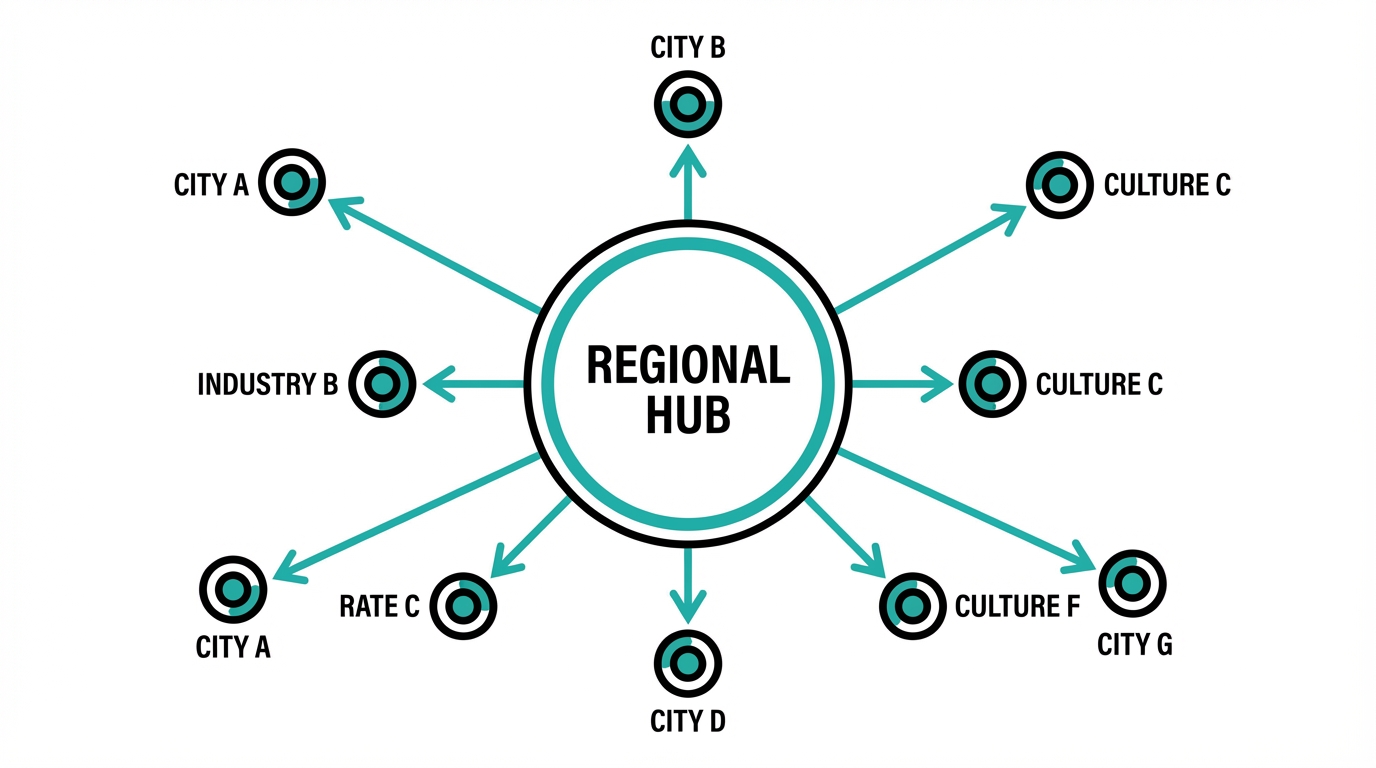

One of the most impressive feats of Reyer’s was its ability to ignore local population constraints. A destination retail marketing strategy relies on the brand being so specialized that customers are willing to travel significant distances to visit. Reyer’s successfully drew shoppers from across Western Pennsylvania and Northeastern Ohio. This regional pull was not accidental; it was the result of consistent brand positioning as the definitive authority on footwear.
By focusing on being a "destination," they bypassed the need for high-density foot traffic. Instead of paying premium rent in a metropolitan center, they leveraged their lower overhead in Sharon to invest more heavily in their inventory. According to reports by Visit Mercer County, the store became a legitimate tourist attraction, proving that if the value proposition is strong enough, location is secondary to reputation. For modern businesses, this means focusing on a niche market strategy that makes your brand the only logical choice for a specific category, regardless of the user's physical or digital proximity.
The Niche Focus: How Extreme Sizes Create Lifelong Loyalty
The core of Reyer’s niche market strategy was their commitment to inclusivity in sizing. While standard retailers carry a narrow range of "average" sizes, Reyer’s stocked women’s sizes 3–13 and widths ranging from AAAAA to EEE. This was a stroke of genius in customer retention. If you are a person who consistently struggles to find shoes that fit, finding a store that stocks 50 options in your specific, rare size creates an immediate and unbreakable bond of loyalty.
This focus on the "long tail" of the market allowed them to capture customers that others ignored. In the modern footwear market, which is projected to reach $588 billion by 2030 according to Statista, the temptation is often to chase the widest possible demographic. However, Reyer’s proved that dominating the edges of the market—the hard-to-fit sizes—creates a more resilient business. This specialized focus ensured that their average order value (AOV) remained high, as customers would often buy multiple pairs once they found a style that fit their unique needs.
The Larry Joltin Method: Salesmanship as an Authority
No discussion of Reyer’s is complete without Larry Joltin, the legendary salesman who became the face of the brand. Joltin was a 3-time winner of the National Shoe Retailers Association (NSRA) Salesman of the Year award. His stats were staggering: he sold approximately 9,000 pairs of shoes a year, which averages out to one pair every 15 minutes of his working day. In today’s terms, Joltin’s annual sales would be worth roughly $1.5 million.
Joltin’s secret was his "Taking Charge" theory. He famously ignored customers who told him their size, insisting on using a Brannock Device to measure them himself. He understood that authority drives sales. He wasn't there to take an order; he was there to provide a professional service. This level of expertise is what modern brick and mortar growth strategies often lack. Joltin was profiled by CBS News and appeared on David Letterman, bringing national attention to the store through his sheer personality and skill.
The Resilience of Brick-and-Mortar in a Digital Age
Despite the rise of e-commerce, the physical retail space is far from dead. Current statistics from Forbes indicate that 80% of retail transactions still occur in person. The survival of brands like Reyer’s, which relocated to the Eastwood Mall in 2021 to adapt to modern shopping habits, highlights the enduring value of the sensory shopping experience. While digital tools can personalize recommendations, they cannot yet replicate the tactile assurance of a professional fitting.
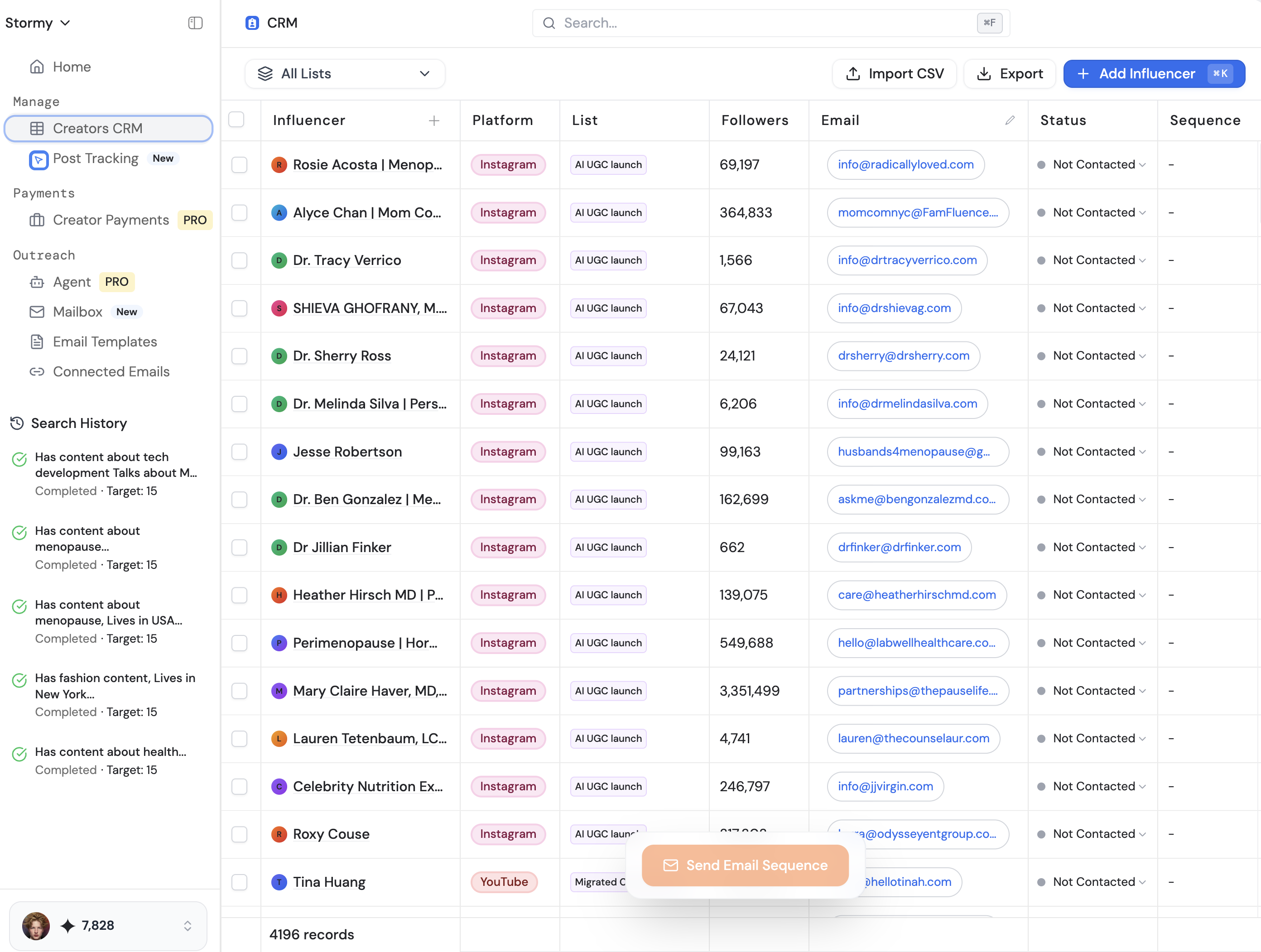
When retail brands look to scale their physical presence today, they must combine old-school service with modern technology. For example, many high-end shoe retailers now use 3D foot scanning to provide the "Joltin-level" accuracy that shoppers crave. When brands need to drive foot traffic to these retail destinations, sourcing the right local creators is essential to spread the word. Tools like Stormy AI can help businesses discover and manage regional influencers who can create authentic content around the "destination" experience, ensuring that the brand reaches potential customers within that critical 75-mile radius.
The Destination Retail Playbook: How to Scale Today

Building a retail destination in 2025 requires a mix of historical wisdom and cutting-edge execution. If you are looking to implement brick and mortar growth strategies, follow this 3-step playbook based on the Reyer’s model:
Step 1: Define Your Selection Moat
Determine what you will stock that no one else does. Whether it’s a specific size range, a specialized category of footwear, or exclusive artisanal brands, your inventory must be the primary reason for the visit. Use modern inventory systems to ensure you never have a "miss" on a core product.
Step 2: Train for Authority, Not Service
Move your staff away from the "How can I help you?" model and toward the "Expert Fitting" model. Like Larry Joltin, your team should be trained to use tools (analog or digital) to provide a definitive answer to the customer’s problem. This builds trust and increases the attachment rate of accessories like socks and care products, which often have margins exceeding 60%.
Step 3: Leverage Regional Influencer Marketing
To draw people from outside your immediate zip code, you need to build a narrative. Use creator discovery platforms like Stormy AI to find local UGC creators who can document their "trip" to your store. High-quality video content showing the scale of your selection and the expertise of your staff can turn a local shop into a regional must-visit location.
The Future of Destination Retail
The story of Reyer’s Shoe Store and Larry Joltin is a reminder that retail excellence is built on the fundamentals of human connection and undeniable value. By mastering inventory management for retail and maintaining a fierce niche market strategy, any business can insulate itself from the volatility of the digital marketplace. Whether you are a physical shop or a modern e-commerce brand, the lesson remains the same: become a destination by offering what others cannot—or will not—provide. As the footwear industry continues to grow, the brands that prioritize the "fit-first" renaissance and expert authority will be the ones that survive the next century of commerce.