In the world of online entrepreneurship, the dream of a $1 million business usually involves a massive team, a complex supply chain, or a venture-backed software startup. But Brett Williams, the founder of DesignJoy, shattered that paradigm by building a $1.8 million per year solo agency with zero employees and zero contractors. By transitioning from a traditional graphic design role to a subscription-based model, Williams created a scalable machine that allows him to work just six hours a day while generating life-changing income. According to interviews on Indie Hackers, this isn't just about design; it is a masterclass in the productized service business model that any freelancer or agency owner can replicate to escape the trap of hourly billing.
The Shift: Why Productized Services Outperform Traditional Agencies
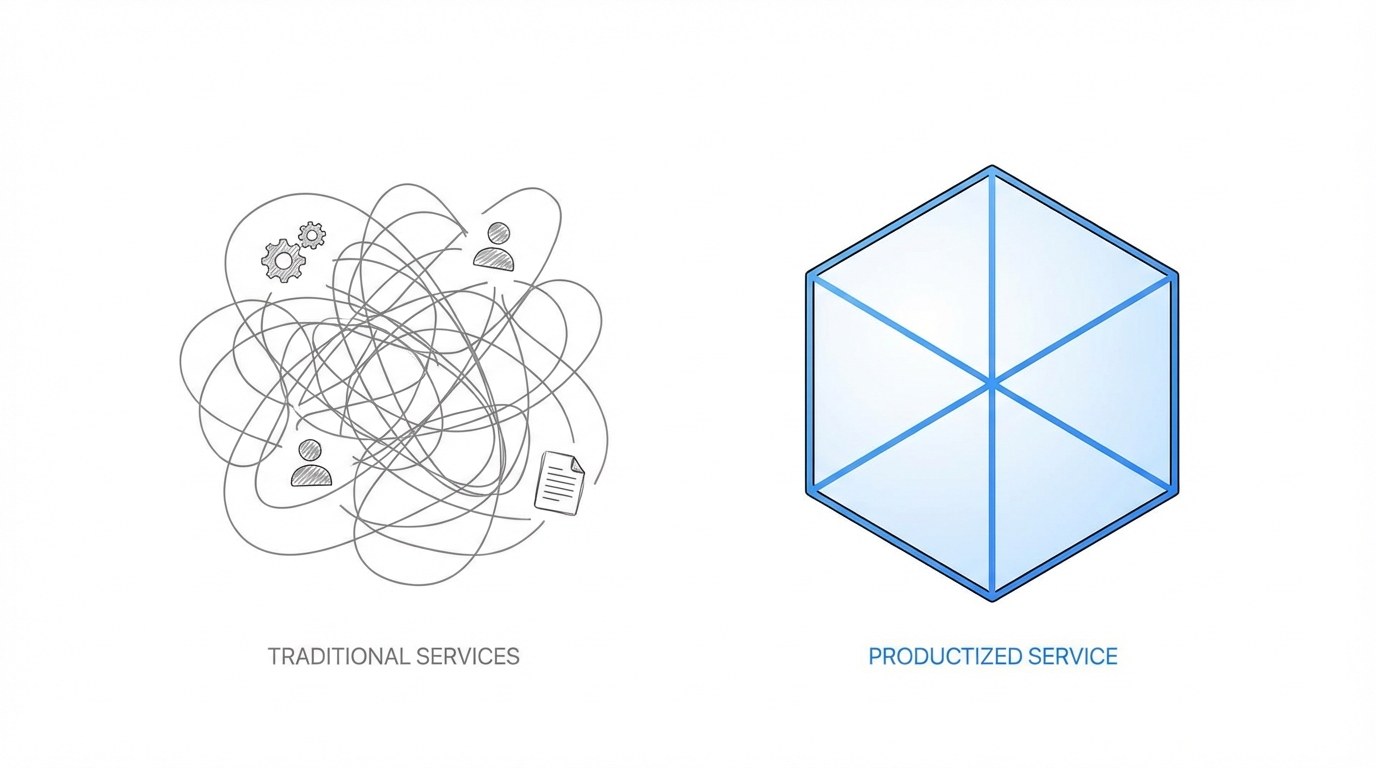
Most freelancers operate on a per-project or per-hour basis. While this works for getting started, it creates a ceiling on your income—you can only work so many hours in a day. A productized service flips this script by turning a service into a defined "product" with a set price, a specific scope, and a recurring delivery timeline. Instead of chasing new leads every month, you build recurring revenue for freelancers that provides stability and predictability.
The core of the DesignJoy model is the unlimited graphic design subscription. For a flat monthly fee, clients get access to an unlimited queue of design requests. By standardizing the offering, you eliminate the need for custom proposals, complex negotiations, and the dreaded "scope creep" that plagues traditional agencies. This allows the solopreneur to focus entirely on delivery rather than administrative overhead, often managed through simple tools like Trello or Notion.
Step 1: Implementing Demand-Based Pricing to Build Momentum
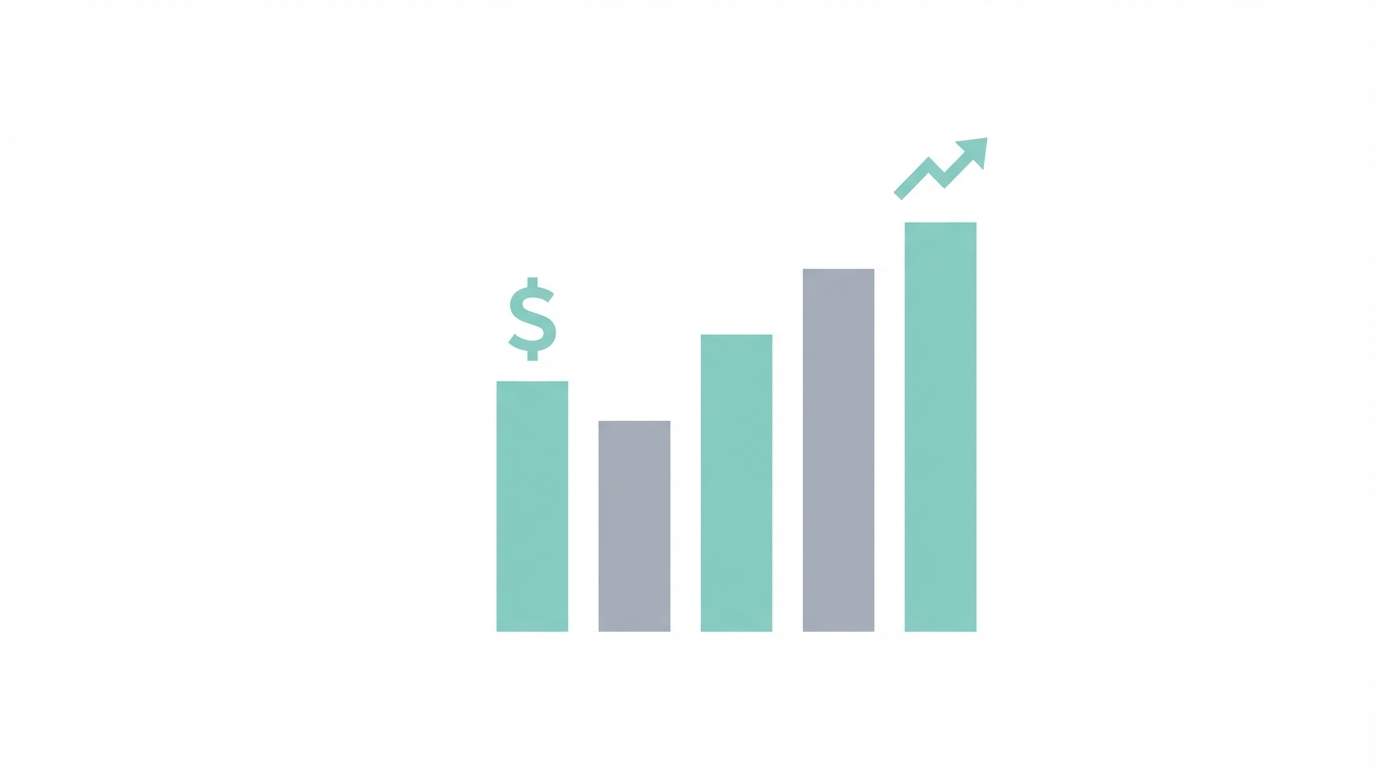

When launching a productized service business model, the biggest hurdle is obtaining that first paying customer. Most entrepreneurs spend months perfecting their branding and pricing, only to find that no one is buying. Brett Williams bypassed this by using what he calls demand-based pricing. When he first launched DesignJoy, he set the price at a staggering $449 per month for unlimited design. For context, that is less than some designers charge for a single logo on platforms like 99designs.
This price point was intentionally "too good to be true." It removed all friction from the buying process. By undercharging initially, he secured his first client within 24 hours. While $449 a month isn't a sustainable long-term price for a world-class designer, it allowed him to put in the "reps" necessary to sharpen his skills and build a portfolio of high-quality work. As demand for his services increased, he systematically raised his prices—from $1,000 to $3,000, and eventually to $5,000 or even $8,000 per month per client.
Finding the right initial audience for these low-cost offers is critical. Much like how modern brands use Stormy's AI search to discover niche-specific influencers who can drive rapid awareness across TikTok, YouTube, and LinkedIn, a solopreneur must find the platform where their target audience hangs out and present an offer they cannot refuse. Once the momentum is established, the price can—and should—scale with the demand.
Step 2: Enforcing Radical Boundaries and Asynchronous Work
As the business grows, the biggest threat to a solopreneur is burnout. When Williams found himself working 16-hour days to keep up with his growing client list, he didn't hire a team. Instead, he implemented radical boundaries. To make the how to productize a service journey successful, you must protect your time as your most valuable asset.
Williams established two non-negotiable rules: first, all communication must be asynchronous via a Trello board. There are no meetings, no Zoom calls, and no "quick syncs." Second, clients can only have one active request at a time. This prevents a single client from overwhelming the system and ensures that the output remains high-quality. Because requests must be written down, clients are forced to be more thoughtful and clear, which reduces the need for revisions and saves hours of back-and-forth communication.
Step 3: Moving from the $500 Client to the $5,000 Client
There is a massive difference between a client who pays $500 and one who pays $5,000. Low-paying clients often have the highest demands, the most frequent complaints, and the highest churn rates. High-paying clients, typically established businesses or venture-backed startups, value their time more than their money. They aren't looking for the cheapest option; they are looking for the fastest and most reliable solution to their problem.
For a company looking to scale, their options are often limited: they can hire a full-time designer for $200,000 a year, spend $40,000 on a slow-moving agency, or wade through thousands of profiles on Upwork or Fiverr to find a "needle in a haystack." The DesignJoy business model offers a fourth option: a proven, world-class designer available for a flat monthly fee with a 48-hour turnaround. For these companies, $5,000 a month is a bargain.
To identify these high-value clients, many agencies are now turning to data-driven outreach. By using Stormy AI for influencer vetting and fake follower detection, businesses can identify which partners or creators align with their brand's quality standards before ever sending an email, ensuring they only spend time pursuing high-impact relationships.
Step 4: Choosing a High-Demand, Low-Touch Niche
Not every service can be productized effectively. The most profitable services follow the high-demand, low-touch rule. Design and branding are perfect because they are high impact—a great website can drastically improve conversion rates on Meta Ads or Google Ads—but the actual execution can be done relatively quickly by an expert.
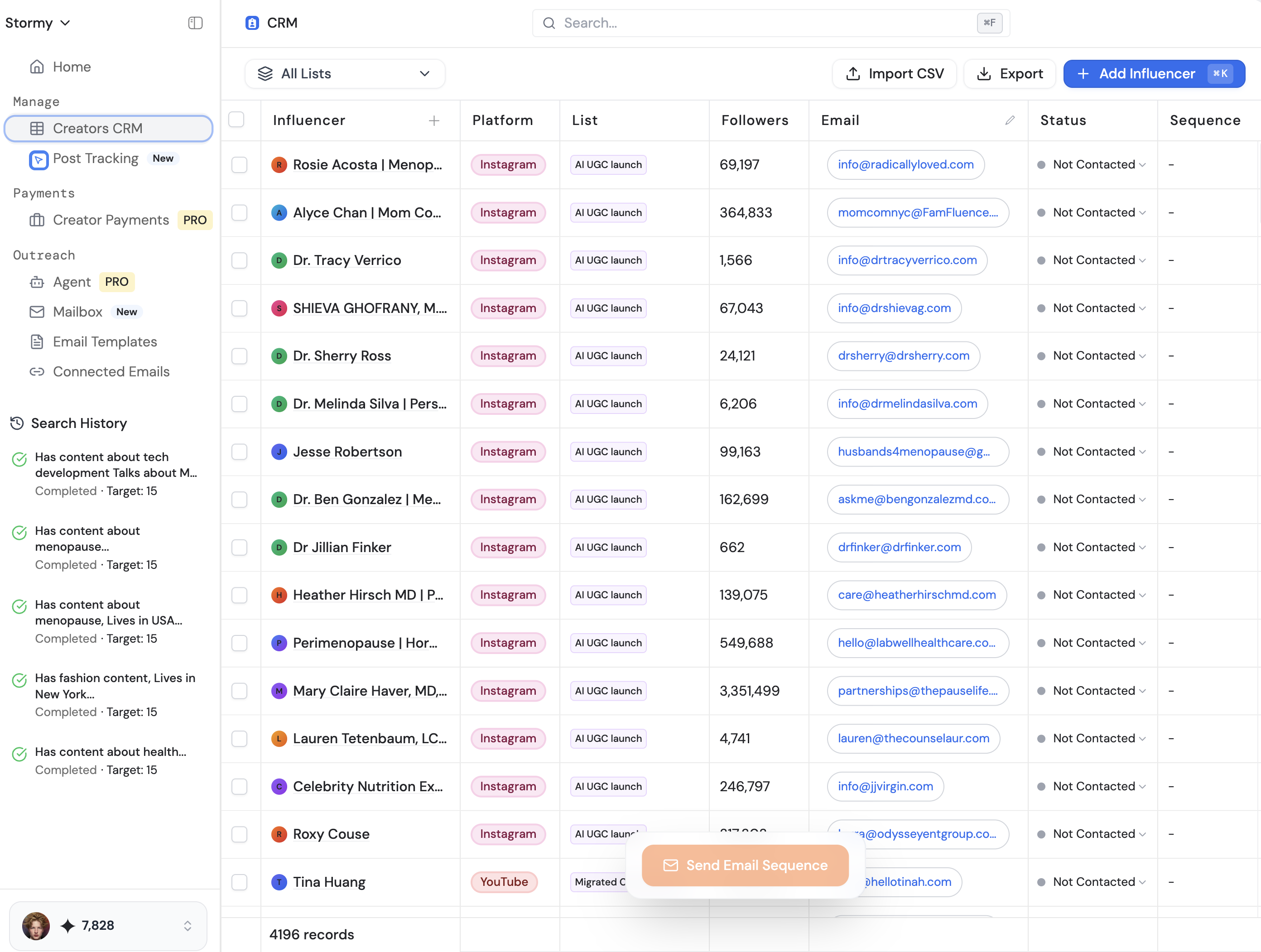
Compare this to bookkeeping or video editing. While they are in demand, they are often "high touch," requiring constant data entry or hours of tedious scrubbing through footage. To maximize profit, you want to pick a niche where you can leverage built-up templates and workflows. This is particularly relevant for businesses focused on User-Generated Content (UGC) for mobile apps. Managing these creators at scale requires a centralized system, which is why savvy agency owners use Stormy's creator CRM to track every collaboration, deal stage, and payment without the administrative nightmare of manual spreadsheets.
Step 5: Diversifying with Digital Products
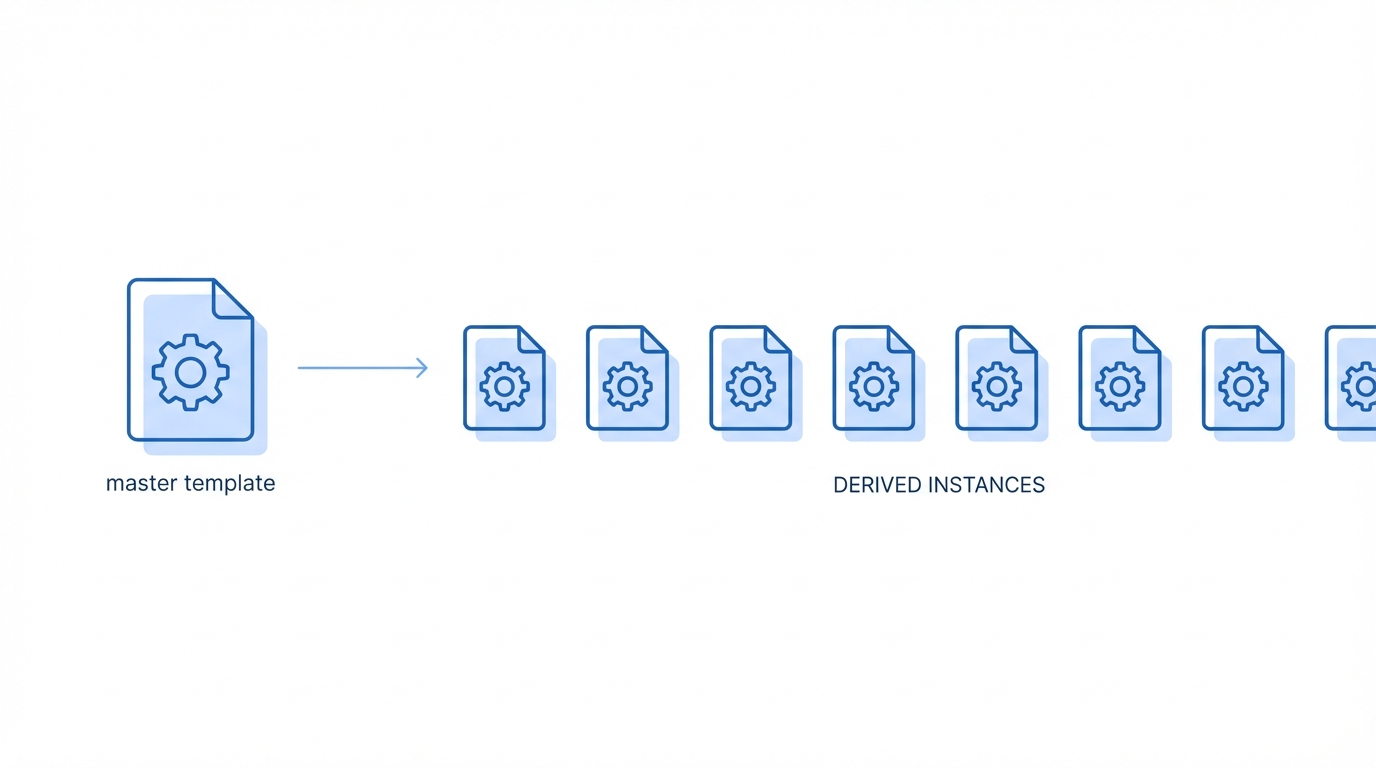
The final stage of the playbook is decoupling your income from your time entirely. Even a highly efficient productized service is still capped by the hours you can work. To reach the next level, Williams began selling his knowledge and assets. He created "Scribbles," a $5 collection of design templates that has been downloaded over 25,000 times, and later launched a comprehensive course on how to productize yourself.
Today, these digital products account for nearly 30% of his total income. This passive revenue stream allows him to be even more selective with his service clients. For anyone looking to scale their outreach for such products, Stormy's AI outreach can automate the process of finding and contacting potential affiliates or newsletter partners with hyper-personalized emails and auto follow-ups to promote these digital goods on autopilot.
Conclusion: Your Path to a $1M Solopreneur Business
The success of the DesignJoy business model proves that you don't need a massive team to build a massive business. By focusing on a specific niche, implementing demand-based pricing, and enforcing strict boundaries, you can build a sustainable, highly profitable productized service business model. Whether you are a designer, a copywriter, or a developer, the steps remain the same: simplify your offer, raise your prices as demand grows, and use AI-powered tools like Stormy AI for post tracking and campaign analytics to handle the heavy lifting of discovery and management. The era of the high-paid solopreneur is here—it's time to build your own playbook.