In the high-stakes world of executive leadership, we often mistake activity for progress. Many leaders spend their entire careers "pumping water" from a well, as Bill Perkins notes in his philosophy of life energy, only to realize at the end that they are still thirsty. They focused on the mechanics of the work rather than the quality of the judgment that directed that work. If you want to move beyond mere productivity and enter the realm of high-impact leadership, you need a decision making framework that treats judgment as a muscle to be trained. This is where the Decision Register comes in.
The Philosophy of the Decision Register: Why the Process Matters More Than the Outcome

Most leaders judge themselves based on results. If a project succeeds, they assume they made a good decision. If it fails, they assume they made a bad one. In professional circles, this is known as "resulting"—and it is a dangerous trap. Just as a poker player can win a hand with a statistically terrible bet, a leader can get "lucky" with a poor leadership decision process. The problem is that luck eventually runs out. To how to improve judgment, you must separate the input (your decision) from the output (the result).
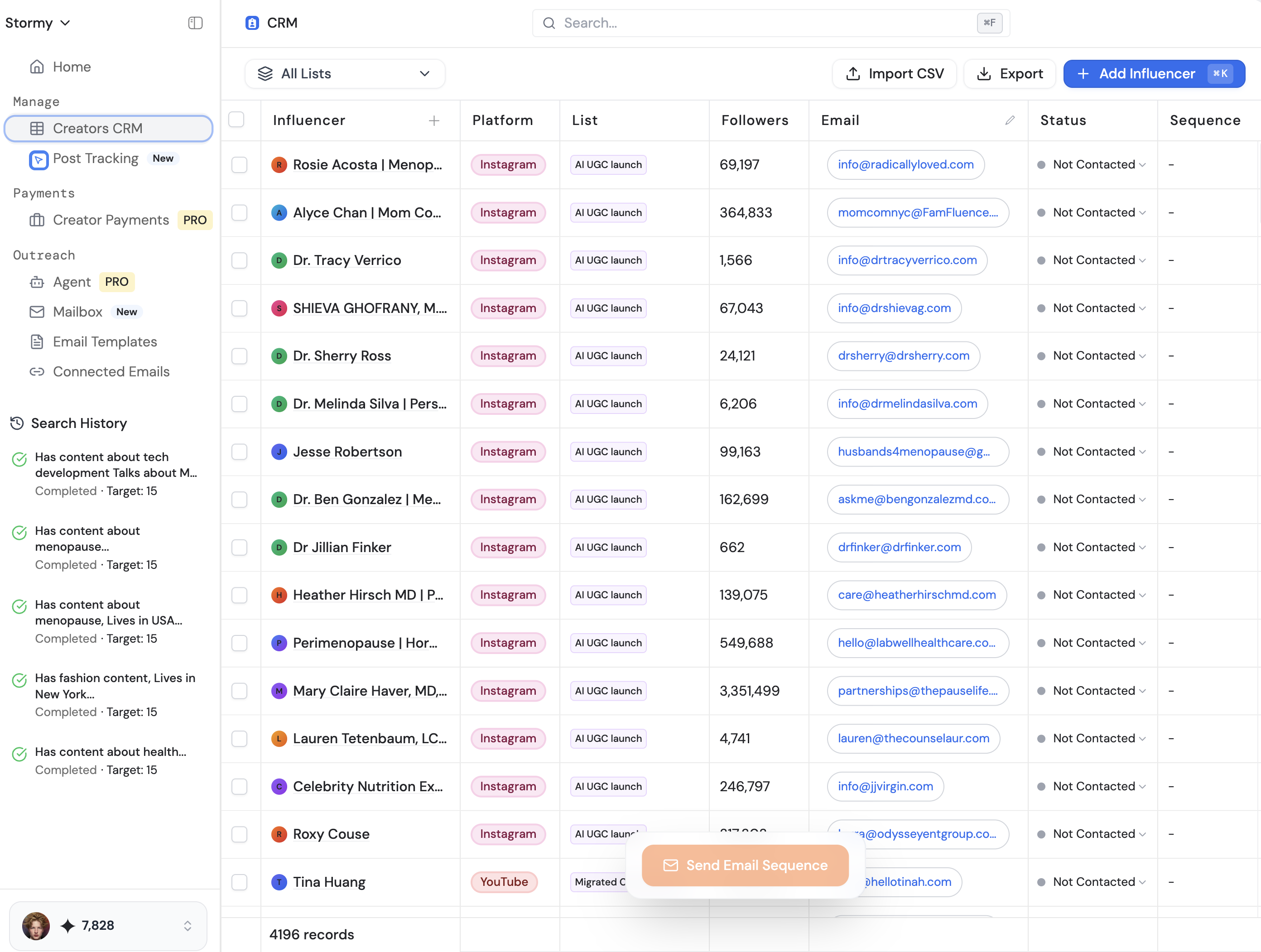
A Decision Register is a living document—often a simple table or a dedicated tool—where you record what you decided, why you decided it, and your confidence level at the moment of commitment. This acts as an objective witness to your state of mind. When you are scaling a company, using Stormy AI as your AI-powered search engine helps automate the data gathering for influencer discovery across TikTok, Instagram, and YouTube, but the final call on a strategic pivot or a major hire rests on your internal judgment. By documenting the "why," you prevent your brain from rewriting history after the fact to make yourself look smarter than you were.
Audit Your Emotional State: The Greed vs. Fear Spectrum
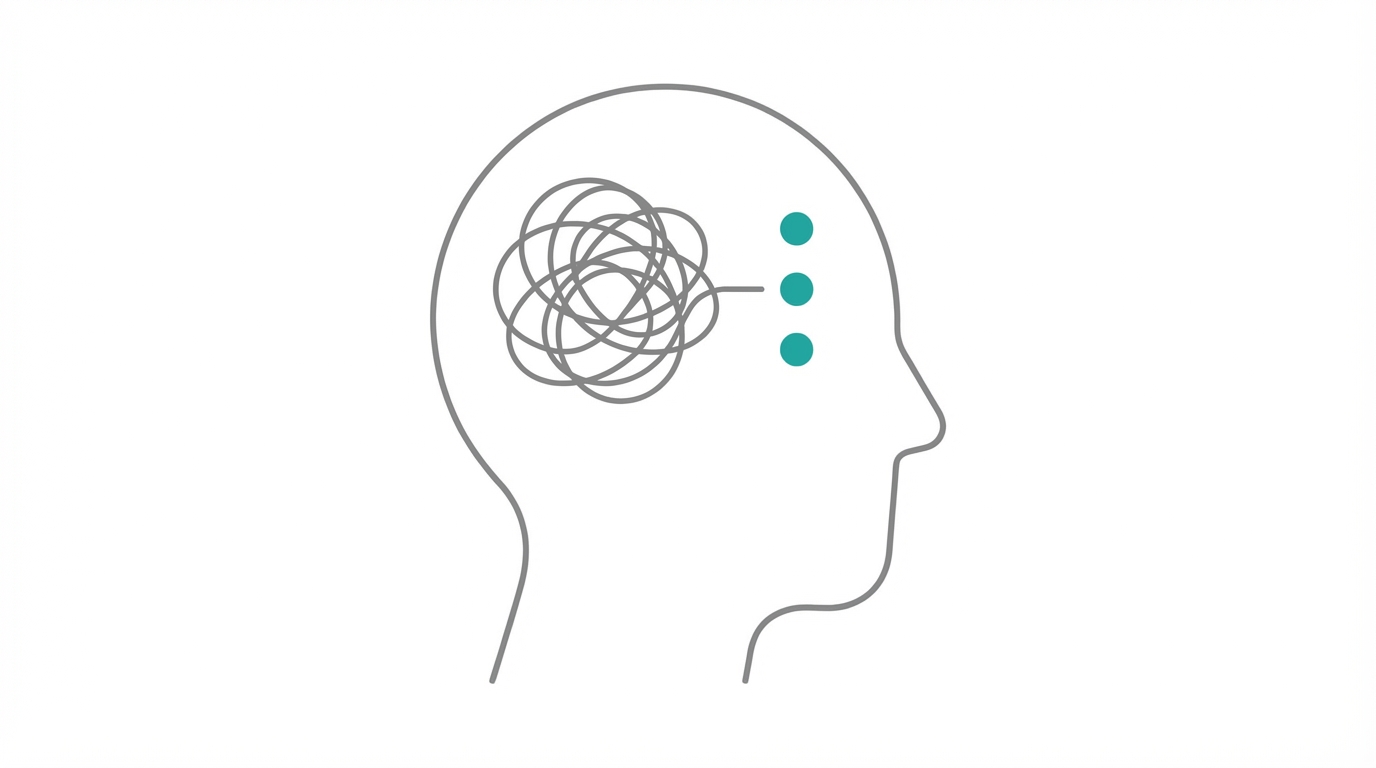
Before you commit to a strategic path, you must perform an emotional audit. High-stakes decisions are rarely made in a vacuum; they are often fueled by internal pressures. When you fill out your Decision Register, you should rank your current feeling on a scale: Extreme Fear, Neutral, or Extreme Greed. Making a decision at either end of the spectrum is like Howard Marks explains in his analysis of market cycles: you are likely acting on impulse rather than logic.
Think of it like going to the grocery store while hungry. You end up with a cart full of junk you don't need. In business, extreme greed (FOMO) leads to over-extension and bloated budgets, while extreme fear leads to missed opportunities and stagnation. When you look at the 11 million ringtones sold by Akon, it wasn't a decision made out of desperation; it was a calm, calculated move to exploit a gap in the market where a 10-second song could be sold for $4.99—twice the price of a full track. He identified the opportunity with a clear head, not an emotional one. This type of executive productivity hack requires you to be honest about your motivations.
The Danger of Blended Reasons: Why You Need One Decisive reason to Act

One of the most common mistakes in the leadership decision process is the use of "blended reasons." This happens when you have a list of five or six "pros" for a decision, none of which are strong enough on their own to justify the action. As Stormy AI facilitates through its deep audience demographics and vetting tools, focus is everything. If you are hiring a UGC creator for a mobile app campaign, you shouldn't hire them because they are "nice," "available," and "affordable." You should hire them because they have a proven track record of driving app installs in your specific niche. Everything else is a bonus.
Reid Hoffman and Peter Thiel often speak about this: if you have a list of secondary reasons, you are likely trying to convince yourself of a weak thesis. Your Decision Register should identify one decisive reason for the action. If that single reason were removed, would you still move forward? If the answer is no, then the decision is fragile. By forcing yourself to name the "one thing," you clarify your priorities and simplify the execution. For instance, when Tony's generated over 500 million euros in revenue, they didn't do it by being a "general toy company." They leaned into one decisive reason: providing a screen-free, physical audio experience for children.
The Decision Register Playbook: A Step-by-Step Implementation
To turn this into an executive productivity hack, you need a repeatable process. Follow these steps for every major strategic move.
Step 1: Define the Decision in a Tweet
If you cannot explain the decision in 280 characters or less, you don't understand it well enough. Complexity is the enemy of execution. Write down the core action: "We are pivoting our marketing budget from Meta Ads to TikTok UGC creators to lower our CAC by 20%."
Step 2: State the Decisive Reason
What is the single most important factor driving this? Avoid the "spaghetti reason" where you throw everything at the wall. Be like the investor who only makes a few high-conviction bets. As Howard Marks suggests, you will only have a few truly great insights in your career; don't dilute them with mediocre ones.
Step 3: Test for Reversibility
Ask yourself: Is this a one-way door or a two-way door? If the decision is reversible, move fast. If it is irreversible—like a major acquisition or a core brand change—you should build in a "cool-down" period. Sleep on it for three days. Often, the "sand" of daily errands (as Jesse Itzler calls the trivial tasks) will settle, and you'll see the "big rocks" more clearly.
Step 4: Predict the Future
Write down what you think will happen in 6 months as a result of this decision. Be specific. This isn't just about revenue; it’s about team morale, market positioning, or technical debt. This prediction is what you will use for your retroactive analysis later.
Testing for Reversibility: Knowing When to Move Fast

A critical part of any decision making framework is understanding the cost of delay. In his book "Die with Zero," Bill Perkins notes that timing matters because certain experiences can only be enjoyed in certain windows. The same is true in business. If a decision is easily reversible (a "two-way door"), the biggest risk is not making the wrong choice, but moving too slowly.
For example, testing a new ad creative with a Stormy AI influencer campaign is a highly reversible decision. Stormy AI is especially effective for mobile app marketing and UGC campaigns where you can use post-tracking to monitor views and engagement in real-time. If the ad fails, you've lost a small amount of budget but gained valuable data. Conversely, signing a multi-year, multi-million dollar exclusivity deal is an irreversible "one-way door." Your Decision Register should flag these differences. High-performing leaders move at 10x speed on reversible decisions and 0.5x speed on irreversible ones. This is how you optimize your leadership decision process for both speed and safety.
Retroactive Analysis: Assessing Your 'Hit Rate'
The real power of a Decision Register comes 6 to 12 months after the decision is made. This is the retroactive analysis phase. Review your register and compare the actual outcome to your initial prediction. You are looking for two things: Was I right for the right reasons? and Was I wrong for the right reasons?
If you were right for the wrong reasons, you got lucky. This is a "bad" success because it can give you false confidence in a flawed process. If you were wrong for the right reasons—meaning you made a statistically sound bet but hit a low-probability negative outcome—that is a "good" failure. Leaders like Jack Carr, who transitioned from the high-stakes world of Navy SEALs to becoming a best-selling author of the James Reese series, understand that you cannot control every variable, but you can control your preparation and your response. By tracking your "hit rate," you begin to see patterns in your own biases. Do you tend to be too optimistic? Too fearful? Do you consistently underestimate the time required for execution?
Conclusion: From Pumping Water to Making Moves
Building a Decision Register is not about creating more paperwork; it’s about protecting your most valuable asset: your judgment. In a world where we are increasingly distracted by the "sand" of Zoom calls and Slack notifications, taking the time to document your high-stakes decisions is a radical act of leadership. It forces you to stop pumping the well for a moment and ask why you are thirsty in the first place.
Start your Decision Register today with a simple spreadsheet. Use the questions from the how to improve judgment playbook to audit your next major move. Whether you are using the Stormy AI autonomous agent to discover and outreach to creators on a daily schedule or deciding on a company-wide pivot, remember that the quality of your inputs determines the quality of your life. As Yoto and Tony's have shown in the physical product space, success comes to those who can find one decisive reason to exist in a crowded market. Document your "why," audit your emotions, and start treating your judgment with the respect it deserves.