In the hyper-competitive world of mobile growth, the difference between a top-charting app and a forgotten project isn't just a great product—it's the ability to build a content factory. When Ryan Thorpe and his team at Reflectly scaled their portfolio to over 50 million downloads, they didn't rely on luck or a single viral video. Instead, they built a systematic creator economy playbook that turned one of their apps, Done, into the number one most downloaded app in the US, even beating out giants like TikTok and Google Chrome. This wasn't achieved through high-priced celebrities, but through a meticulously managed army of 250 in-house micro-influencers trained to produce high-converting UGC at scale. To replicate this success, you must stop thinking about influencers as one-off partners and start treating UGC creator management as an industrial process.
Transitioning from Influencers to Content Creators
The first mistake most brands make in their influencer marketing strategy is focusing on follower counts. In Thorpe’s industrial growth model, the focus shifts entirely from "influencers" to "content creators." The goal isn't to buy access to an existing audience; it is to hire a professional who can craft a video that converts when used as a paid ad. In fact, Thorpe found that the optimal follower range was between 2,000 and 20,000 followers. These creators have shown enough craft and discipline to build a small following, but they aren't yet charging the high premiums associated with larger accounts.
By focusing on creators with lower follower counts, brands can achieve a much higher ROI. These individuals are often more willing to follow strict creative guardrails and participate in long-term partnerships. When you are looking to discover creators on Stormy AI, you should prioritize those who demonstrate a high level of craft and skill rather than raw reach. This shift allows you to move away from the unpredictable "lottery" of organic virality and toward a predictable system where creators act as the research and development arm of your marketing department.
The Three-Stage Recruitment Playbook

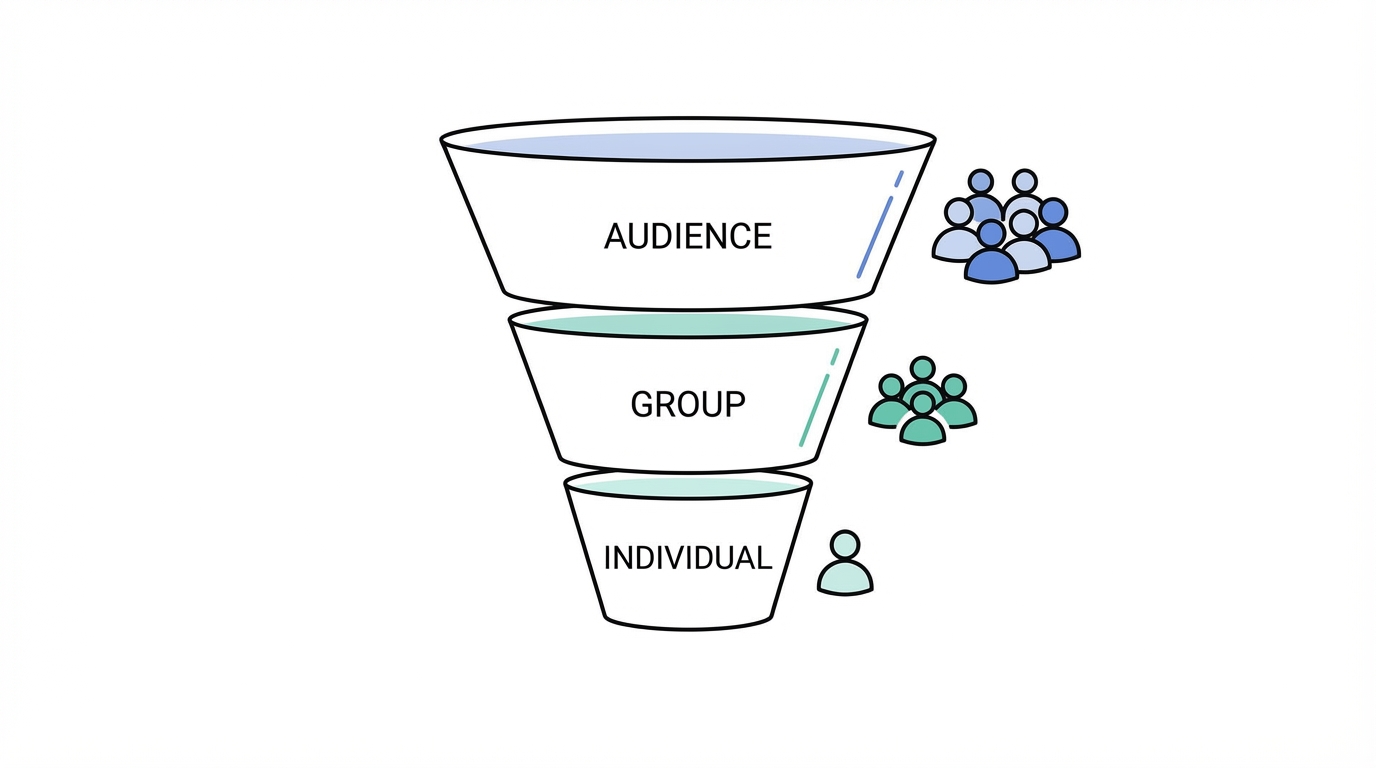
To build a creator army of hundreds, you need a vetting process that filters for reliability as much as creativity. Managing hundreds of creators manually is impossible without automation and a clear funnel. Stormy AI is an all-in-one AI-powered influencer marketing platform for creator discovery, especially for mobile app marketing and UGC campaigns, and can help identify the initial pool, but the internal vetting process must be rigorous. Thorpe’s team reached out to thousands of creators to find their core group of 250 reliable partners.
Step 1: The Initial Outreach
The outreach should be professional and emphasize a long-term relationship. Thorpe’s team even created a dedicated landing page for creators, featuring testimonials from other creators already in the program. With Stormy AI, you can automate this outreach using AI-personalized emails that find creator addresses automatically and handle follow-ups while you sleep. This professionalism ensures that the creators treat the partnership as a serious business relationship from day one.
Step 2: The Probation Task
Once a creator is interested, they are given a probation task. This is typically a basic "day in the life" video using the app. This task isn't just about checking their editing skills; it’s about checking their ability to follow specific creative briefs. Many creators fail at this stage because they cannot follow instructions or they lack the technical discipline required for high-conversion assets.
Step 3: Reliability and Timing
The final filter is reliability. A creator who produces a beautiful video but delivers it three days late is a liability in a high-speed scaling environment. Only those who deliver high-quality craft on time graduate into the permanent creator army. This systematic approach ensures that you only invest training resources into creators who will provide long-term value for your influencer marketing for apps.
Building a 'Creator University' In-House
One of the most innovative aspects of Thorpe’s strategy was the creation of an in-house 'Creator University.' Rather than hoping creators knew how to make a high-converting ad, the team actively taught them. They provided pitch decks, concepts, and data-driven feedback to turn amateurs into professionals who understood marketing metrics. This training is essential for micro-influencer scaling because it aligns the creator's creative output with the brand’s business goals.
Creators were taught to understand CPI (Cost Per Install) and subscription conversion rates. By sharing the "secret sauce" of what makes a video go viral, the brand builds loyalty. Creators feel they are gaining a career-level skill set, making them less likely to churn or jump to a competitor for a slightly higher fee. This educational layer is what transforms a simple vendor list into a creator army. When you use Stormy AI to find your initial cohort and vet them for fake followers, consider how you will provide them with the metrics and training they need to succeed.
Standardizing the Creative Brief: The Frame-by-Frame Model


To achieve consistency across thousands of videos, the creative brief must be granular. Thorpe’s team went as deep as defining the exact frame count for their videos. A typical 15-second high-converter might require 25 to 27 individual frames or cuts. This high level of visual stimulation is necessary to capture attention in the fast-paced TikTok or Instagram Reels environment.
Specific creative requirements included:
- POV Shots: All clips of the phone must be a Point-of-View (POV) shot, looking down at the device to simulate the user's experience.
- Frame Density: A minimum of two or more shots per second to keep the viewer engaged.
- Trending Audio Guardrails: Providing a weekly list of trending sounds for creators to incorporate, ensuring the content feels organic to the platform.
- Hook Categories: Creators were trained on different hook styles—curiosity-based, empathetic, or reflective—depending on the app's goals.
Tools like Spytok can be used to identify these viral trends and frame structures before including them in your briefs. By standardizing these elements, you ensure that even with 250 different personalities, the output remains within a high-converting framework.
The Three-Tier Ad Scaling System

Once the content is produced, it enters a rigorous, scientific testing environment. You cannot predict which video will go viral; Thorpe himself notes that a video with 66.9 million views was successful for reasons his team still doesn't fully understand. Therefore, you must test everything. Using tools like Superwall to optimize paywalls in tandem with these ads can dramatically increase the overall efficiency of your funnel.
- Level One (The $20 Test): Every new video is tested with a small budget—roughly $10 to $20. This gives every asset a "fair whack" at hitting target metrics. If a video shows promise or picks up organic traction (around 10,000 views), it graduates.
- Level Two (The Scaling Phase): Winners from Level One move to campaigns with budgets of $100 to $500. Here, the algorithm tests the video against a broader audience to see if the conversion rates hold.
- Level Three (The Evergreen Winners): The top 1% of videos become Level Three evergreens. These videos receive 90% of the total ad spend and can run for years. One specific video for the Done app remained a top performer for two consecutive years.
To further refine this process, many founders use Paywall Experiments to ensure that once an ad brings a user into the app, the conversion to a paid subscription is optimized. This end-to-end testing—from ad creative to paywall—is the hallmark of an industrial growth factory.
Seasonal Arbitrage: Winning the 'January Super Bowl'
Timing is just as important as creative. For health, fitness, and productivity apps, January is the most critical month of the year. Thorpe’s strategy involves seasonal ad buying arbitrage, where they spend 75% of their entire annual budget in January. During this time, the market tailwinds are so strong that the cost to acquire a user is often 50% cheaper than the rest of the year.
However, not all days in January are equal. Thorpe advises looking for weekly cycles. People are most motivated to start new habits on Sunday, Monday, and Tuesday. If January 1st falls on a Thursday or Friday, the "peak push" often happens the following Sunday when people are mentally "clocked in" to start their week. By 10x-ing your spend during these specific windows, you can establish a new baseline of MRR (Monthly Recurring Revenue) that sustains the company for the rest of the year.
The Deal Structure: Balancing Flat Fees and Performance
To maintain a creator army of 250 people, the financial arrangement must be sustainable for the brand and motivating for the creator. A common mistake is paying purely for performance, which can lead to creator burnout and lack of loyalty. Thorpe recommends a hybrid model:
- Base Flat Fee: $30 to $40 for entry-level creators, scaling up to $80 or $100 for reliable veterans. This covers the creator’s time (usually 1-2 hours per video) and ensures they get paid regardless of algorithm luck.
- Organic Performance Bonuses: Flat rate bonuses if a video hits 50k or 100k views organically.
- Ad Performance Bonuses: Significant "kickers" (ranging from hundreds to a thousand dollars) if a video becomes a Level Three evergreen asset.
Conclusion: Building for the Future of AI-Driven Growth
The UGC creator management landscape is evolving. As we move into an era of AI-powered growth, the manual labor of data analysis is being replaced by agents. While legacy tools can help with basic tracking, autonomous AI agents like those found in Stormy AI can now handle the entire discovery and outreach workflow on a daily schedule while you sleep. Tools like Float are already being built to act as "AI employees," monitoring ASO, forecasting spend, and identifying growth opportunities. However, the core of the creator economy playbook remains the same: authentic, high-density, human-led content is the only way to cut through the noise.
By building an in-house university, standardizing your briefs to the frame-level, and utilizing a scientific three-tier scaling system, you can build a marketing machine that doesn't just ride trends but creates them. Start by finding your first 50 creators, treat them like professional partners, and prepare your systems for the next "January Super Bowl."