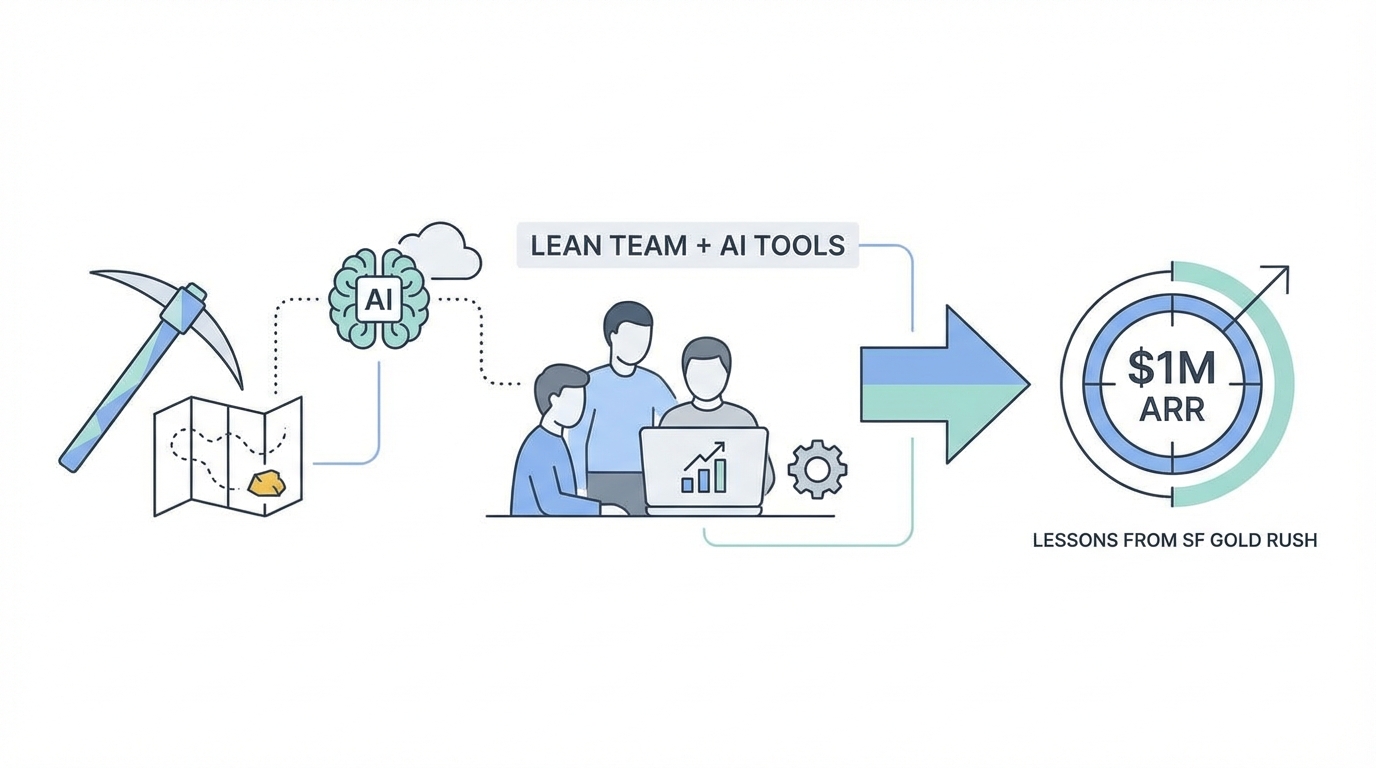
San Francisco is currently the epicenter of a $50 trillion AI Gold Rush, a generational shift in technology that is redefining what it means to be a "lean startup." For the first time in history, we are seeing teams of fewer than five people generating multi-million dollar annual recurring revenue (ARR) in just months. This isn't just about better software; it's about a fundamental change in the relationship between humans and computers. By leveraging omnipresent context and AI-first development tools, founders are achieving revenue-per-employee ratios that were once considered impossible.
The 'Command-Enter' Philosophy: Why Context Beats Prompting
One of the most profound shifts in the current AI wave is the death of the traditional prompt. In earlier iterations of AI, users had to painstakingly describe what they wanted. Today, the most successful AI productivity tools like Cursor are moving toward a "Command-Enter" philosophy. As the founders of the viral startup Cluey explain, the goal is for AI to look at your screen and instantly figure out what you need based on the last year of your computer activity.
When the AI has full context—your emails, your Slack messages, your open browser tabs, and your historical workflows—you no longer need to explain the "who, what, and why." You simply hit a hotkey, and the AI executes. This transition from active prompting to passive contextual awareness, championed by platforms like Limitless.ai, is what will separate the winners from the losers. In a world where ChatGPT requires manual input, context-aware platforms offer a frictionless experience that integrates directly into the user's flow.
The Cluey Case Study: $5M ARR with 5 Employees
The speed at which AI startups can scale is best illustrated by Cluey. In just three months, the team went from zero to $5 million in ARR. Perhaps more impressive is the team size: only five full-time employees. This results in a staggering $1 million in revenue per employee. This lean model is possible because AI doesn't just power the product; it powers the company's internal operations.
For founders looking at how to start an AI business, Cluey provides a blueprint: find a high-friction digital task, apply omnipresent context to it, and iterate at breakneck speed. Their success proves that you don't need a massive headcount to build a massive business. Instead, you need a highly focused group of "extreme" founders who are willing to live and breathe the product. This "locked-in" culture is often fostered in environments like HF0, a residency program that models itself after silent meditation retreats to maximize "executive function" and focus.
Step-by-Step Guide to Identifying High-Value AI Niches
To build a $1M ARR startup, you must target niches where AI provides a 10x improvement over manual effort. According to insights from the Andreessen Horowitz team, the most fertile ground for AI innovation falls into two primary categories: Entertainment and Productivity.
Step 1: Audit High-Friction Workflows
Look for tasks that require high cognitive load but are repetitive. This includes note-taking, travel booking, and coding. The goal is to build tools that make users smarter and more effective. If you can save a corporate executive five hours a week, the AI revenue model practically writes itself through high-ticket SaaS subscriptions.
Step 2: Leverage Vertical AI
Horizontal tools like general LLMs are a commodity. The real value lies in Vertical AI—tools built for specific industries. Whether it's an AI that manages App Store Optimization (ASO) for mobile developers using data from Sensor Tower or a platform that automates creator discovery, specificity is your competitive advantage.
Step 3: Solve for 'Outcome' not 'Output'
Don't just build a tool that generates text. Build a tool that completes a task. For example, instead of an AI that writes an email, build an AI that finds the recipient, researches their background, writes the personalized message, and manages the follow-up sequence automatically.
Why the 'Solo-ish' Founder Model is the Future
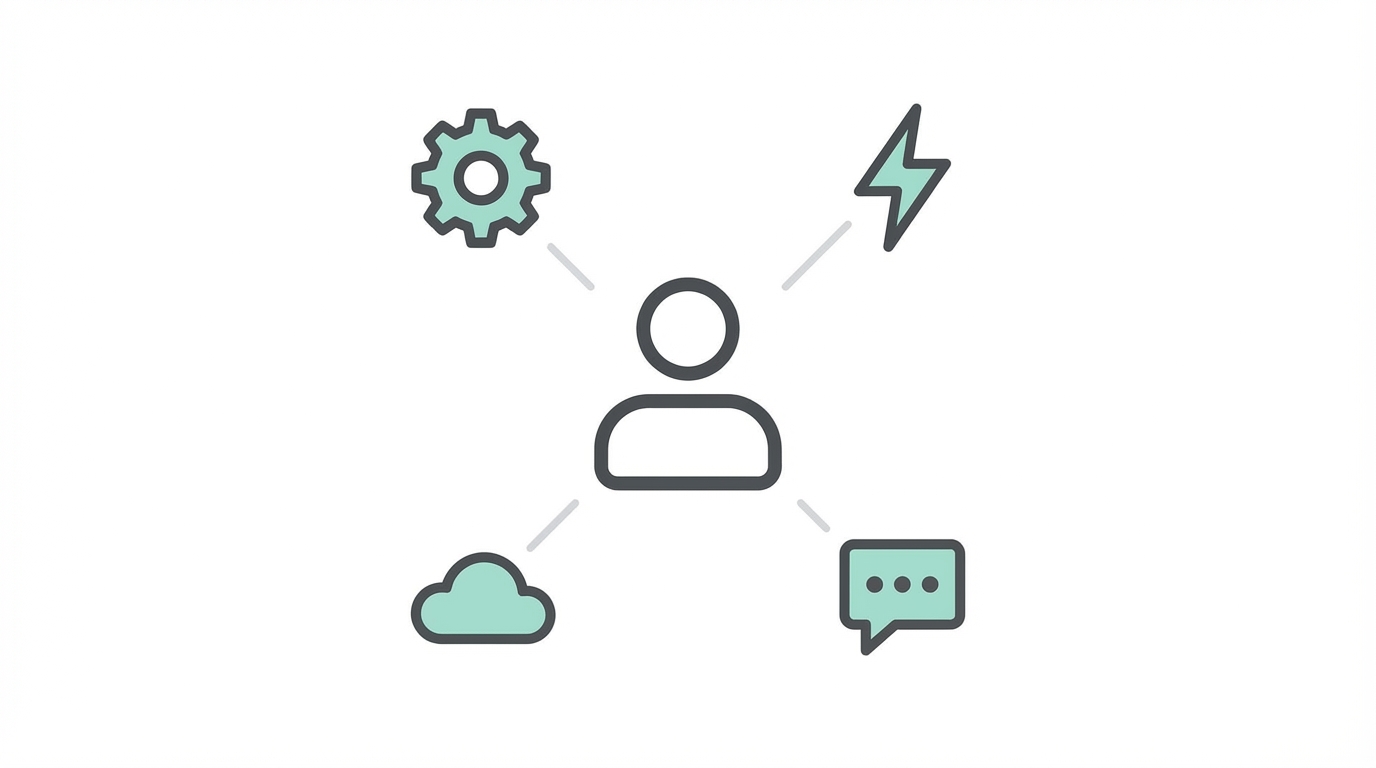
The lean startup methodology is being pushed to its logical extreme. We are entering the era of the "Solo-ish" founder—a single visionary who uses an army of AI agents and a handful of key collaborators to run a global operation. In this model, human capital is reserved for high-level strategy, while AI handles the execution of code, customer support, and even initial sales outreach.
This model thrives because it eliminates the communication overhead that plagues larger organizations. When you have a team of five, everyone is in constant sync. When you augment those five people with AI productivity tools, they perform like a team of fifty. This is why specialized residencies like HF0 focus on "subtraction"—removing all distractions (like cooking, cleaning, and administrative tasks) so founders can focus 100% of their energy on the product.
Tools for Rapid Iteration: From Idea to MVP

The barrier to entry for building software has never been lower. Platforms like Bolt.new are allowing non-technical founders to build full-stack web applications using nothing but natural language. This "no-code AI" movement is democratizing software development, enabling founders to move from an AI startup idea to a functioning MVP in a single weekend.
For modern growth, companies must also look toward User-Generated Content (UGC) as a primary engine for customer acquisition. Marketing an AI tool requires social proof and authentic demonstrations. This is where tools like Stormy AI become essential for lean teams. Instead of hiring a massive marketing agency, founders can use Stormy to discover creators, vet their audience quality, and manage outreach automatically via AI-personalized emails. This allows a lean team to run app install campaigns and influencer strategies that rival the scale of Fortune 500 companies.
Once your MVP is live, you can track its performance across platforms like TikTok and YouTube using Stormy's post-tracking capabilities. By combining rapid development tools like Bolt.new with automated marketing stacks, a solo founder can manage the entire lifecycle of a product—from code to viral growth—without ever needing to raise a massive Series A or hire twenty developers.
Conclusion: The Path to Your First Million
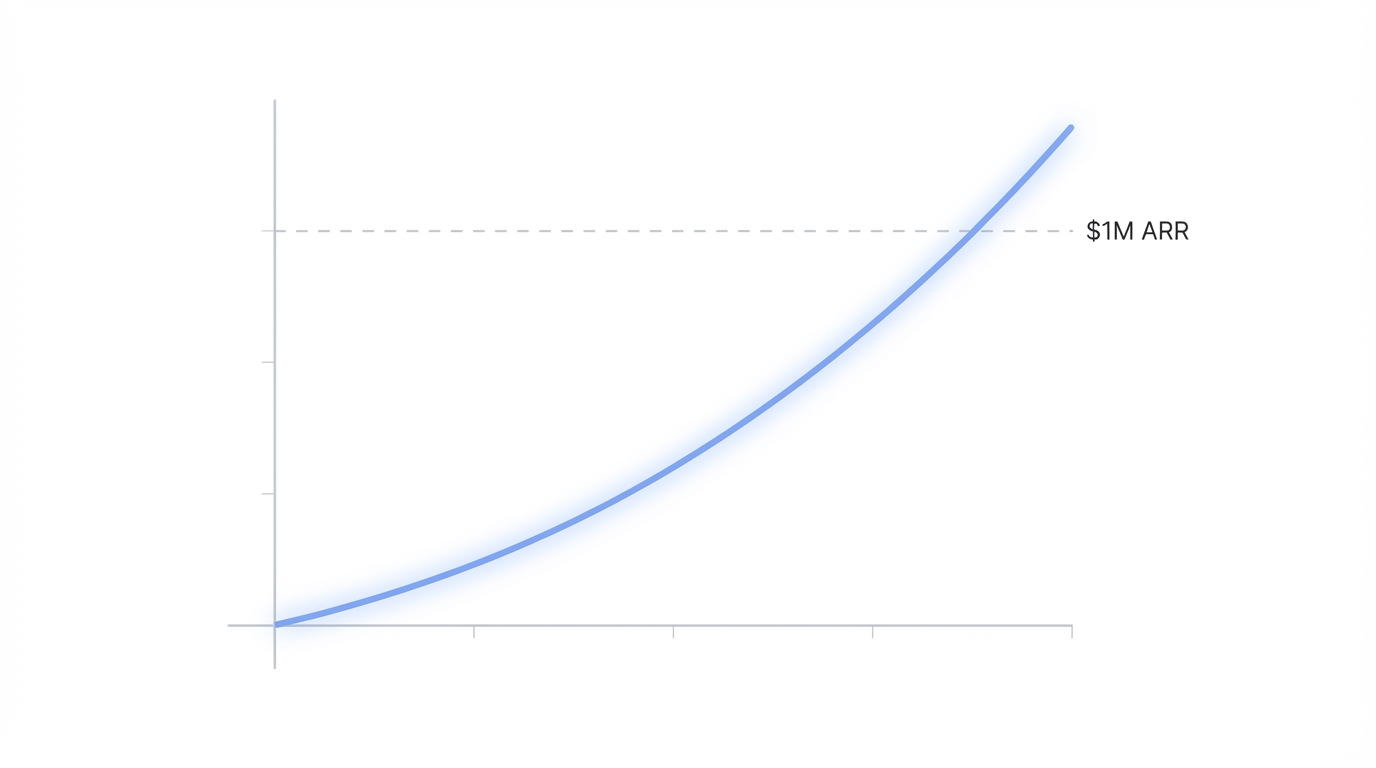
Building a $1M ARR AI startup in today's landscape requires three things: unrelenting focus, a context-first product, and the leverage of AI-powered tools. The "SF Gold Rush" isn't just about being in a specific geographic location; it's about adopting the mindset that a small, lean team can out-innovate and out-earn massive incumbents.
To get started, focus on a high-value niche in productivity or automation. Use AI to build your product, and use AI to market it. By keeping your team small and your revenue-per-employee high, you don't just build a business—you build a highly efficient, scalable machine that thrives in the new AI economy. Whether you're using Stripe to handle payments or Meta Ads Manager to find your first users, the infrastructure is there. Now, it's just a matter of hitting Command-Enter.