The era of manually drafting social media posts, copy-pasting into schedulers, and meticulously resizing images for five different platforms is coming to an abrupt end. We are witnessing a fundamental shift from "Chat AI"—where you ask a bot for ideas—to "Action AI," where autonomous agents execute entire marketing workflows from your terminal. According to data from Fortune Business Insights, the social media management market is set to explode from $27.03 billion in 2024 to $124.63 billion by 2032, driven largely by this pivot toward automation. For marketing managers and growth leads, the question is no longer about which tool to buy, but how to build an agentic social media automation engine that scales content 100x without increasing headcount.
The Rise of Agentic Marketing: Why Claude Code Changes Everything
In 2025, the baseline for marketing efficiency has shifted. A recent survey by SurveyMonkey revealed that 56% of marketers are already integrating AI into their workflows, with 43% identifying AI as the single most critical component of their social strategy. However, most are stuck in the "prompt-and-paste" loop. Enter Claude Code, Anthropic's agentic command-line tool that allows marketers to move from the browser to the terminal, enabling marketing automation workflows that interact directly with local files and external APIs.
The productivity gains are staggering. Teams adopting agentic AI workflows have reported a 300x increase in output for complex tasks, such as multi-platform content repurposing, compared to manual methods. This isn't just about speed; it's about ROI. Modern automation tools now yield an average return of $5.44 for every $1 invested, according to research from Templated.
Step 1: Setting the Foundation with CLAUDE.md
Before an AI social media manager can write a single tweet, it needs a brain. In the world of Claude Code, this brain is a file named CLAUDE.md. This documentation file lives in your project's root directory and acts as a persistent memory bank that Claude reads every time you initiate a task.
Instead of repeating your brand guidelines in every prompt, you define your Brand Voice, Content Pillars, and Platform Constraints once. When Claude executes a command, it references this file to ensure consistency. This prevents the generic, "robotic" tone that plagues most AI-generated content. According to the Digital Marketing Institute, the human marketer’s role is shifting toward Context Engineering—curating the logic and parameters that guide the AI, rather than writing the content itself.
What to include in your CLAUDE.md:
- Voice & Tone: Define if you are "witty and technical" or "authoritative and professional."
- Formatting Rules: Specify that LinkedIn posts shouldn't use more than three hashtags, while X (Twitter) threads must have a strong hook in the first 280 characters.
- Banned Words: List the typical AI fluff (e.g., "delve," "unleash," "tapestry") that you want the agent to avoid.
- Content Pillars: Define the core topics your brand covers to prevent off-brand hallucinations.
"The move from isolated chat interfaces to context-aware agents allows marketers to scale quality, not just quantity."
Step 2: The Workflow—Leveraging 'Plan Mode'
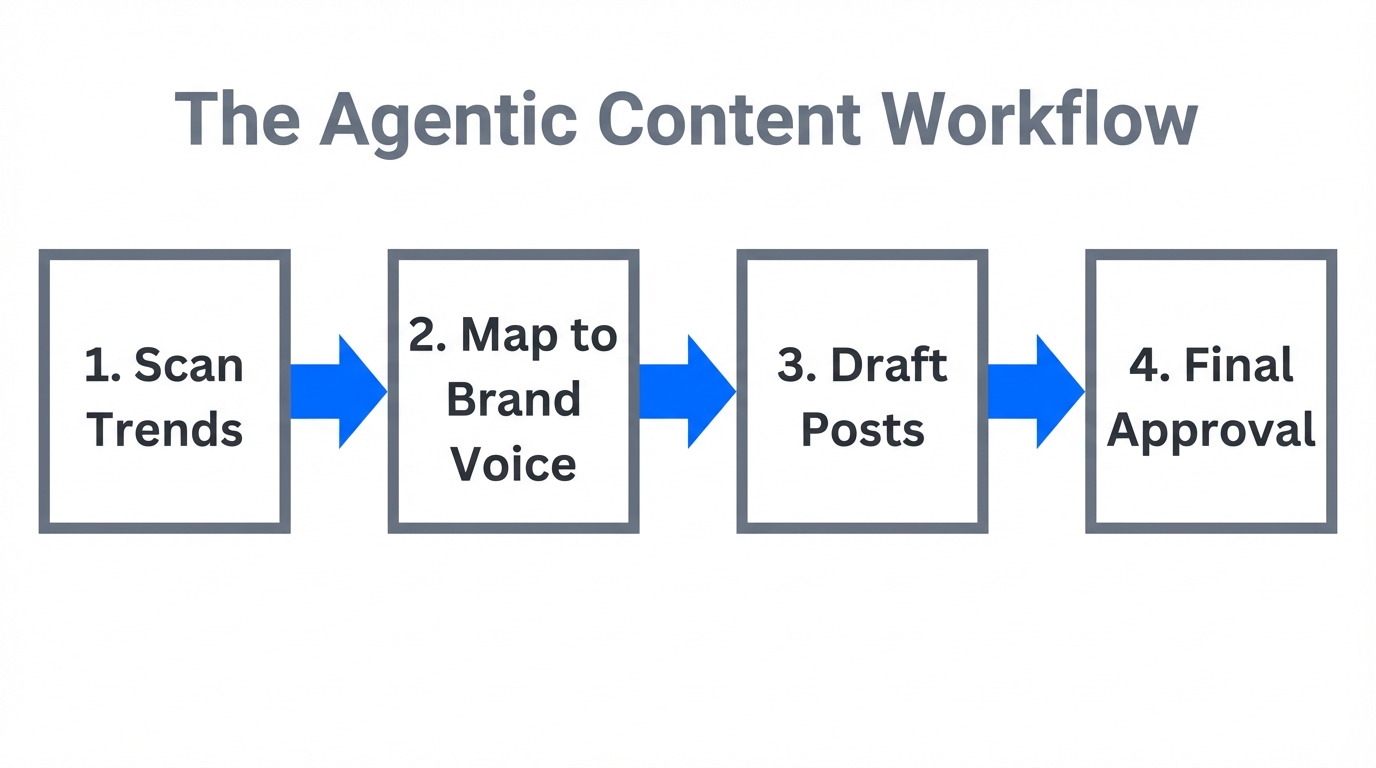
One of the most powerful features of Claude 3.5 and 3.7 Sonnet is the ability to enter Plan Mode. By hitting Shift + Tab in the Claude Code CLI, you can ask the agent to architect a multi-step distribution plan before it writes a single line of code or copy.
For example, you can point Claude at a long-form blog post or a YouTube transcript and say: "Design a multi-platform distribution plan for this material." The agent will then suggest a sequence of X threads, LinkedIn articles, and even TikTok scripts. This approach significantly reduces hallucinations and ensures that the structural nuances of each platform are respected.
| Platform | Structure Rule | Claude Code Instruction |
|---|---|---|
| Professional / Story-driven | Focus on white space and "see more" hooks. No hashtags in the body. | |
| X (Twitter) | Punchy / Viral threads | Use bold hooks and numbered threads. Maximum 280 chars per tweet. |
| TikTok/Reels | Visual / Hook-heavy | Generate scripts with 3-second visual cues and high-retention hooks. |
This systematic repurposing is a game-changer. Students at the GenAI Skills Academy have built workflows that take 5-6 hours to set up but save over 20 hours of manual labor every week. While your agent is drafting, you can focus on high-level strategy or use tools like Stormy AI to discover and vet UGC creators who can provide the raw video assets your automation engine needs.
Step 3: Execution—Moving from 'Chat' to 'Action' via MCP Servers
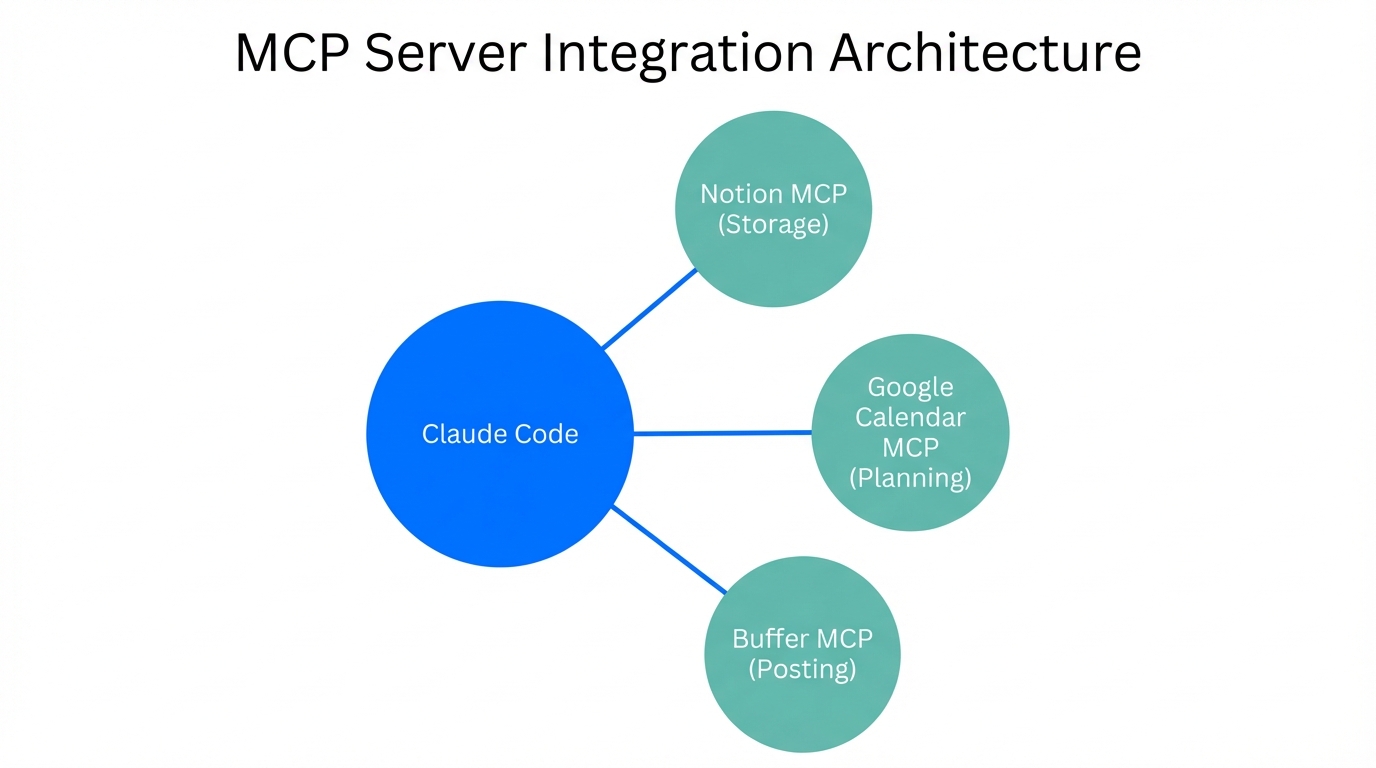
The true magic of Claude Code for marketing lies in the Model Context Protocol (MCP). MCP servers act as the "hands" for Claude, allowing it to interact with the real world. Instead of you copy-pasting text into a scheduler, Claude can use an MCP server to talk directly to an API.
For instance, by using the Late MCP, Claude can connect to the Late.dev API to actually hit "Schedule" on your posts. You can also integrate with Zapier or SocialBee to route content to different queues based on the topic or performance metrics.
How the technical sequence looks:
- Research: Claude uses an Apify MCP to scrape current trends or competitor gaps.
- Generation: Claude drafts posts based on the
CLAUDE.mdguidelines. - Validation: Claude checks its own work against "topic cooldown" rules to ensure you aren't posting too frequently on the same subject.
- Distribution: Claude pings a webhook that sends the final, approved copy to your social scheduler.
"Agentic AI doesn't just write; it works. The integration of MCP servers turns a language model into a functional team member."
Step 4: The 80/20 Rule—Maintaining a Human Touch
A major pitfall of social media automation is the "bot look." If every response and post feels clinical, engagement will plummet, and platforms may shadowban the account. To avoid this, experts at Mixpost recommend the 80/20 Rule: 80% automated distribution and 20% manual engagement.
Use Claude Code to handle the heavy lifting—repurposing content, scheduling, and formatting. But leave the community management, direct message replies, and high-stakes trend-jacking to a human. Furthermore, always build a "Human-in-the-loop" (HITL) gate. Use a tool like n8n.io to send a "Draft for Approval" notification to your Slack or Microsoft Teams channel before the agent is allowed to post live.
If your strategy involves influencer marketing or UGC, automation is even more critical. While Claude handles the scheduling, an all-in-one platform like Stormy AI can automate the discovery and outreach to creators. By combining an AI agent for scheduling with an AI agent for creator sourcing, a small team can run a global marketing operation with minimal overhead.
The Bottom Line: ROI and the Future of the Marketing Stack
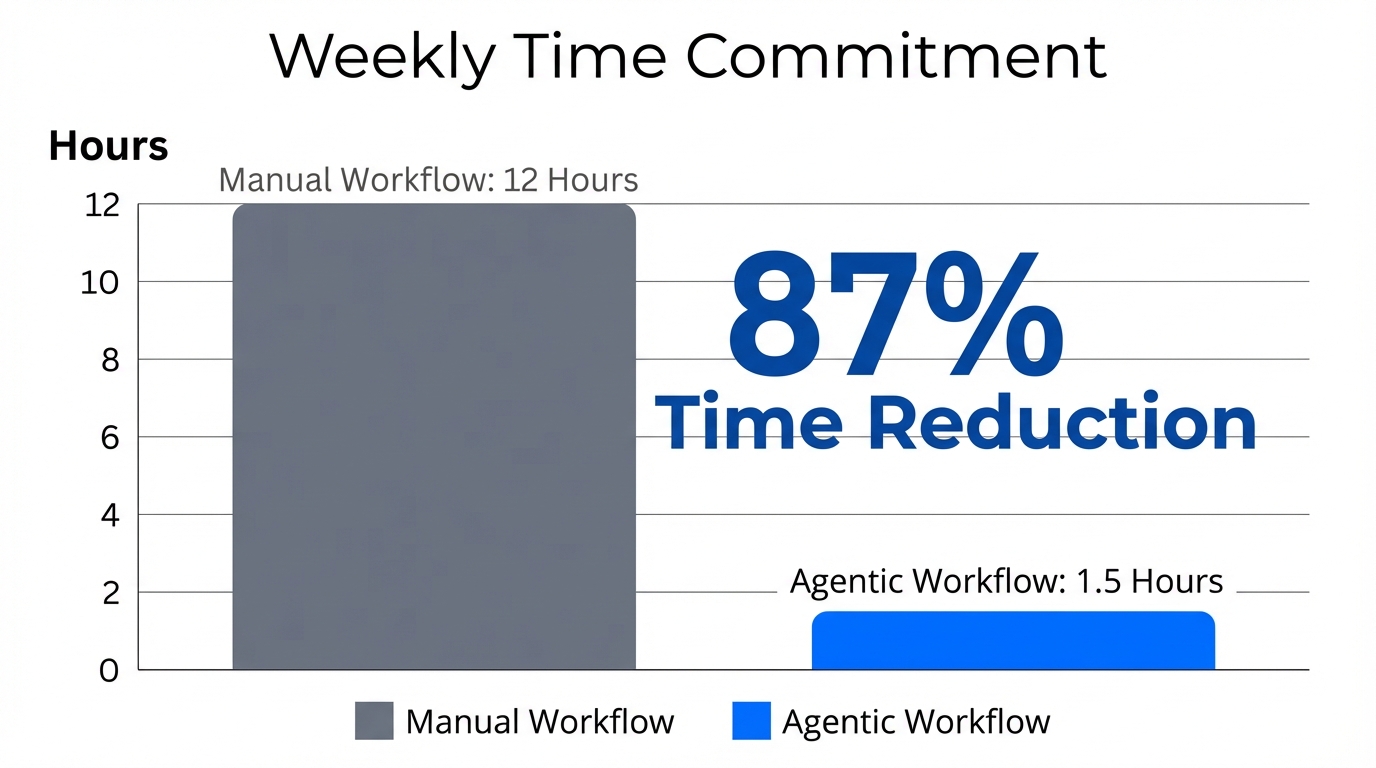
The transition to agentic AI marketing isn't just about saving time; it's about expanding the boundaries of what a single marketer can achieve. When you automate the tedious aspects of the social media calendar, you free up the mental bandwidth to focus on creative strategy and data-driven iteration. Developers on Reddit's /r/ClaudeAI community consistently highlight that Claude’s ability to generate bug-free code makes it the superior choice for building these custom marketing connectors.
As we move toward a world where 40% of enterprise apps are powered by agents, the early adopters of Claude Code and MCP-enabled workflows will be the ones who define the new standard for digital growth. By setting up a robust CLAUDE.md, leveraging Plan Mode, and connecting to execution APIs, you are not just automating a calendar—you are building a self-sustaining marketing engine.
"The future of marketing belongs to those who can bridge the gap between human creativity and agentic execution."
Conclusion: Your Automation Roadmap
To start your journey with Claude Code for marketing, begin small. Choose one high-effort task—like turning a blog post into an X thread—and build a local script to handle it. Once you've mastered the logic, expand to MCP servers and full-scale marketing automation workflows.
Remember, the goal is autonomous efficiency, not total absence. Keep your human touch for the 20% that matters—the deep connections and the creative sparks—and let Claude handle the rest. With the right foundation, your social media presence will grow while you sleep, powered by the most sophisticated agentic tools available today.