For years, the marketing industry has treated Artificial Intelligence like a sophisticated sounding board—a place to draft social posts or brainstorm catchy headlines. But as we move deeper into 2026, the paradigm is shifting. We are moving from the era of "Chat AI" to the era of "Action AI." The launch of Claude Code, Anthropic’s agentic command-line interface (CLI), has fundamentally changed the game for marketing automation. It is no longer about asking a bot to think; it is about deploying an agent to do.
Business owners and marketing leaders are now leveraging these agentic marketing workflows to build entire ecosystems in the time it used to take to hold a single briefing meeting. By moving the workflow into the terminal and utilizing the Model Context Protocol (MCP), a single operator can now achieve a staggering 300x increase in output for complex tasks. This guide provides a comprehensive playbook for restructuring your operations to build a high-velocity, automated marketing department.
The Shift to Action AI: Moving from the Browser to the Terminal
The biggest mistake most marketing teams make is staying within the browser-based chat interface. While the web version of Claude is excellent for creative writing, it is functionally isolated. It cannot see your files, it cannot run scripts, and it certainly cannot interact with your live ad data in real-time. Claude Code, however, is a professional development environment for marketers. According to FatJoe, approximately 34% of all Claude tasks now involve computer or mathematical tasks, including strategy execution and automated workflow management.
This shift represents the rise of "Vibe Marketing" or "Engineering-as-Marketing." Instead of just producing content, teams are building "micro-tools"—ROI calculators, custom generators, and lead magnets—that provide immense value. This transition has led to 70% of Fortune 100 companies adopting Claude to streamline their technical and creative operations.
"The entire marketing department is now one person with Claude Code and a coffee. We are seeing complete systems built in under an hour."
The 'One-Person Marketing Department' Architecture
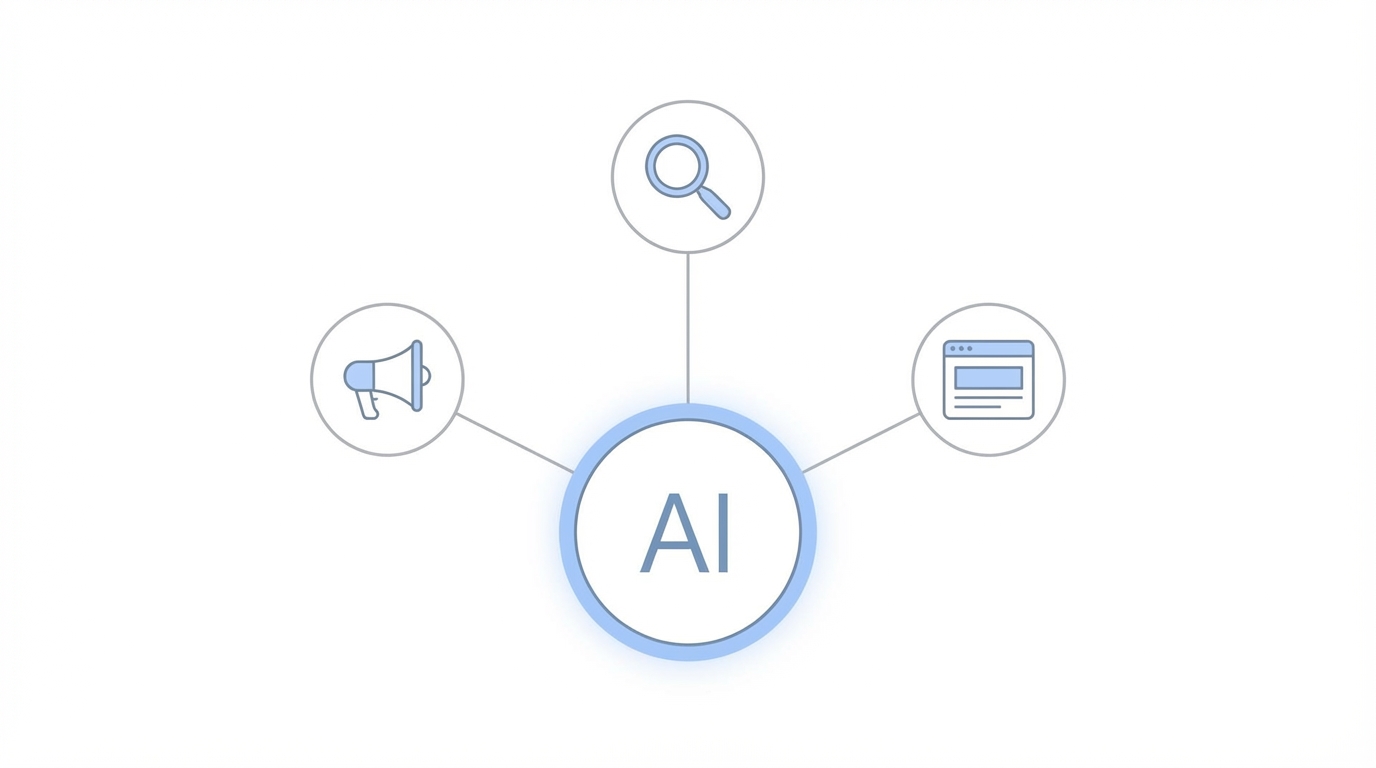
Building an AI marketing department doesn't mean firing your team; it means augmenting your best people so they can operate as a full-stack agency. The architecture relies on "Agentic Orchestration," where instead of one AI trying to do everything, you deploy specialized agents for specific functions. This results in a 75% reduction in time for standard workflows like SEO audits and campaign analysis, as noted by LobeHub.
The Three-Pillar System
- The Research Agent: Uses the Model Context Protocol (MCP) to pull real-time competitor data, keyword gaps, and market sentiment.
- The Creation Agent: Generates code-validated landing pages, email sequences, and ad copy based on the research data.
- The Distribution Agent: Programs and schedules content across social platforms and ad managers using official API servers.
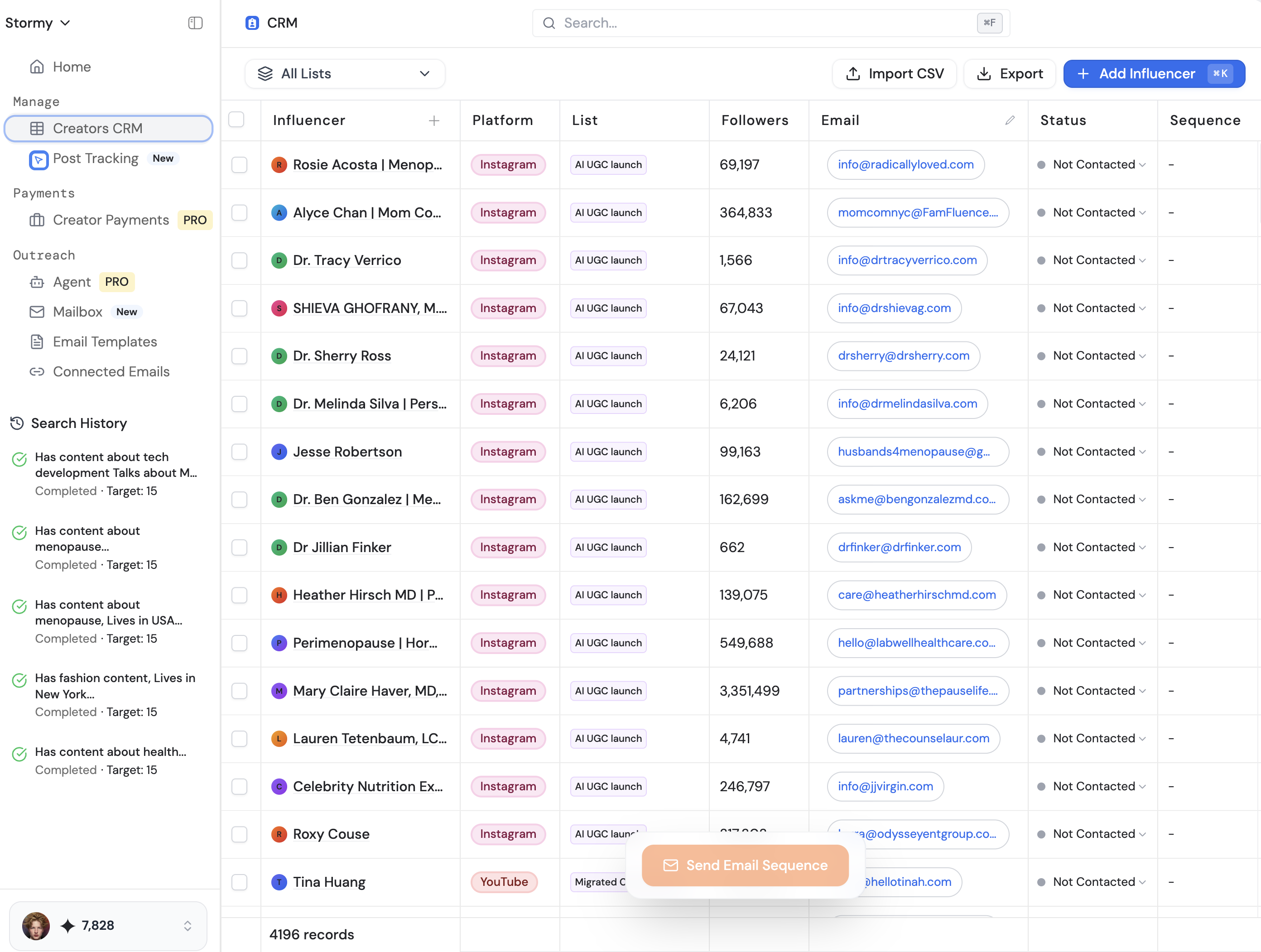
Growth marketers like James Dickerson have demonstrated that this architecture can ship a complete marketing system—including research, landing pages, and video ad scripts—in just 58 minutes. For those managing complex creator partnerships, platforms like Stormy AI can be integrated into this workflow to source and vet UGC creators at scale, ensuring your automated distribution has high-quality, human-centric creative to push.
Mastering 'Plan Mode' for Complex Campaigns
One of the most powerful features of Claude Code for business is Plan Mode. High-level marketing strategies often fail because they are too vague. When you use Shift + Tab to enter Plan Mode, you are asking Claude to break down a massive objective (e.g., "Launch a multi-channel campaign for our new SaaS feature") into a sequence of validated, executable steps.
This avoids the "Magic Prompt" fallacy—the idea that one long prompt will solve everything. Instead, break your marketing workflow efficiency into micro-tasks:
- Step 1: Contextualization. Define your brand voice and constraints in a
CLAUDE.mdfile. - Step 2: Validation. Have Claude draft the plan and ask for human approval at each critical juncture.
- Step 3: Execution. Let the AI write the code, scrape the data, or generate the assets.
- Step 4: Audit. Use automated "visual QA" tools to ensure the output meets brand standards.
"Success in AI marketing is no longer about prompt engineering; it is about context engineering."
The MCP Advantage: Connecting Your Stack
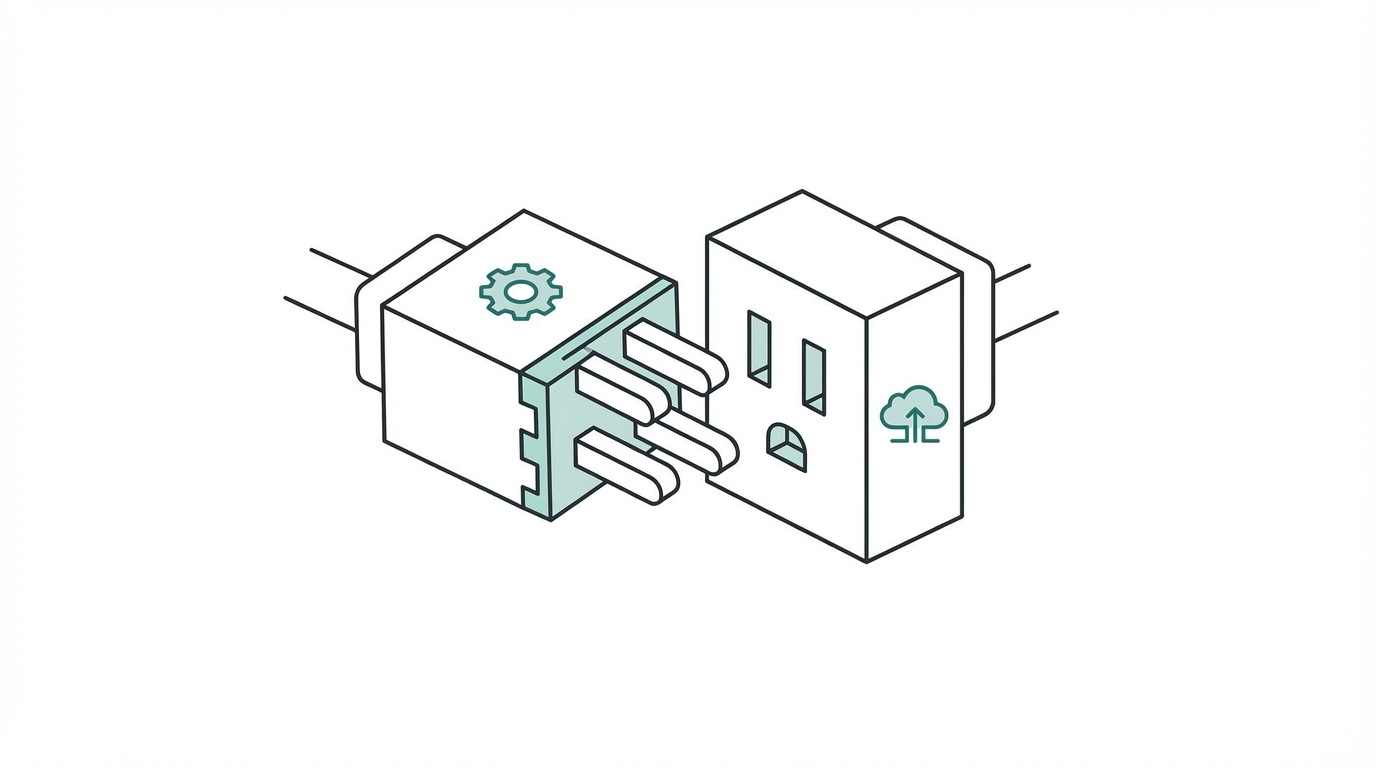
To truly automate, your AI needs hands. The Model Context Protocol (MCP) allows Claude Code to connect to your existing tools. This is what differentiates a Claude Code for business implementation from a standard AI assistant. By connecting live data, you eliminate the "knowledge cutoff" problem and ensure your marketing decisions are based on what is happening right now.
For example, using the Puppeteer MCP, marketers can automate competitor website scraping and visual QA of their own landing pages. This level of technical automation allows for 300x faster output on programmatic SEO and multi-landing page optimization, a stat supported by research from Geeky Gadgets.
When executing influencer-led campaigns, you can leverage the terminal to manage your creator database. While Claude handles the logic, Stormy AI provides the essential creator CRM and post-tracking capabilities needed to monitor how those automated campaigns are performing across TikTok and Instagram. This combination of agentic logic and specialized analytics is the hallmark of a modern, efficient marketing stack.
Case Studies: TELUS, Rakuten, and 30% Efficiency Gains
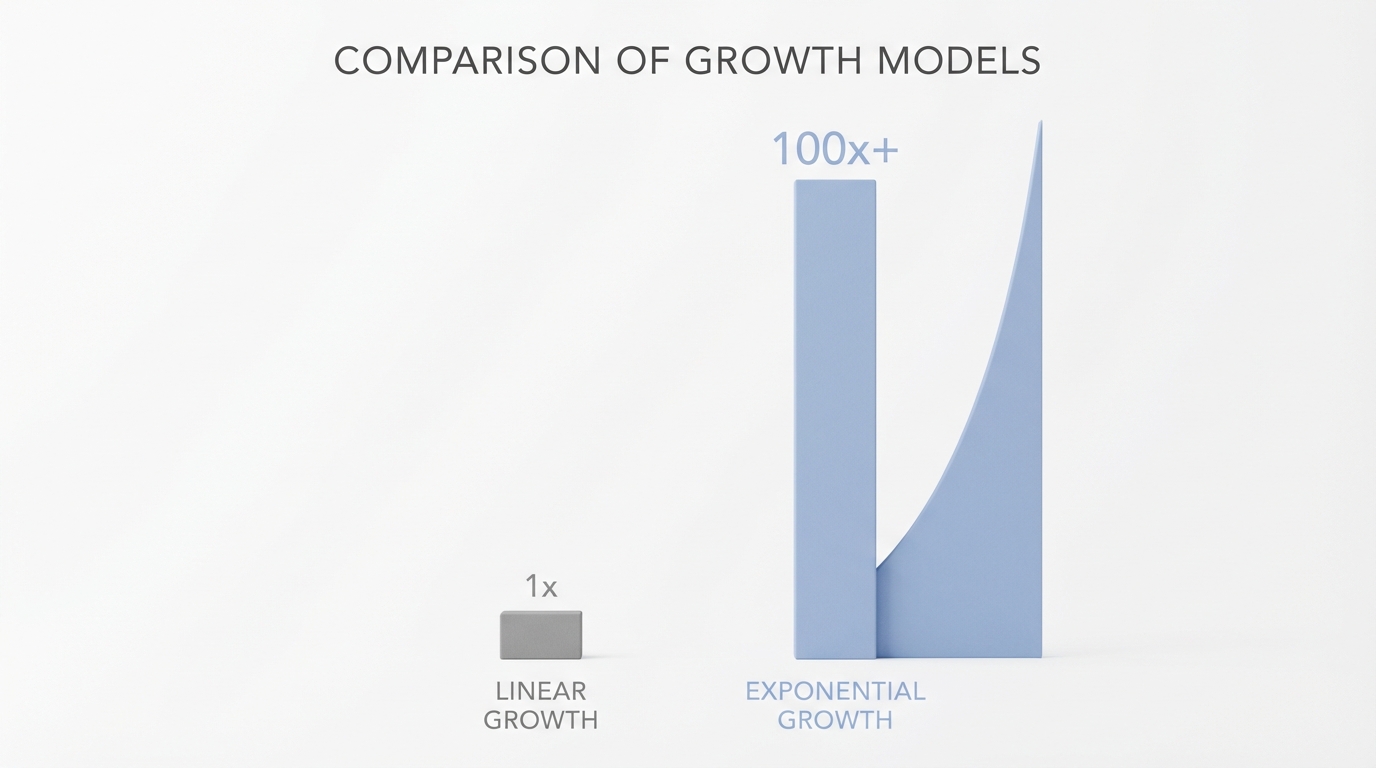
Large enterprises are already proving the ROI of these workflows. TELUS, for instance, leveraged Claude to create over 13,000 custom AI solutions, which allowed them to ship marketing and engineering code 30% faster and save an estimated 500,000 hours of manual labor, according to official Anthropic case studies.
Similarly, Rakuten used Claude Code to autonomously implement complex activation vectors in their codebase. They achieved 99.9% accuracy in just 7 hours—a task that would have taken a team of developers and marketers weeks to coordinate and verify. These aren't just marginal gains; they are structural shifts in how business is conducted.
Avoiding Common Pitfalls: Context Bloat and the Magic Prompt
As you move toward agentic marketing workflows, you will likely encounter "Context Window Bloat." This happens when a conversation becomes too long and the AI begins to lose track of the core objective or starts making errors. To combat this, experts recommend the /compact command. This summarizes the findings and clears the irrelevant history, allowing you to start a fresh session with only the essential context.
Another critical mistake is Ignoring the Human-in-the-Loop. AI can "dig a hole" by following a wrong path if it misinterprets a brand voice or a legal compliance requirement. You must remain the editor-in-chief. Stop execution if you see the AI making incorrect assumptions. As Max Junestrand, CEO of Legora, notes, the goal is to democratize automation so domain experts can implement solutions directly, but those experts must still provide the "taste" and strategic oversight.
Conclusion: Building the Future of Automated Growth
The transition to a one-person marketing department is not a future possibility—it is a current reality for those willing to master the terminal. By moving from Chat AI to Action AI, utilizing Plan Mode for structured execution, and connecting your stack via MCP, you can achieve unprecedented levels of marketing workflow efficiency.
To begin, start with a small, repeatable task like an SEO audit or a landing page A/B test. Use Claude Code to build the framework, and integrate specialized tools like Stormy AI to handle the high-touch elements of creator discovery and campaign tracking. The future belongs to the "Vibe Marketers" who can orchestrate these powerful agents to create, distribute, and optimize at the speed of thought.