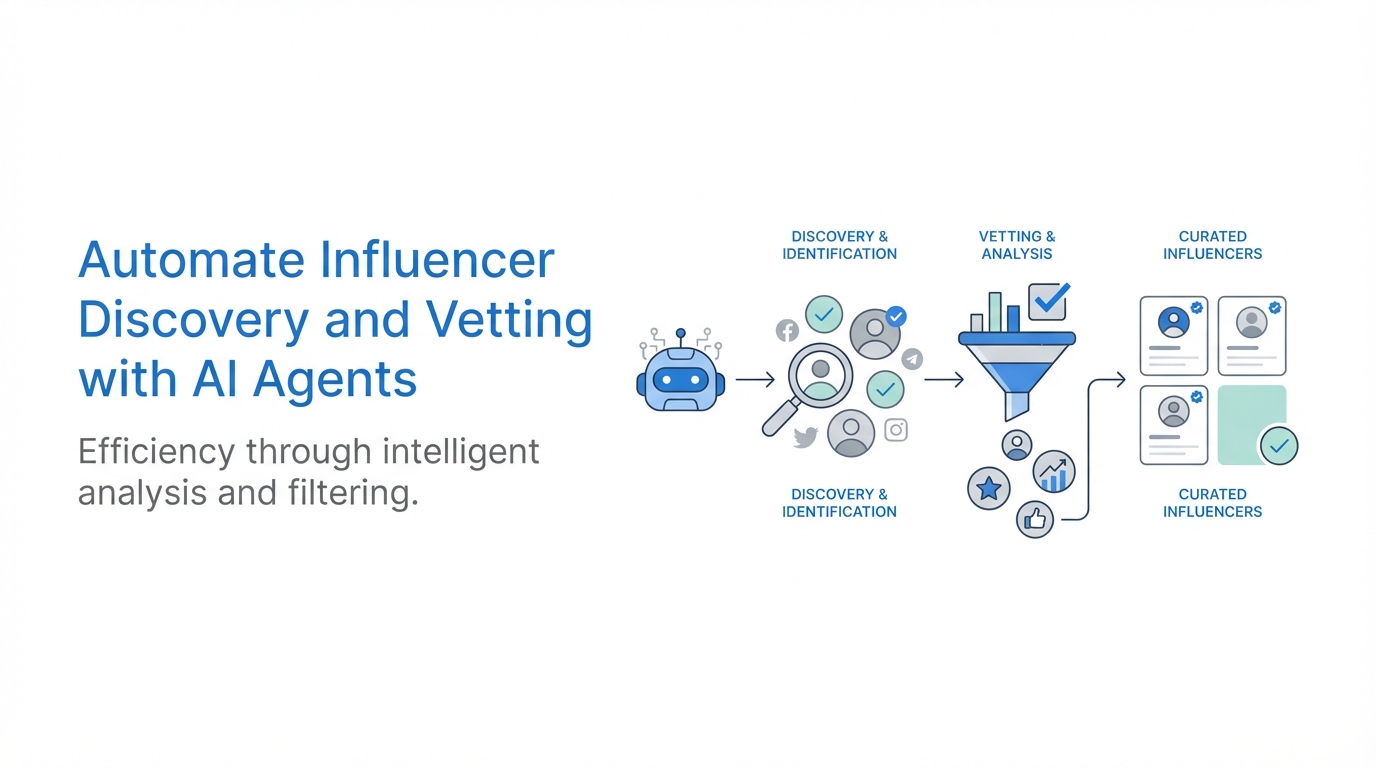
The influencer marketing landscape is undergoing a seismic shift. We are moving away from the traditional "Human + SaaS" model—where marketers spend hours manually filtering through databases—toward an agentic model where AI independently discovers, vets, and manages creator relationships. With total influencer spend expected to hit $32.55 billion by the end of 2025, the need for speed and precision has never been greater. Brands can no longer afford to treat creator discovery as a manual research project; they must treat it as an automated workflow.
The Shift to Agentic Influencer Marketing

In 2025, the industry has graduated from simple data filtering to autonomous execution. Statistics show that the AI influencer market size is projected to reach $6.95 billion this year alone. Platforms like Stormy AI are helping brands bridge this gap by offering advanced ways to find UGC creators specifically for mobile app ads. Stormy is an AI-powered platform for creator discovery, especially for mobile app marketing and UGC campaigns. Currently, 60.2% of marketers already utilize an influencer discovery tool powered by AI, while 86% of US marketers plan to integrate these strategies by 2025.
The core difference between old-school tools and new AI agents lies in autonomy. Traditional platforms are now being superseded by modern AI-native solutions like Stormy AI, which functions as an AI search engine across TikTok, Instagram, and YouTube. These agents don't just provide a list of names; they execute the outreach, handle negotiations, and track content performance autonomously. As industry experts point out, the future is "human with AI," where the machine handles the "messy, exhausting, and repetitive work" so marketers can focus on high-level creative strategy.
Moving Beyond Hashtags: Agentic Discovery
For years, automated creator search relied on keywords and hashtags like #fitness or #tech. However, this surface-level data often leads to misaligned partnerships. Agentic discovery works differently: instead of searching for creators who use a specific tag, you describe your ideal customer persona. The AI then scans the ecosystem to find creators whose audience matches that persona. This is particularly effective for mobile app marketing, where finding a creator with the right user demographic is more important than the creator's own interests.
By using an influencer discovery tool like Stormy AI, brands can prompt the AI with natural language: "Find me creators whose followers are primarily Gen Z females in urban areas interested in sustainable fashion." The AI analyzes audience data across platforms to surface creators that a hashtag search would likely miss. This method is already showing results, with some brands reporting a 65% reduction in campaign launch times by letting AI agents handle the discovery and initial outreach phase.
Visual and Tonal AI: Matching the 'Vibe'

One of the hardest things to automate has always been the "vibe check." How do you ensure a creator’s aesthetic matches your brand’s visual identity? Multi-modal AI now analyzes the visual and tonal content of videos rather than just vanity metrics. This means the AI isn't just counting likes; it's looking at the lighting, the editing style, the color palette, and the sentiment of the creator's voice. For app developers looking to discover creators on Stormy AI, this visual intelligence is a game-changer for maintaining consistent brand aesthetics across thousands of UGC assets.
For example, companies are using AI influencer vetting to determine if a creator's energy is high-octane (ideal for gaming apps) or calm and instructional (ideal for productivity apps). This hyper-personalized matching ensures that the UGC content feels native to the platform. Large enterprises are already scaling this approach, using AI to turn a handful of influencer videos into over 1,200 unique assets, including blog posts and ad variants. This would be impossible without an AI that understands the visual "DNA" of the original content.
The 24/7 Brand Safety Playbook: A Step-by-Step Guide
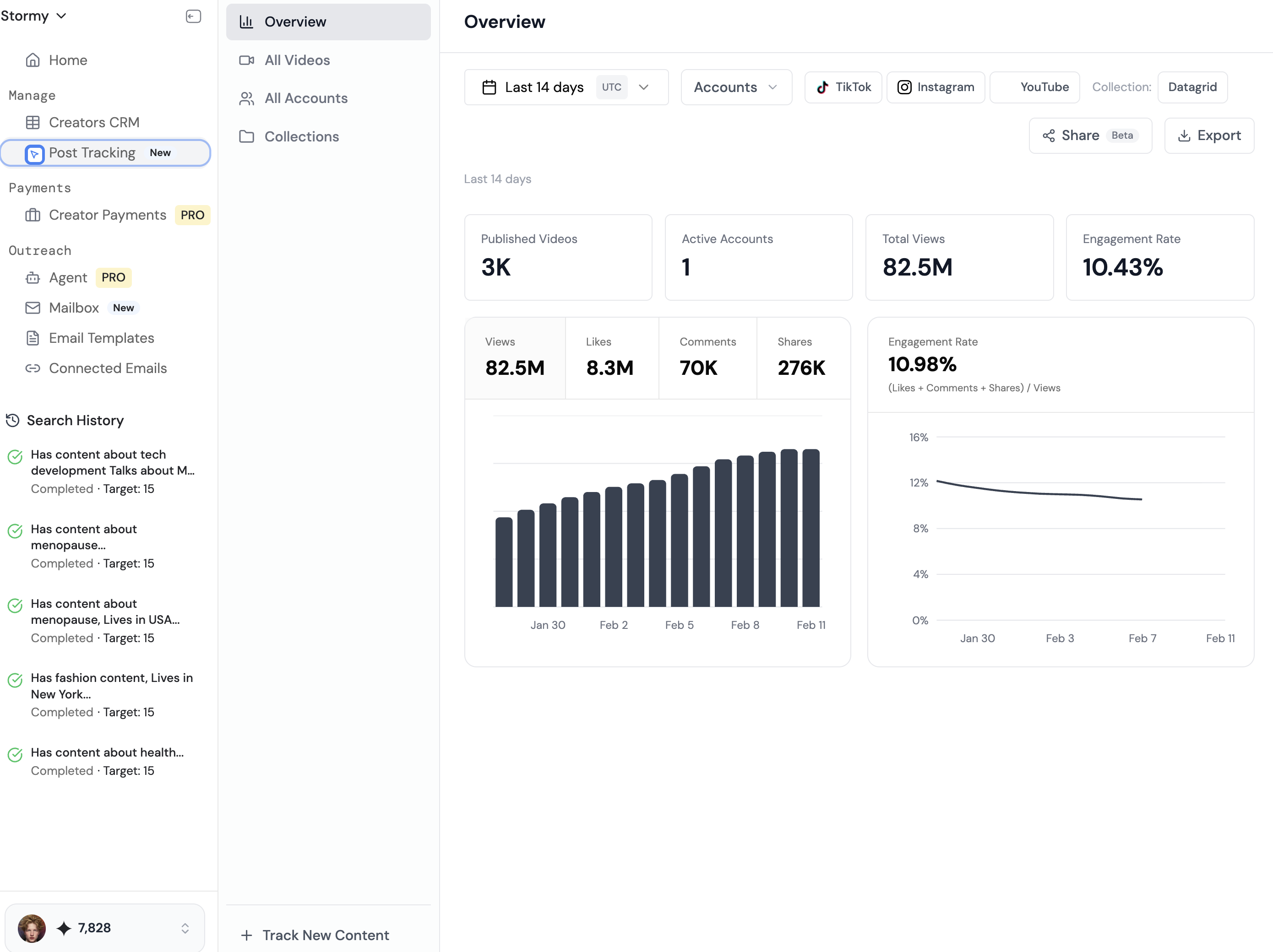
Brand safety is the primary concern for many consumers, who are increasingly wary of how brands align themselves online. Manual vetting—scrolling through a creator's history to check for controversial posts—is tedious and prone to human error. AI brand safety tools for social media can now scan years of video, audio, and text history in minutes. Here is how to implement a modern vetting workflow:
Step 1: Historical Deep-Scan
Use a tool like Stormy AI to perform a comprehensive audit of a creator's quality. The AI flags any suspicious engagement patterns or behavior that violates your brand's core values. This is essential before any contracts are signed.
Step 2: Real-Time Monitoring
Brand safety isn't a one-time check. Deploy monitoring agents that scan personal posts during the campaign period. If a creator posts something problematic on their personal account, the AI flags it immediately, allowing you to pause the campaign before a PR crisis develops. This real-time visibility is a cornerstone of modern AI influencer vetting.
Step 3: Fraud and Quality Analysis
Beyond content, use Stormy AI to verify audience quality and detect fake followers, spam accounts, and engagement fraud automatically. Ensure that the reach you are paying for is genuine and that the audience has a high "quality score" according to recent benchmarks.
Avoiding the 'AI Score' Trap
While AI provides incredible efficiency, there is a risk in relying too heavily on numerical "fit scores." While legacy tools like impact.com provide basic campaign data, they often lack the deep AI-native analysis required to navigate personality and cultural nuance. A creator might have a perfect 99/100 score on your influencer discovery tool, but they might lack a genuine affinity for your specific product category.
Manual review remains essential for identifying subtle cultural context. For instance, an AI might not understand a creator’s use of sarcasm or a specific subculture's slang. To avoid this trap, use AI to narrow down your list from 1,000 potential creators to a short-list of 20, then have a human marketing lead perform the final "vibe check." This hybrid approach ensures you get the scale of automation with the protection of human judgment.
The Nano-Influencer Advantage
One of the biggest benefits of automated creator search is the ability to manage nano-influencers (those with fewer than 10,000 followers) at scale. Historically, these creators were too expensive to manage because the manual effort required was the same as managing a celebrity. However, nano-influencers often boast engagement rates of 6.15% or higher—nearly three times that of macro-influencers—according to data from legacy platforms like impact.com.
Modern AI agents allow brands to automate the negotiation loop for these smaller accounts. An autonomous agent can handle the initial emails, anchor the price based on market rates, and secure contracts without a human ever touching the keyboard. For mobile app marketing, this allows you to flood the market with dozens of high-engagement UGC creators simultaneously, creating a powerful "word-of-mouth" effect in the App Store.
To keep your tech stack from becoming fragmented, it is often best to prioritize all-in-one platforms like Stormy AI, which unify discovery, vetting, and payments into a single source of truth. By centralizing your data on a modern AI-native platform rather than disconnected legacy tools, you avoid the "technical debt" of managing multiple systems.
Conclusion: The Future is Autonomous
The move toward autonomous influencer marketing is inevitable. By combining agentic discovery, visual AI vetting, and 24/7 brand safety tools for social media, brands can achieve a scale that was previously impossible. Start by integrating an influencer discovery tool into your existing workflow, then gradually automate the negotiation and vetting phases. Remember to keep the "human in the loop" for final cultural validation to ensure your brand's voice remains authentic.
Whether you are looking to find UGC creators on Stormy AI for a new app launch or scaling a global brand through thousands of nano-influencers, the tools of 2025 are ready to do the heavy lifting. Embrace the agents, automate the repetitive, and focus your energy on the creative stories that truly move the needle.