In the digital-first landscape of 2026, the most disruptive trend in the creator economy isn't happening on a screen—it’s happening in physical real estate. While the world spent years obsessing over virtual metaverses and remote workflows, a new breed of entrepreneur has quietly been building physical hubs that are generating staggering returns. Leading this charge is The Lighthouse, a creator campus model that successfully scaled to 8-figure revenue within its first year using only a single location. This isn't just about co-working; it’s about the professionalization of the creator economy through high-utility physical infrastructure.
The Strategic Shift: From Desk Utility to Creator Infrastructure
 12:18
12:18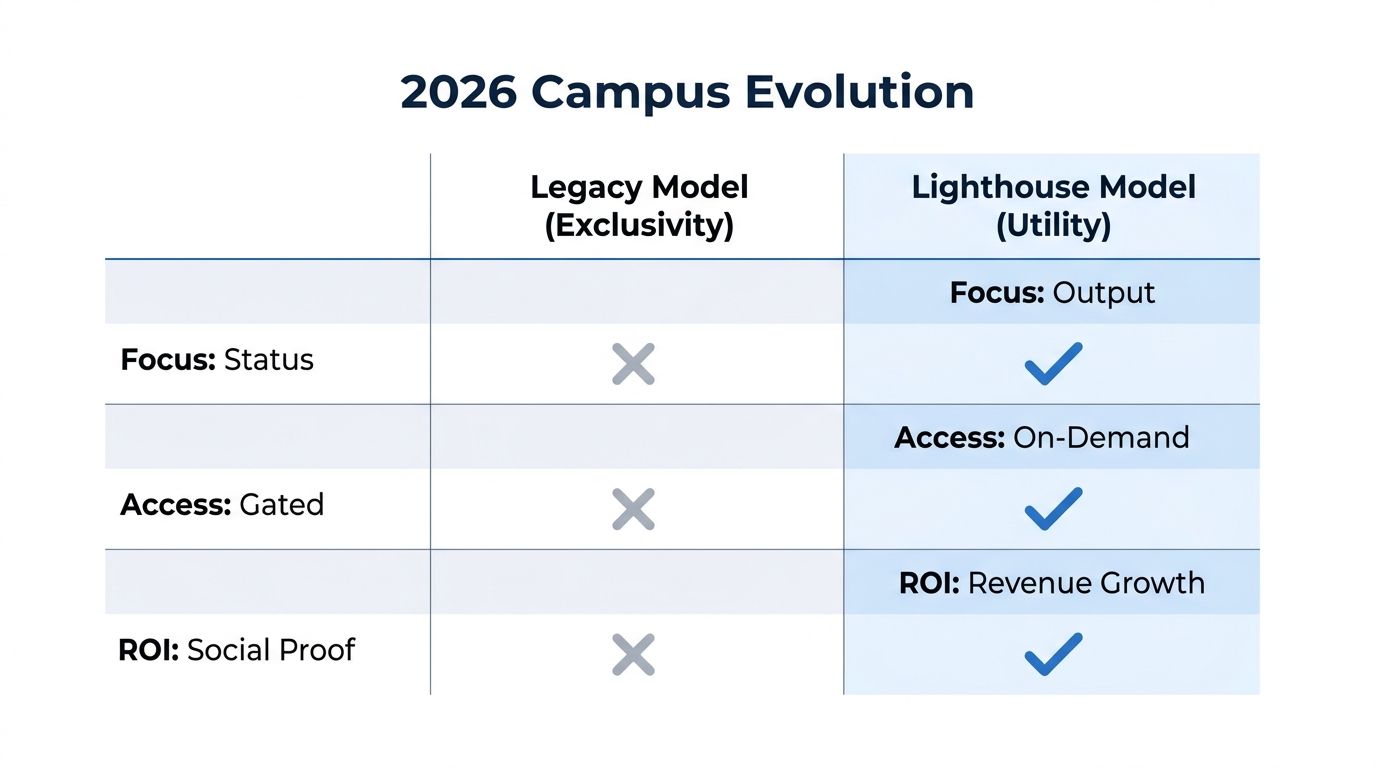
The traditional co-working model, popularized by early pioneers, focused on providing a desk, a coffee machine, and a stable Wi-Fi connection. However, for the modern influencer and UGC creator, a desk is the least valuable asset in their toolkit. The 2026 creator requires production-grade environments that facilitate content output. This is where Whaler, the agency behind The Lighthouse, identified a massive market gap.
Unlike Soho House, which prioritizes social exclusivity and prestige, the new wave of creator campuses prioritizes utility. Scaling "cool" is notoriously difficult because exclusivity is inherently limited. However, scaling utility—like professional recording studios, lighting rigs, and soundproof podcast booths—is a repeatable business model that creators are willing to pay a premium for. By positioning themselves as the "work and social home for creatives," platforms like NeueHouse and The Lighthouse have bypassed the pitfalls of legacy co-working.
"Scaling exclusivity is a challenge of branding; scaling utility is a challenge of infrastructure. The latter is where the 8-figure revenue lives in 2026."
Anatomy of an 8-Figure Revenue Model
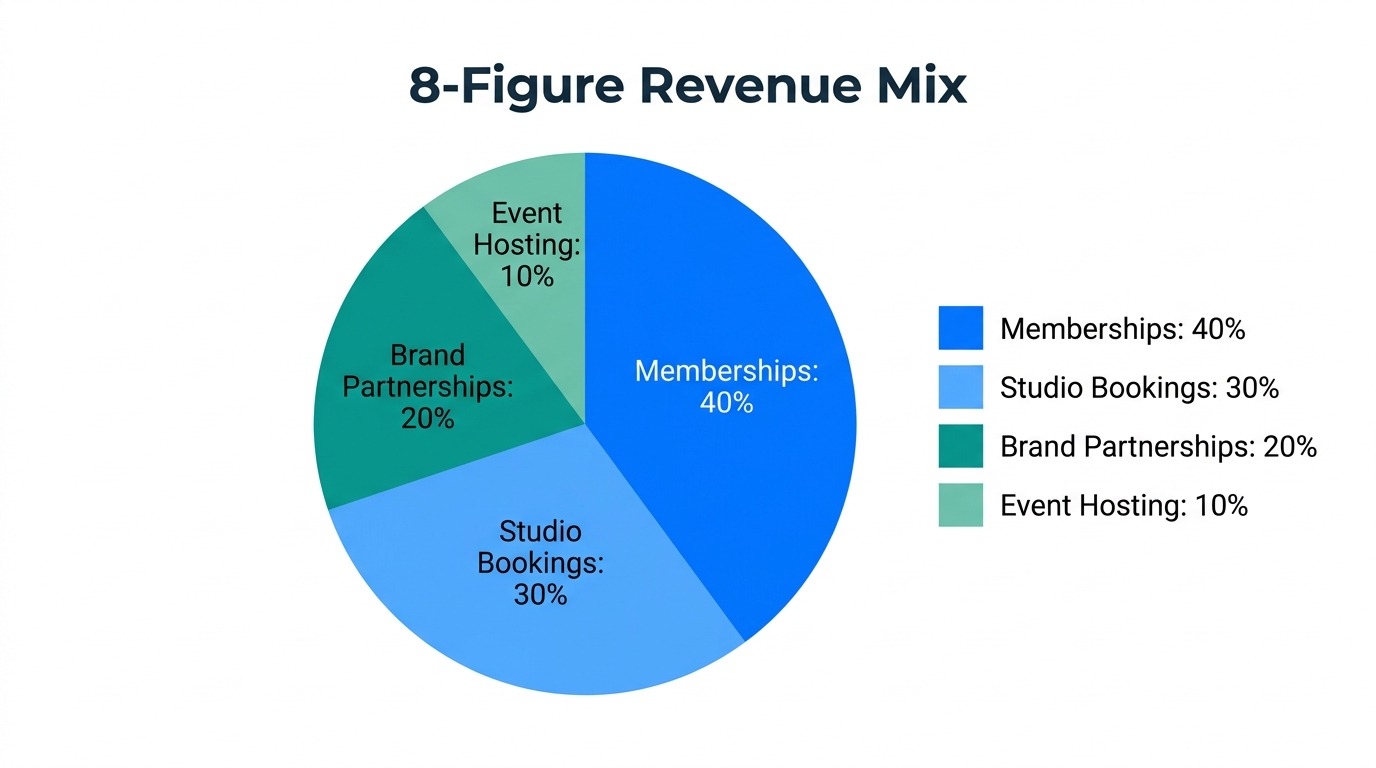
How does a single physical location generate over $10 million in its first year? The answer lies in the revenue stacking of niche amenities. Traditional co-working spaces often struggle with low margins on desk rentals, but the Lighthouse model utilizes a tiered membership and booking system that maximizes every square foot of the campus.
Members aren't just paying for entry; they are paying for access to professional content engines. This includes high-end podcast studios, TikTok-ready lifestyle sets, and professional editing bays. In a world where consistent output is the only way to survive the algorithm, creators view these fees as a necessary business expense rather than a luxury. Furthermore, these campuses often serve as the physical headquarters for TikTok Ads production and large-scale UGC campaigns for brands.
| Feature | Traditional Co-working | The Lighthouse Model |
|---|---|---|
| Core Value | Desk Space & Wi-Fi | Content Production Studios |
| Revenue Driver | Monthly Membership | Hourly Studio Bookings + Membership |
| Target ICP | Remote Employees | High-Output Content Creators |
| Margin Quality | Low (Real Estate Play) | High (Service & Utility Play) |
The 'Lighthouse' Strategy: Building a Content Distribution Engine
10:18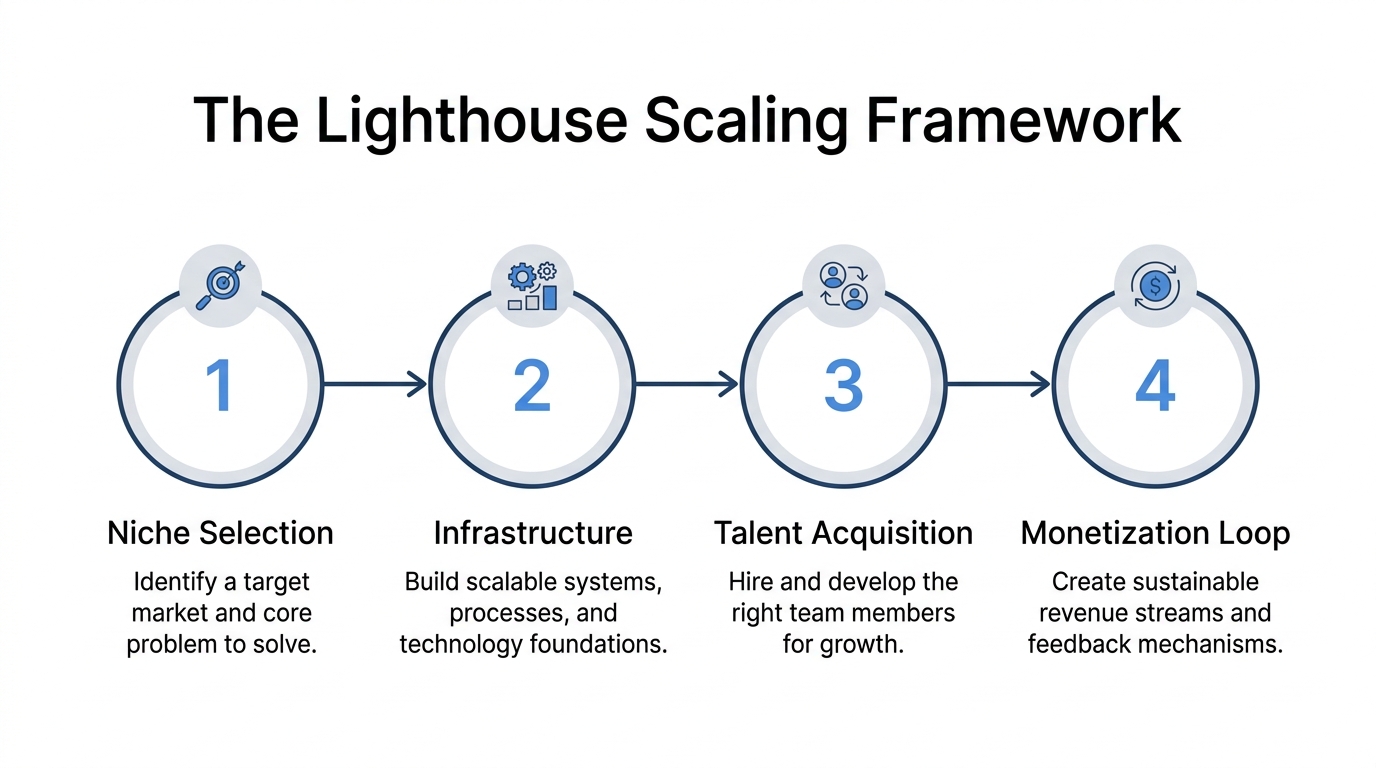
The brilliance of the "Lighthouse" strategy is that the physical space itself becomes a marketing flywheel. When high-value influencers record content within the campus, the location is frequently tagged, shared, and showcased in their videos. This creates a natural SEO and social media pull that reduces customer acquisition costs (CAC) to nearly zero. Every piece of content filmed at these hubs serves as a high-intent advertisement for the campus itself.
This model thrives on the "Join or Die" sentiment of 2026. As AI-generated content saturates the digital world, the craving for genuine human interaction and physical community has reached an all-time high. Creators are no longer content to work in isolation; they want to be part of a "buzzing" environment like The Malin, where the energy of other high-performers acts as a catalyst for their own creativity.
Step-by-Step: Identifying Your Creative Niche
14:18To replicate the success of 8-figure creator campuses, you cannot be everything to everyone. You must identify a specific, underserved creative niche within a major metro area. Here is the playbook for vetting your market:
- Analyze Local Creator Density: Use platforms like Stormy AI to search for creators in specific cities (e.g., "fitness creators in Austin with 50K+ followers"). If there is a high density of creators in a specific niche but no centralized production hub, you have found your market.
- Identify the Friction Point: What is preventing these creators from scaling? For podcasters, it’s often soundproofing and high-end equipment. For lifestyle creators, it’s access to diverse, aesthetic backgrounds.
- Map the Ecosystem: Look at where these creators currently hang out. Are they in generic coffee shops or basic gyms? Build a space that offers 10x the utility of their current environment.
"You don't need 10,000 members; you need 500 high-output creators who view your space as the essential factory for their digital products."
Operational Efficiency: Balancing Hospitality and Production
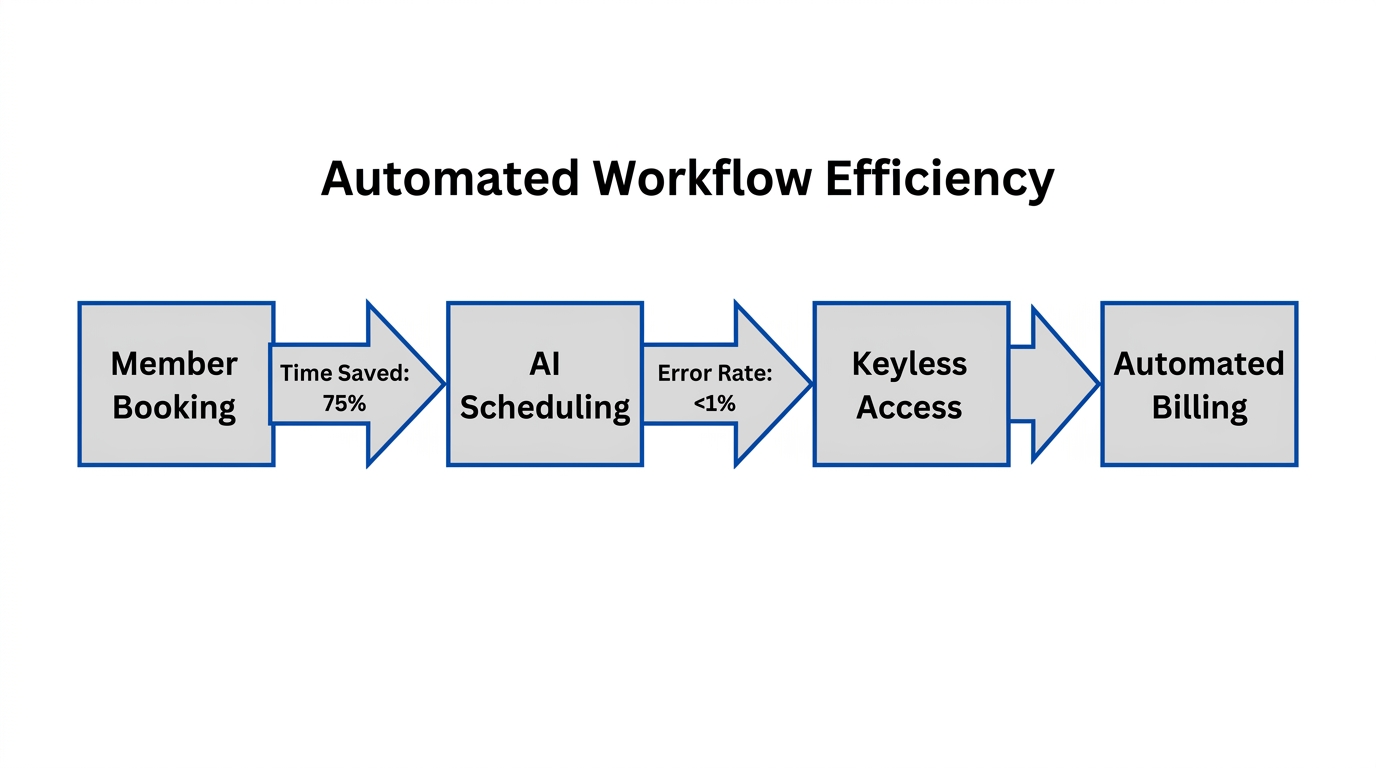
Running a creator campus is a hybrid of real estate development, hospitality, and media production. Unlike a standard office, these spaces require on-site production assistants and technical support. Operational excellence means ensuring that a creator can walk in, plug in their camera, and start recording without a 30-minute setup time.
Many successful campuses are now integrating their physical operations with digital management tools. For instance, managing the relationship between the creators using the space and the brands looking to hire them can be streamlined using an AI-powered CRM. By using Stormy AI, campus operators can track the performance of the creators in their community, making the campus even more attractive to brand partners who want to run app install campaigns or UGC-heavy marketing blitzes.
The Future: Physical Infrastructure for Influencers
21:38As we look deeper into 2026, the creator campus model will likely expand into niche-specific housing and dedicated family-friendly spaces, similar to the Beginning Clubhouse in Brooklyn. The most successful operators will be those who can increase the value of their real estate not by adding more units, but by positioning the space as the ultimate environment for a specific type of high-value customer.
Whether it’s a pet-friendly "Live-Work-Play" complex for dog-obsessed creators in Denver or a high-tech studio hub in Los Angeles, the goal is the same: maximize net income through niche utility. The era of generic co-working is over. The era of the specialized creator campus is just beginning.
"In 2026, the real estate winners aren't those who own the most land, but those who own the most productive square footage for the world's new workforce."
Conclusion: Your 8-Figure Playbook
Scaling a physical business to 8-figures in one year requires more than just capital—it requires a deep understanding of the creator's workflow. By following the strategy set by The Lighthouse, entrepreneurs can build sustainable, high-margin businesses that tap into the fundamental human need for community and the professional need for production quality. Start by vetting your local creator market, identify the utility gap, and build the infrastructure that helps creators sell more digital products. The physical hub is the new content distribution engine.