In the high-octane world of Silicon Valley, entrepreneurs often chase the same shiny objects: generative AI video, consumer social apps, or productivity tools for remote teams. Yet, while thousands of founders compete for the same narrow sliver of attention, a solo bootstrapper named Jordan built a $1.5 million business in a sector that 95% of people don't even realize is an industry. His product, Parakeet Chat, has no mobile app, no traditional user interface, and cannot be found on the Apple App Store. It is an invisible product dominating a hyper-niche market.
By solving critical communication and legal research pain points for incarcerated individuals, Jordan created a sustainable Starter Story success that generated over $300,000 in revenue in 2025 alone. This article breaks down the niche market strategy 2026 requires for founders who want to stop competing and start dominating hidden markets.
The Fortune in "Boring" Industries
Discover how a hidden idea in a boring industry became a massive success.
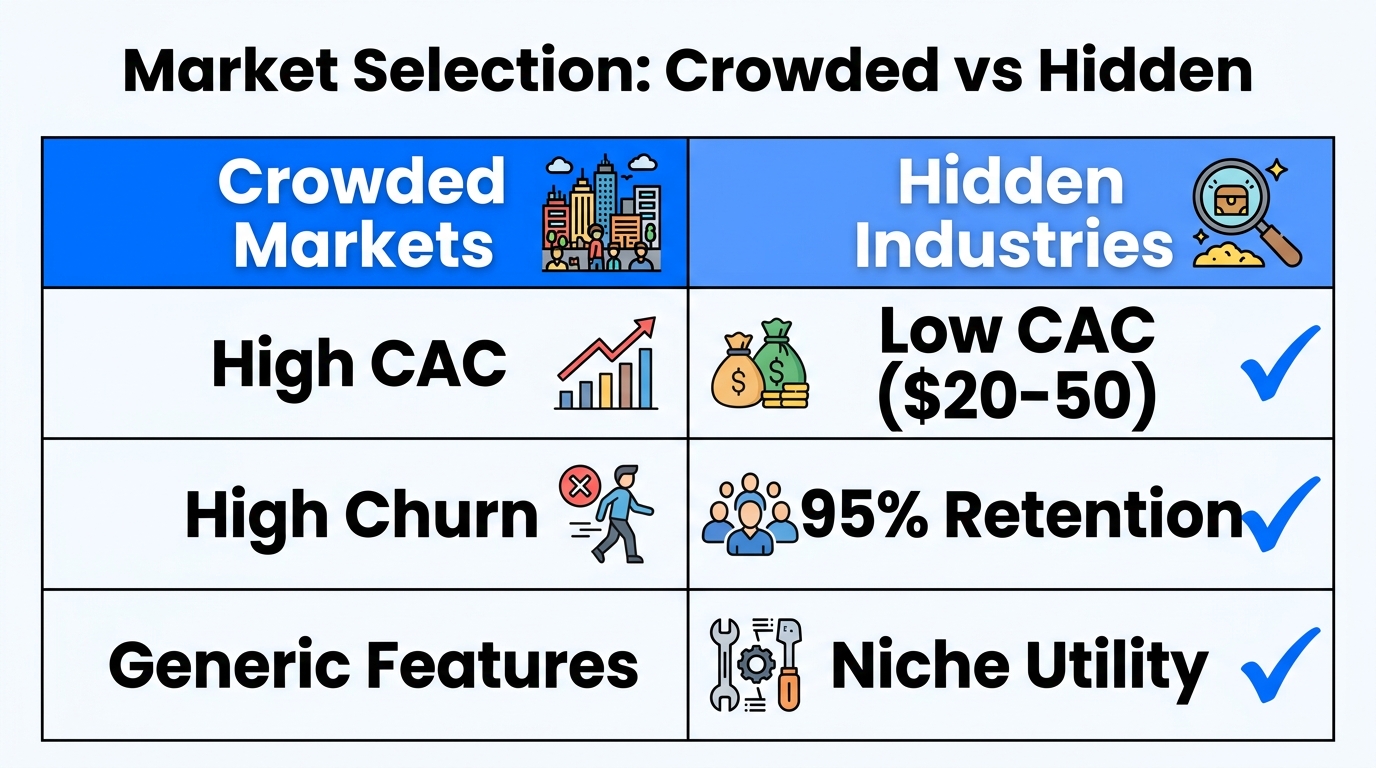
Most entrepreneurs overlook "boring" or "unattractive" industries because they lack the glamor of mainstream tech. However, these are precisely the sectors where the most painful problems exist. Jordan didn’t stumble upon Parakeet Chat by browsing trending keywords on Google Ads; he found it through a jarring personal experience. When a colleague was suddenly incarcerated, Jordan witnessed firsthand the predatory pricing and archaic technology that dominates the prison communication sector.
To identify these opportunities, you must look for closed ecosystems. These are environments where standard internet rules don't apply. Whether it’s heavy manufacturing, maritime logistics, or the prison system, these industries rely on legacy systems that are ripe for a micro-SaaS growth explosion. In Jordan's case, he realized that incarcerated people were paying exorbitant fees for subpar services, creating a massive opening for an unconventional customer acquisition strategy.
"The key to finding a $1.5M idea isn't looking at what's trending on Product Hunt—it's looking at the broken systems that everyone else is too afraid or too bored to fix."
The 'Closed Ecosystem' Validation Framework
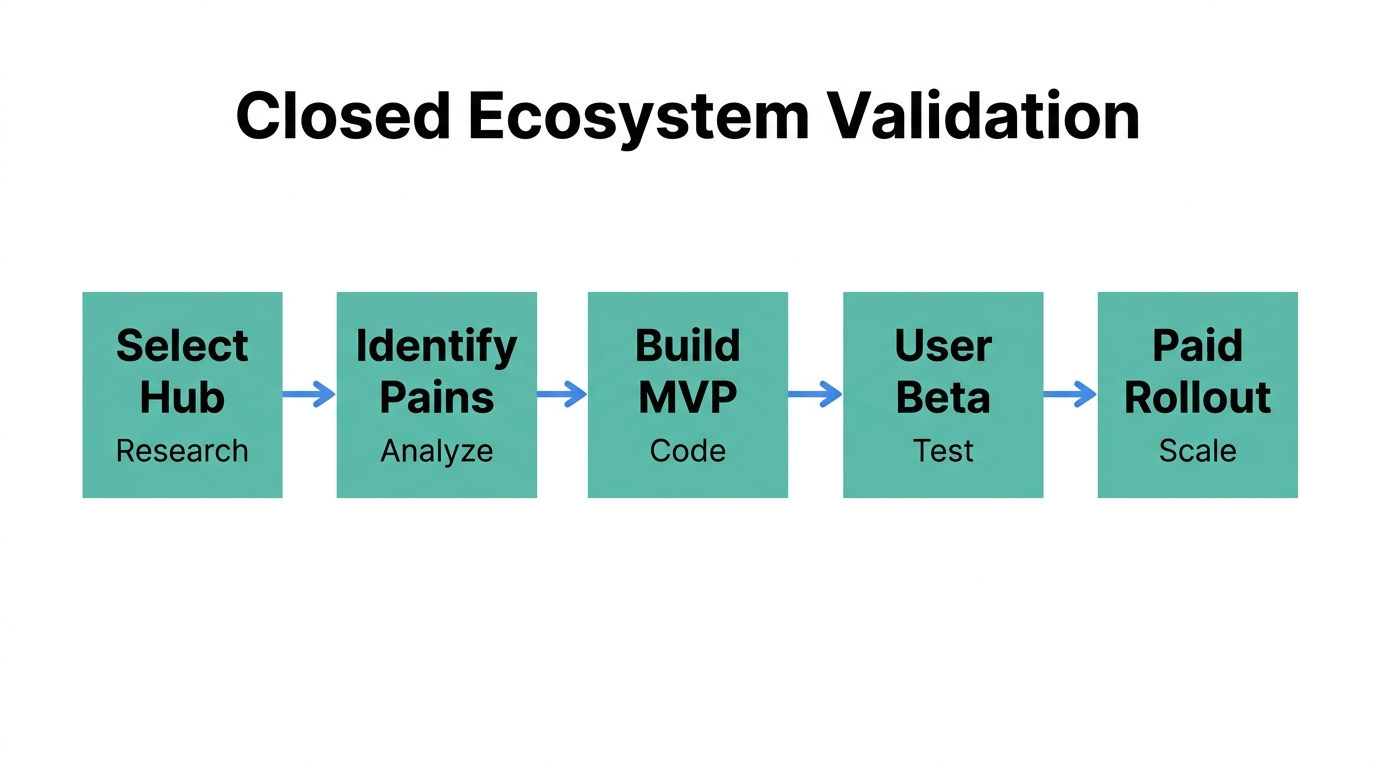
In a standard SaaS environment, validation is easy: you build a landing page on Framer, run some targeted traffic, and collect email addresses. But how do you validate an idea when your target audience has no access to the open web? For Jordan, the Parakeet Chat business model required a different approach: Building the MVP was the validation.
He spent one month building a prototype in TypeScript and another month building a payment system. Within 30 days of release, he had 200 paying users. In a closed ecosystem, word travels fast because the community is tightly knit and the alternatives are dismal. If your product solves a desperate need, your first users become your most aggressive marketers.
| Validation Step | Traditional SaaS | Closed Ecosystem (Parakeet Method) |
|---|---|---|
| Market Research | Keyword volume, competitor analysis | Direct contact with users/insiders |
| MVP Launch | Landing page, waitlist | Fully functional prototype |
| Feedback Loop | Hotjar, Google Analytics | Word-of-mouth, direct user feedback |
| Primary Metric | Signups | Retention and referrals |
The lesson for 2026 is clear: You must be willing to let your idea die. Jordan emphasizes that many founders fall in love with their vision and refuse to show it to the world for fear of rejection. In a niche market, the world will likely "spit on it" initially, but that friction is exactly what provides the data needed to pivot toward a $300K ARR solution.
Solving the 'Invisible Product' Challenge
Learn how word of mouth drives growth for products in highly restricted environments.How do you market a service that has no UI? Parakeet Chat operates entirely through email bots. Incarcerated users email a specific address, and an AI-powered system processes the request—whether it's looking up legal case law, sports stats, or drafting messages to family—and sends a reply. There is no app to download on the App Store.
This "No-UI" approach is a masterclass in go-to-market playbook execution for 2026. By removing the need for a complex interface, Jordan bypassed the technical limitations of prison hardware. To scale this, he didn't use Facebook ads. Instead, he leaned into the "cult-like" loyalty of his users. He built an internal recruitment system where users received free credits for referring others. This created a viral loop within federal prisons, eventually reaching 20% of the entire federal prison population.
"If you create a product that resonates, your users won't just be customers; they will be your zealots. Word of mouth is the only marketing that survives in a closed ecosystem."
For founders in the outside world, this highlights a powerful trend: the de-commoditization of UI. As AI becomes the primary way we interact with data, the "app shell" becomes less important than the utility of the backend. In 2026, many of the most successful micro-SaaS companies will follow the Parakeet model—living entirely inside Beehiiv newsletters, Slack channels, or email threads.
The 2026 Blueprint for 'No-UI' Product Distribution
See how this unique distribution model leverages existing internal prison email systems.Building a successful business in 2026 requires a lean, AI-first tech stack. Jordan notes that he hasn't opened his code editor in months because AI handles the heavy lifting. His stack remains robust yet simple: TypeScript, React (for the family-facing dashboard), Postgres, and Redis for queuing millions of messages.
When dealing with unconventional customer acquisition, your payment infrastructure must be bulletproof. Parakeet Chat separates the user from the customer. While the incarcerated person uses the service, their family on the outside pays the $15-$20 monthly subscription via Stripe. This model ensures a steady flow of $300,000 in annual revenue without the volatility of consumer-only apps.
As you scale these types of niche businesses, managing relationships becomes paramount. While Jordan's product is largely automated, he relies on a modern growth stack to keep the business lean. Just as Stormy AI allows brands to automate creator discovery and outreach across TikTok and YouTube, niche founders are using AI agents to handle customer support, legal research, and even code generation. The goal is to spend more time on strategy and less time on maintenance.
From Solo Bootstrapper to $300K ARR
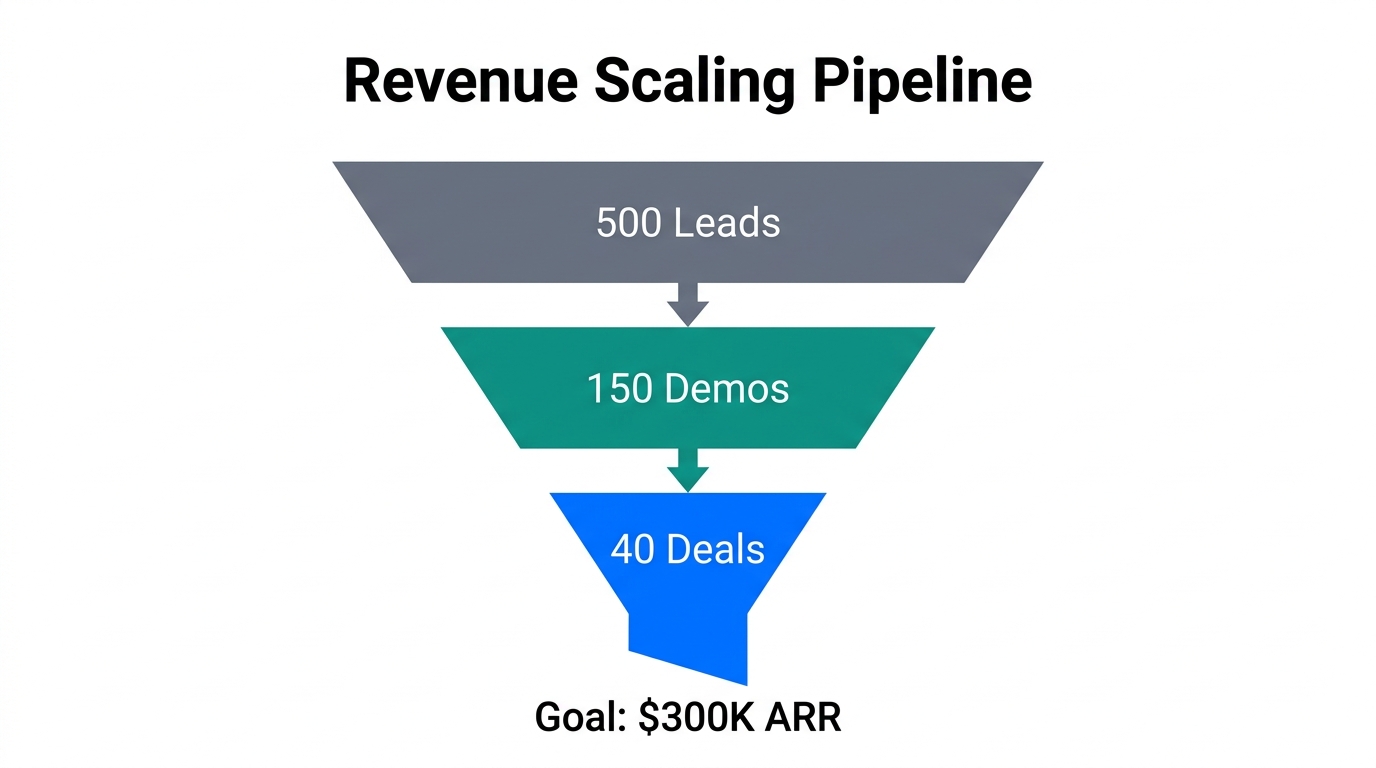
The transition from a $1.5M total revenue milestone to a consistent $300K ARR business required a shift in focus from mere communication to high-value legal research. Many Parakeet Chat users use the tool to study case law and understand their legal rights. By providing a tool that has actual life-changing consequences, Jordan increased the perceived value of the subscription, leading to over 9 million messages sent to date.
To replicate this micro-SaaS growth, founders should look for niches where the current solutions are "scams" or extremely low-quality. Jordan's success wasn't because he was a "genius," but because he had spent 10 years making mistakes in other ventures. He argues that there is no such thing as an overnight success—only a series of invalidated ideas that eventually lead to the right one.
| Feature | Legacy Prison Comms | Parakeet Chat (AI Model) |
|---|---|---|
| Accessibility | Landline phones, expensive kiosks | Ubiquitous email-based bot |
| Cost | High per-minute/message fees | Flat monthly subscription |
| Intelligence | Basic text transmission | AI-powered legal & educational research |
| Reach | Limited to approved contacts | 9M+ messages across 30k users |
"The most important advice for any founder is this: Start with a stupid idea. Do it right now. You will learn more from a controlled mess-up than from reading twenty business books."
Conclusion: The 2026 Niche Playbook
The success of Parakeet Chat serves as a powerful reminder that niche market strategy 2026 is about utility over visibility. By identifying an invisible industry, validating within a closed ecosystem, and leveraging a No-UI distribution model, Jordan built a life-changing business as a solo founder. He didn't need a massive marketing budget or a team of 50 engineers; he needed one deep problem and a simple way to solve it.
As you look for your next venture, remember that 95% of people are looking at the same things you are. To win, you must look where they aren't. Whether that's helping incarcerated individuals learn their legal rights or using Stormy AI to find the perfect micro-influencers for a niche mobile app, the biggest opportunities are always found in the corners of the market that others think are "too small" or "too boring" to bother with.
Ready to find your own hidden niche? Start by invalidating your first five ideas today. The faster you fail, the closer you get to your own $1.5M breakthrough.