
In July 2022, David Bressler had a six-week window before his youngest child was born. While most would prepare by catching up on sleep, David decided to solve a recurring workplace headache: the constant stream of junior analysts knocking on his door asking for help with Excel formulas. Using Bubble.io and a heavy dose of "YouTube University," he built a no-code MVP in just two weeks. What started as a simple experiment, Excel Formula Bot (now rebranded to Formula Bot), exploded into a viral sensation with 750,000 users and $26,000 in Monthly Recurring Revenue (MRR). But the real story isn't the growth—it's how a solo founder manages competing with ChatGPT and the looming shadow of Microsoft’s built-in AI tools.
The Rise of the Vertical Specialist: Finding a Moat in an LLM World
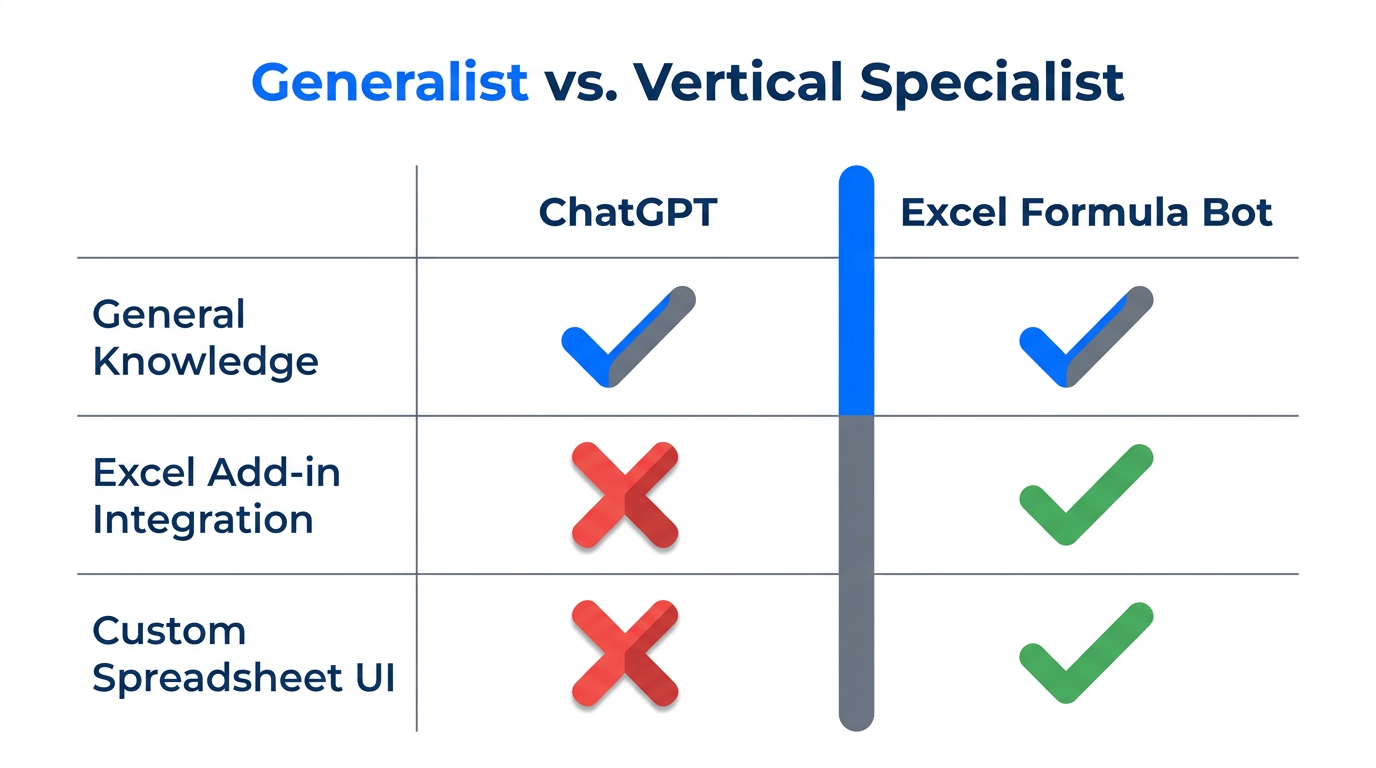
When David launched, ChatGPT wasn't yet a household name, though the underlying GPT technology was available. His initial success came from a viral post on the Excel subreddit, followed by an even bigger surge on the "Internet is Beautiful" community. However, virality is a double-edged sword. David quickly realized that an input/output box that translates text into formulas could be easily replicated. Within months, dozens of "carbon copy" competitors emerged, all racing to the bottom on price.
"I blew through like $5,000 in OpenAI API costs in days. I had a decision to make: shut it down or keep going."
To survive, David had to move beyond the simple "formula generator" moniker. The core of his AI startup strategy shifted toward becoming a specialist. While general-purpose LLMs like Claude or ChatGPT can write formulas, they lack the specific environmental context of a spreadsheet. David realized that convenience and customization were his primary moats. By building an add-on that lives directly inside the spreadsheet, he eliminated the friction of switching tabs—a minor hurdle that represents a major productivity drain for power users.
Localization: Supporting the Global Long-Tail
One of the most significant advantages Formula Bot maintains over generic tools is its deep understanding of localization. Microsoft Excel is used by over a billion people globally, but it doesn't function the same way in every language. Formulas in the Spanish version of Excel, for example, use different function names than the English version. Many users speak one language but are forced to use another for their software interface.
David built his platform to handle these nuances, allowing users to input requests in their native tongue and receive formulas tailored to their specific localized version of Excel. This level of SaaS product differentiation is something generic models often struggle with, as they tend to default to English-centric syntax. By catering to the "global long-tail," Formula Bot secured a loyal user base in markets that larger players often overlook.
Customer Discovery: Building What Microsoft Won’t
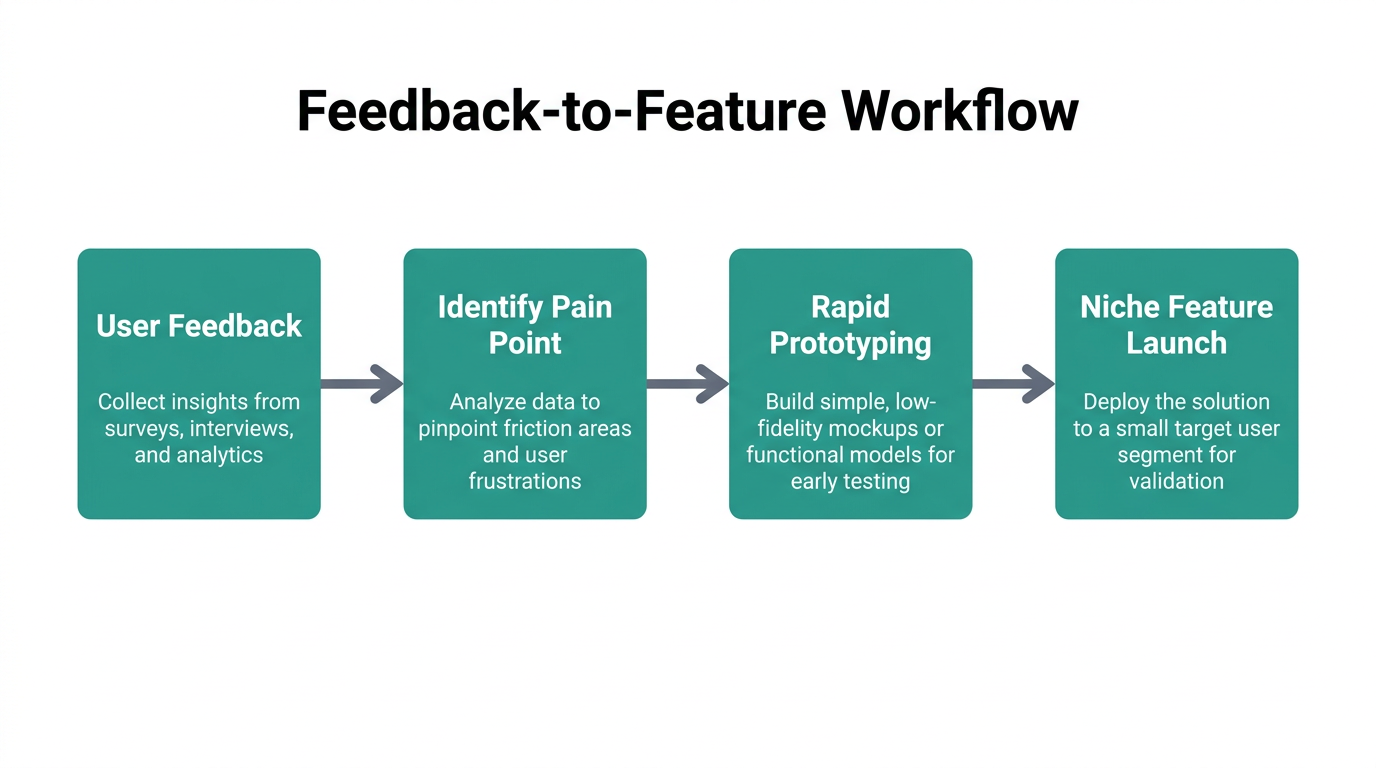
As Microsoft began integrating AI directly into the Office suite and launched partnerships with OpenAI, David faced an existential threat. Many suggested his tool would be "Sherlocked"—rendered obsolete by a platform update. His response was to get closer to his customers than Microsoft ever could. He began offering 1-on-1 calls to users who emailed him complex Excel problems.
During these sessions, David would actually do the user's work for them in exchange for honest feedback. This "Service-as-a-Feature" approach revealed that users weren't just struggling with formulas; they were struggling with data analysis. They didn't just want a VLOOKUP; they wanted to know why their quarterly projections were off. This insight led to the creation of the Data Analyzer, a product that functions like Zapier for data, allowing users to upload files and receive charts, modeling, and deep analysis through natural language.
| Feature | Generic LLM (ChatGPT) | Formula Bot (Specialized) |
|---|---|---|
| Workflow | External Browser Tab | Integrated Add-on |
| Localization | Inconsistent | Native Language Support |
| Data Privacy | General Training Data | Secure Data Analysis |
| Ease of Use | Requires Prompt Engineering | Structured Input/Output |
Pivoting from Formula Generator to Data Platform
The transition from a "formula bot" to a comprehensive data platform was essential for long-term customer retention for SaaS. A formula generator is a utility you use once and forget; a data analyzer is a platform you rely on for your weekly reporting. By expanding the product's scope, David moved up the value chain. He wasn't just helping people write code; he was helping them make business decisions.
This pivot also allowed for more aggressive pricing. David initially launched with a $2.99/month tier, but as the value proposition grew, he successfully moved users to $6.99 and eventually $9.00+ monthly tiers for unlimited access. Despite the existence of free alternatives, approximately 5,000 paying subscribers find the specialized features worth the cost. This proves that users will pay for tools that solve highly specific, high-friction problems even when generalist tools are free.
"My vision moving forward is to build something that cannot be replicated both in ChatGPT as well as Microsoft."
To sustain this growth, David had to master not just product development, but also marketing and relationship management. Just as Formula Bot leveraged the power of community on Reddit to scale, many modern startups are finding that human-centric marketing is the key to standing out in an AI-saturated market. For instance, using tools like Stormy AI can help brands identify and collaborate with niche creators who can authentically explain the value of specialized software to their specific audiences, creating a layer of trust that big tech companies often lack.
Retention Strategies: Keeping Users When AI is Everywhere
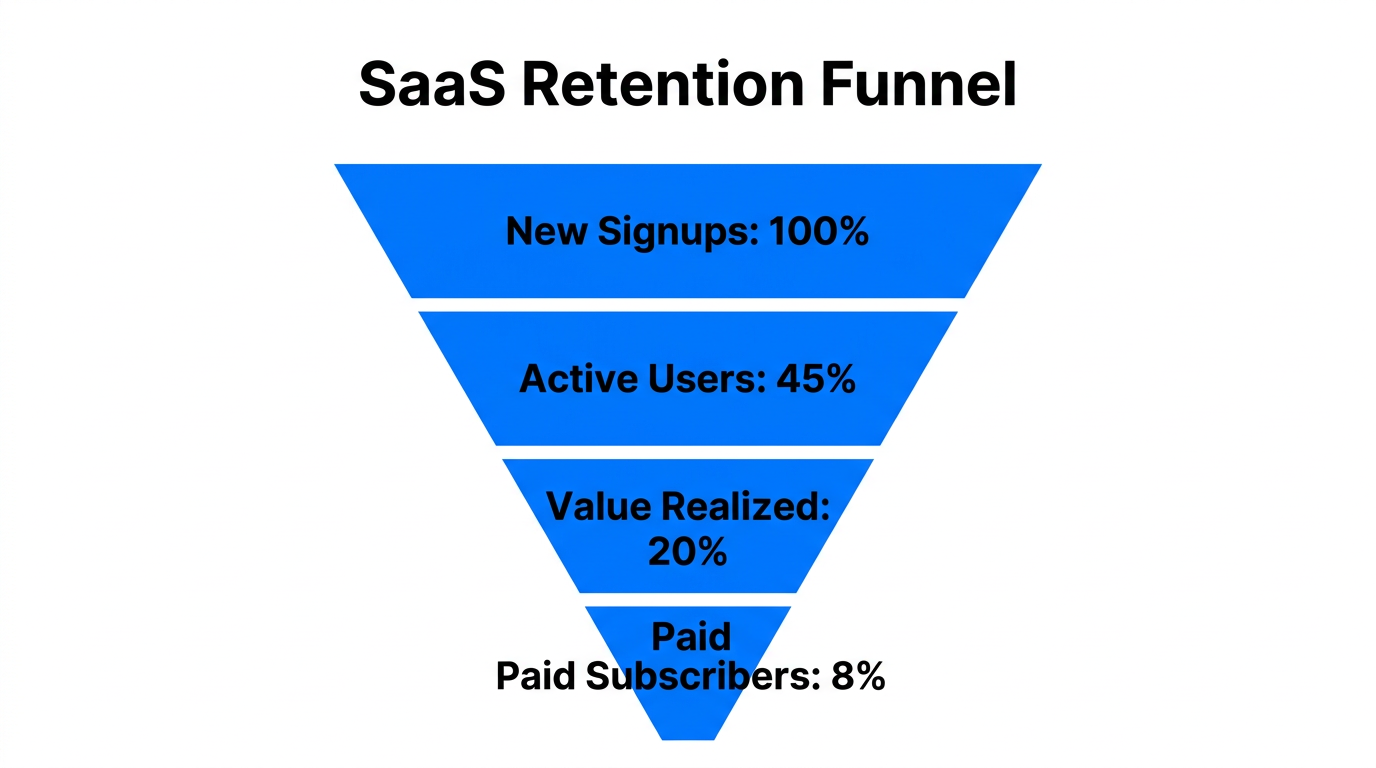
Retention in a crowded AI market requires a blend of psychology and utility. David notes that while roughly 5-10% of his churn can be attributed to users switching to ChatGPT, the majority of his users stay because of the ecosystem effect. Once a user has the Formula Bot add-on installed in their Microsoft Excel or Google Sheets environment, the friction of leaving becomes higher than the cost of staying.
Key retention tactics used by Formula Bot include:
- Constant Feature Updates: Moving from 100% no-code to a hybrid model allowed David to ship complex features faster than the competition.
- Niche Problem Solving: Addressing issues like regex generation or VBA script writing that generic AI often hallucinates on.
- Community Feedback Loops: Using customer support emails as a roadmap for the next "must-have" feature.
Conclusion: The Future of Micro-SaaS in the AI Age
David Bressler’s journey from a six-week project to a million-dollar valuation serves as a blueprint for the modern entrepreneur. The threat of "Big Tech" is real, but it is not absolute. By focusing on customer discovery, localization, and workflow integration, small startups can build durable businesses in the gaps that giants like Microsoft and OpenAI leave behind. The goal isn't to build a better LLM; it's to build a better user experience around the LLM.
As you look to build or scale your own product, remember that your greatest advantage is your ability to move fast and talk to your users. Whether you're using Bubble to build your MVP or using Stormy AI to source creators for your launch, the key to surviving the AI revolution is staying indispensable to your specific niche. Stop trying to be the everything-app for everyone, and start being the must-have tool for the person with a specific, painful problem to solve.