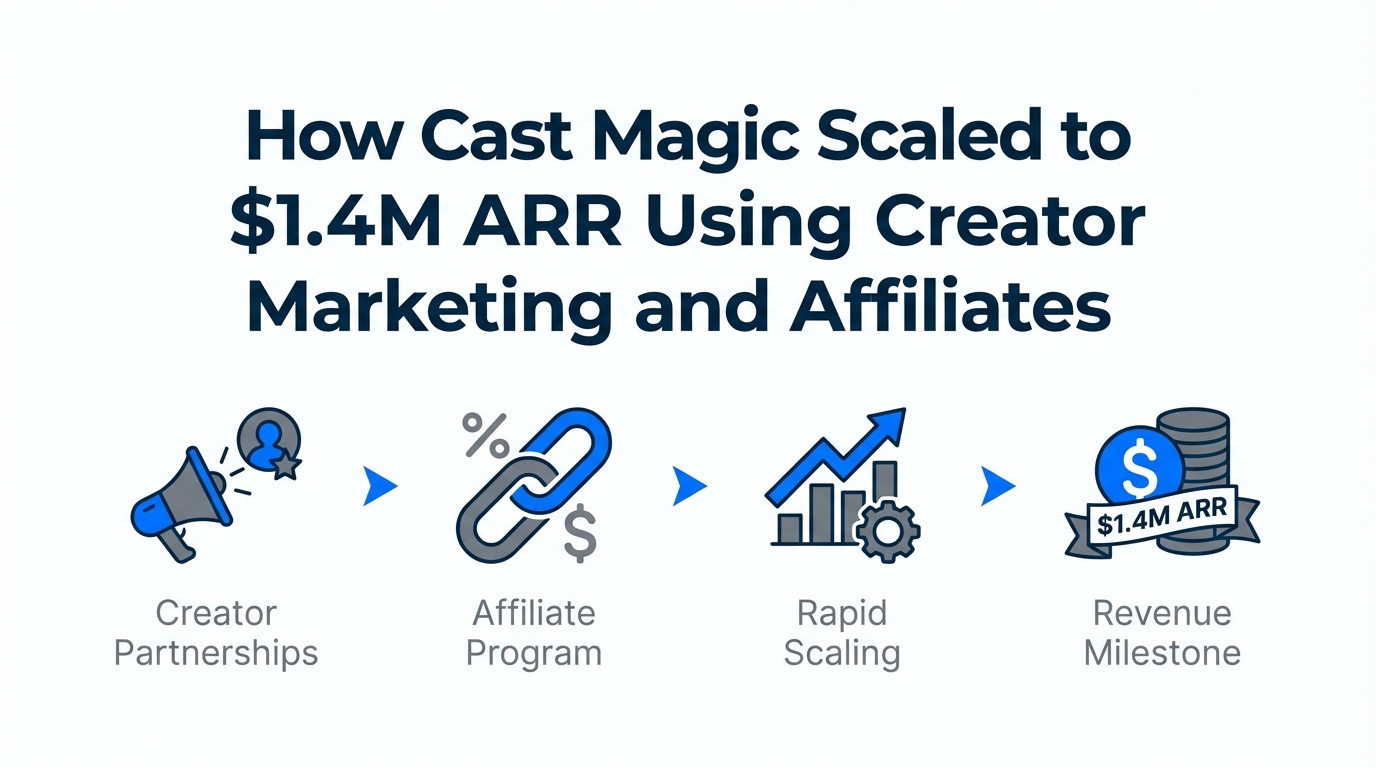
Building a SaaS product is often the easy part; the real challenge lies in distribution. In an era where AI apps are popping up daily, standing out requires more than just clean code and a sleek UI. It requires a creator-led distribution strategy that cuts through the noise. This is exactly what the founders of Cast Magic, Blaine, Ramone, and Justin, achieved when they scaled their platform from zero to $120,000 in Monthly Recurring Revenue (MRR) in just ten months. By treating the creator economy for saas as their primary growth engine, they turned a simple tool for podcast show notes into a multi-million dollar business.
As detailed in their recent interview with Starter Story, the team didn't rely on massive VC funding or bloated marketing departments. Instead, they built a one-man marketing machine powered by strategic partnerships and a rigorous system for creator discovery. Their journey offers a blueprint for any founder looking to master scale ai app marketing without burning through their runway.
The Springboard Effect: Leveraging AppSumo for Early Brand Equity
Before diving deep into individual creator partnerships, Cast Magic needed a foundation. They found this through AppSumo, a marketplace for software deals. While many founders shy away from lifetime deals (LTDs) due to the lack of recurring revenue, the Cast Magic team saw it as a strategic investment in brand building. The launch generated approximately $350,000 in revenue and brought in 10,000 early adopters who provided critical feedback loops.
This early traction was the "great springboard" that allowed them to transition into a sustainable influencer marketing strategy. With 10,000 users, they had the social proof necessary to approach high-tier creators. They weren't just another unproven AI tool; they were a top-selling product with a community behind them. This credibility is essential when moving into the next phase: finding and recruiting adjacent industry creators.
Finding Creators at Scale: The Instagram Scraping Method
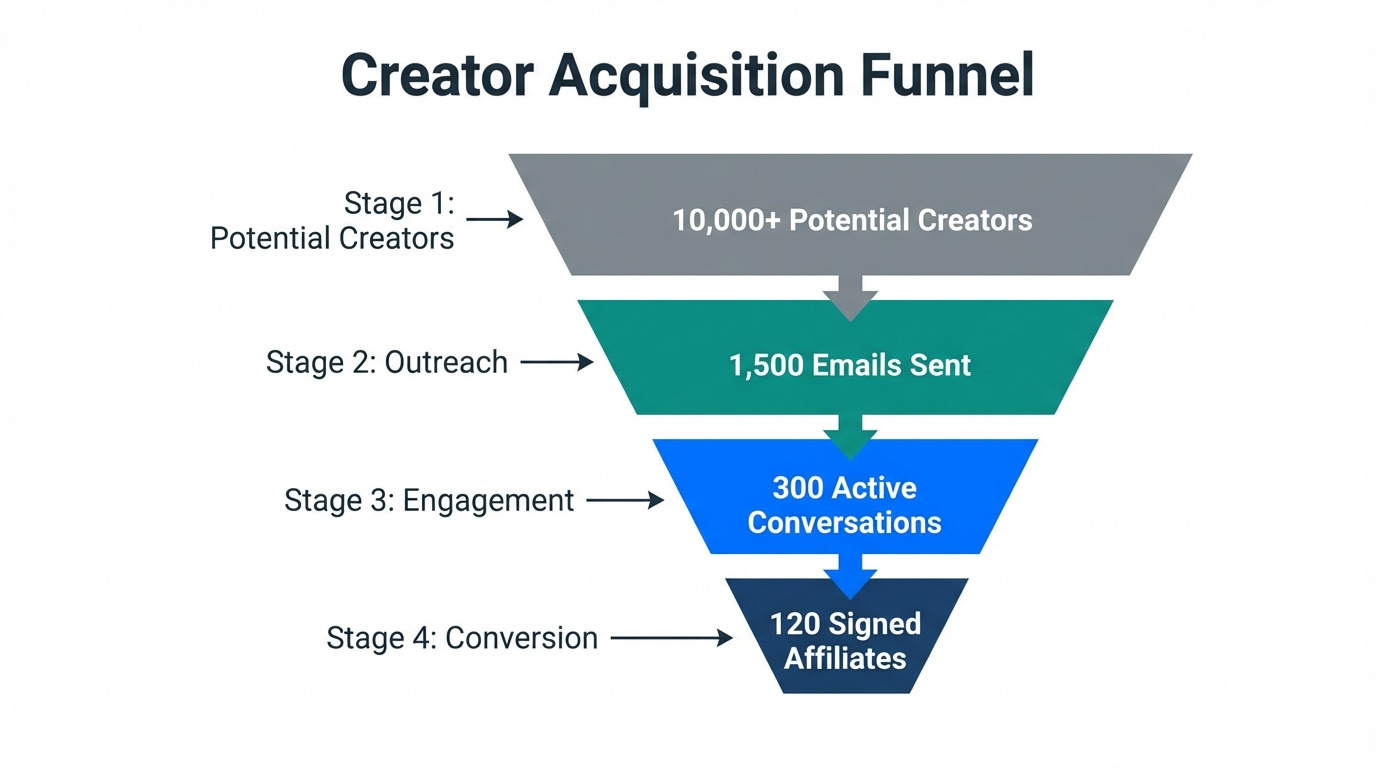
The core of Cast Magic’s success was their proactive approach to creator discovery. Rather than waiting for influencers to find them, they went hunting. The co-founder, Ramone, emphasized a tactical approach to scraping social platforms like Instagram to find creators who lived in "adjacent industries."
The process involved several key steps:
- Identify Adjacent Niches: They didn't just look for "AI creators." They looked for podcasters, digital marketers, agency owners, and productivity experts who already had a workflow problem that Cast Magic could solve.
- Hashtag Research: By monitoring hashtags related to these niches on Instagram, they could identify which creators were consistently posting high-quality, relevant content.
- Competitor Mapping: They researched similar companies that served the same customer base and mapped out their distribution channels. If a competitor was succeeding with a specific type of affiliate, Cast Magic knew that audience was already primed for their solution.
"Build volume first. Once you build volume and responses, now you have leverage to negotiate the rates." — Ramone, Co-founder of Cast MagicThe 'Volume First' Approach to Outreach
One of the most common mistakes in influencer marketing strategy is over-optimizing the first five emails. The Cast Magic team took the opposite approach: Volume First. Their goal was to reach a critical mass of responses before worrying about the fine print of every deal. By reaching out to hundreds of creators, they could quickly identify which niches had the highest response rates and interest levels.
This "brute force" discovery phase allowed them to find the true signal in the noise. They looked for creators who weren't just influencers, but power users. When a creator understands the product deeply, their content feels authentic, leading to higher conversion rates in affiliate marketing growth campaigns. Managing this manually is a Herculean task, which is why modern platforms like Stormy AI have become essential for founders. These tools allow you to automate the discovery and initial outreach phase, letting you focus on the high-level negotiation and relationship building that Cast Magic prioritized.
Transitioning from CPM to Performance-Based Models
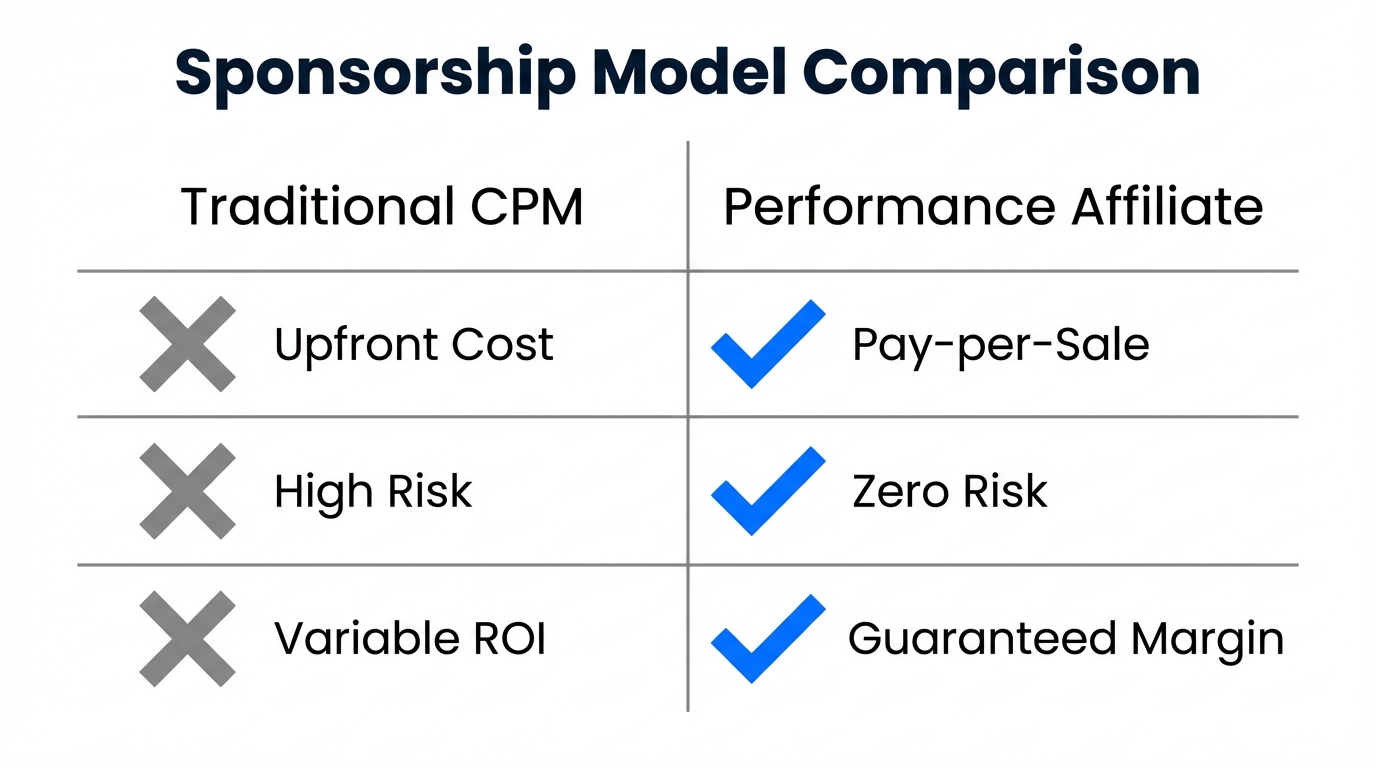
In the beginning, Cast Magic experimented with flat-fee CPM (Cost Per Mille) sponsorships to get the word out. This helped them build a baseline of visibility. However, they quickly realized that to scale to $1.4M ARR profitably, they needed to shift toward performance-based affiliate models.
The transition followed a specific hierarchy of creator relationships:
| Phase | Model | Goal | Primary Metric |
|---|---|---|---|
| Discovery | Flat-Fee CPM | Brand Awareness | Impressions |
| Validation | Hybrid (Fee + Bonus) | Testing Conversion | Click-Through Rate (CTR) |
| Scaling | Affiliate / Revenue Share | Profitable Growth | Return on Ad Spend (ROAS) |
By moving to an affiliate model, Cast Magic aligned their incentives with the creators. If the creator produced a viral video on TikTok or YouTube that drove thousands of sign-ups, they earned a significant commission. This eliminated the risk of "dud" sponsorships where a brand pays thousands of dollars for a post that gets zero traction. Performance-based marketing ensures you only pay for actual results.
Eliminating Manual Management: The Notion-Based System
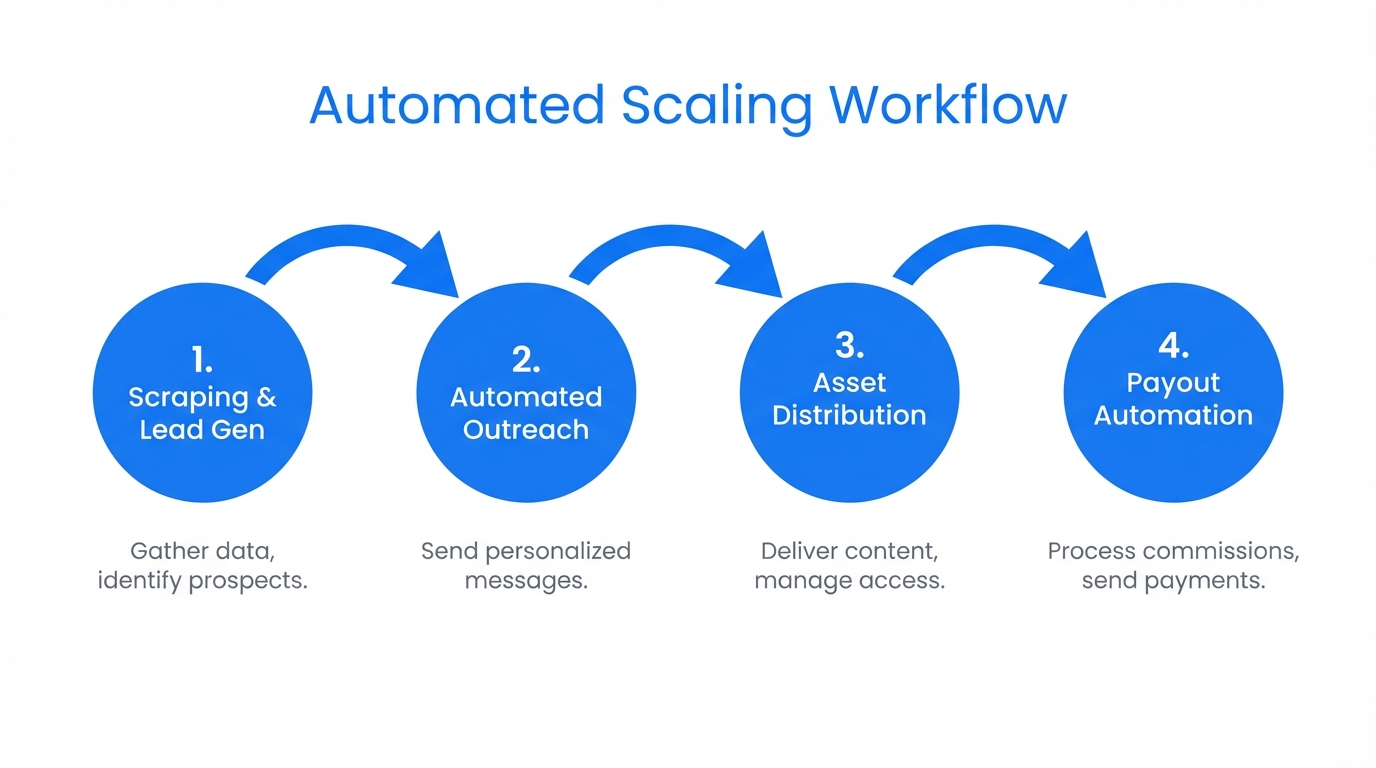
How does a one-man marketing team manage dozens of creators without losing their mind? The answer lies in systems. Ramone noticed he was spending hours on calls and emails ideating content concepts with every new partner. To fix this, he built a comprehensive Notion document that acted as a self-serve creator portal.
The system included:
- Content Concept Bank: A list of proven video ideas, such as "How to turn one podcast into 10 LinkedIn posts."
- Brand Guidelines: Clear instructions on tone of voice, visual assets, and what *not* to say.
- Product Roadmap: Updates on new features so creators always had something fresh to talk about.
- Performance Dashboard: Clear tracking of which hooks and angles were performing best across the board.
"I created a whole Notion document of a bunch of concepts. Now I don't have to get on a call with them to ideate on the content. It really just all comes down to systems."This systematic approach allowed Cast Magic to scale their creator roster while keeping their internal team lean. By providing creators with the "ingredients" for a successful video, they ensured content quality stayed high even as the volume of posts increased. This level of organization is what separates a hobbyist influencer program from a professional scale ai app marketing machine.
The Golden Rule: Keeping Marketing Spend Below 20%
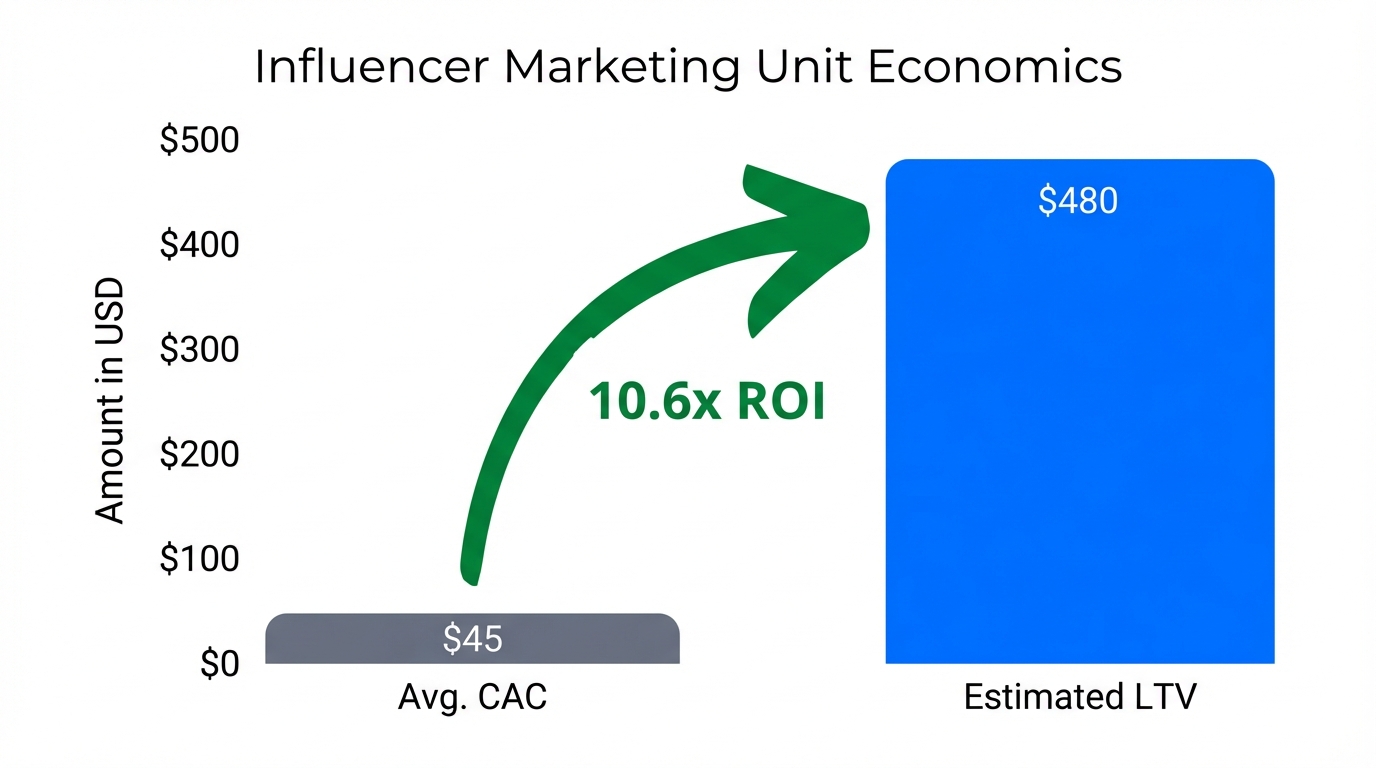
Profitability is the North Star for the Cast Magic team. Despite their rapid growth, they have maintained a strict rule: never spend more than 20% of revenue on marketing. This ensures they have high margins to reinvest in product development and maintain a healthy bottom line.
To achieve this, they are ruthless about analyzing their unit economics. They track the cost of LLMs and transcription services via OpenAI and other providers to ensure that every new user is profitable. Because their creator marketing is largely affiliate-driven, their Customer Acquisition Cost (CAC) is naturally capped as a percentage of the revenue generated. This makes their growth predictable and sustainable.
When you combine low churn with a capped acquisition cost, you get the perfect conditions for scaling to $120k MRR and beyond. It’s not just about getting users; it’s about getting the right users through trusted voices in the creator economy for saas.
Modern Tooling: How to Emulate Cast Magic's Strategy
For founders looking to replicate this success, the manual scraping of Instagram and spreadsheet management is a significant barrier. While the Cast Magic team built these systems from scratch, today’s landscape offers more efficient solutions. Using Stormy AI allows brands to identify those "adjacent industry creators" automatically using AI-powered search prompts.
Instead of manually looking up hashtags, you can simply search for "productivity podcasters with high engagement rates" and get a vetted list in seconds. Integrating these tools with a CRM for creator relationships allows you to maintain the personal touch that Ramone and his team used, but at a fraction of the time cost. This tech stack, paired with a performance-first mindset, is how you build a dominant position in the AI market.
Conclusion: The Blueprint for Creator-Led Success
Cast Magic’s journey to $1.4M ARR isn't a result of luck; it’s the result of a perfectly executed influencer marketing strategy that prioritized systems over head count. By starting with a springboard like AppSumo, moving into high-volume social discovery, and then solidifying those relationships through performance-based affiliate models, they created a growth engine that runs 24/7.
The takeaway for founders is clear: distribution is a product of systems, not just effort. If you can solve your own problem, build a brand through trusted creators, and keep your marketing costs strictly in line with revenue, you too can scale an AI app to six-figure MRR in record time. Focus on finding the creators who are already speaking to your audience, give them the tools to succeed, and align your incentives for the long haul. That is the secret to winning the creator economy for saas.