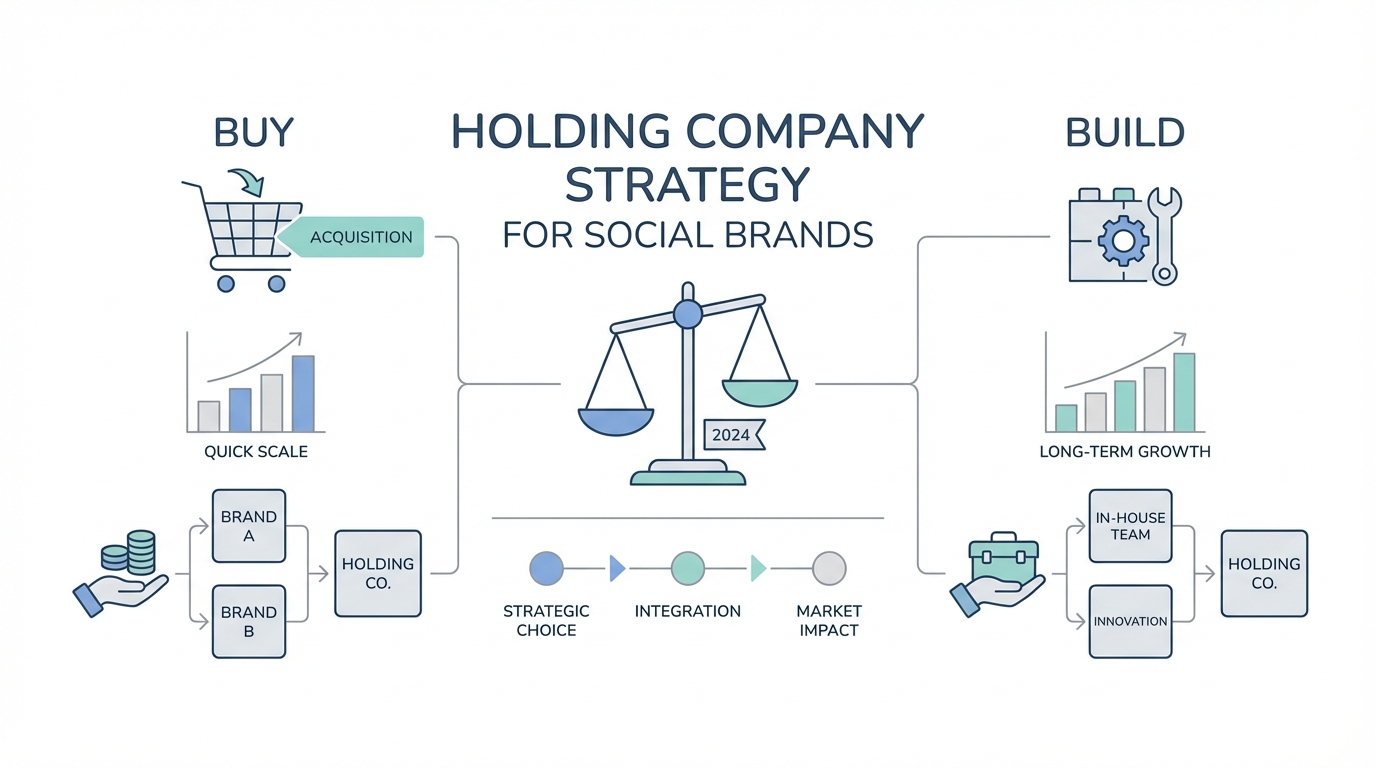
The entrepreneurial landscape in 2024 is defined by a paradox: capital is plentiful, yet the path to a profitable entrepreneurial portfolio feels narrower than ever. For many founders, the current market presents a fork in the road. On one side is the allure of the "Silver Tsunami"—the promise of acquiring baby boomer-owned businesses for pennies on the dollar. On the other is the grueling "zero to one" struggle of building from scratch. However, modern masters of the holding company strategy, such as Michael Girdley, are signaling a significant shift in the formula: when assets are expensive, you don't buy assets—you create them.
The Macro Market Cycle: Why Expensive Assets Shift the Advantage


In the world of M&A strategy, price is the ultimate filter. According to Girdley, who manages a diverse portfolio ranging from software to fireworks, the past four years have been characterized by "expensive assets." When interest rates fluctuate and market demand for stable cash flow increases, the multiples on existing businesses often swell beyond the point of a reasonable ROI. This makes the buy vs build business decision relatively straightforward: if the cost of acquiring a dollar of profit is higher than the cost of creating it through personnel and sweat equity, you build.
Many founders are currently seduced by the idea of skipping the "annoying part" of building—the first 18 months of uncertainty. However, the crowding of the market has pushed prices up. When everyone is rushing toward the same M&A strategy, the opportunity often lies in the opposite direction. By focusing on a business incubation model, you avoid the bidding wars that currently plague the search fund and micro-PE space. As Girdley notes on his GirdleyWorld YouTube channel, the goal is to watch where the herd is going and then head elsewhere.
The Law of Large Numbers in M&A: Filtering the 'Silver Tsunami'
The holding company strategy often relies on the narrative that retiring baby boomers will create a flood of available businesses. While this "Silver Tsunami" is real in aggregate, the "law of large numbers" reveals a different reality for the individual buyer. When you filter for quality, the pool of viable targets shrinks rapidly. First, you must eliminate industries that are unethical or undesirable. Second, and more importantly, you must filter out "owner-dependent" traps. These are businesses that exist solely because of the owner's personal relationships, specialized credentials, or decades of tribal knowledge.
Furthermore, the best baby boomer-owned businesses rarely reach the open market. Many are already spoken for—sold to strategic competitors, handed down to children, or stabilized by professional management teams. This means the M&A strategy of browsing listings on BizBuySell often leaves you with the "scraps" that require too much risk for the price. Instead, Girdley suggests that the most interesting opportunities come through serendipity and inside information—data that isn't available to the general public. Building a network of colleagues via platforms like LinkedIn is often more effective than any broker site.
Competitive Advantage Mapping: Finding Your Unfair Advantage
Before deciding on a buy vs build business path, you must map your competitive advantage. For Girdley and his team at Dura Software, that advantage is hyper-niche vertical market software (VMS). Software is perhaps the greatest business model in history because of its "sticky" customers, high gross margins, and predictable recurring revenue. By sticking to a niche they understand deeply, they can underwrite acquisitions with a level of precision that generalist firms lack.
Step 1: Identify Your Niche
Whether it is software, UGC-driven social brands, or localized services, your holding company strategy must be anchored in an area where you have more knowledge than the average buyer. This allows you to spot value where others see risk. For instance, if you understand the dynamics of TikTok and Instagram, you might find that the business incubation model for a social-first brand is significantly cheaper than buying a legacy retail brand.
Step 2: Assess the Moat
Look for pricing power and durable revenue. In the software world, vertical markets like insurance or pet care provide a natural moat. In the social world, a community-led brand can provide the same durability. If the target business doesn't have a clear advantage that survives the current owner, it isn't an asset—it's a job. This is why many are moving toward the ScalePath model of creating peer networks and playbooks that scale beyond any single individual.
The Step-by-Step Incubation Formula: From Zero to One
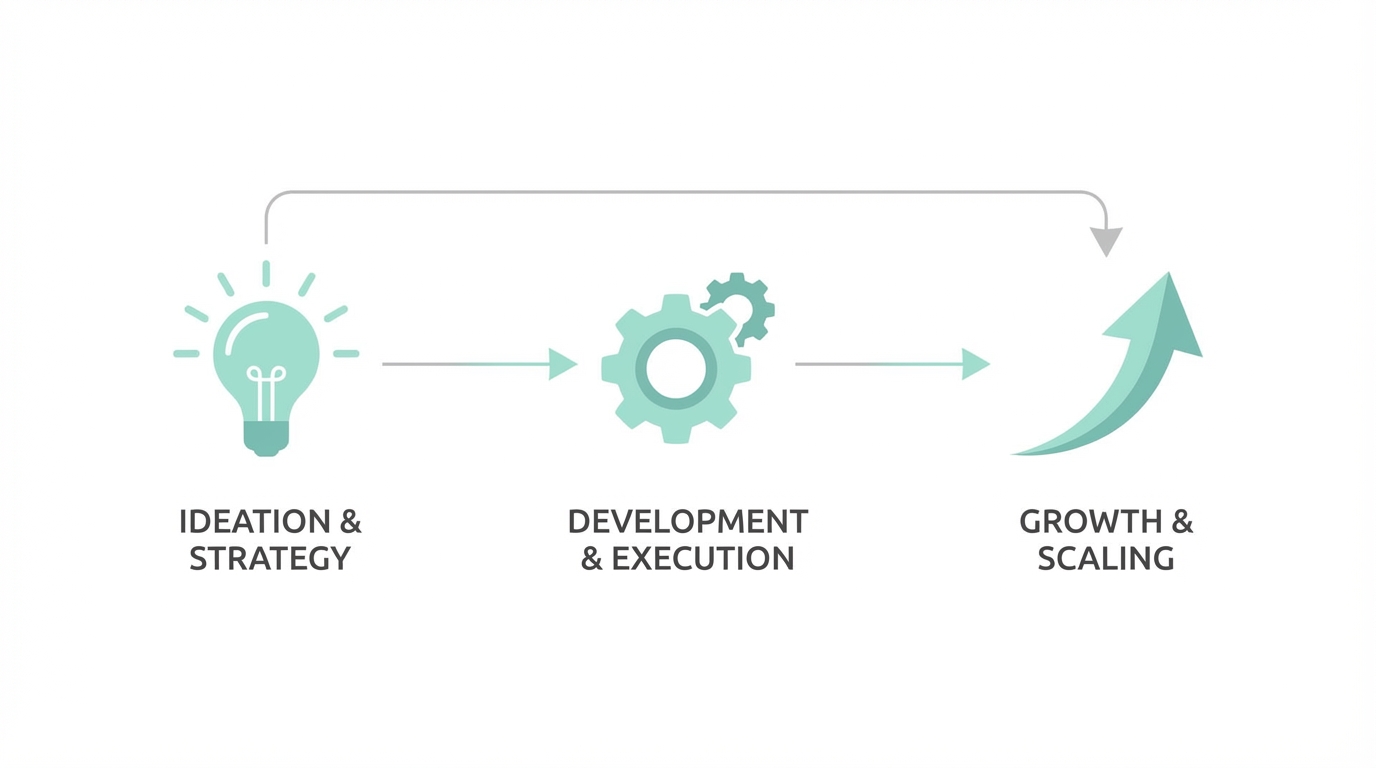

When you choose to build, you are essentially betting on your ability to find product-market fit faster and cheaper than the market can price it. This requires a disciplined business incubation model. Girdley uses the "effectuation model," which involves looking at your current resources—voice, trust, capital—and seeing what change you can make. This is a lean startup approach to building an entrepreneurial portfolio.
- Lean Startup Interviews: Before writing a single line of code or launching a product, interview potential customers. At ScalePath, the team interviewed dozens of small business owners to discover their pain points—specifically, that they were "stuck" in their businesses and needed recipes, not just courses.
- Asynchronous Delivery: Modern founders are busy. Whether you are building software or a service, delivering value in an asynchronous way (like via Slack) allows you to scale without needing to be "present" for every interaction.
- The "Playbook" Model: Instead of general advice, provide specific playbooks for common problems (e.g., hiring a lawyer, cash planning). This turns your knowledge into a scalable asset.
As you scale these new ventures, AI-powered discovery becomes vital. For social-first brands, platforms like Stormy AI streamline creator sourcing and outreach, helping you manage UGC creators at scale and reducing the personnel costs that often kill new incubations. By automating the discovery and outreach to creators, you can build a "billion-view" impact engine without the overhead of a legacy media agency.
Calculating the ROI of Creation: Personnel vs. Multiples
The financial core of the holding company strategy is understanding the cost of capital. If you raise money from private equity firms like Peterson Partners, you gain fuel for larger acquisitions but give up a percentage of control. If you self-fund, you maintain total freedom—what Girdley calls the "multiple of fun." In 2024, the personnel costs for a small, elite team to incubate a business are often lower than the 4x-6x EBITDA multiples required to buy one.
Furthermore, modern technology has lowered the barrier to entry for building a business incubation model. Utilizing Stormy AI's creator CRM to manage partnerships and automate follow-ups allows a single "entrepreneurial apprentice" to do the work of a five-person marketing team. This shifts the ROI heavily in favor of building, as you can reach $1M+ in revenue with minimal capital outlay, especially in niches like everythingmarketplaces.com or community-driven SaaS.
The Castle vs. The Prison: Financing and Control

Every decision in your entrepreneurial portfolio should be viewed through the lens of: "Am I building a castle or a prison?" Taking $30M in venture capital might look like a success, but it often introduces "micro-bosses"—investors who might prioritize an exit over your "tap dancing to work" ratio. For many in the holding company strategy space, staying self-funded or using debt sparingly is the key to maintaining the freedom they sought in the first place.
The M&A strategy of giants like Constellation Software is built on decades of maniacal focus. They don't just buy businesses; they manage a culture and create systems for continuous learning. Whether you choose to buy or build in 2024, the lesson is the same: play long-term games with long-term people. Success in a holding company strategy isn't about the size of the portfolio, but the quality of the life it affords you.
Conclusion: The 2024 Playbook for Social Brands
The buy vs build business debate isn't just about math; it's about market timing and competitive advantage. In a year where assets remain expensive and "Silver Tsunami" deals are often owner-dependent traps, the business incubation model offers a superior path for most social-first entrepreneurs. By leveraging AI for creator discovery, sticking to vertical niches you understand, and prioritizing your "tap dance" ratio over raw growth, you can build a holding company strategy that survives for decades. Focus on impact, automate the friction with tools like Stormy AI, and remember that sometimes the best business to buy is the one you haven't built yet.