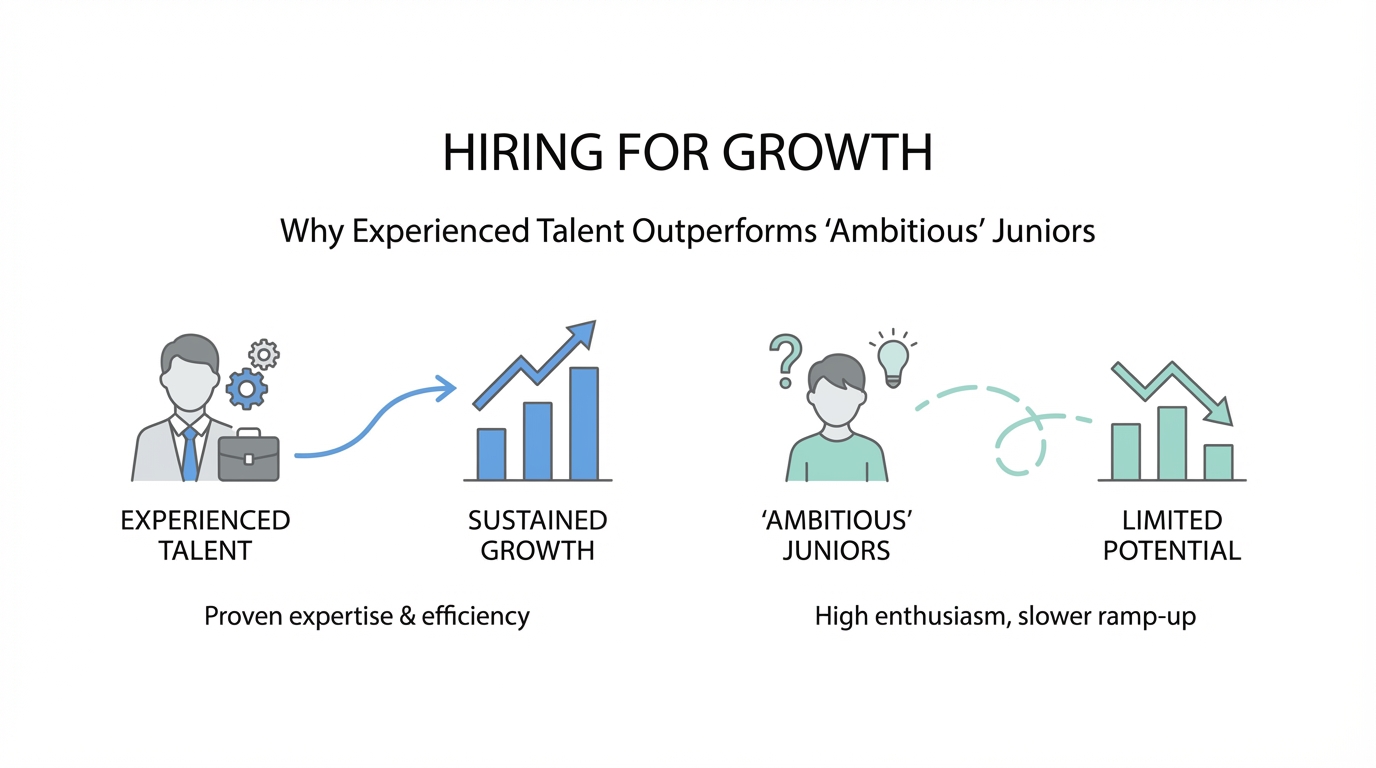
In the romanticized world of early-stage startups, there is a pervasive myth: the 'Diamond in the Rough.' We’ve all seen the archetype—the young, hungry, high-agency individual who is willing to work for peanuts while they 'figure it out.' Many founders fall into the trap of the 'American Dream' hiring mentality, believing that their job is to take the broken, the weak, and the unproven and mold them into superstars. It feels noble, it feels like angel investing in people, and it makes the founder feel like a genius when it works. But as many seasoned entrepreneurs have discovered the hard way, this is often a recipe for stagnancy. To achieve true scale, your hiring strategy for startups must pivot from 'I can fix him' to 'he’s already done this before.'
The Hidden Cost of the 'I Can Fix Him' Mentality


The mistake of betting on unproven ambition often stems from an emotional bias. Founders love the story of finding a needle in a haystack—a recent graduate who sends a hilarious video application and shows raw potential. However, the recruitment ROI on these hires is statistically dismal. When you hire someone who has never performed the task at hand, you aren't just paying their salary; you are paying for their education, their mistakes, and the months of lost time while they navigate the learning curve. This is one of the most common founder hiring mistakes: prioritizing a 'good vibe' or raw energy over a proven track record.
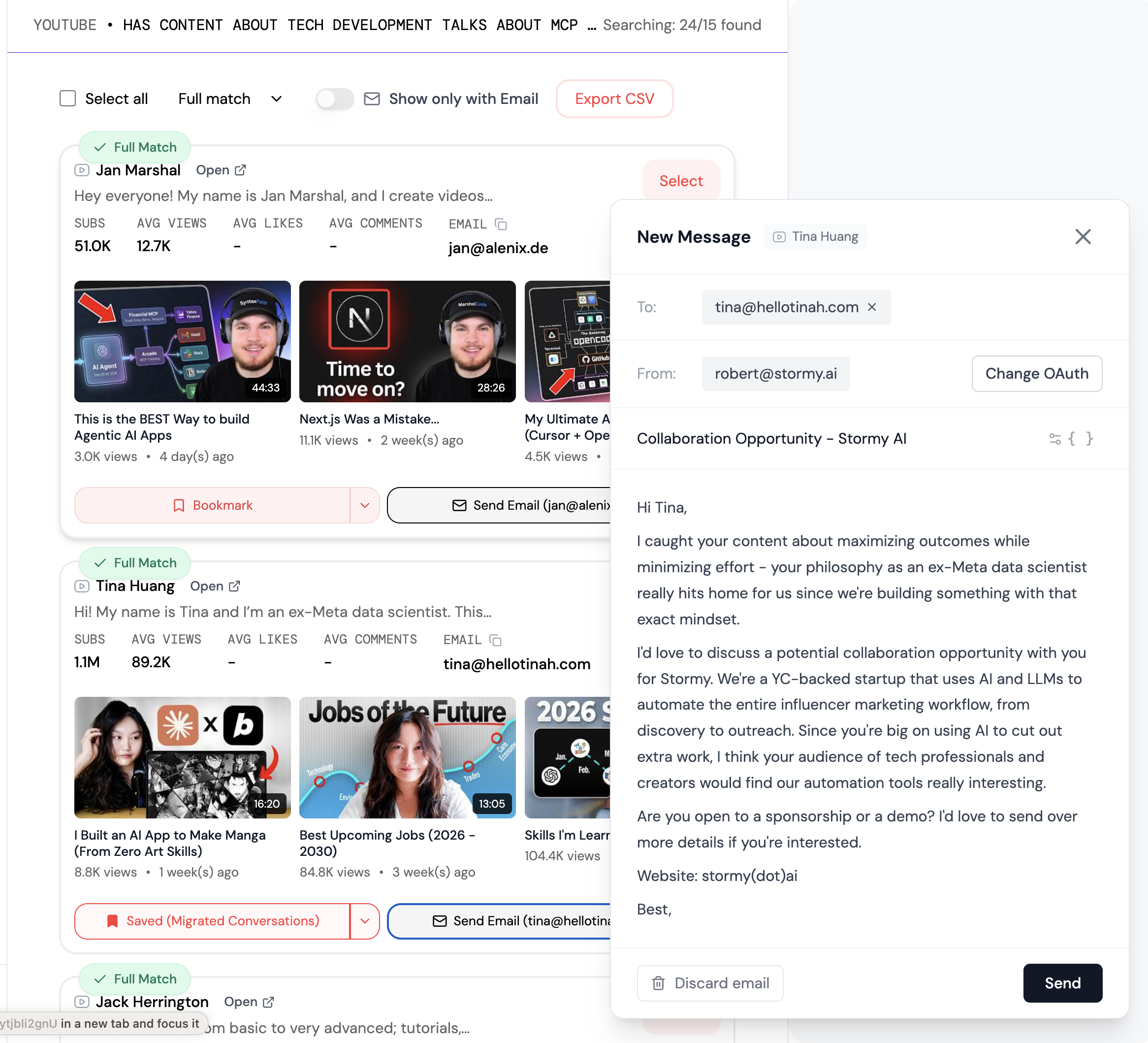
As businesses grow, the complexity of tasks shifts. In the early days, you might need a generalist, but when you are scaling a business team, you need specialists who have seen the movie before. Experienced hires might cost two or three times more in base salary, but the output is frequently five to ten times better. They don't just do the work; they bring systems, processes, and a 'Terminator' focus that prevents the 'leaks in the bucket' that drain startup capital. For instance, when looking for content creators for mobile app marketing, platforms like Stormy AI help you bypass the trial-and-error phase by using an AI-powered search engine to instantly find influencers across TikTok, Instagram, and YouTube who already understand the nuances of high-conversion performance creative.
Experienced vs Junior Employees: The 10x ROI Math
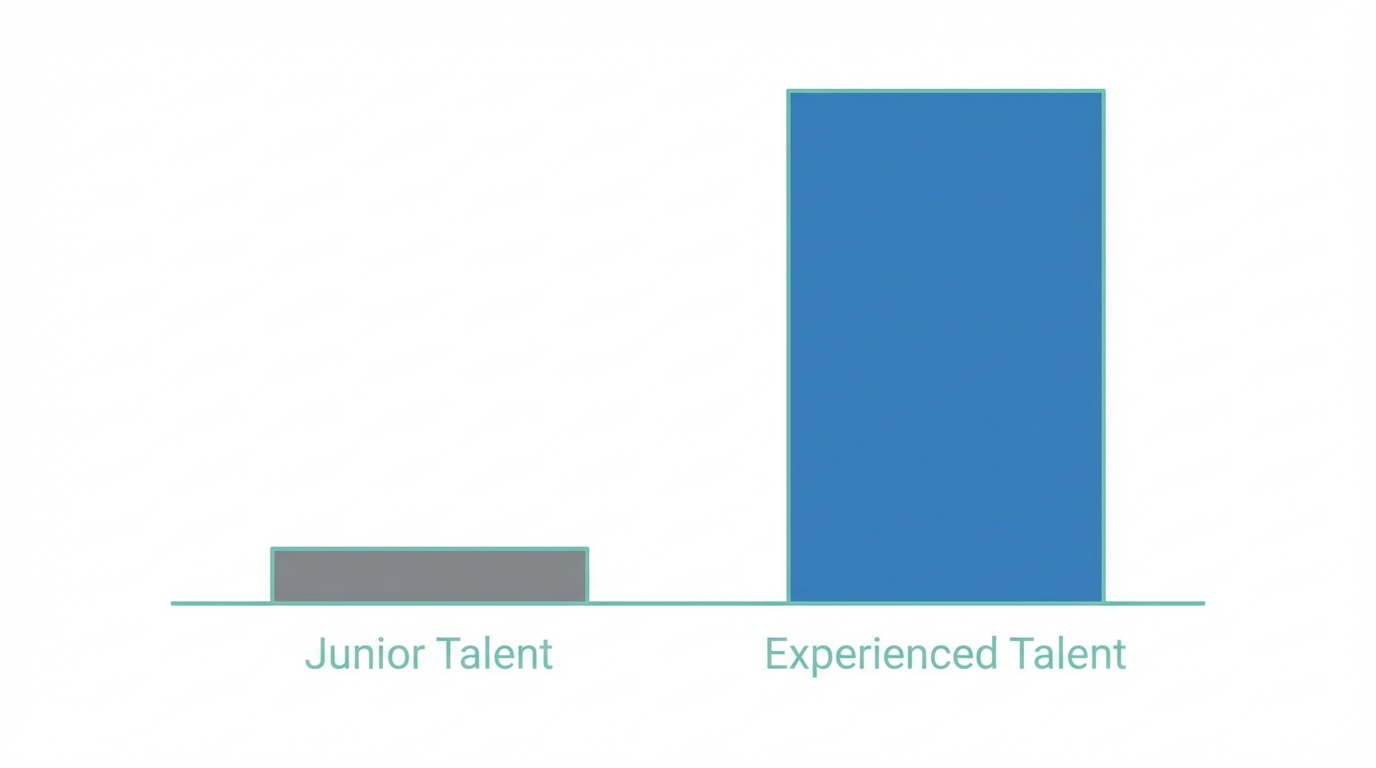
Let’s look at the numbers. A junior employee might cost $50,000 to $60,000 a year, while a seasoned pro commands $150,000 to $180,000. To a 'frugal founder,' the junior seems like the smarter financial move. But if that junior hire takes twelve months to reach 70% efficiency, and the senior hire hits 100% efficiency in thirty days, the opportunity cost of the junior hire is staggering. Experienced vs junior employees is not just a debate about salary; it is a debate about speed. In a competitive market, speed is the only advantage a startup has.
High-agency people are essential, but high-agency combined with experience is lethal. When scaling your marketing efforts, you can use Stormy AI to vet creator profiles in seconds, using AI analysis to detect fake followers and engagement fraud before you waste your budget. Look at companies like Rippling or Airbnb. These companies didn't just hire 'ambitious' kids; they recruited people who had already built at scale elsewhere. When you are running aggressive performance campaigns on Meta Ads Manager or optimizing for Apple Search Ads, a single mistake by an inexperienced hire can burn tens of thousands of dollars in a weekend. An experienced hand knows the signals to watch for and the noise to ignore.
Overcoming 'Frugal Founder' Syndrome
Many founders are held back by frugal founder syndrome—the desire to build things the 'cheap way.' This means getting the free desk off Craigslist and hiring the cheapest possible talent. While this scrappiness is necessary in the first six months, it becomes a liability during the growth phase. If you are talented and hardworking, the only variable that matters is project selection. If you are a 10/10 founder working on a 2/10 opportunity, you will fail. Similarly, if you have a 10/10 project but a 2/10 team, you will grind yourself into the ground.
Using advanced tools like Stormy AI to find UGC creators and influencer talent allows you to treat your team like an investment portfolio. You want to allocate capital to assets (employees/creators) that have a high probability of 10x returns. Stop trying to find the 'diamond in the rough' and start looking for the 'straight flush.' As Adam from Owner demonstrates, being a 'Terminator' about your numbers and growth trajectory is what attracts high-level investors and top-tier talent alike.
The Opportunity Cost of Bad Projects
Success isn't just about how hard you work; it's about what you choose to work on. Many talented founders spend years on 'dog projects'—like trying to launch a sushi restaurant chain or a niche craft beer app—simply because they didn't audit the market fit or the founder-project fit. When you hire experienced talent, they often act as a sanity check. A senior hire will tell you if your project selection is flawed, whereas a junior hire will simply follow you off the cliff. High-quality talent likes to win, and they won't join a project that doesn't have a clear path to a 'Sarah's List' style 10x jump.
The 'Consultant-to-Teacher' Hybrid Model
If you must hire younger, greener staff, do not leave them to their own devices. The most effective way to onboard junior talent is the Consultant-to-Teacher model. This involves hiring an elite agency or a high-level consultant for a fixed period—typically 60 days. In the first 30 days, the expert does the work while the junior shadows them. In the second 30 days, the expert teaches the junior how to replicate the results. This ensures that the 'green' employee is learning from the best, rather than making expensive mistakes on your dime.
This is particularly useful in specialized areas like Google Ads management or technical SEO. By pairing your high-agency junior with a proven veteran, you create a scalable path for scaling a business team without the high failure rate of traditional solo-junior hiring. Stormy AI is an all-in-one platform that allows you to set up an autonomous AI agent to handle creator discovery and outreach on a daily schedule, helping bridge the gap between 'angel investing' in people and the pragmatic need for professional results.
The Step-by-Step Growth Audit: A Playbook
To fix the 'leaks in your bucket,' you must perform a regular audit of your team and your projects. Follow this playbook to identify where you are settling for 'ambition' over results:
Step 1: Identify Your 'Project Selections'
List every major initiative your team is currently working on. Rate each from 1-10 based on market opportunity and founder fit. If you are working on 2/10 projects, kill them immediately. Your time is your most expensive asset.
Step 2: The Agency vs. Experience Review
Look at your current staff. For every junior employee, ask: 'Is this person a 10/10 in their role, or am I keeping them because they are cheap/lovable?' If they aren't performing at a level that would make a senior hire redundant, you have a recruitment leak.
Step 3: Calculate the 'Takeaway' Cost
Determine how much of your own time is spent managing each employee. High-maintenance projects usually stem from low-agency people. Replace these with 'Terminators'—people who take a goal and exceed it without needing their hand held. Look at the Neuralink model: hire the absolute best in the world for a specific, difficult mission, and the management overhead disappears.
Step 4: Implement a Professional Standard
Stop acting like an amateur. Professionals sit down and do the work regardless of how they feel. Ensure your team has a 'Founder Mode' mentality where they can dive into the 10cm details of a problem and then zoom back out to the 10,000-foot vision. If you need help structuring this, Stormy AI provides a comprehensive Creator CRM for managing relationships, deal stages, and collaboration history, ensuring your team has a clear blueprint for scaling your influencer efforts.
Conclusion: Bet on Proven Winners
In business, as in sports, the 'Elon Index' of success is built on the backs of people who are already gods amongst men in their respective fields. While the 'American Dream' of fixing people is a beautiful sentiment, it is a poor hiring strategy for startups. If you want to build a company that survives the 'second baby blindside' and scales to $10 million in revenue and beyond, you must be willing to pay for proven results. Invest in experienced talent, select 10/10 projects, and use AI-powered tools to find the best possible collaborators. Stop searching for diamonds in the rough; start hiring the people who have already found them.