How to Hire Your First AI Ecommerce Employee for Shopify and Amazon in 2026
Learn how to hire an AI ecommerce employee for Shopify and Amazon in 2026. This playbook covers the 1:10 human-to-AI ratio and autonomous back-office agents.
By 2026, the era of the "AI tool" has officially ended. We are no longer looking for software that simply assists us; we are hiring digital workers. The global AI in ecommerce market has surged to over $10.5 billion, and the businesses winning the race are those that have transitioned to a model of one human director overseeing a fleet of autonomous agents. If you are still manually checking inventory levels or following up with suppliers via email, you aren't just behind—you are operating with a massive economic handicap.
The Economic Shift: Digital Workers vs. Human Hires
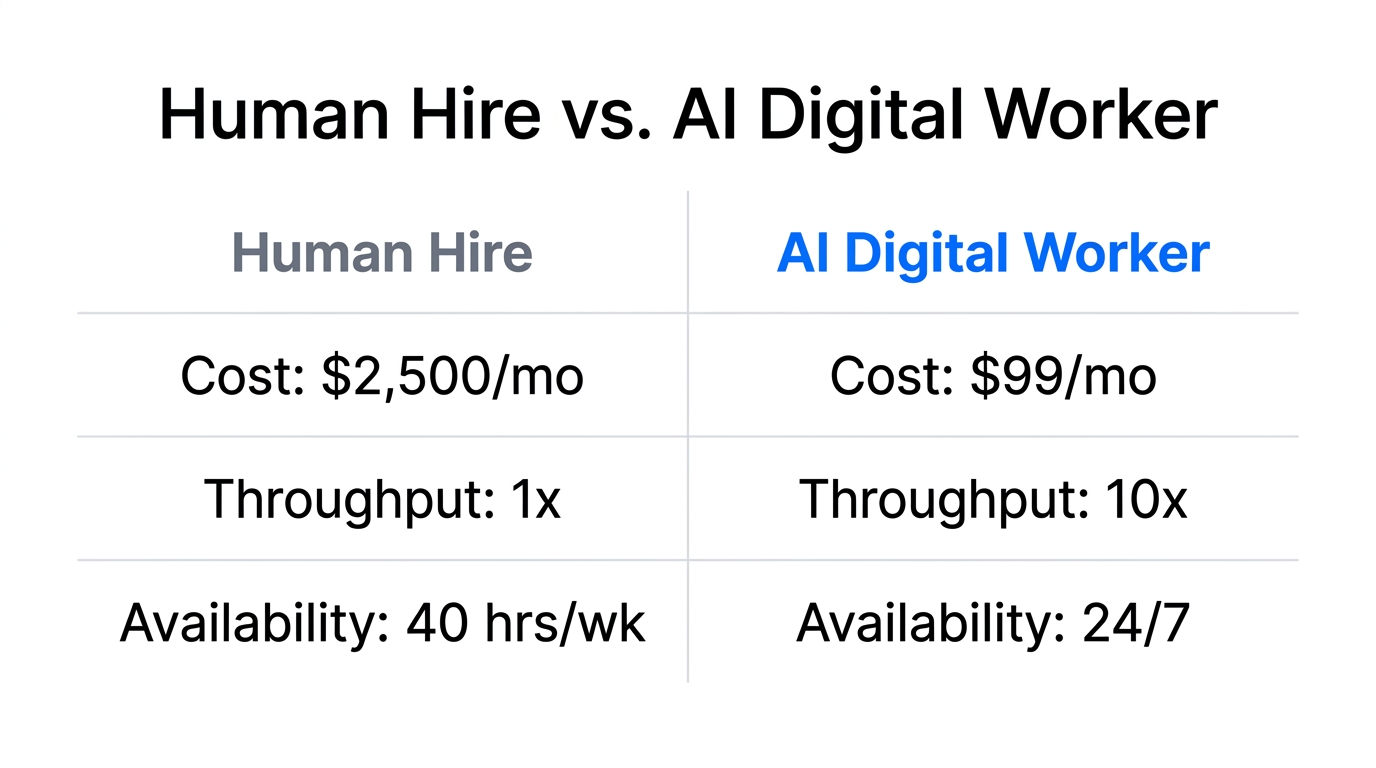
In 2026, the financial argument for the AI ecommerce employee is undeniable. A traditional mid-level operations manager for a Shopify or Amazon brand currently costs between $120,000 and $150,000 annually when you factor in benefits and overhead. In contrast, an autonomous digital worker like Stormy AI costs between $3,000 and $10,000 per year.
| Metric | AI Employee (Digital Worker) | Human Employee (Mid-Level) |
|---|---|---|
| Annual Cost | $3,000 – $10,000 | $120,000 – $150,000 |
| Availability | 24/7/365 | 40 hours/week |
| Onboarding | Instant (Data Ingestion) | 3–6 months |
| Scalability | Infinite | Linear |
| Key Strength | Speed & Accuracy | Empathy & Strategy |
The 2026 operating model isn't about replacing humans entirely; it is about the 1:10 human-to-AI ratio. According to recent Gartner research on agentic AI, successful firms now use one human "Director" to manage ten AI agents. This allows lean teams to achieve the output of a 50-person organization without the management debt.
"The mistake that a lot of people make is they pay $15K a month for their first employee when they should just be hiring an AI agent to run the back office for a fraction of the cost."
Defining the 'Director' Role: Moving from Execution to Oversight
When you hire an AI agent for ecommerce, your job description changes overnight. You are no longer the one pulling CSVs from Meta Ads Manager or manually updating a "Master Inventory" spreadsheet. Instead, you become the Director of an autonomous workforce. Your primary responsibility shifts to setting protocols and escalation triggers.
For example, instead of auditing your own Google Ads performance, you task Stormy AI to monitor ROAS and CPA across every campaign. If a campaign drops below your target threshold, Stormy flags it in your shared Slack channel with a suggested budget move. You simply approve or deny the action. This "Human-in-the-Loop" (HITL) model ensures you maintain control while the AI handles the 80% of volume that is repetitive and data-driven.
How Stormy AI Manages the Back Office Autonomously
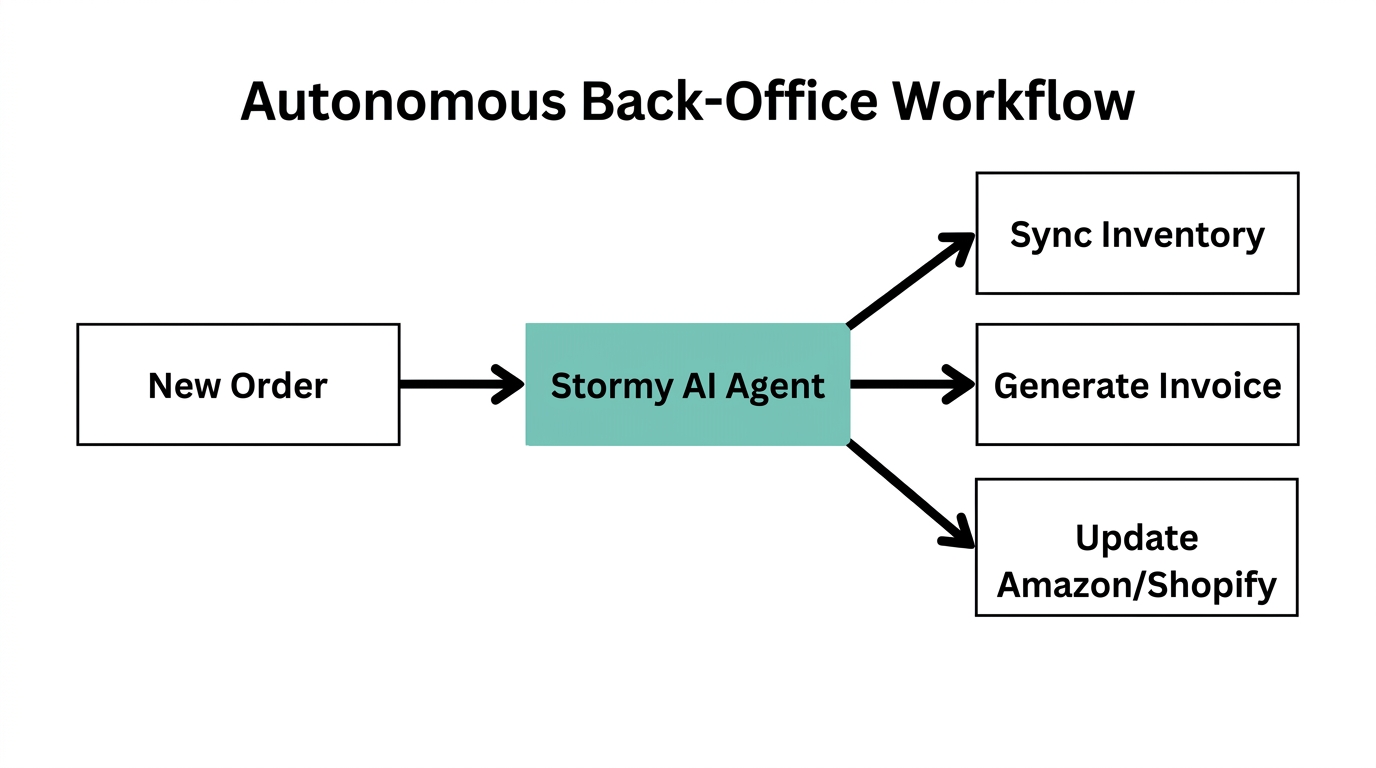
While tools like Shopify Magic focus on content creation, an ecommerce digital worker like Stormy AI focuses on the messy, operational back office. It acts as a teammate that can use a browser, an inbox, and a spreadsheet just like a human would.
1. Inventory & Supplier Follow-ups
Stormy AI monitors your inventory levels across Shopify, Amazon, and TikTok Shop. When a SKU hits a stockout risk, Stormy doesn't just send you a notification. It reads your supplier emails, checks lead times in your spreadsheet, and drafts a restock purchase order. It can even follow up automatically if the supplier hasn't replied within 48 hours, ensuring your supply chain never goes cold.
2. Multi-Channel Reporting
Instead of logging into five different dashboards, you ask Stormy AI to build a weekly performance report. It pulls spend from TikTok Ads, revenue from Amazon Ads, and blended ROAS from your Shopify backend, dropping a polished XLSX with charts directly into your inbox every Monday morning.
Lessons from the Giants: Klarna and IKEA
The transition to AI employees is already proven at the enterprise level. Klarna's AI assistant recently handled 2.3 million chats in a single month—work that would have required 700 full-time human agents. Not only did it reduce resolution time from 11 minutes to 2 minutes, but it is also projected to drive $40 million in annual profit improvement.
Similarly, IKEA's AI agent, Billie, now handles nearly half of all customer inquiries. This didn't just cut costs; it allowed IKEA to retrain 8,500 staff members as interior design consultants, generating significant additional revenue. For a smaller brand, this means you can stop hiring for data entry and start hiring for creative strategy.
"The first priority in 2026 is making your catalog agent-ready. If AI agents can't 'see' your products, you won't exist in the modern customer journey."
The 4-Step Playbook to Hiring Your AI Employee
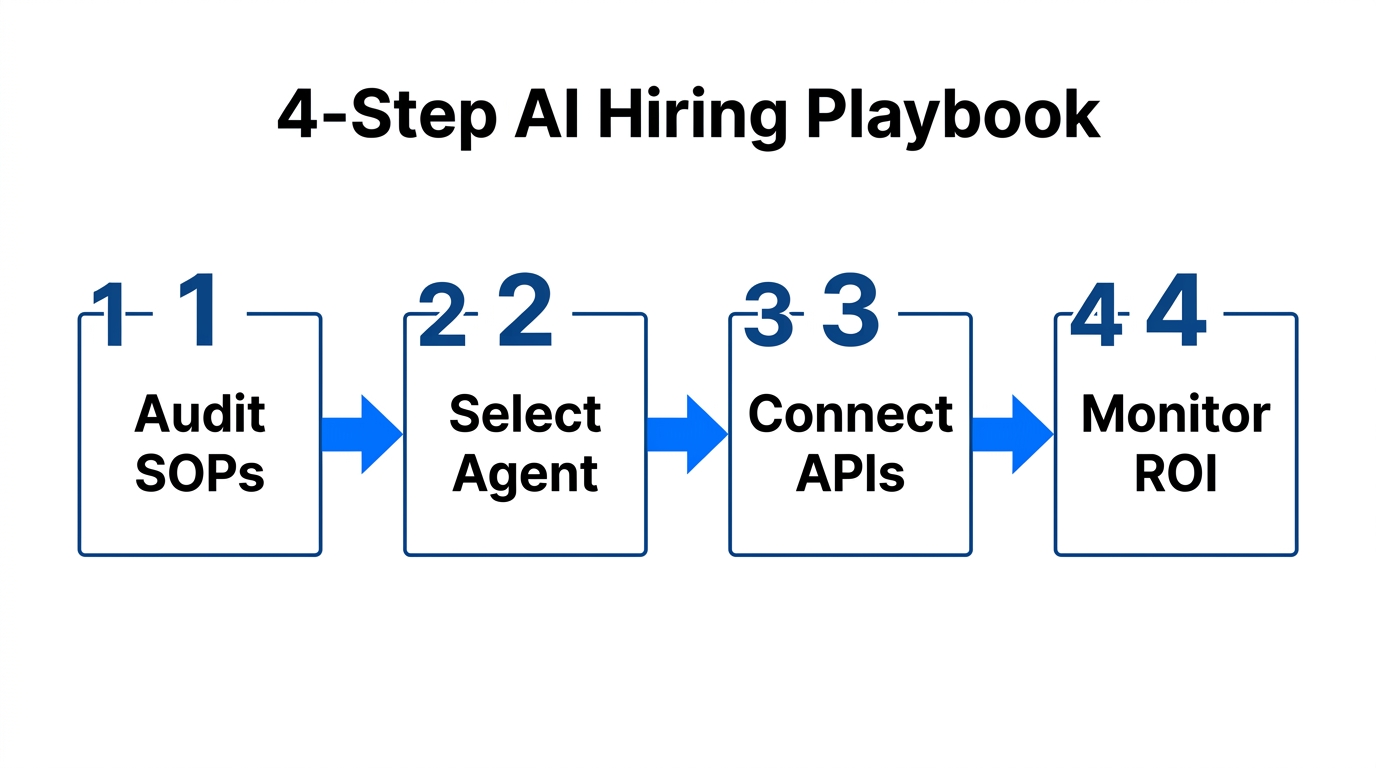
To successfully implement an Amazon FBA AI assistant or a Shopify digital worker, you must follow a structured implementation plan. You cannot simply "turn on AI" and expect it to work without context.
Step 1: Build AI-Readable Infrastructure
Start by creating an llm.txt file in your root directory. This is a plain-text file that tells AI agents exactly what your brand stands for, your shipping policies, and your unique selling points. Ensure your Shopify metafields and GTINs are 100% accurate; merchants with high data fill rates see 3x more discovery from AI shopping agents.
Step 2: Deploy Support Deflection
Use a tool like Gorgias to handle common "Where Is My Order" (WISMO) queries. These agents can resolve up to 90% of tickets without human intervention, freeing up your time for growth tasks.
Step 3: Automate Back-Office Ops with Stormy AI
Connect Stormy AI to your spreadsheet engine and email inbox. Task Stormy with monitoring your supplier deadlines and flagging any listing issues on Amazon (like suppressed listings or broken variants) before they cost you a weekend of sales.
Step 4: Shift to Agentic Marketing
Replace generic email blasts with autonomous flows. Use Klaviyo AI or Octane AI to let the system decide when to send an email based on a user's predicted churn probability. This moves your marketing from "one-to-many" to "one-to-one" at scale.
The Future of the Agentic Storefront
By the end of 2026, we will see the rise of Agent-to-Agent (A2A) commerce. A consumer's personal AI assistant, such as Claude or Gemini, will talk directly to your brand's AI agent to negotiate a price or check compatibility. If your store isn't powered by an AI ecommerce employee that can handle these real-time requests, you will lose the sale to a brand that is.
Hiring your first AI employee is not a tech project—it is a leadership shift. It requires moving from a "doing" mindset to a "directing" mindset. When you empower an agent like Stormy AI to handle the messy back office, you finally gain the bandwidth to build the brand you envisioned when you started.
Conclusion: Your 2026 Competitive Advantage
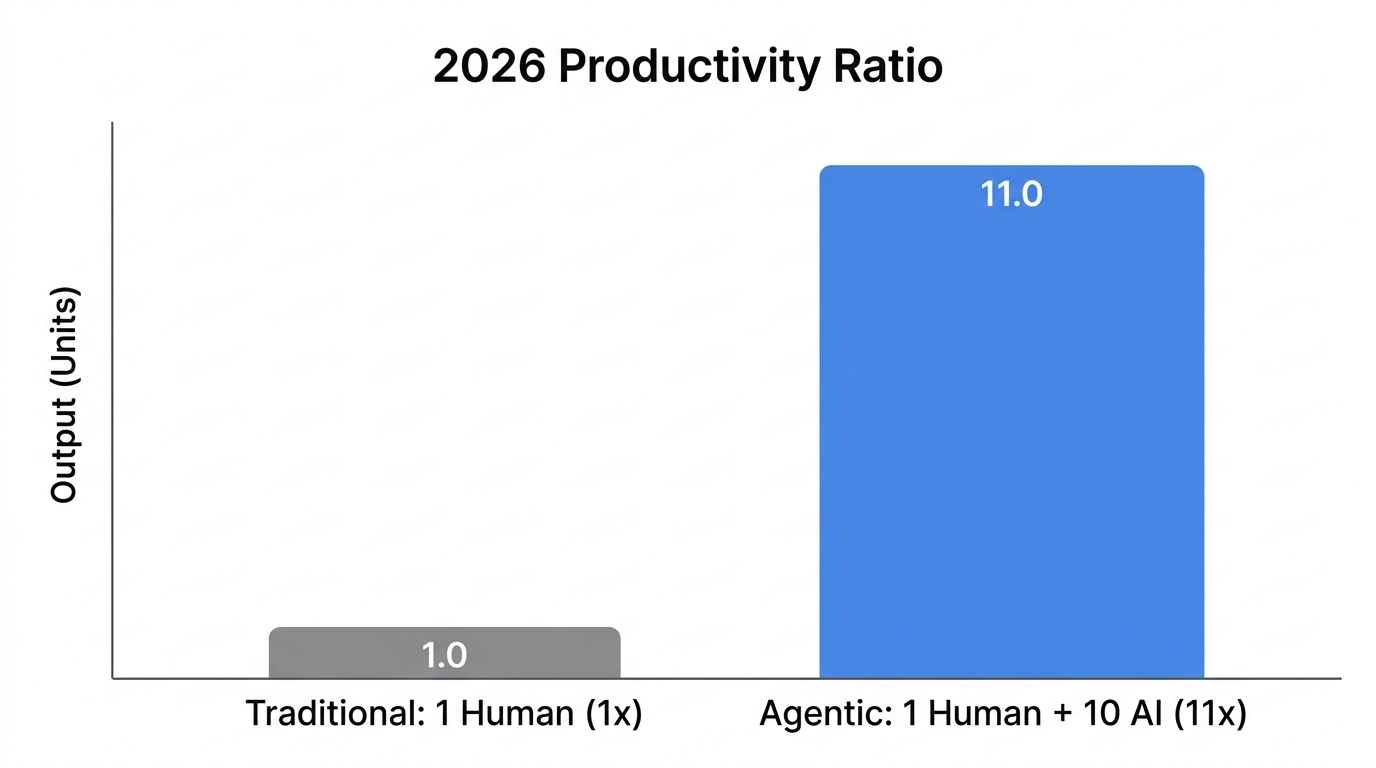
The 2026 ecommerce landscape rewards the efficient. Brands that continue to rely on $150,000 human hires for $10,000 tasks will eventually be priced out of the market. By implementing a Shopify automation 2026 strategy and hiring an AI agent for your back office, you are securing a massive operational advantage. Start by automating one function—whether it is customer support or supplier follow-ups—and scale your digital workforce from there. The era of the AI employee is here; it is time to put them to work.