In the high-stakes environment of a go-to-market strategy 2026, founders and marketers often find themselves paralyzed by choice. Much like the modern dating landscape, where an infinite scroll of profiles creates an illusion of endless options, the digital marketplace offers an overwhelming array of distribution channels, customer segments, and partnership opportunities. However, the same behavioral science that helps users find partners on Hinge can be applied to optimize business growth.
Logan Ury, Director of Relationship Science at Hinge and author of How Not to Die Alone, argues that the biggest mistake people make in dating—and by extension, in business—is searching for too long. When we wait for the perfect moment or the perfect market fit, we fall victim to diminishing returns. To win in 2026, companies must move away from aimless exploration and toward strategic decision making grounded in mathematical frameworks like Optimal Stopping Theory.
The 37% Rule: Benchmarking Your Market Entry
 13:25
13:25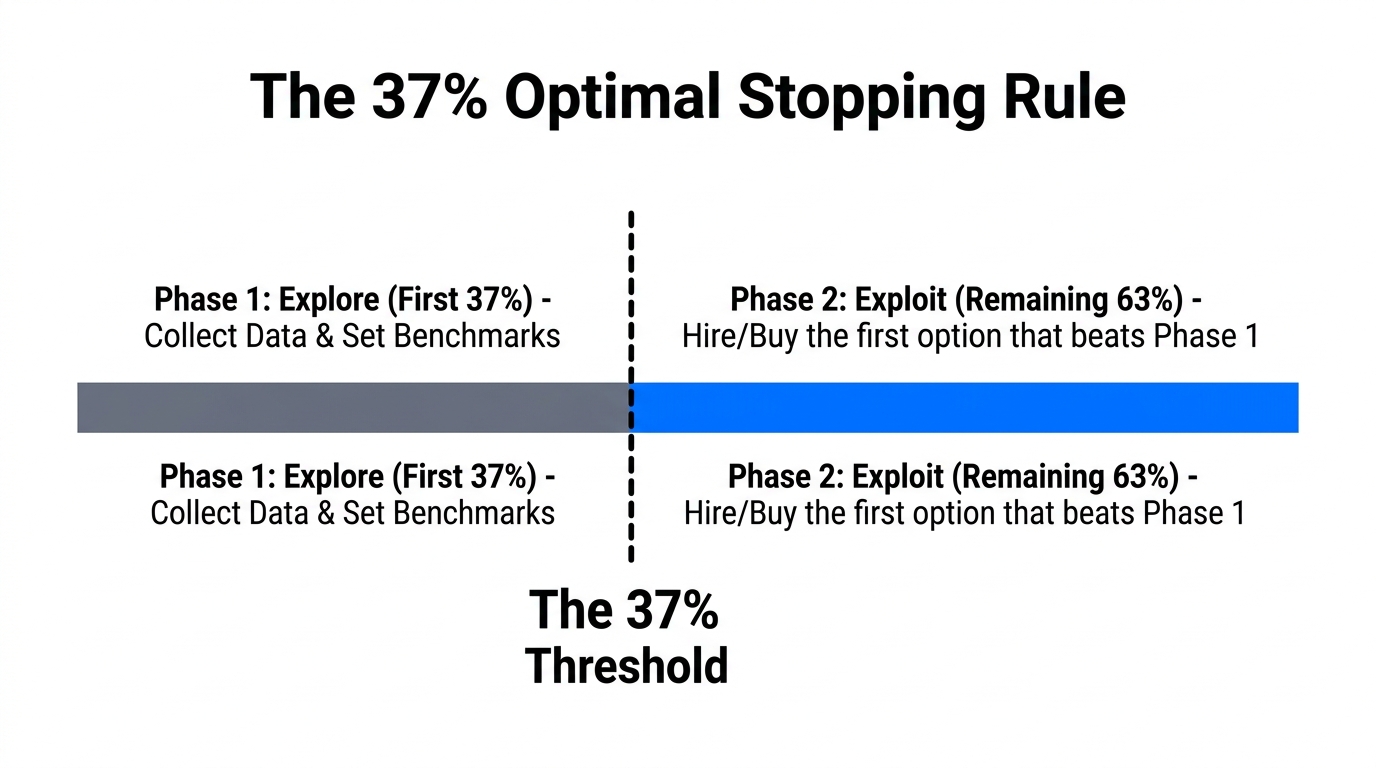
In data science, the "Secretary Problem" is a classic puzzle in optimal stopping theory business applications. Imagine you are interviewing 100 candidates for a role. You must decide on each person immediately after their interview, and you cannot go back to someone you previously rejected. At what point do you stop looking and commit?
The mathematical answer is the 37% Rule. You should spend the first 37% of your search process (in this case, the first 37 candidates) simply observing and gathering data. You don't hire any of them; instead, you identify the single best candidate from that sample to serve as your benchmark. From that point forward, you hire the very next person who is as good as or better than that benchmark. This maximizes your probability of picking the absolute best candidate without wasting time on an exhaustive search.
Applying this to a 2026 growth cycle means recognizing that you don't need to audit every single influencer on TikTok or Instagram. Platforms like Stormy AI allow you to rapidly vet a sample of creators, establish your performance benchmarks, and move into the execution phase while your competitors are still stuck in the "discovery" loop.
"You don't want to go too long because then all the good people might be in the past, but you don't want to go too short because you don't know the pool."
Maximizers vs. Satisficers: The Cost of Perfection
17:29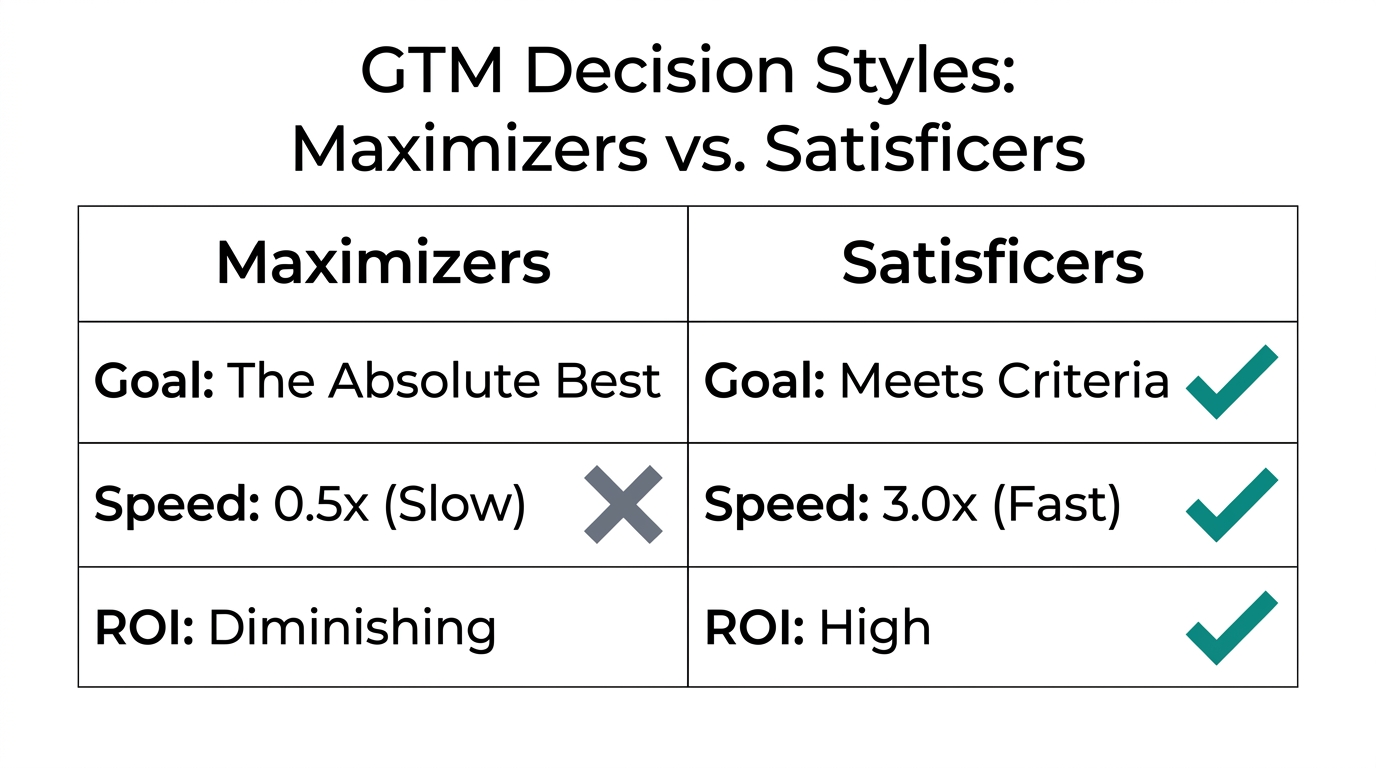
Behavioral science categorizes decision-makers into two groups: Maximizers and Satisficers. Maximizers are those who must explore every single option before making a choice. They spend months researching the best espresso machine or the perfect CRM. Satisficers, on the other hand, have a clear set of criteria, and as soon as they find an option that meets those criteria, they pull the trigger.
Research from Adam Grant and other behavioral experts suggests that while Maximizers might occasionally make a "better" choice on paper, Satisficers are significantly happier and move faster. In the fast-paced world of 2026 tech, speed is often more valuable than marginal optimization.
| Trait | Maximizer (The Researcher) | Satisficer (The Executor) |
|---|---|---|
| Approach | Exhaustive search of all options. | Threshold-based decision making. |
| Speed | Slow; prone to analysis paralysis. | Fast; moves once criteria are met. |
| Happiness | Low; often regrets the "what if." | High; confident in their choice. |
| Outcome | Diminishing returns on research time. | Higher ROI on execution time. |
When building a market research framework, being a Maximizer can be a death sentence. If you spend six months vetting a complex CRM implementation versus a Pipedrive setup, you lose half a year of lead generation. The goal for 2026 is to be a Strategic Satisficer: define your non-negotiables, find the tool or partner that hits them, and commit.
The 6-Foot Rule: How Arbitrary Filters Kill Conversions
30:49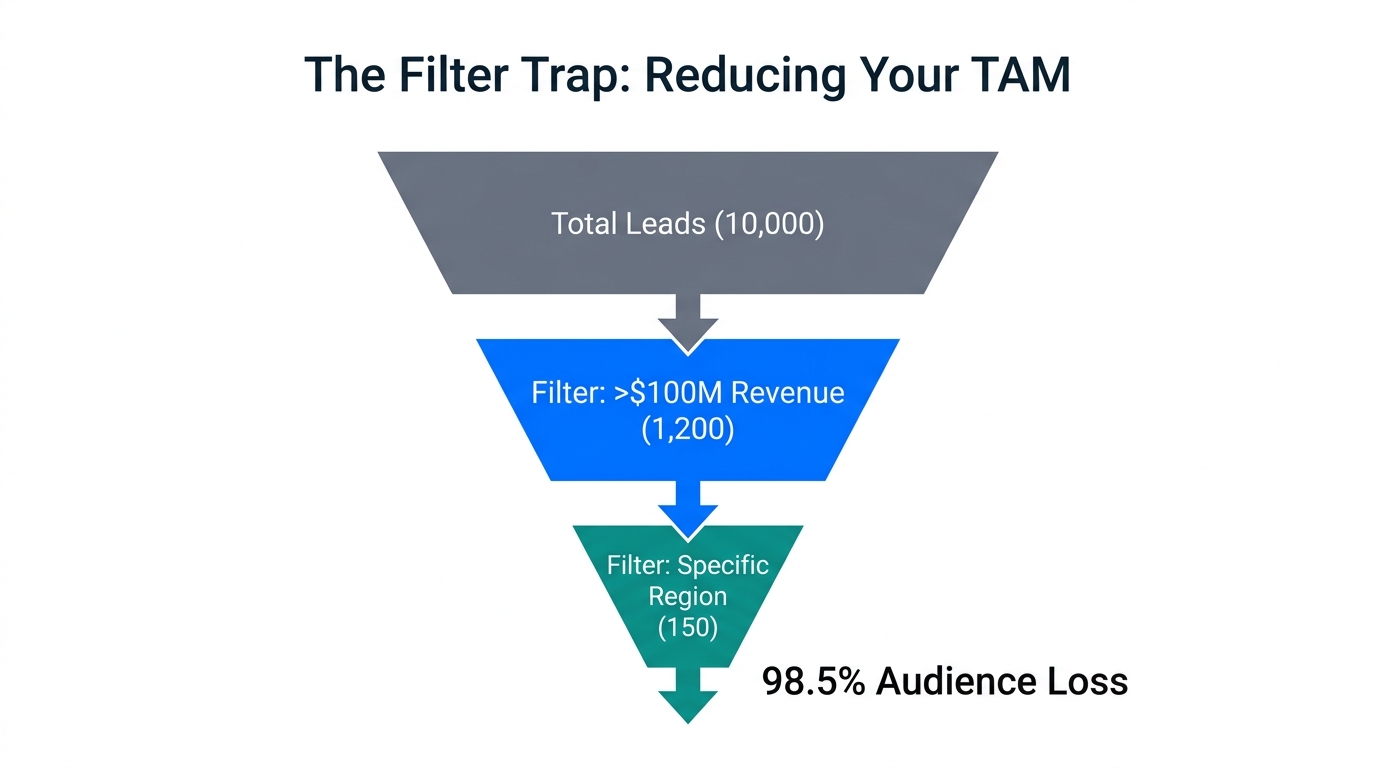
One of the most revealing pieces of Hinge data analysis involves the height filter. A massive percentage of women on dating apps set their minimum height filter to 6 feet. However, only 14% of men in the US are 6 feet or taller. By setting this arbitrary filter, users are accidentally disqualifying 86% of their potential dating pool before they even see a profile.
In GTM strategy, companies do this constantly with their Ideal Customer Profile (ICP). Marketers will set filters in LinkedIn or sales tools that are so restrictive—demanding a specific title, at a specific company size, in a specific sub-sector—that they accidentally filter out 80% of their viable market.
"Your ICP is a club, and your filters are the bouncer. If the bouncer is too strict, the party stays empty."
To avoid this, marketers should date like a scientist. Run experiments by relaxing one filter at a time. If you think you only need influencers with a graduate degree to promote your app, try a campaign with "intellectually curious" creators who don't have that credential. You might find that the 5'9" equivalent of your market—the overlooked segment—actually delivers a much higher ROI because they aren't being bombarded by every other brand.
The Power of Weak Ties: Expanding Your Distribution
50:03Why are you more likely to get a job or a major partnership from an acquaintance than a close friend? This is the "Power of Weak Ties." Close friends have overlapping networks; they know the same people and opportunities you do. Weak ties—people you met at a conference once or former colleagues on LinkedIn—act as bridges to entirely different social and professional ecosystems.
In 2026, distribution is about leveraging acquaintance networks. Instead of only targeting the same "top-tier" influencers that every competitor is fighting over, successful GTM strategies focus on "weak tie" creators who have niche, high-trust audiences. These are the partners who can introduce your brand to a new "parcel of land" your competitors haven't touched yet.
"Fuck the Spark": The Slow Burn of Sustainable Growth
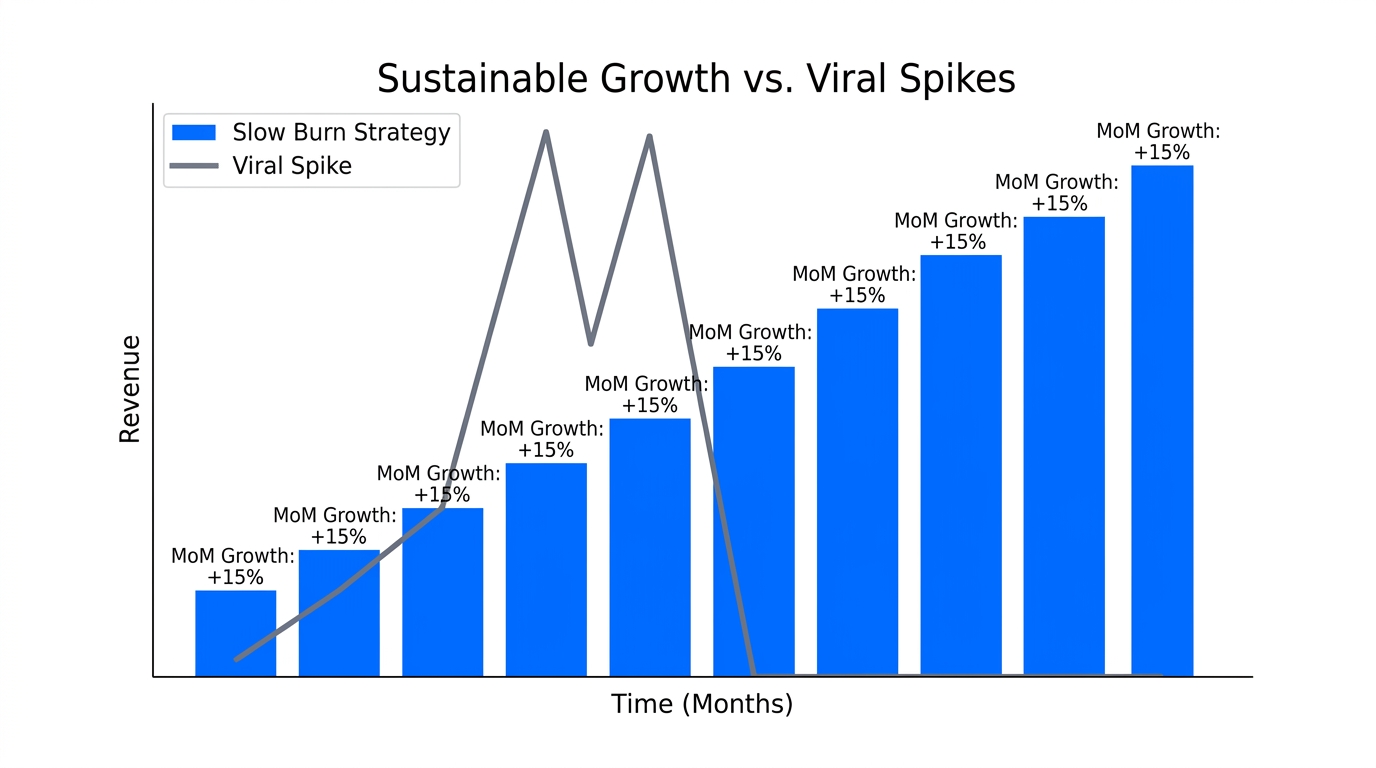
Logan Ury's most controversial advice is often "Fuck the Spark." In dating, people wait for an instant, rom-com chemical explosion. If they don't feel it on the first date, they move on. But science shows that attraction often grows over time—the Slow Burn. Only 11% of people experience love at first sight.
Business leaders often make the same mistake with new marketing channels. They run a TikTok Ads campaign for three days, don't see an instant viral "spark," and declare the platform a failure. They are looking for the "soulmate" channel instead of building a relationship with their audience.
The Three Tendencies of GTM Failure
- The Hesitator: The founder who won't launch because the product isn't "ready." They wait until they are a "catch," losing market share to scrappier competitors.
- The Maximizer: The marketer who won't commit to a strategy because they're afraid a better one is just around the corner.
- The Romanticizer: The team that expects growth to be effortless and abandons any channel that hits a "bump in the road."
To succeed in strategic decision making, you must commit to the slow burn. This means moving from a "zero questions" approach to one of active curiosity. In sales, this looks like asking support-response questions that help the prospect go deeper into their problems, rather than shifting the conversation back to your product features. It's about building relational fitness, not just hunting for a quick win.
Conclusion: Your GTM Playbook for 2026
The lessons from dating science are clear: effort is the ultimate currency. Whether you're optimizing a Hinge profile or a go-to-market strategy 2026, the winners are those who stop searching for perfection and start executing with intention.
Stop being a Hesitator. Use the 37% Rule to benchmark your performance early in the year. Relax your arbitrary filters to find hidden market opportunities. And most importantly, leverage the tools that automate the "discovery" phase so you can focus on the human side of marketing. Use Stormy AI to find, vet, and outreach to the creators who will build that slow-burn, sustainable growth for your brand. In 2026, the market belongs to the Satisficers who have the guts to commit.