In the breakneck world of scaling startups, the difference between a year of explosive growth and one of stagnant complexity often comes down to two things: the quality of your decisions and the discipline of your systems. As a founder managing multiple business units, the pressure to remain "always-on" can lead to cognitive rot, where the very tools meant to help you scale—Slack, Notion, and endless Zoom calls—become the friction points that hold you back. True high-performance management isn't about working harder; it's about building a founder productivity system that protects your focus and implementing leadership decision making frameworks that filter out the noise. Based on a deep 2024 year-in-review analysis, this guide breaks down the actionable unlocks for founders looking to build effective remote work culture and high-leverage teams.
The Day Zero Integrity Test: Screening for Initiative
One of the most difficult parts of remote team management tips is figuring out if a new hire has the "founder's mindset" or if they are just following a script. Traditional interviews often fail to reveal how a person handles ambiguity. To solve this, high-performance founders are implementing what is known as the Day Zero Integrity Test. This test involves giving a new hire—or even a potential candidate—a small task with intentionally unclear instructions.
The goal isn't to trick them; it's to see their default behavior when they hit a wall. Do they guess and hope for the best, or do they stop, ask clarifying questions, and seek a better path? This behavior in the first week tells you everything you need to know about their future performance. A teammate who guesses on a small task will eventually guess on a six-figure decision. In an effective remote work culture, communication is the only proxy for visibility, making this test a critical filter for long-term success. Founders who want to accelerate their team's output often join communities like Startup Empire to learn how to refine these vetting processes and find high-quality partners.
The Friday Afternoon Test: Evaluating Critical Decisions
Most business management strategies emphasize making big decisions when you are at your peak—highly caffeinated and full of "Day One" energy. However, there is a counter-intuitive framework called the Friday Afternoon Test. The premise is simple: big, life-altering business decisions should only be finalized when you are tired and ready for the weekend. If a strategy, a hire, or an acquisition still feels right at 4:00 PM on a Friday when your energy is low, it is likely a sound decision.
When you are excited and high-energy, it is easy to talk yourself into a "strip mall" approach—opening dozens of little businesses because they all seem like good ideas in the moment. The Friday Afternoon Test forces you to ask if you are willing to commit to the "skyscraper"—the one big project that requires long-term focus. This level of leadership decision making prevents impulsive pivots and ensures that your founder productivity systems are aligned with your most profitable long-term goals by avoiding the pitfalls of decision fatigue.
Remote Work Checks and Balances: Preventing Financial Leakage
The move toward decentralized teams offers immense leverage, but it comes with a hidden cost: the lack of physical oversight can lead to costly financial errors. In 2024, many founders learned the hard way that high trust must be paired with high verification. There have been instances where remote finance or operations staff, while not necessarily malicious, were juggling multiple jobs or inputting incorrect data, leading to mistakes worth hundreds of thousands of dollars. To maintain a healthy remote team management environment, you must implement strict checks and balances.
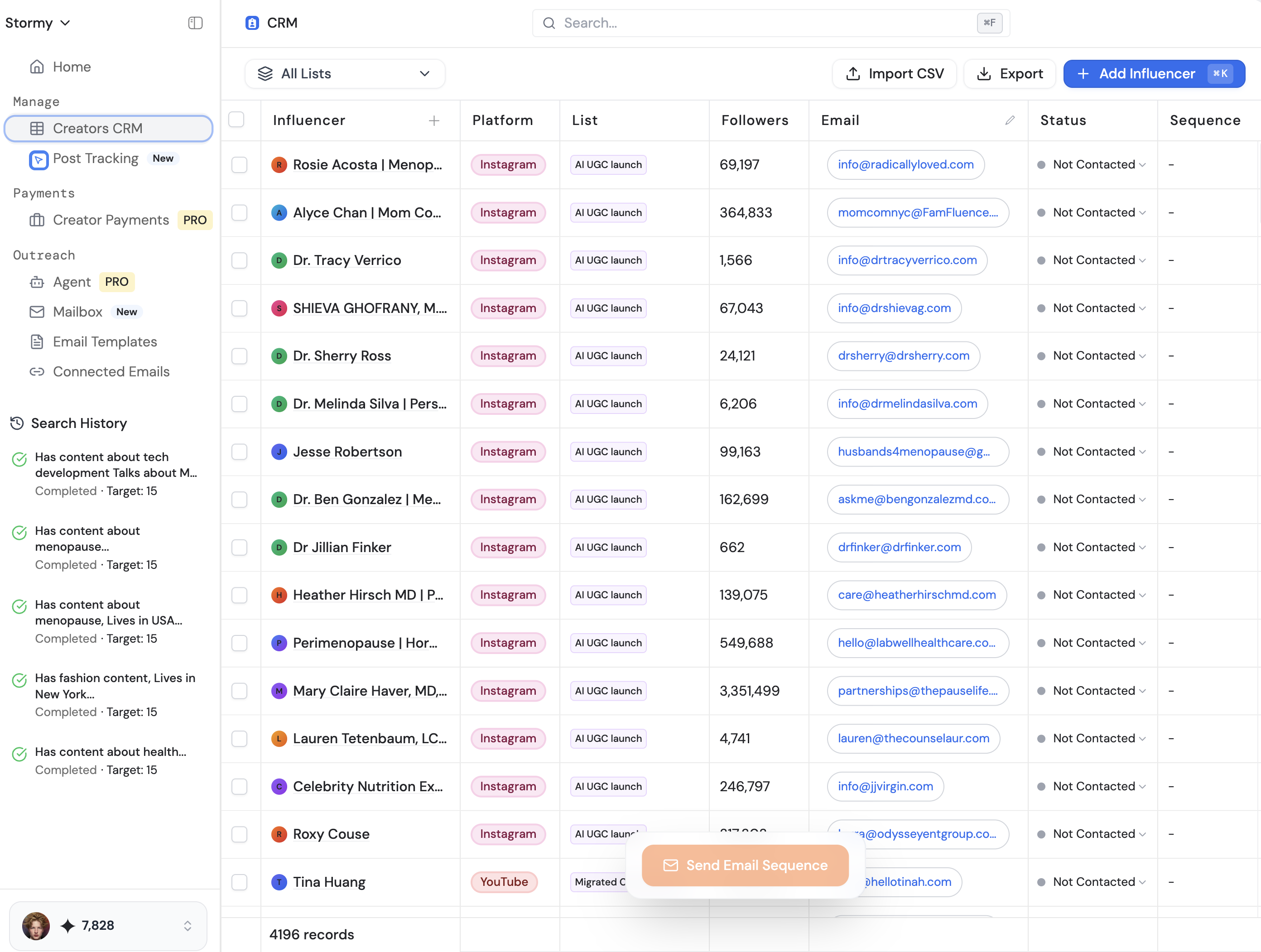
This includes regular audits, automated reporting, and ensuring that no single person has total control over a financial or operational workflow without a second set of eyes. For those managing complex marketing budgets, using AI-driven platforms like Boring Ads can help automate the analysis of ad spend and creative performance, reducing the risk of human error. Furthermore, tools like Stormy AI can help source and manage UGC creators at scale, providing a structured CRM environment that keeps remote collaborations transparent and accountable. Using a dedicated platform for creator management ensures that payments and deliverables are tracked automatically, preventing the kind of oversight gaps that occur in manual spreadsheets.
The Minimalist Productivity Stack: Less Software, More Focus

One of the biggest founder productivity systems unlocks of the year has been the shift away from complex, all-in-one software. While platforms like Notion are incredible for team documentation, they can often become a source of digital distraction for the individual founder. Many high-performers are reverting to a minimalist productivity stack centered around speed and simplicity. This typically looks like moving personal brainstorming and quick notes into Apple Notes and using a dedicated, focused task manager like Things.
The logic is simple: the more time you spend "organizing" your work in complex databases, the less time you spend actually doing the work. A minimalist stack reduces the cognitive load required to capture an idea. By using Apple Notes for observation and Things for execution, you create a frictionless path from thought to action. This approach, combined with aggressive SEO strategies from partners like Boring Marketing, allows founders to focus on high-level growth rather than getting bogged down in administrative software management.
Focused Deep Work and Digital Hygiene
In addition to software simplification, effective remote work culture requires strict digital hygiene. The most successful founders are increasingly utilizing Do Not Disturb mode as their default state. In an era of instant gratification via X (Twitter), LinkedIn, and Slack, the ability to disappear for four hours of Deep Work is a competitive advantage. Combining this digital silence with pen-and-paper note-taking can further ground your thinking, allowing you to map out complex business management strategies without the temptation to click on a notification.
Building the Platform Flywheel: Content as Leverage

For a founder, your personal brand is often the most significant lever for revenue. In 2024, many businesses saw a 40% increase in revenue purely through social media flywheels. The strategy isn't just about "posting more"; it's about creating a content loop. For example, observations made in Apple Notes during the week can be refined into tweets on X on Fridays. Those tweets then inform scripts for a podcast or YouTube channel, which in turn drive subscribers to a newsletter.
To scale this effectively, founders are reaching out to industry experts for specific feedback. Using platforms like Intro.co allows you to book time with world-class experts—such as thumbnail designers for MrBeast or SEO veterans—to get 15 minutes of hyper-specific direction. This tactical feedback is what allowed some podcasts to jump from 11,000 to 146,000 YouTube subscribers in a single year. By focusing on niche authority and high-quality lead magnets, you can turn a passive audience into a scalable business asset.
Conclusion: The Path to High-Performance Management
High-performance management in 2025 isn't defined by how many hours you clock, but by how effectively you can protect your attention and vet your team. By implementing the Day Zero Integrity Test and the Friday Afternoon Test, you ensure that your leadership is based on clarity rather than impulse. Coupled with a minimalist productivity stack and a commitment to remote work checks and balances, these systems provide the foundation for sustainable growth. Whether you are building "skyscrapers" in the AI space or managing a portfolio of cash-flowing businesses, remember that effective remote work culture starts with the founder setting the standard for focus and accountability. Simplify your tools, verify your teammates, and strike while the iron is hot.