In 2026, the digital storefront never sleeps. The era of the static influencer post—the 15-second curated reel on Instagram or the polished static image—has been eclipsed by a more dynamic, aggressive, and highly profitable medium: 24/7 interactive live shopping. While human creators once dominated these streams, the sheer scale of the global economy now demands a solution that doesn't require rest. Enter the age of AI influencer marketing. By leveraging platforms like HeyGen, brands are now deploying hyper-realistic virtual commerce avatars that can sell, engage, and localize at a fraction of the cost of traditional talent.
The Shift from Static Posts to 24/7 Interactive Streams
 0:43
0:43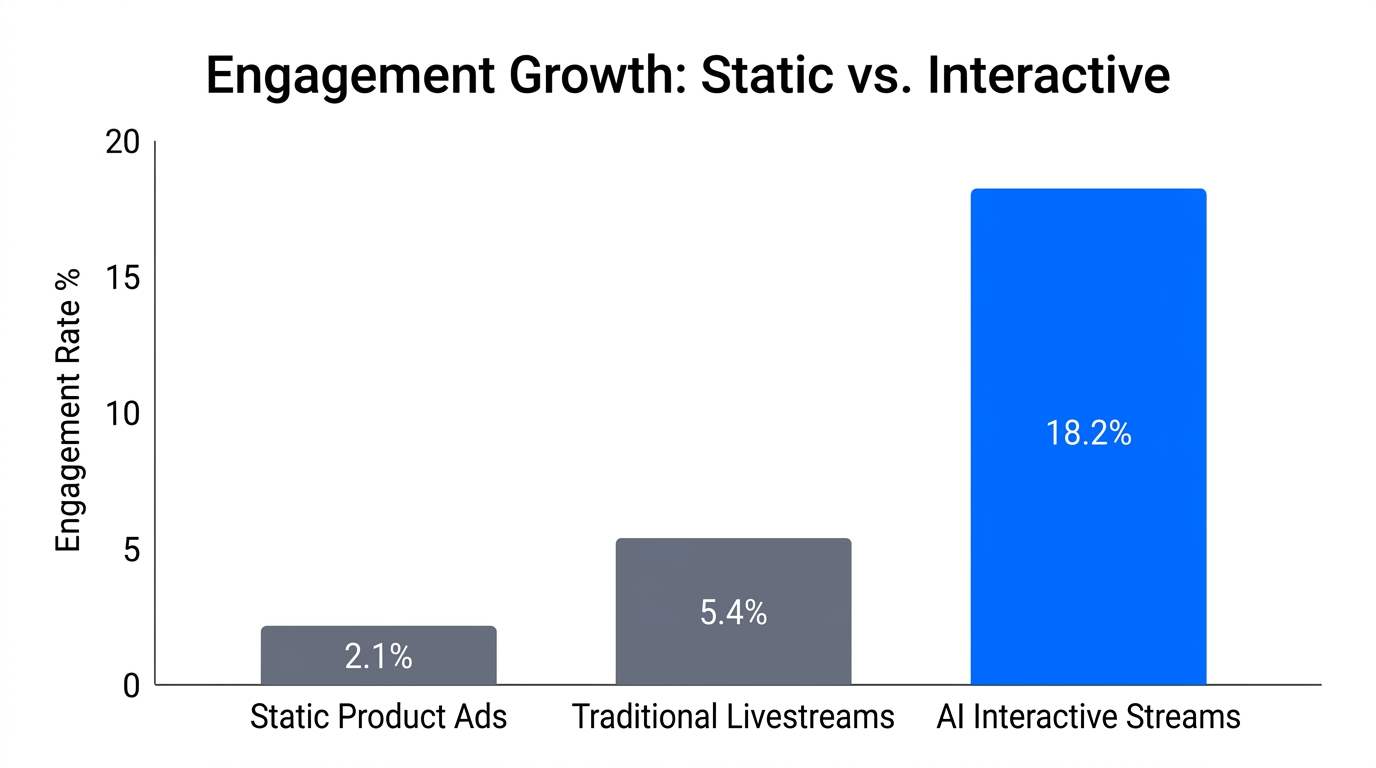
The traditional influencer marketing model of 2024 and 2025 was fundamentally limited by human biology. A human creator can only stream for a few hours before fatigue sets in, and their ability to interact one-on-one with thousands of viewers is non-existent. In 2026, we have moved toward a "personality-driven automated commerce" model. This isn't just about playing a recorded video; it's about using AI to create a live, reactive environment where the avatar responds to real-time comments, answers product questions, and creates a sense of community.
As social commerce platforms like Whatnot have proven, the magic of live shopping lies in the interaction. It’s the "Twitch-ification" of retail, drawing inspiration from the high-engagement live environments found on Twitch. By using HeyGen live shopping avatars, brands can maintain that "high-touch" feel without the logistical nightmare of scheduling human talent across multiple time zones. These avatars are trained on licensed human actors, ensuring that the uncanny valley is a thing of the past. They look, move, and sound like real people, but they are capable of infinite scale.
"The novelty of the AI avatar itself tickles the consumer's fancy, but the real value is the ability to provide a personalized, one-on-one video interaction for every single shopper in the stream."
Building the 'Kim Kardashian-Style' Celebrity Avatar
3:05One of the most potent strategies in 2026 is the use of celebrity-licensed AI avatars. Imagine a world where an AI version of a major influencer—let's use a Kim Kardashian-style persona as an example—is available to talk to every single customer interested in her latest brand drop. Using the HeyGen API, developers can now build orchestration layers that allow these avatars to mention customers by name, reference their specific purchase history, and offer personalized styling advice.
For brands like Skims or Nike, this means the creator doesn't just "pedal" the product; they consult on it. By integrating your product database with an AI agent powered by Claude or GPT-4, the avatar knows exactly what's in stock, the specific fabric details, and the shipping times for the user's specific region. This level of localization is what separates the winners from the losers in the 2026 virtual commerce avatar race.
Step-by-Step: Implementing AI Avatars into TikTok Shop and Whatnot
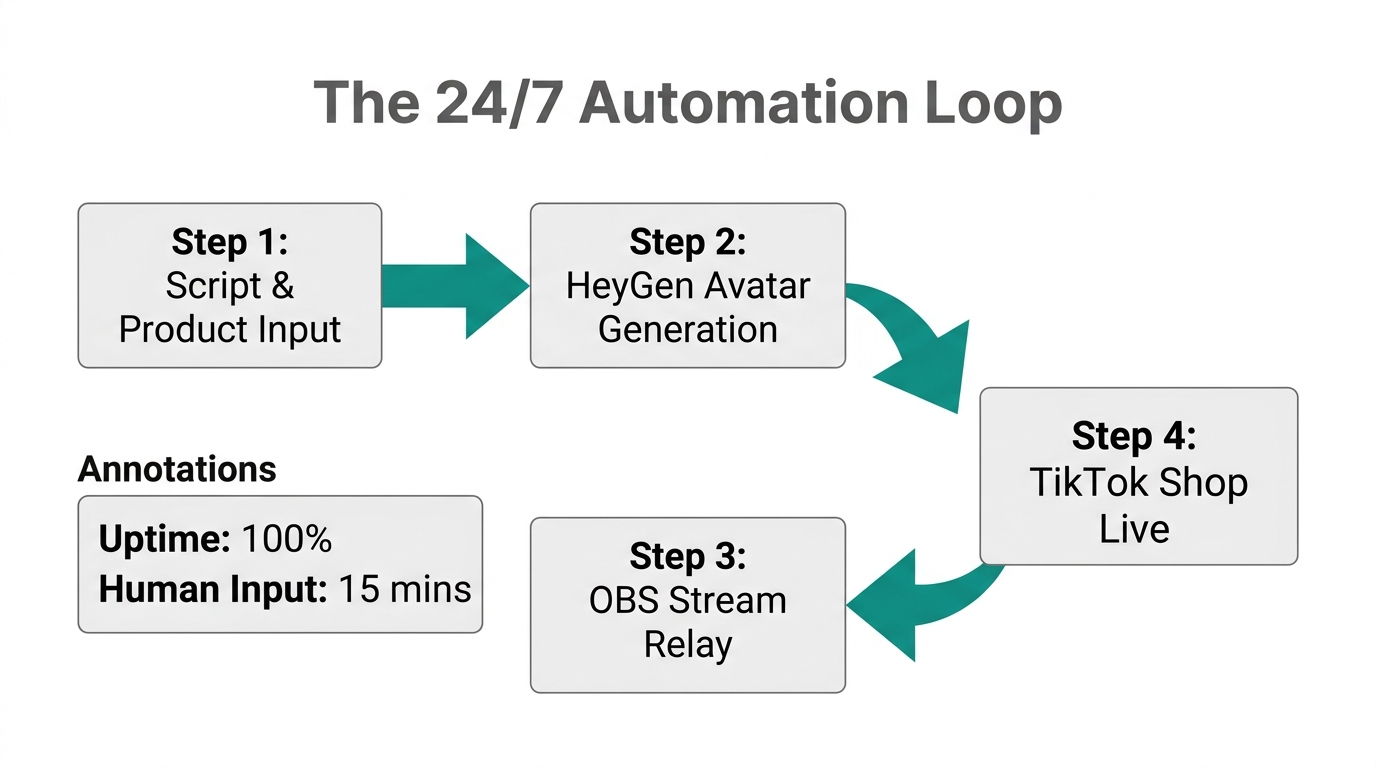
Automating your live shopping presence requires a blend of creative assets and technical orchestration. Here is the 2026 playbook for TikTok Shop automation:
Step 1: Avatar Creation and Voice Cloning
Use HeyGen to either select a pre-made avatar or create a custom one based on your brand's face. If you are working with a human influencer, use high-fidelity voice cloning tools like ElevenLabs and 4K video training sets to ensure the avatar is indistinguishable from the real person. This allows the human creator to focus on high-level strategy while their AI twin handles the 24/7 "grind" of live selling.
Step 2: The Orchestration Layer with Airtable
To make the avatar truly "smart," you need a backend. Many top-tier agencies are using Airtable as a scripting layer. By defining code that talks to the HeyGen API directly from an Airtable row, you can automate the generation of personalized video responses or stream segments based on incoming data from TikTok Ads Manager or your Shopify backend.
Step 3: Real-Time Engagement Vetting
As you scale, you must monitor the quality of these interactions. While AI handles the output, platforms like Stormy AI are used to track post-performance, analyze audience quality, and ensure that the AI isn't engaging with bot accounts or fraud. Stormy's AI-powered vetting ensures your virtual commerce avatars are reaching real humans with high intent to buy.
| Feature | Human Influencer | HeyGen AI Avatar |
|---|---|---|
| Availability | 4-6 hours per day | 24/7 Continuous |
| Scalability | One stream at a time | Thousands of concurrent streams |
| CPA (Cost Per Acquisition) | High (Flat fee + Commission) | Low (Compute cost only) |
| Localization | Limited to one language | Instant translation (40+ languages) |
| Personalization | Generic shoutouts | One-on-one data-driven advice |
Managing the CPA: Virtual Influencers vs. Human Talent
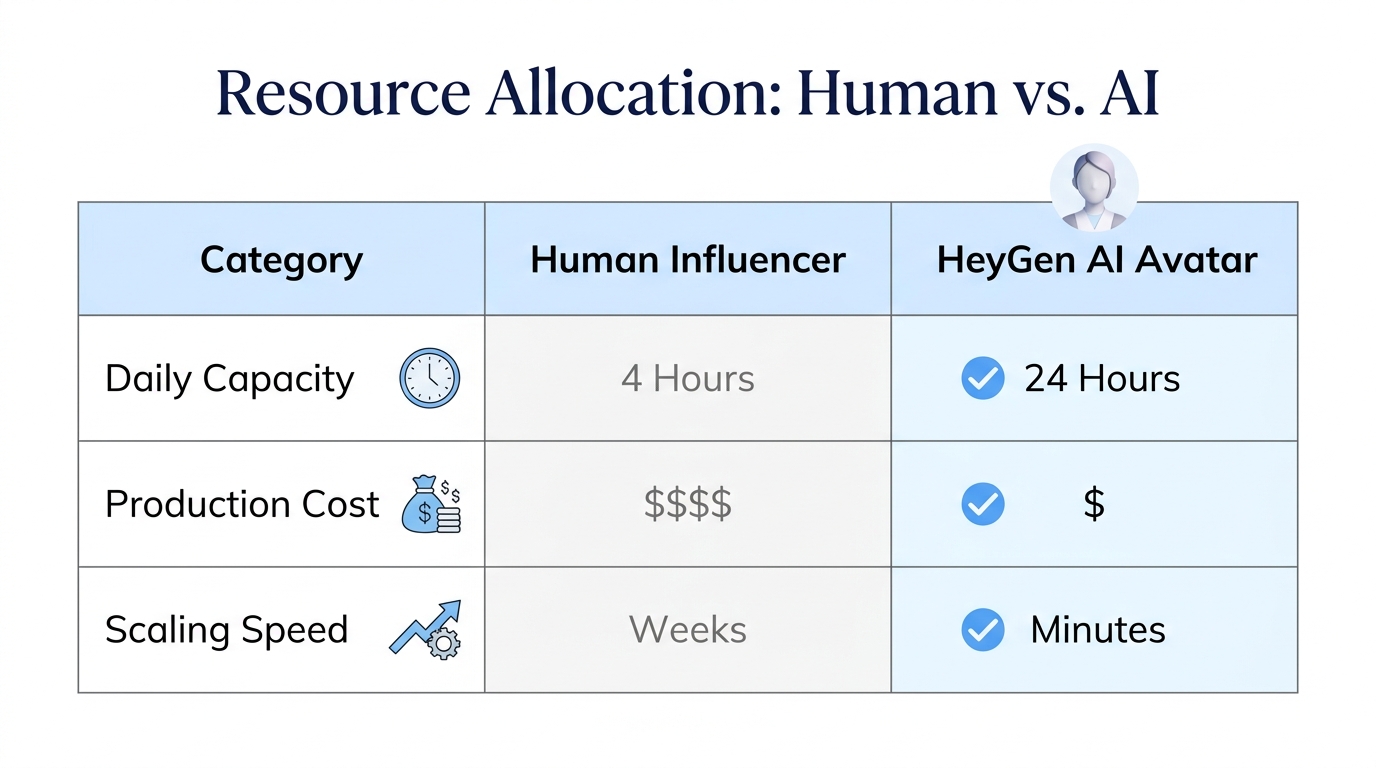
In 2026, the Cost Per Acquisition (CPA) is the only metric that matters for e-commerce brands. Human influencers are becoming increasingly expensive as the top 1% of talent consolidates their power. For a startup or a mid-market brand, the financial leverage of AI is undeniable. By using AI avatars, you effectively eliminate the "labor" component of the cost structure.
Consider a standard Business Process Outsourcing (BPO) model. Traditionally, you might hire a call center or a streaming farm in an offshore location to run your TikTok Shop. In 2026, those same firms are replacing their human staff with AI-leveraged teams. They aren't firing people; they are giving one human the power to manage 50 AI streams simultaneously. This shift is taking low-margin commerce businesses and turning them into high-margin tech-like entities with tens of percent in increased profit.
"We are moving into an era where every traditional business is 'up for grabs' because AI can automate up to 50% of the cost structure, specifically in labor-intensive areas like creator outreach and live sales."
The Psychology of Trust: Why Gen Z and Alpha Prefer AI
2:13A common misconception in 2024 was that consumers would reject AI as "fake." By 2026, that theory has been thoroughly debunked. Gen Z and Gen Alpha consumers—who have grown up with ChatGPT and Claude as their primary research tools—actually trust AI more than humans in many contexts. They see AI as an objective source of information, free from the hidden biases or "sell-out" tendencies of human creators.
For a young shopper, getting a product recommendation from an AI avatar is like getting a medical diagnosis from an AI—they know it is trained on the "wisdom of the collective," pulling data from thousands of reviews and technical specs instantly. The "stamp of approval" for a product in 2026 often comes from the AI's ability to provide a human-like face to a data-backed recommendation. Tools like Stormy AI help brands bridge this trust gap by identifying which AI-driven campaigns are resonating with specific demographics and ensuring the content quality scoring remains elite.
The 2026 Creator Economy: A New Paintbrush
39:01We are no longer in the era of simple tech automation. We are in the era of AI artistry. The winners in the live shopping space aren't just the best coders; they are the best "prompters" and creative directors. They understand the artistry of consumer psychology. Whether it's setting an avatar to an "unhinged mode" to create viral clips or using hyper-niche personalities to target sub-cultures, the possibilities are infinite.
If you are a brand looking to scale, your strategy should be two-fold: Use human creators for high-level brand awareness and "hero" moments, then use HeyGen live shopping avatars to handle the 24/7 bottom-of-funnel conversion. Manage the entire ecosystem through a centralized hub like Stormy AI, where you can discover new human partners and track your virtual ones in a single view.
The future of commerce isn't just automated; it's personal, interactive, and powered by AI. Don't let your brand get left behind in the static age. Start building your virtual sales force today.