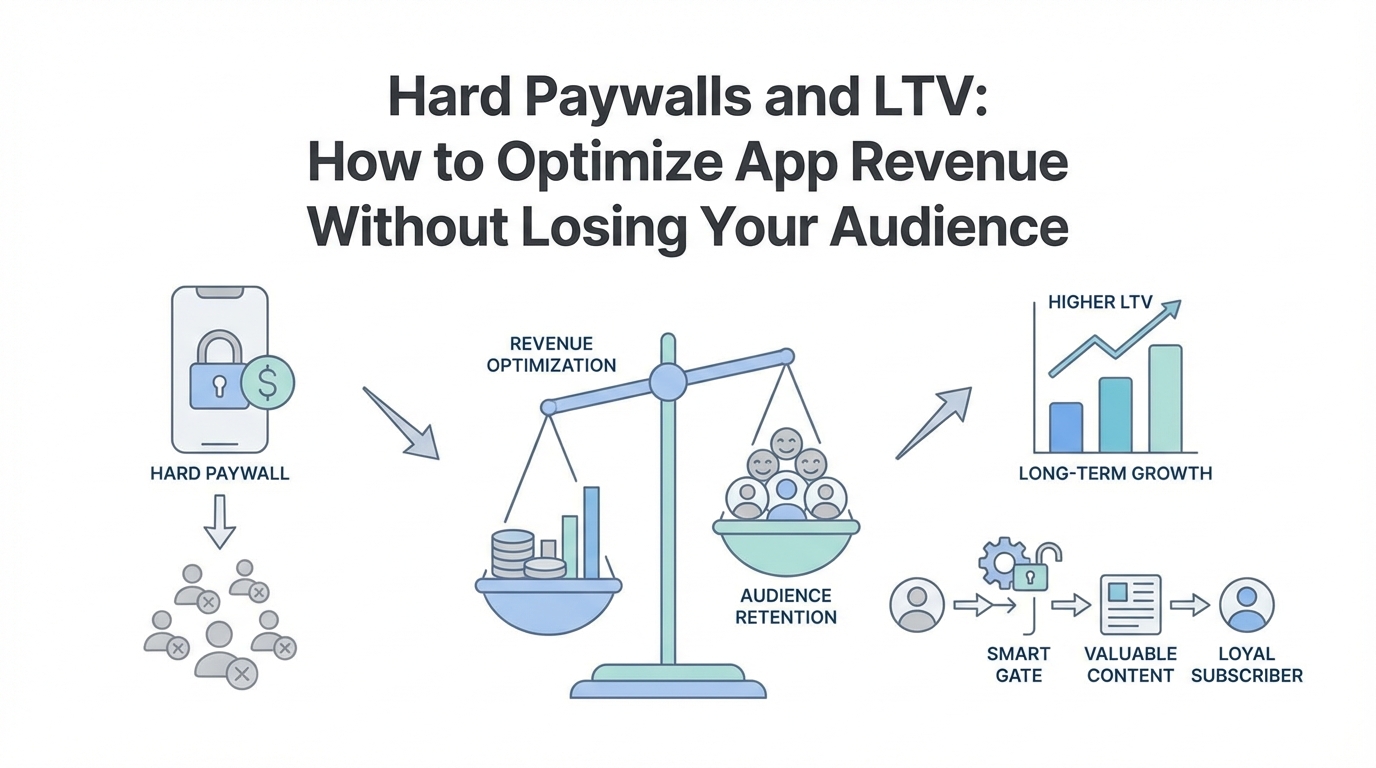
In the high-stakes world of mobile growth, the line between a viral hit and a profitable business is often drawn by a single screen: the paywall. Many developers spend months perfecting their core loop only to shy away from aggressive app monetization strategies out of fear of alienating their user base. However, according to the State of Subscription Apps report, the most successful consumer apps are discovering that users are more willing to pay than we think—provided the value is clear and the gate is firm. Transitioning from a loose freemium model to a strategic, data-driven hard paywall doesn't just improve your immediate cash flow; it fundamentally shifts your subscription app revenue trajectory by filtering for high-intent users from day one.
The Accidental Viral Lesson: When a Bug Becomes a Feature
One of the most compelling case studies in mobile app paywall optimization comes from the founders of Stronger, a gamified workout tracker. While bootstrapping their app, they stumbled into a monetization breakthrough by complete accident. During a New Year’s Eve update, a bug in their code inadvertently triggered a "hard paywall" for every user who opened the app. Suddenly, the app was unusable unless the user started a subscription or a trial. Instead of a deluge of support tickets and deleted accounts, the founders watched as their phones pinged incessantly with new sales notifications. This accidental experiment led to an overnight revenue boost of approximately 25%.
The lesson here is profound: If you give people an excuse to not pay, they won't. Many users who genuinely find value in your product will simply default to the free version because it's available. By removing that path of least resistance, the Stronger team realized that their previous "weak" freemium model was actually leaving significant money on the table. This shift didn't require a redesign of the app’s core functionality; it simply required a change in the app monetization strategies they employed at the point of entry.
Macro vs. Micro Testing: Focus on the Big Levers First


When founders think about mobile app paywall optimization, they often gravitate toward "micro" changes. This includes testing different button colors, changing the font size, or tweaking the copy from "Start Trial" to "Try for Free." While these iterations have their place, they rarely move the needle in a statistically significant way for apps with moderate traffic. Platforms like Stormy AI emphasize that before you worry about the aesthetic nuances of your creative, you must first solve for the macro variables of your funnel.
Macro testing involves high-level structural changes such as:
- Paywall Frequency: How many times does a user see the paywall in their first session?
- Feature Gating: Which specific features are locked? Is the paywall hit immediately upon launch or after the first "value moment"?
- Hard vs. Soft Gates: Can the user dismiss the paywall, or is a trial opt-in mandatory to proceed?
- Pricing Tiers: Testing a weekly vs. annual plan as the primary focus.
For most apps, a macro change like moving the paywall from the third screen of onboarding to the very first screen will have 10x the impact of any micro-copy change. To run these tests effectively, developers are increasingly turning to Superwall, which allows for rapid A/B testing of paywall structures without requiring a full app store submission for every iteration.
Avoiding the Statistical Significance Trap
A common mistake in increasing app LTV is running an A/B test for a week and assuming a 2% lift in conversion is a "winner." Without massive volume, these small variations are often just standard deviations. To ensure your results are valid, use a statistical significance calculator. This is why focusing on macro changes is superior for bootstrapped teams; the results are usually so stark that they overcome the noise of low sample sizes. If you want to see a real jump in subscription app revenue, test the placement and the "hardness" of the gate before you test the hex code of your call-to-action button.
The Trial-First Strategy: Forcing the Opt-In
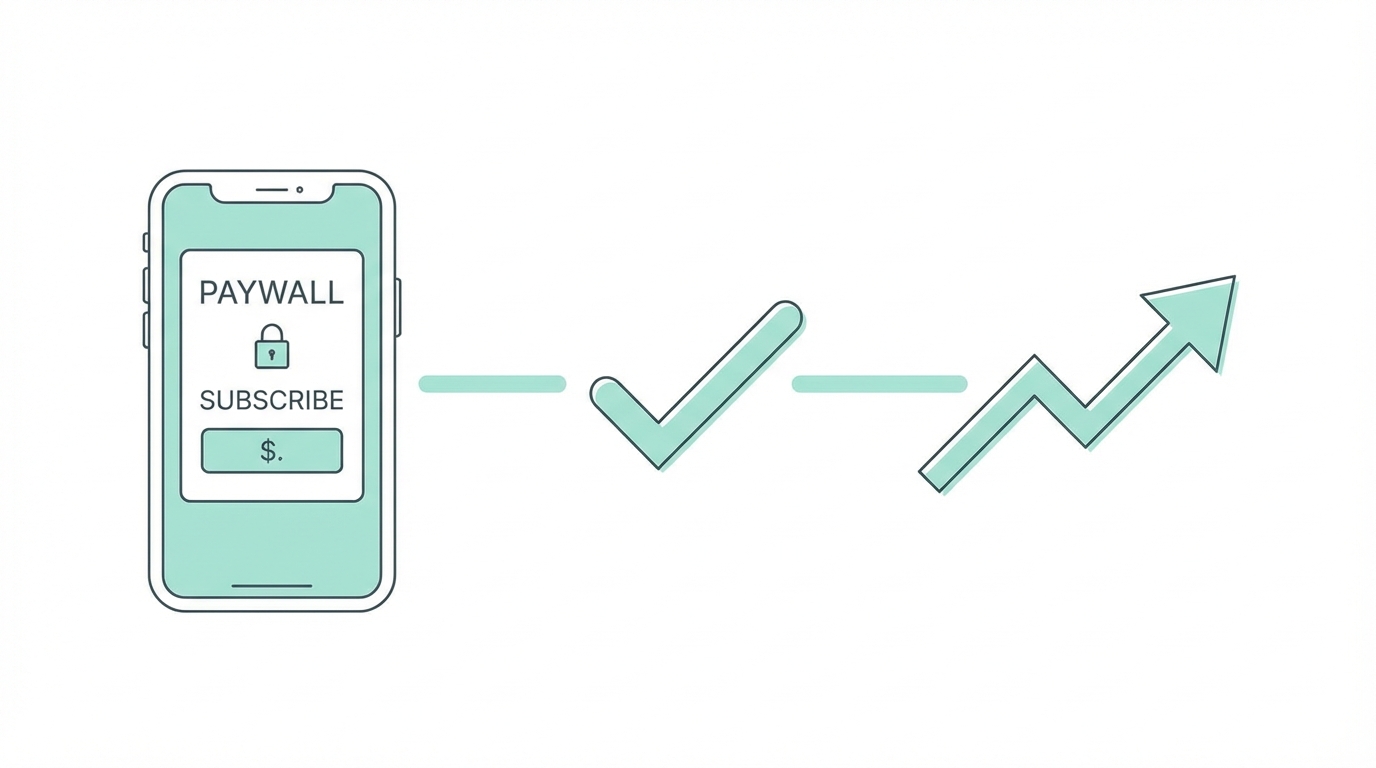
One of the most effective app monetization strategies used by top-grossing apps today is the "Trial-First" hard paywall. In this model, the app remains technically "freemium," but it forces every user to start a free trial to access any functionality during the initial onboarding. If the user cancels the trial later, they may be downgraded to a limited free version. This approach ensures that 100% of your active users have at least considered the premium value proposition.
By forcing the opt-in, you significantly increase the number of users who enter your payment funnel. Statistics from internal app audits suggest that users who start a trial are 5-10x more likely to eventually become long-term subscribers than those who remain on a purely free tier. This strategy works particularly well when combined with a robust content strategy on platforms like TikTok or Instagram, where viral curiosity drives high-volume, low-intent downloads that need to be quickly qualified through a hard paywall.
Category-Defined LTV: Know Your Value Prop Ceiling
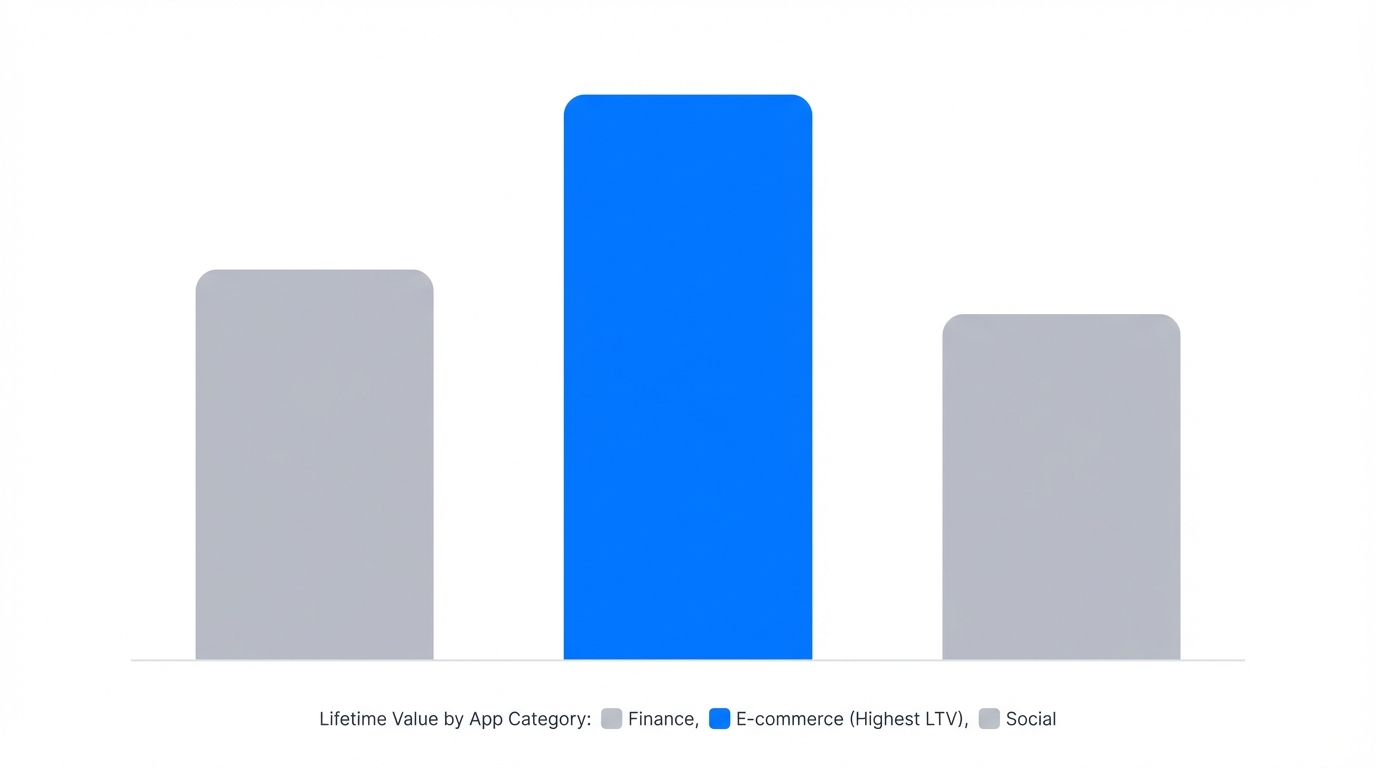
Your ability to increase app LTV is ultimately capped by the category your app occupies. You must understand what your value proposition is being measured against. For example, if you are a workout tracker, your user is comparing your $60/year subscription to a pen and paper or a free spreadsheet. If you are a workout *planner* or a personal training app, you are being compared to a $150/hour human trainer. The latter allows for a much higher price ceiling.
To maximize subscription app revenue, you must align your pricing and paywall strategy with the perceived value of your category. Using tools like ProfitWell can help you benchmark your retention and LTV against industry standards. If you find your LTV is stagnant, it might not be a paywall issue—it might be a positioning issue. Are you offering a utility, or are you offering a transformation? Utilities are hard to monetize at high price points; transformations (health, wealth, relationships) are where the high-LTV users live.
Viral Loops: Using UGC and Social Content to Feed the Paywall
A hard paywall is only effective if you have a consistent stream of traffic. The founders of Stronger achieved over 300 million views on their social content by engineering "viral-ready" features. They didn't just build a workout app; they built a "heat map" that visualized muscle growth in bright, eye-catching colors. This visual was designed specifically to perform well on TikTok slideshows and Reels.
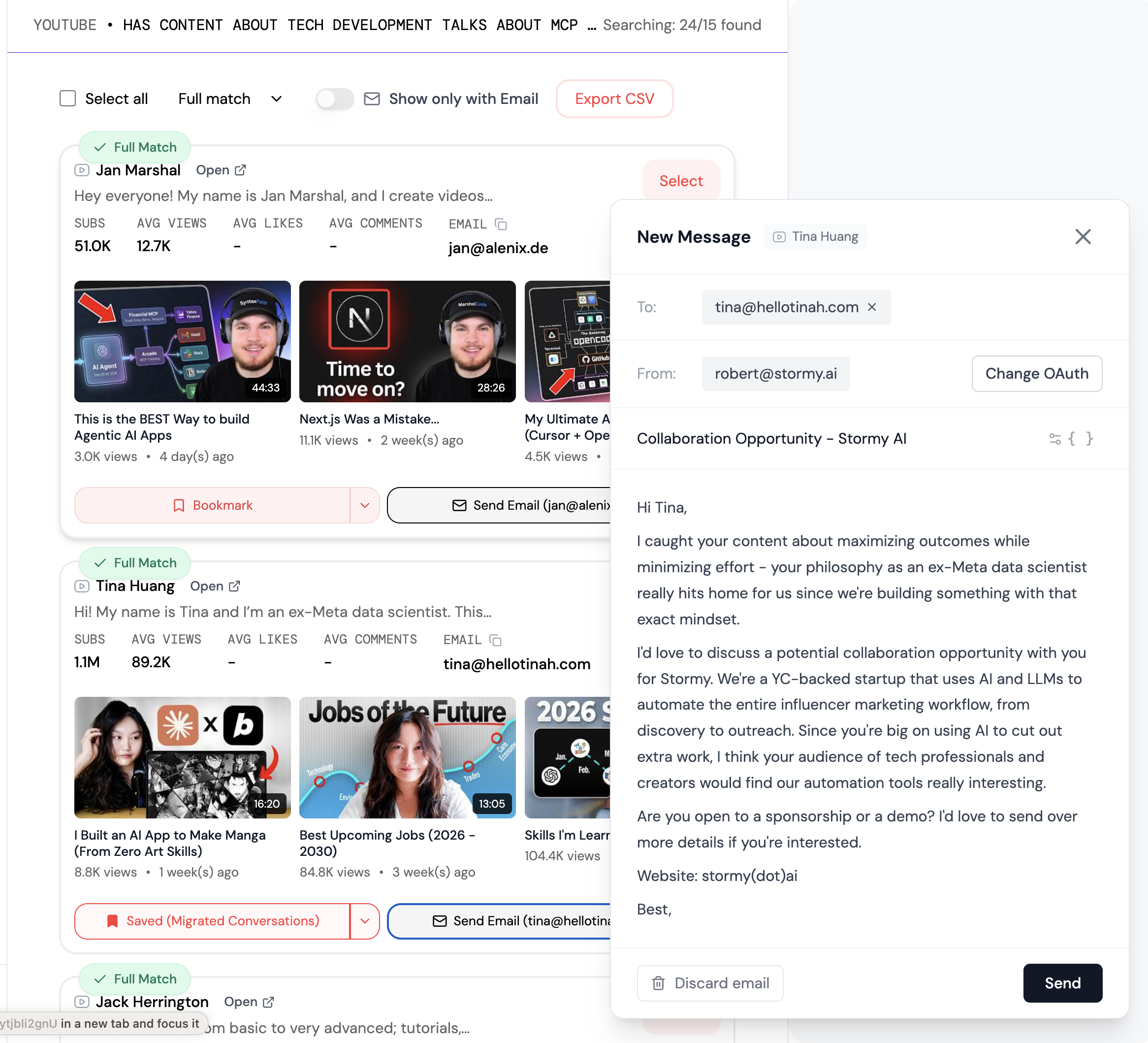
Their "Feed-In" format—a 6-second video that fades from black to a high-contrast app screenshot—hacked the algorithms by driving watch times that were double the video length. When users saw these "brain rot" or highly entertaining clips, they rushed to the App Store. This is where Stormy AI, an AI-powered platform for creator discovery, becomes invaluable for mobile app marketers. By using Stormy AI to vet creators for audience quality and engagement fraud, brands can ensure their UGC spend reaches high-intent users who are likely to convert through a hard paywall.
Designing the Product for the Screenshot
If you want to reduce your acquisition costs and improve mobile app paywall optimization, you must design your UI with social sharing in mind. Every screen in your app should be a potential marketing asset. Use tools like Figma or Canva to mock up how your app's data visualizations will look in a 9:16 vertical video format. If the data isn't instantly readable and "cool" enough for a user to want to share it, you are missing out on the K-factor that fuels low-cost growth.
The Playbook for Optimizing App Revenue

Transitioning from a basic app to a revenue machine requires a systematic approach. Follow this step-by-step playbook to refine your app monetization strategies:
Step 1: Audit Your Current Gating
Identify every feature that is currently free. Ask yourself: "Does making this free actually help the user convert, or does it just give them a reason to stay free?" If the feature is core to the value prop, it should likely be behind a trial or a paywall. Check your analytics to see where the drop-off occurs. You can also use Stormy AI's post tracking to monitor how different creator-led campaigns impact your funnel performance in real-time. If users are using the app for 30 days without ever seeing a paywall, your mobile app paywall optimization has failed.
Step 2: Implement a Mandatory Trial Onboarding
Move your paywall to the end of your onboarding flow. Do not make it dismissible until the user has at least seen the "Start Free Trial" option. Use clear, bold typography to explain the benefits. Linking your paywall designs to a tool like Superwall allows you to change these gates on the fly based on user behavior data.
Step 3: Test Macro Pricing Structures
Before you run Google Ads or Meta Ads to scale, ensure your unit economics work. Test a high-price annual plan ($60+) against a lower monthly plan. Often, a higher price point with a slightly lower conversion rate will result in a much higher increasing app LTV, giving you more "dry powder" to outbid competitors on Apple Search Ads.
Step 4: Scale with AI-Powered UGC
Once your paywall is converting, you need volume. Use Stormy AI for finding UGC creators and influencers who can produce authentic, "unpolished" videos of your app in action. As the founders of Stronger noted, highly polished ads often perform worse on TikTok than a simple screen recording with a trending sound. You can even use a Stormy AI agent to automate the discovery and outreach process while you sleep, ensuring a steady stream of new content partners.
The Future of Consumer Apps: Moats and Network Effects
As AI makes "vibe coding" and rapid app development easier, the technical moat of a mobile app is shrinking. Anyone can build a workout tracker in a weekend. To protect your subscription app revenue, you must build moats that AI cannot easily replicate: brand, community, and network effects. When each incremental user adds value to the next (social sharing, leaderboards, global rankings), you create a sticky ecosystem that a copycat app cannot steal.
Furthermore, being a "first mover" in a category gives you a massive social proof advantage. If a copycat launches an app similar to yours, they are effectively paying to grow your category. When users search for the competitor on the App Store, your app—with its 100x review volume and established brand—will often be the one they actually download. Mobile app paywall optimization is just one part of the puzzle; the rest is building a brand that people are proud to be associated with.
Conclusion: From Freemium to Foundational Revenue
Optimizing your app revenue is not about "tricking" users into paying; it's about confidently asserting the value of your work. By moving toward hard paywalls, embracing macro A/B testing, and leveraging viral UGC distribution, you move from a hobbyist project to a multiple six-figure business. Start by tightening your gates, forcing the trial, and using data-driven tools to find your winning format. The revenue is there—you just have to stop giving your users an excuse not to give it to you.