In the fast-paced mobile economy of 2026, the difference between a struggling indie project and a $300,000 MRR breakout is often a single A/B test. When Dillion Verma launched Halo AI, he didn't just stumble into success; he engineered it through a series of high-stakes Superwall experiments 2026. By moving away from traditional gated onboarding and embracing intent-based triggers, Halo AI achieved a staggering 16.5% paywall conversion rate [source: RevenueCat Report]. This tactical deep dive explores the exact app monetization strategy used to bootstrap a consumer AI app from zero to 1.2 billion views and six-figure monthly revenue in record time.
The 'Soft then Hard' Paywall Flow: Why Gating is Out
Discover how gated and non-gated paywalls impact conversion rates in real experiments.
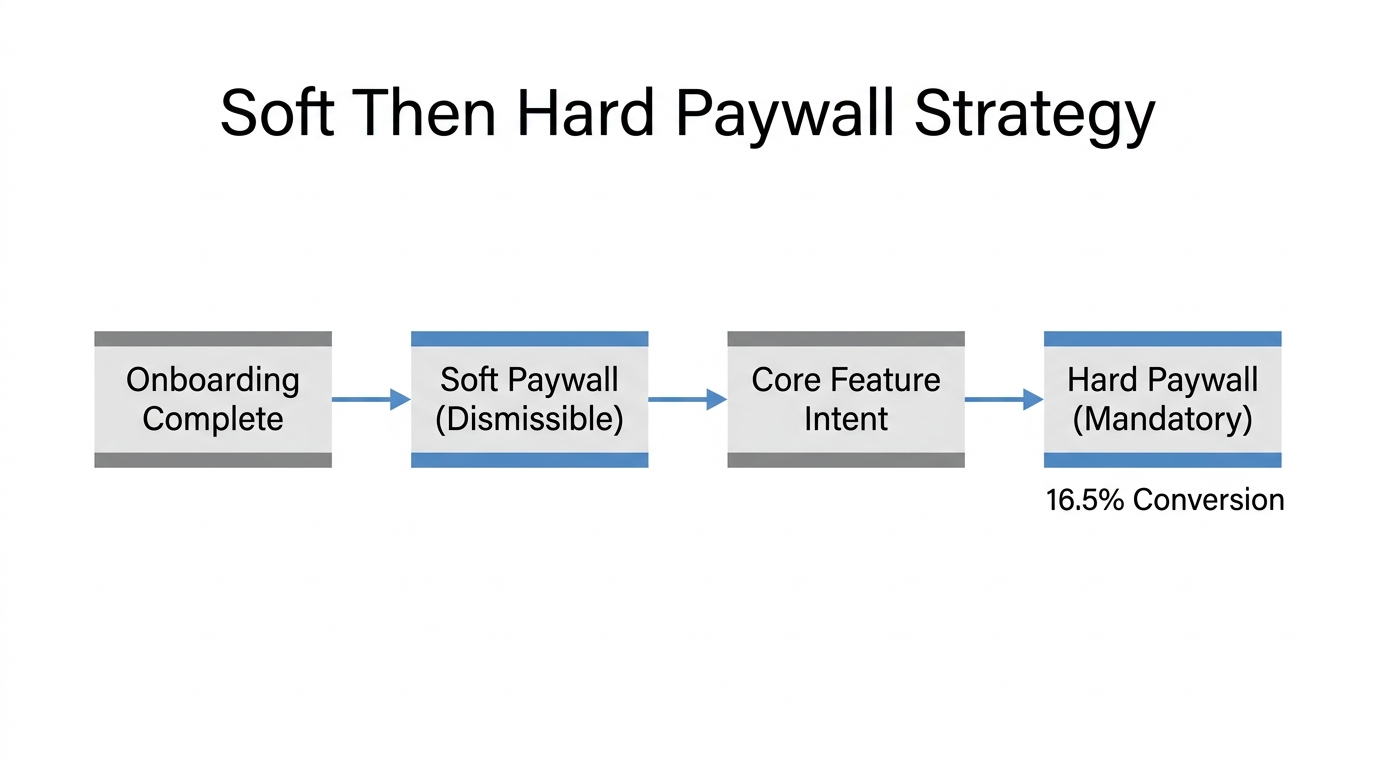
Most app developers in 2026 still cling to the 'Hard Paywall' at the end of onboarding. While this can capture immediate intent, it often alienates users who haven't yet experienced the 'Aha!' moment. Halo AI's breakthrough came from testing a 'Soft then Hard' flow. Users are initially presented with a paywall during onboarding but are explicitly allowed to skip it. This non-gated approach reduced friction and allowed users to enter the app dashboard immediately.
By allowing users to poke around the dashboard—viewing trending AI templates like hairstyles, room decor, or tattoos—Halo AI built psychological momentum. Users weren't just being asked to pay; they were being shown exactly what they were paying for. Data from paywall-experiments.com suggests that for AI consumer apps this year, lowering the initial barrier to entry actually increases long-term LTV by reducing early churn.
"Users who skip the initial paywall aren't saying 'no' forever—they're saying 'show me more.' When they eventually hit the 'Send' button to generate an image, their intent is 10x higher."
The Power of the Intent-Based Trigger: The 'Send' Button Magic
Explore how template interactions and user intent are used to trigger paywalls.The real conversion magic happens when the paywall is triggered by a specific, high-intent action. In Halo AI, users can upload a photo and type a custom prompt for the AI. It is only when they click the 'Send' button to process the edit that the gated paywall appears. At this exact moment, the user has already invested time and effort; they are primed to convert.
This paywall conversion rate optimization works because it aligns the 'ask' with the 'value delivery.' Research into thousands of A/B testing subscriptions shows that 'Action-Locked' features outperform 'Time-Locked' trials. By requiring a sign-in only after the user has engaged with the core tool, Halo AI ensures that their database is filled with high-intent users who are just one tap away from a subscription.
Weekly vs. Annual: Why $8.99/Week Dominates 2026 AI Apps
Dillion discusses the strategic choice between weekly and annual subscription pricing models.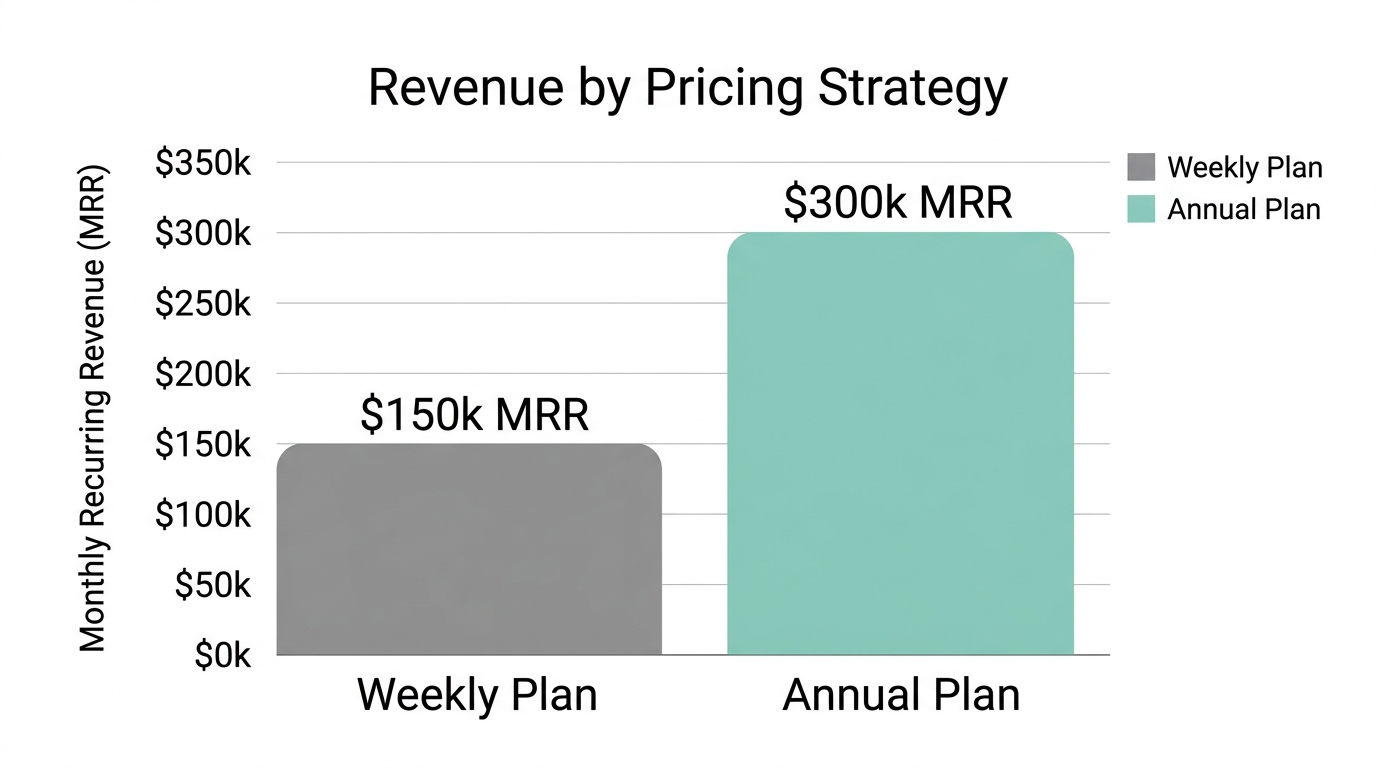
A common mistake in app monetization strategy is pushing for annual subscriptions too early. For entertainment-focused AI apps, the usage pattern is often bursty. Users want to try a specific prank or trend and might not envision using the app for a full year. Halo AI leaned into this by prioritizing an $8.99/week price point as recommended by Apple’s latest pricing guidelines.
| Metric | Weekly ($8.99) | Annual ($59.99) |
|---|---|---|
| Conversion Rate | High (Lower commitment) | Moderate (High friction) |
| Immediate Cash Flow | Predictable | Front-loaded |
| Psychological Barrier | Low (<$10) | High (Commitment) |
| Best For | Viral Growth/UGC | Utility/Productivity |
While annual plans offer better long-term stability, weekly plans maximize immediate ROI, which is critical when scaling via UGC and paid ads. When your Superwall experiments 2026 show that users are willing to pay $9 for a single week of viral content creation, you can reinvest that capital instantly into more creators. Platforms like Stormy AI streamline this reinvestment by helping brands discover and manage the 85+ creators needed to maintain 1.2 billion views across TikTok and Instagram.
Leveraging the Superwall Database: 422 Profitable Experiments
Dillion Verma didn't invent these flows in a vacuum. He utilized Superwall's database of 422 profitable experiments. This tool allows developers to upload a screenshot of their current paywall and receive AI-driven ideas to increase revenue. In 2026, data-driven iteration beats 'gut feeling' every time.
- Creative Diversity: Using different paywall designs for users coming from TikTok vs. those from Google Search.
- Contextual Messaging: Highlighting "AI Photo Editing" on the paywall when the user just uploaded a photo.
- Social Proof: Integrating real-time counters of "Images Generated Today" to build trust, a tactic often seen in top-tier e-commerce designs.
"Don't guess what your users want. Use a tool that has already seen what works across 4,000 other apps and apply those winning patterns."
Salvaging Revenue: Handling Abandonment and Trial Cancellations
Learn how high-pressure situations forced the team to optimize for rapid revenue growth.A 16.5% conversion rate is impressive, but what about the 83.5% who don't pay? Halo AI uses exit offers and transaction abandonment flows to catch users before they leave. If a user closes the paywall after clicking 'Send,' a secondary 'limited time' offer might appear, perhaps offering the first week for $1.99 via Stripe-integrated discount codes.
Additionally, A/B testing subscriptions for trial cancellations is a hidden goldmine. When a user goes to cancel their trial in the app settings, Halo AI triggers a 'save' flow—offering a discount or a switch to a cheaper monthly plan. This salvages the acquisition cost and keeps the user in the ecosystem. To manage the massive influx of creator-driven traffic that feeds these flows, growth teams often use Stormy AI to automate creator outreach and ensure a steady stream of new users to test these experiments on.
The 2026 Playbook for App Dominance
Scaling Halo AI to $300k MRR required more than just a viral TikTok; it required a monetization machine built on constant iteration. By using Superwall experiments 2026, the team moved from an 'always-gated' mindset to a value-first approach that respects the user's journey. Whether you are running an AI photo editor or a B2B SaaS tool, the lessons are clear: trigger your paywall at the moment of highest intent, favor weekly pricing for viral products, and never stop testing.
As you scale your distribution through UGC and influencers, remember that your paywall is the final gate. Using AI-powered discovery tools to find the right creators is only half the battle; ensuring your paywall converts those views into dollars is where the real profit is made. Start your next experiment today at paywall-experiments.com and stop leaving revenue on the table.