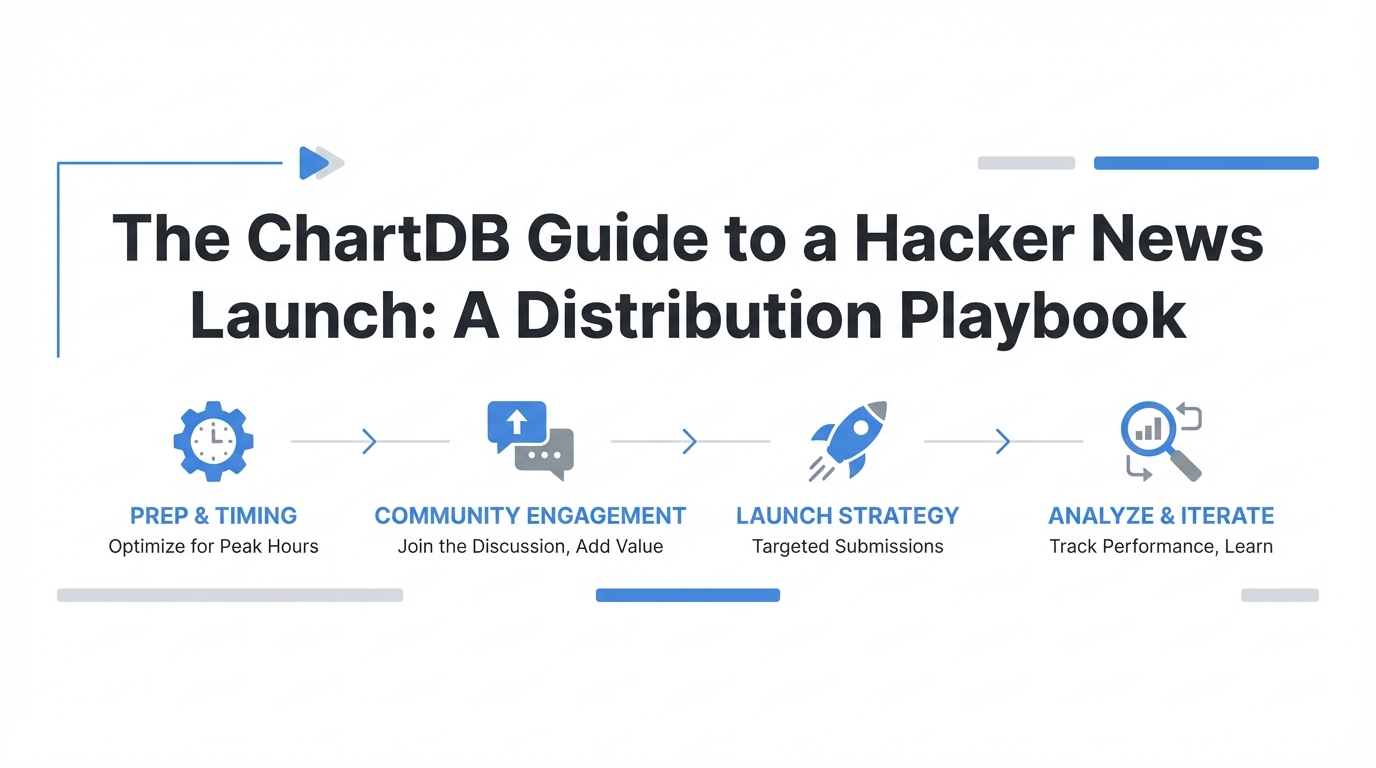
For most founders, the dream of a viral product launch often feels like a gamble. We spend months building in a vacuum, hoping that once we finally hit "publish," the world will beat a path to our door. But as Jonathan Fishner, co-founder of ChartDB, discovered, a successful Hacker News launch strategy isn't about luck; it is about engineering the path of least resistance for your users. By focusing on a single, high-value problem and removing every possible barrier to entry, Jonathan transformed a tiny open-source project into a developer sensation that currently generates over $9,000 in monthly recurring revenue (MRR).
In this distribution playbook, we will deconstruct how ChartDB leveraged the Hacker News front page and GitHub marketing for startups to acquire 250,000 users and 21,000 stars without a dime spent on traditional advertising. If you are a developer or a founder looking to build a sustainable distribution engine, this is your step-by-step guide to the viral growth hacking tactics that actually work in 2026.
The Failed Pivot: Why Complexity Kills Launches
Before ChartDB became a success, Jonathan and his team were building something entirely different: an AI-powered database client. The idea was to integrate large language models (LLMs) directly into the database workflow to help developers run complex queries. On paper, it sounded like a winner. In practice, it was a distribution nightmare. Because the tool required database credentials and local installation, the barrier to entry was too high. Developers are notoriously protective of their data; asking for credentials before delivering value is a recipe for high churn.
The team realized they needed to pivot. They stripped away the AI complexity and focused on a single, visual problem: database visualization. Instead of asking for access, they built a tool that could take a simple JSON schema and turn it into a beautiful, interactive chart. By reducing that friction really helped to provide engagement from developers who were skeptical of the previous iteration. This shift from a "full vision" product to a specific "wedge" is what allowed them to succeed where others failed.
"Reduction of friction is the key to providing engagement from developers. If they can't see the value in 30 seconds, they are gone."The 'Show HN' Framework: Mastering the Front Page
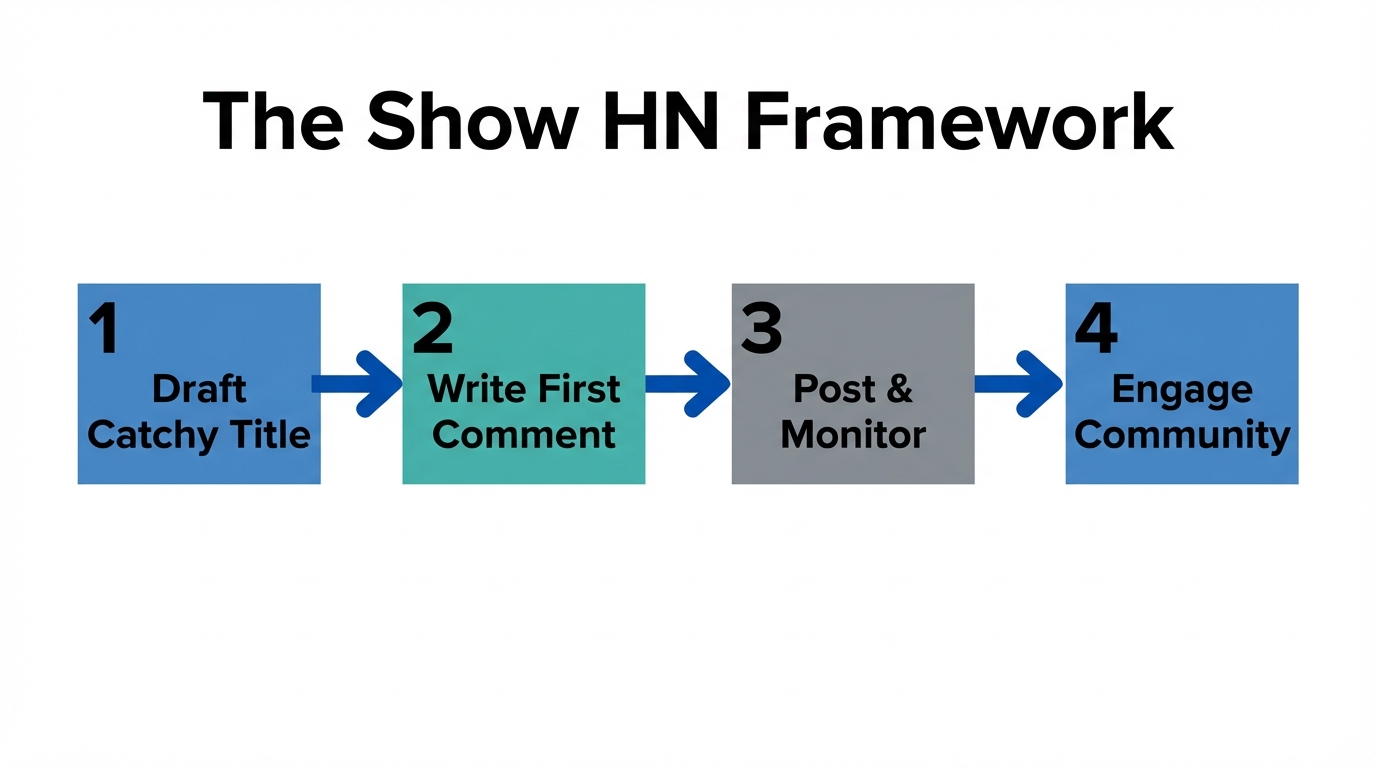
The turning point for ChartDB was its launch on Hacker News. This platform is a cornerstone of any product launch playbook, but it is also a minefield. The community is quick to sniff out marketing fluff and corporate jargon. To succeed, you must follow the "Show HN" rules strictly and focus on utility.
1. Positioning as Open Source
Developers have an inherent bias toward open-source tools. It implies transparency, community ownership, and the ability to self-host. By positioning ChartDB as an open-source project on GitHub, Jonathan tapped into this goodwill. The Hacker News launch strategy became less about selling a subscription and more about sharing a resource.
2. The Power of the Visual "Wow" Effect
Text-heavy posts rarely trend on Hacker News unless they are groundbreaking research. For a product, you need a visual hook. ChartDB's core value—turning messy SQL schemas into clean ERDs—is inherently visual. When users landed on the site, they saw the tool in action immediately. This immediate demonstration of value is what triggers the upvotes necessary to hit the front page.
3. Real-Time Engagement
A launch is not a "set it and forget it" event. When the post hit the front page, Jonathan and his team were there to answer every question, address every bug report, and explain their tech stack. This level of responsiveness builds the credibility needed to turn a casual browser into a GitHub star.
GitHub Marketing for Startups: Turning Traffic into Stars
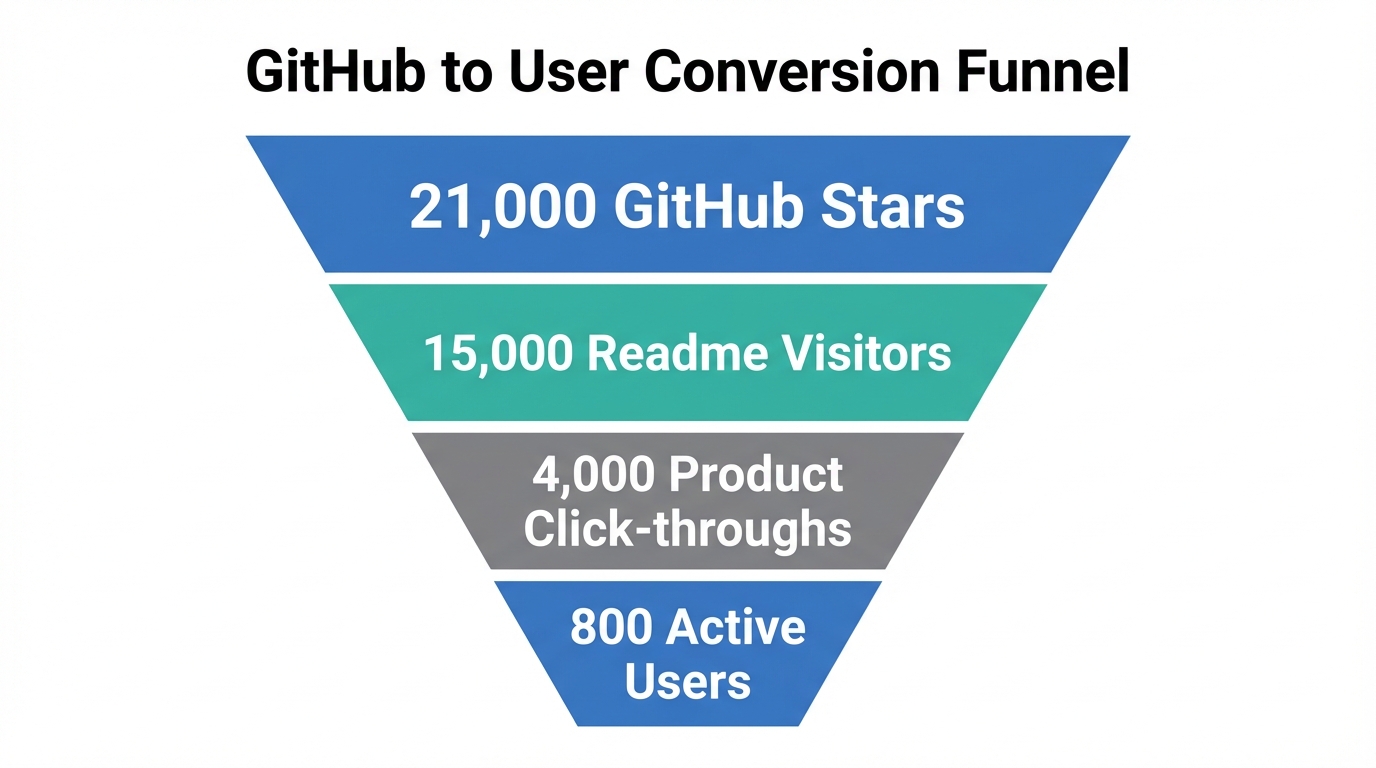
While Hacker News provides the spark, GitHub marketing for startups provides the fuel. A high star count on GitHub acts as social proof, signaling to other developers that your project is stable, popular, and worth their time. ChartDB managed to secure over 21,000 GitHub stars by following a specific engagement loop.
- No Sign-Up Walls: Users could use the tool immediately without creating an account. This allowed for maximum "test-driving."
- The "Smart Query" Mechanism: Jonathan developed a specific SQL query that users could run locally to export their schema. This kept data private while allowing the tool to function perfectly.
- Call to Action: Within the free tool, there were subtle prompts to "star us on GitHub" if the user found the visualization helpful.
By treating GitHub as a developer distribution channel rather than just a code repository, the team ensured that the traffic from their launch had a long-term impact on their SEO and authority. Monetization should not be a guess and should be response to your behavior, and for ChartDB, that meant watching how developers used the free tool before introducing paid cloud tiers.
"The homepage is where so many developers every day going and checking those launches. It is the ultimate distribution engine for the developer economy."The Tech Stack and Cost of Growth
Building a tool that can handle a viral surge requires a robust but cost-effective stack. Jonathan’s team utilized modern web technologies to ensure the tool remained fast and responsive even when thousands of users were visualizing schemas simultaneously.
| Category | Tool Used | Monthly Cost (Approx) |
|---|---|---|
| Frontend | React + Vite | $0 (Open Source) |
| Canvas Engine | React Flow | $0 (Open Source) |
| Hosting | AWS | $600 |
| Analytics | Plausible Analytics | $25 |
| Marketing Site | Framer | $30 |
| Payments | Stripe | Transaction Fees |
Interestingly, the team also invested in Ahrefs for long-term organic growth. While the viral launch provided the initial boost, they knew they needed to maintain visibility. For brands that aren't purely developer-focused, similar distribution can be achieved by partnering with content creators. For example, platforms like Stormy AI can help source and manage UGC creators at scale, allowing you to replicate the "viral" feeling across different social niches like TikTok or LinkedIn.
Monetizing the Developer Persona
One of the biggest mistakes founders make when building for developers is trying to monetize the utility too early. If the core tool is useful, developers will use it for free. The trick to reaching $9,000+ MRR is to monetize the constraints of the persona.
Jonathan’s playbook for monetization followed these steps:
- Individual Utility: Make the tool free and frictionless for the individual dev.
- Observe Patterns: Watch how users interact. Jonathan noticed users wanting to share visualizations with their teams.
- Team Collaboration: Introduce paid tiers for real-time collaboration, cloud hosting, and advanced security compliance (like SOC2).
- Strategic Outreach: Use tools like Stormy AI to discover creators who can showcase the team-collaboration features to a wider audience of engineering managers.
This approach ensures that you never alienate your core user base while still capturing value from the enterprise level. Pick the persona and remove aggressively all the friction as much as possible until you see the adoption feel effortless.
"Double down on what you really feel it's working and you see the traction coming up. Ignore everything else."Conclusion: The Wedge Strategy
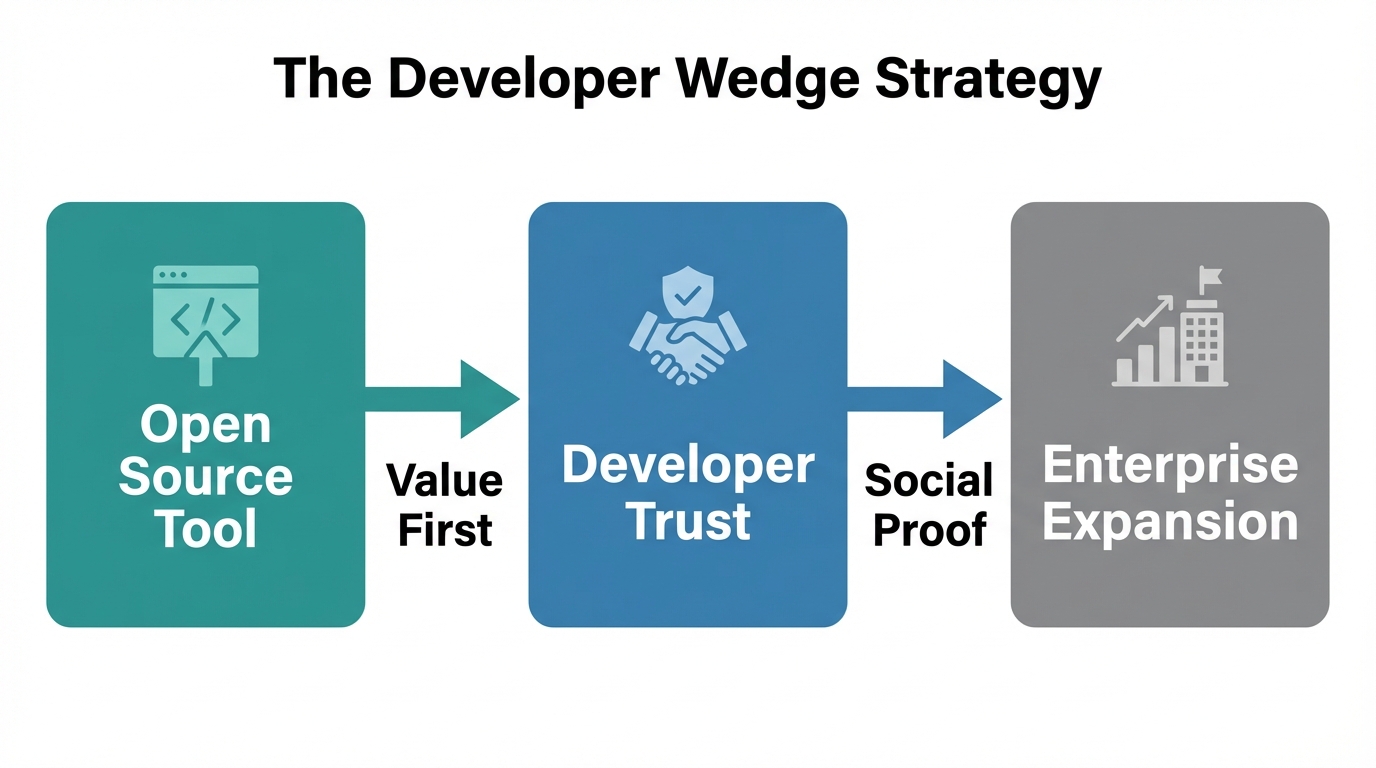
The success of ChartDB proves that you don't need a million-dollar marketing budget to achieve viral growth hacking results. By focusing on a specific "wedge"—database visualization—and launching on community-driven platforms with zero friction, you can build a massive user base overnight.
The key takeaways for any founder are clear: reduce friction aggressively, launch where your ICP lives (like Reddit or Hacker News), and treat your GitHub repository as a primary marketing asset. Whether you are building an open-source tool or a mobile app, the principle remains the same: provide value first, ask for credentials second, and always be ready for the surge when you finally hit the front page.