In 2026, the era of the manual marketing manager is officially over. We have entered the age of GTM Engineering—a shift where growth leaders have transitioned from clicking buttons in a UI to jockeying autonomous marketing agents from a centralized terminal. If you are still spending your day manually uploading CSVs to a CRM or building ad sets in a web dashboard, you aren't just behind; you're becoming obsolete. The modern marketing machine isn't a collection of disparate tools; it is a coordinated agentic swarm orchestrated through environments like Claude Code.
Defining GTM Engineering: Beyond Simple Automation
Discover how GTM engineering replaces traditional manual marketing middle work with automation.
The term "GTM Engineering" originally surfaced as a buzzword coined by platforms like Clay to describe cascading workflows for data enrichment and outbound sales. However, as we move through 2026, it has evolved into something far more powerful. It is no longer just about connecting Zapier to a Google Sheet; it is about building personal software that handles the "middle work" of marketing, sales, and customer experience autonomously.
GTM Engineering is the practice of centralizing your entire marketing stack’s APIs into a single development environment. Instead of logging into Meta Ads Manager, you interact with the Facebook Ads API through a terminal harness. You aren't just automating tasks; you are writing growth protocols that agents execute 24/7. This transition allows a single growth engineer to do the work of a ten-person marketing team by shifting focus from execution to strategy and "agent jockeying."
"The job of a marketer in 2026 is no longer about touching the keyboard for execution. It's about having ideas, passing them to an agent harness like Claude Code, and polishing the final output."
| Feature | Legacy Marketing (2023-2024) | GTM Engineering (2026) |
|---|---|---|
| Workflow | Manual UI-based execution | Autonomous Agent Swarms |
| Primary Tool | SaaS Dashboards | API Harness (Claude Code) |
| Scalability | Linear (Requires more headcount) | Exponential (Requires more compute) |
| Data Handling | Manual Exports/Imports | Live API Data Pipelines |
Setting Up Your 2026 Marketing Environment
To begin your journey into growth marketing automation 2026, you must stop living in browser tabs and start living in a repository. The foundation of a GTM Engineering stack is an API-first directory. This is a local folder (e.g., /growth-agents/) that acts as the brain for your autonomous machine.
The most critical file in this directory is your environment file (.env). This file holds the keys to your entire marketing kingdom. In 2026, the robustness of a tool’s API is the primary factor in software selection. For example, while HubSpot has a great UI, Salesforce remains a power player in the GTM engineering space because of the depth of its API endpoints. Your .env file should centralize keys for every tool in your stack:
- CRM: HubSpot or Pipedrive
- Communication: Intercom and SendGrid
- Outreach: Instantly AI and Phantom Buster
- Advertising: Facebook Ads, Google Ads, and TikTok Ads
- Infrastructure: Railway and Vercel
The Shift from UI-Dependence to API-First Marketing
Explore why every modern company is evolving into an API-first service provider.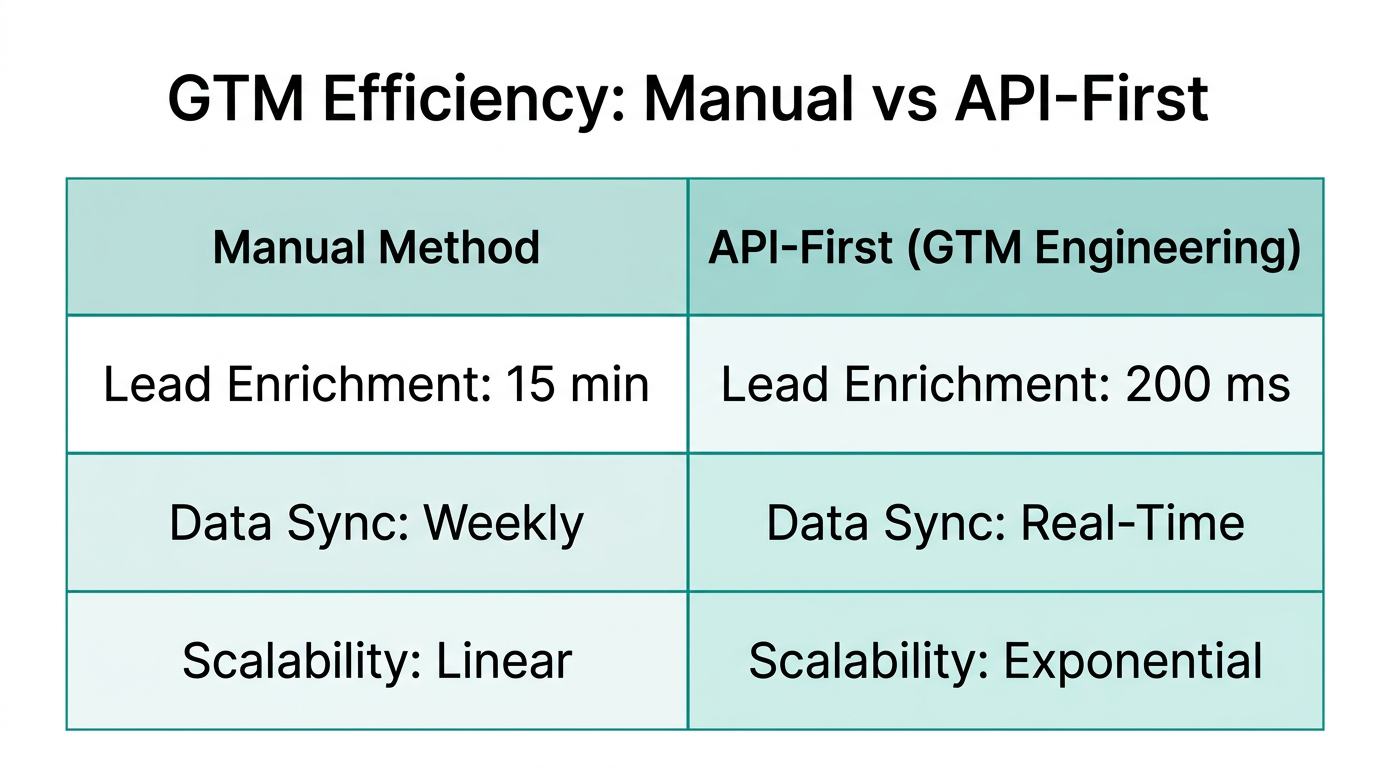
Why the terminal? Because UIs are bottlenecks. When you use a web interface, you are limited by what the product designers thought you should be able to do. When you use an API via Claude Code, you are limited only by the logic of the code itself. This allows for "personal software" creation—tools built specifically for your unique business needs that didn't exist an hour ago.
For instance, if you need to analyze the sentiment of 5,000 Reddit comments to generate Facebook Ad copy, you don't hire a freelancer. You use the Perplexity API to scrape the data, push it into a Postgres database on Railway, and have Claude Code generate 1,000 ad variations based on those specific pain points. This entire workflow can be built, tested, and deployed in under 30 minutes.
"Every company is becoming an API company. If you can't interact with your software through a terminal in 2026, you're working at a fraction of the speed of your competitors."
Workflow Orchestration: Using Claude Code as a Harness
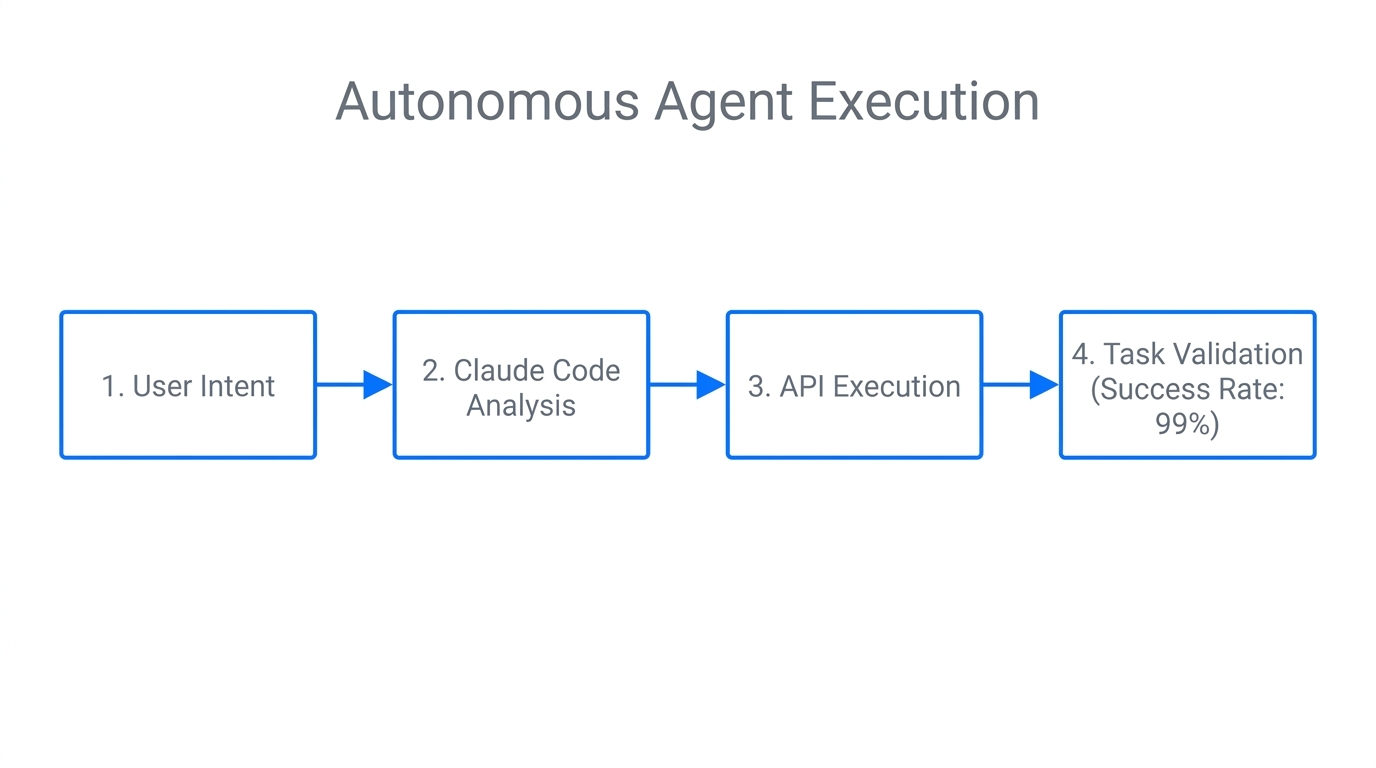
Claude Code acts as the centralized harness for these operations. It allows you to "vibe code" complex marketing scripts without being a full-stack engineer. You describe the outcome you want—for example, "Scrape all podcast hosts in the marketing category from Rephonic, verify them with Million Verifier, and add them to an Instantly campaign"—and the agent handles the scaffolding.
For more advanced influencer-led growth, platforms like Stormy AI provide the perfect data source for these agents. You can use Stormy to discover the right creators using natural language prompts, then pipe those creator profiles directly into your Claude Code environment to automate personalized outreach at scale. This combination of AI-powered discovery and agentic outreach is the gold standard for growth in 2026.
Step-by-Step: Deploying Your First Marketing Agent Swarm
Building an autonomous marketing agent isn't a theoretical exercise; it's a procedural one. Follow this playbook to deploy your first swarm.
Step 1: Define the Job-to-be-Done
Identify a repetitive manual task. A classic example is Facebook Ad Creative iteration. Manually creating 50 variations of a before-and-after ad in Figma is a waste of human potential. Instead, define the task as: "Generate 100 React-based ad components based on Reddit pain points and upload them to Facebook as drafts."
Step 2: Initialize Your Agent Harness
Open Claude Code in your growth directory. Ensure your .env file is loaded with your Facebook Ads API key and Perplexity API key. Use voice transcription (like SuperWhisper) to describe the workflow. This allows you to think at the speed of light while the agent handles the syntax.
Step 3: Build the Scaffolding
Instruct the agent to build a bulk ad generator using React components. This allows for infinite variations of text, colors, and layouts without ever opening a design tool. Use HTML-to-Canvas libraries to convert these code-based ads into PNGs automatically.
Step 4: Analyze and Close the Loop
This is where autonomous marketing agents truly shine. Don't just upload the ads; build a dashboard within your terminal to track performance. Use an MCP (Model Context Protocol) to pull live data from Facebook. Instruct the agent to: "Daily, check for ads with a CPM 30% higher than the average and pause them. Take the top 3 performers and increase their budget by 20%."
Deployment and Scaling: Moving to the Cloud
Learn how to deploy and scale your custom marketing agents using Railway.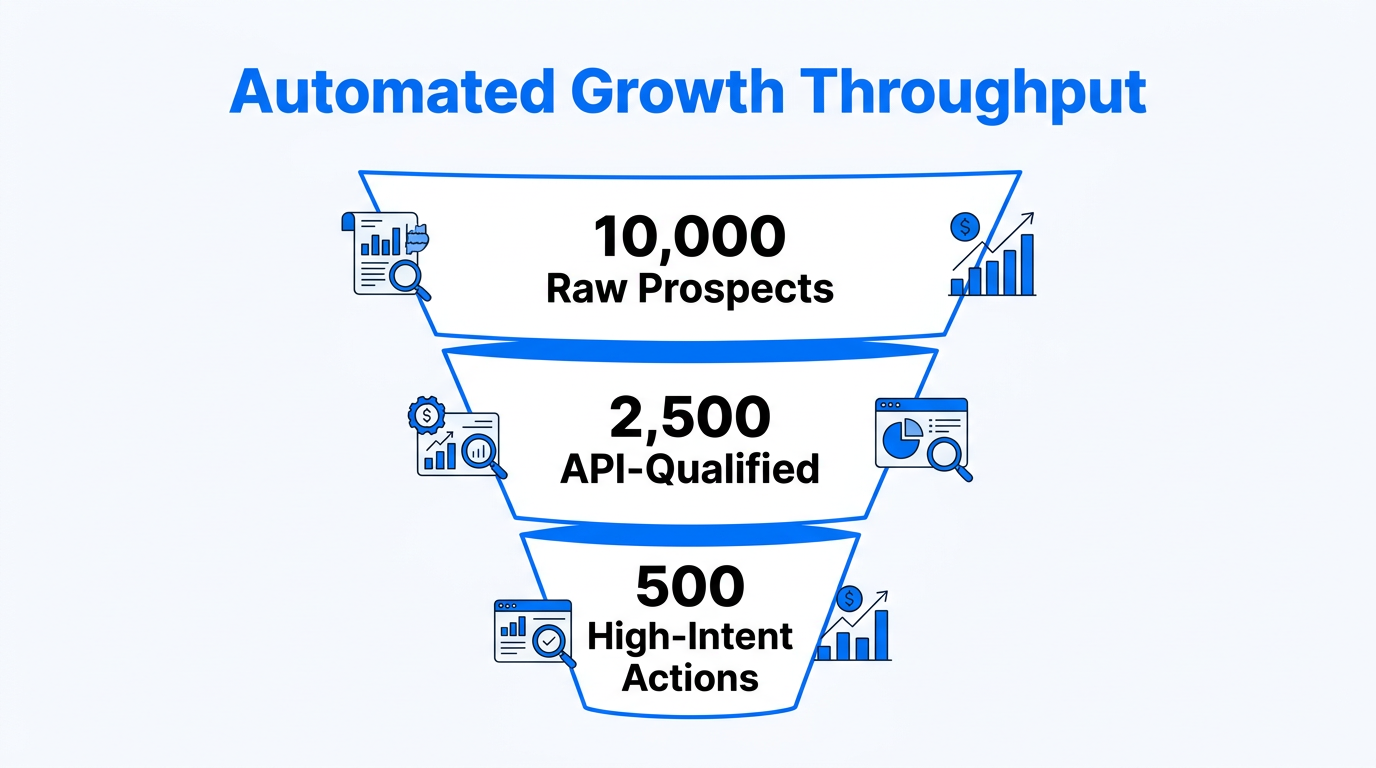
Running agents on your local machine is fine for testing, but for 24/7 operations, you must deploy to a server. GTM Engineering in 2026 leans heavily on Railway for on-demand infrastructure. You can instruct Claude Code to spin up a Postgres database or a Node.js server with a single command.
This allows you to build "On-the-Fly Software." Need a custom internal tool for your sales team to scrape LinkedIn engagers via Phantom Buster and enrich them with Apollo? You can build the UI in Vercel, host the logic on Railway, and have it running in production before your morning coffee is cold.
The Future: Domain Expertise as the Ultimate Superpower
A glimpse into the future where autonomous agents manage end-to-back marketing operations.There is significant concern about job displacement in marketing. It is a reality that one GTM engineer can now do the work of a dozen traditional marketers. However, this shift places a massive premium on domain expertise and vocabulary. To be a successful agent jockey, you must know how to describe the problem with precision.
A graphic designer with 20 years of experience has the vocabulary to describe texture, lighting, and composition to an agent in a way a novice never could. Similarly, an expert growth marketer knows how to prompt an agent for a "TV-static texture" or a "PAS (Problem-Agitation-Solution) framework" for copy. Your lexicon is your most valuable asset in the age of AI agents.
"The winners of 2026 won't be the ones who can code the best, but the ones who have the deepest domain knowledge and the best vocabulary to guide the agents."
Conclusion: From Marketer to Growth Engineer
The transition to GTM engineering is not just a change in tools; it's a change in identity. You are moving from a world of manual execution to a world of system design. By centralizing your stack in a Claude Code for marketing environment, you can build an autonomous machine that gets customers on repeat while you sleep.
To start building your own autonomous engine, begin by auditing your current stack for API robustness. Start a repository, populate your .env file, and begin with one small task—like automated LinkedIn responding or bulk ad generation. As you get comfortable jockeying agents, you'll find that the "middle work" disappears, leaving you free to focus on the high-level strategy that truly drives growth.
If you're looking to source the creators who will fuel these autonomous campaigns, Stormy AI is the essential first step in your 2026 growth stack. Build the engine, find the talent, and let the agents do the rest.