Growth marketing is undergoing a seismic shift. For years, the standard UX audit playbook involved a dozen different browser tabs, manual screenshots, and a heavy reliance on gut feeling or expensive agency consultations. Today, that workflow is being replaced by the "Vibe Coder" philosophy—a high-velocity approach where marketing leaders use AI code editors like Cursor to act as architects of their own growth engine. By leveraging the Model Context Protocol (MCP), marketers can now perform conversion rate optimization and deep technical audits without ever leaving their development environment. This guide explores how to transform Cursor from a code editor into a powerful agentic command center for your landing pages.
The New Growth Stack: Understanding MCP and Cursor AI Growth
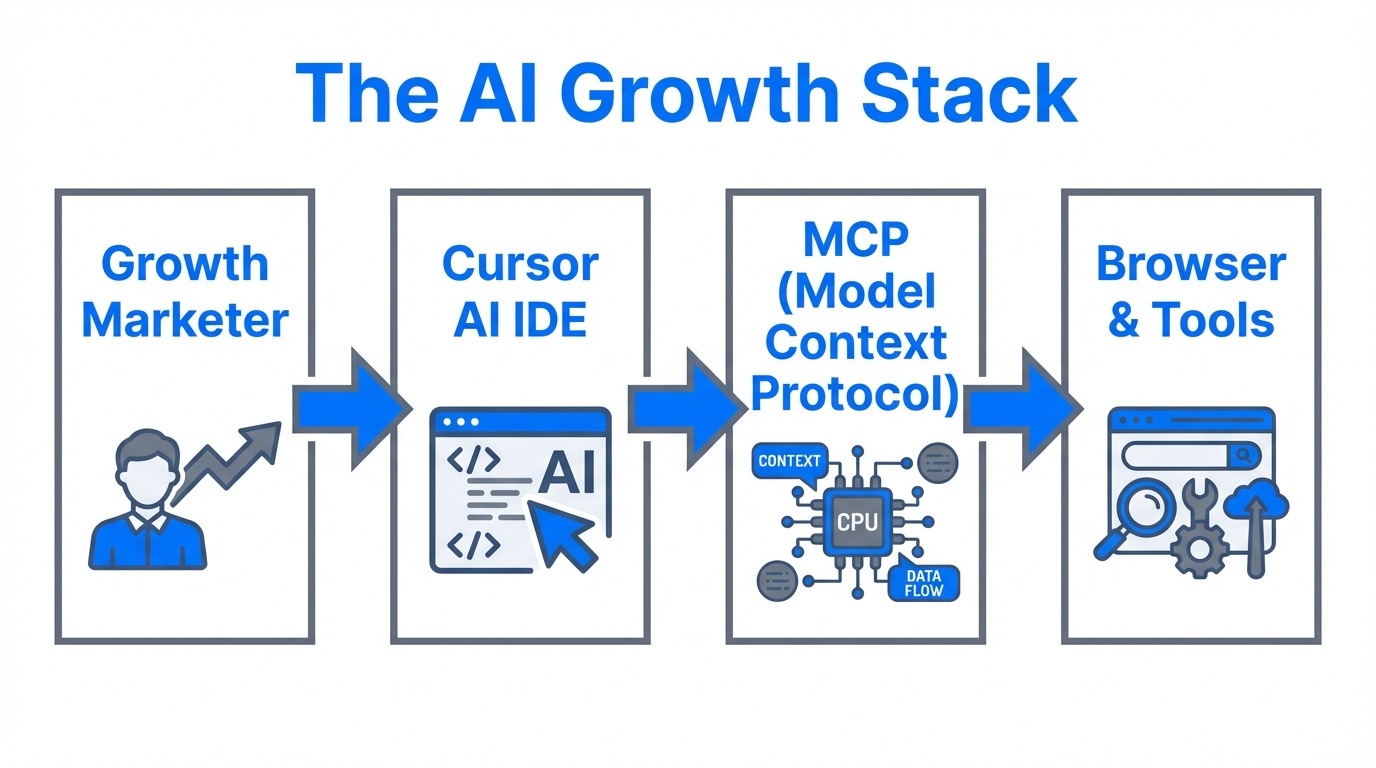
Before diving into the tactics, it is crucial to understand the technology powering this revolution. The Model Context Protocol (MCP) is an open standard that enables AI models to interact with third-party tools, databases, and local files seamlessly. In the context of Cursor AI growth, MCPs act as the "hands and eyes" of your AI agent.
As noted by growth experts, we are moving toward a world where LLMs are the new browser. Instead of navigating to Meta Ads Manager or an analytics dashboard manually, you can programmatically pull that data into Cursor. This creates a "closable system" where the feedback loop between finding a friction point and fixing the code is reduced from days to seconds.
"The key insight is that we are turning SaaS into something programmable. It’s not just about building apps; it's about making your entire business operations accessible through a single text prompt."
Step 1: Automated UX Audits with Playwright MCP
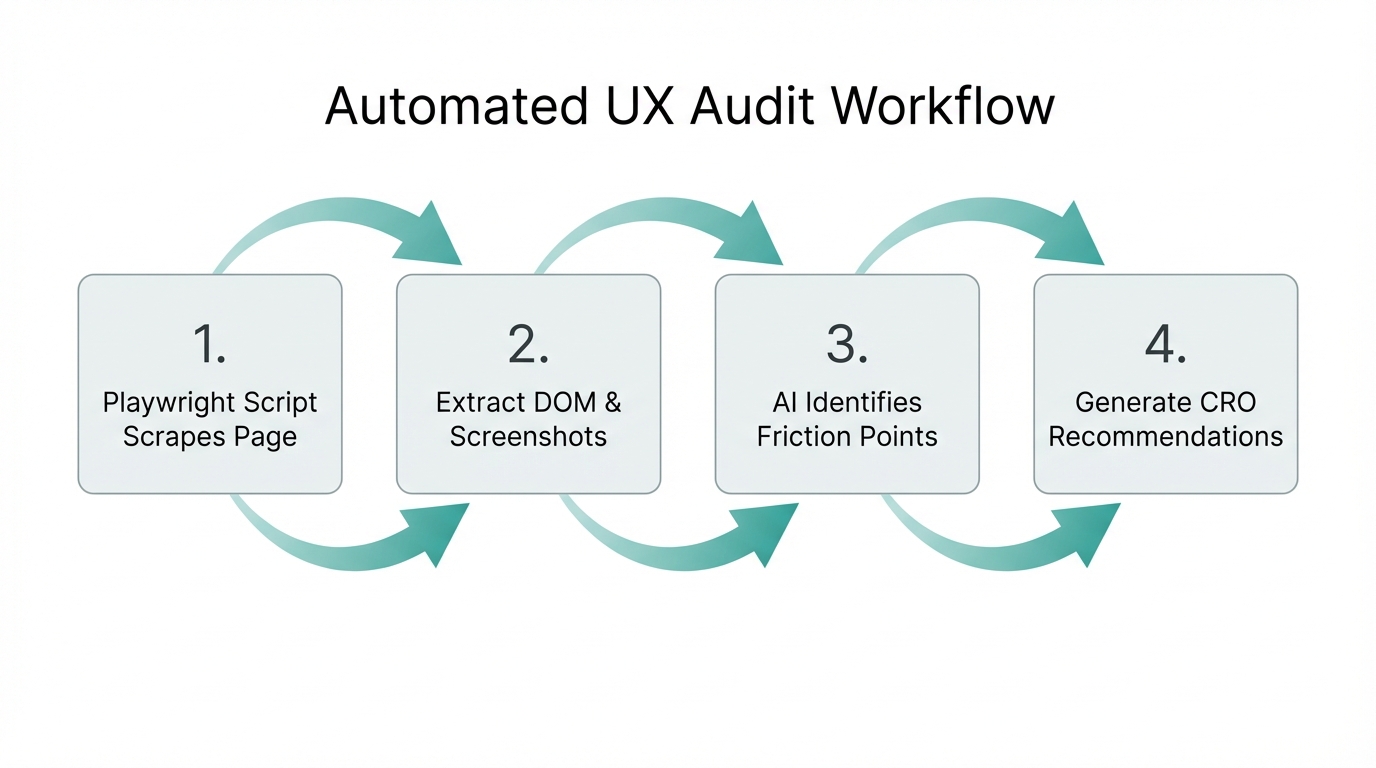
The first step in any landing page optimization strategy is understanding exactly what the user sees. Traditionally, this meant taking manual screenshots on different devices. With the Playwright MCP, you can automate this entire process within Cursor.
Playwright is an agentic browser tool that allows an AI to open a webpage, navigate through menus, and capture high-resolution screenshots. By using the Playwright MCP in Cursor, you can issue a simple command: "Use Playwright to go to my landing page and take a full-page screenshot."
This allows for immediate visual context. Unlike a static image you might upload to a chat window, Cursor maintains the file in your local directory, allowing the AI to "see" the codebase and the visual output simultaneously. This is the foundation of a modern UX audit playbook.
Step 2: Choosing the Right Model for Analysis
Not all AI models are created equal when it comes to conversion rate optimization. To get the best results in Cursor, you should understand the distinction between "thinking" models and "agentic" models:
- Thinking/Reasoning Models: Models like o3 or Gemini 2.0 are excellent for high-level strategy and planning. Use these to draft your optimization plan.
- Agentic/Action Models: Models like Claude 3.5 Sonnet are optimized for taking actions, running MCP tools, and writing code.
A pro-tier workflow involves asking a reasoning model to develop a complex UX audit playbook, then switching to an agentic model like Sonnet to execute the screenshots and code changes. This "chain of thought" approach ensures that your automated CRO testing is backed by sound logic before a single line of CSS is altered.
Step 3: Integrating Analytics for Data-Driven CRO
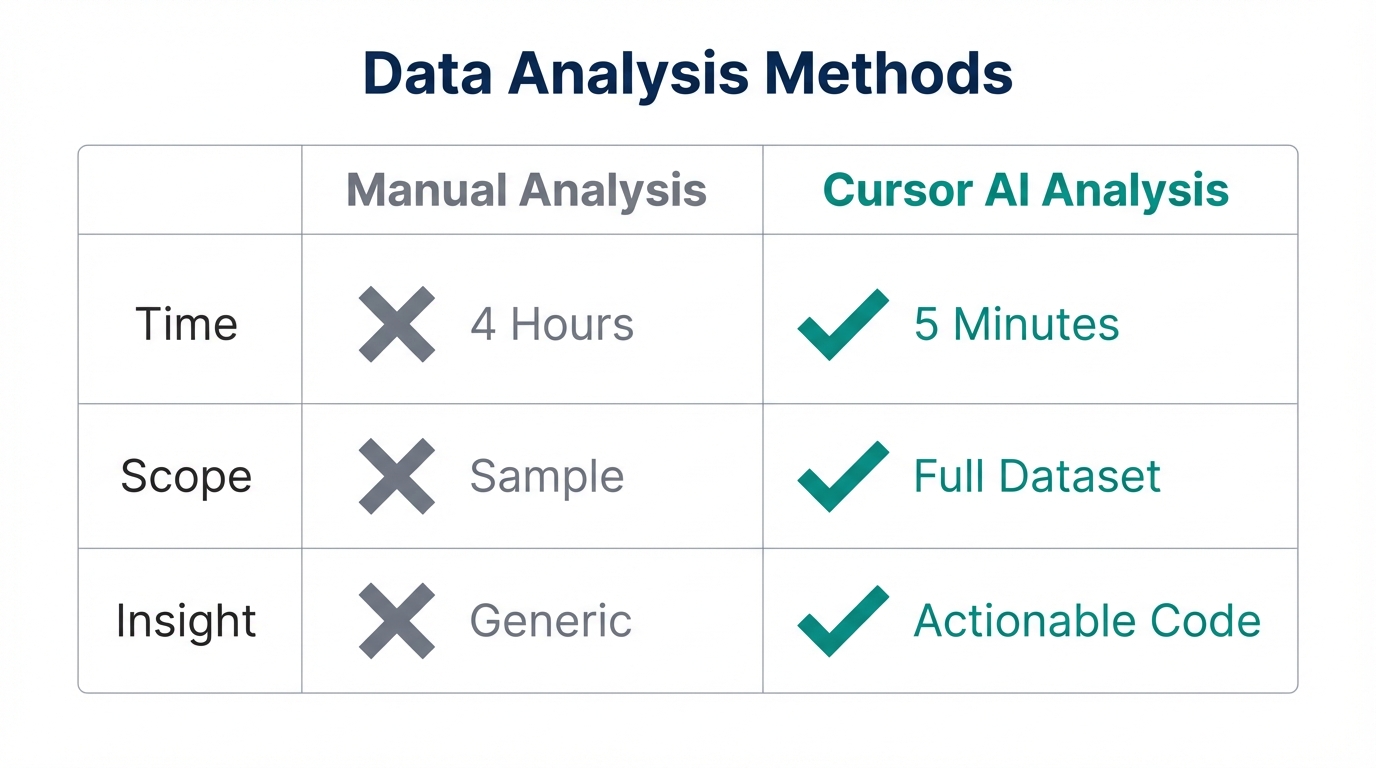
Screenshots tell you what is happening; analytics tell you why it matters. By integrating tool-specific MCPs like Humbolytics, you can feed live traffic data directly into your Cursor chat. Data-driven optimization is no longer about looking at charts and guessing.
For instance, if your Humbolytics data shows a 70% drop-off on your "Pricing" section for mobile users in Brazil, you can tell Cursor: "Analyze the screenshot of my mobile pricing section and cross-reference it with this drop-off data. Suggest three UI changes to improve retention."
| Audit Type | Traditional Method | Cursor AI Method |
|---|---|---|
| Visual Capture | Manual Screenshots | Playwright MCP (Automated) |
| Data Analysis | Exporting CSVs to Excel | Direct Analytics MCP Integration |
| Implementation | Writing JIRA tickets for Devs | Vibe Coding (One-Prompt Execution) |
| Validation | Refreshing & Clearing Cache | Automated QA with Agentic Browsers |
Step 4: The Vibe Coding Approach to Rapid Iteration
The term "Vibe Coding" refers to the ability to describe a functional or aesthetic change and have the AI implement the code perfectly. In landing page optimization, this means you can move from a UX suggestion to a live A/B test in minutes.
If the AI suggests that adding social proof or video testimonials above the fold will increase conversions, you don't need to manually edit your React or HTML components. Instead, you can reference your brand guidelines—often stored in a local .txt or .md file via Firecrawl—and tell Cursor to "Implement the hero section changes based on these insights."
When running a campaign driven by influencers or UGC creators, speed is everything. Platforms like Stormy AI can help you source the raw content you need, while Cursor allows you to embed that content into your high-converting landing pages faster than any traditional development cycle.
"Sam Altman said it is the era of the 'idea guy,' and he’s right. When you can describe a conversion funnel and have an agent build it, your only bottleneck is your creativity."
Step 5: Competitor Intelligence with Perplexity and Exa
Your UX audit playbook shouldn't exist in a vacuum. To stay competitive, you need to know what others in your niche are doing. By using the Perplexity MCP or Exa, you can perform deep research on competitor split testing and pricing strategies.
You can prompt Cursor to: "Research the top five split testing tools in 2025 using Perplexity, identify their hero section structure, and compare it to my current layout." This allows you to adopt winning patterns from industry leaders without the trial-and-error of blind testing.
Step 6: Guarding the Funnel with Automated QA
The most heartbreaking moment for a growth marketer is realizing a "broken" conversion path cost them thousands in ad spend. Automated CRO testing must include a robust QA layer. Using Playwright, you can set up a "Test Plan" that the AI executes daily.
An agentic browser can go to your site, click the "Sign Up" button, fill out a form with test data, and verify if the "Thank You" page loads. If it fails, Cursor can catch the console error, identify the bug in your code, and propose a fix—all before you finish your morning coffee.
Ensuring your conversion paths never break is the final piece of the automated CRO testing puzzle. This creates a resilient growth engine that self-corrects as you scale.
Bonus: Sourcing Content for Your New Funnel
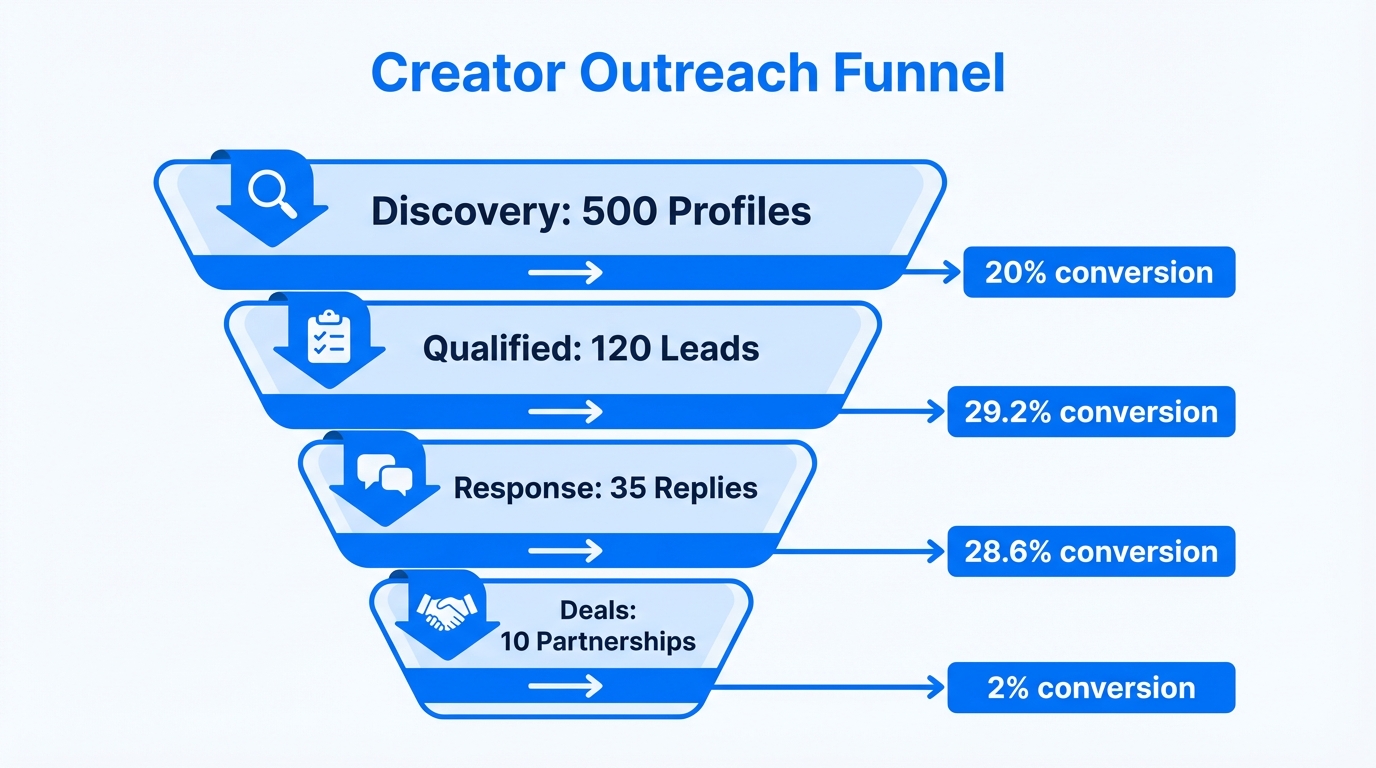
Once your landing page is technically optimized, the biggest lever for conversion rate optimization is the quality of your creative assets. No amount of "Vibe Coding" can fix a page that lacks authentic human connection. For growth marketers focusing on mobile apps or e-commerce, sourcing high-quality UGC (User Generated Content) is essential.
Tools like Stormy AI streamline the process of finding the right creators to populate those new "social proof" sections your AI audit recommended. Once you have the assets, you can jump back into Cursor and use the agentic workflows described above to deploy them across your various landing page variants.
Conclusion: The Future of CRO is Programmable
The transition from a "marketer who uses tools" to a "growth architect who builds systems" is the defining trend of 2025. By mastering Cursor AI growth and the UX audit playbook, you gain a competitive advantage that traditional teams simply cannot match. You are no longer waiting on developers or designers to make incremental changes; you are driving the "vibe" of your product in real-time.
Start small: install the Playwright MCP, take a screenshot of your hero section, and ask Cursor how it can be improved. Once you see the power of automated CRO testing in action, you'll never go back to the old way of marketing.