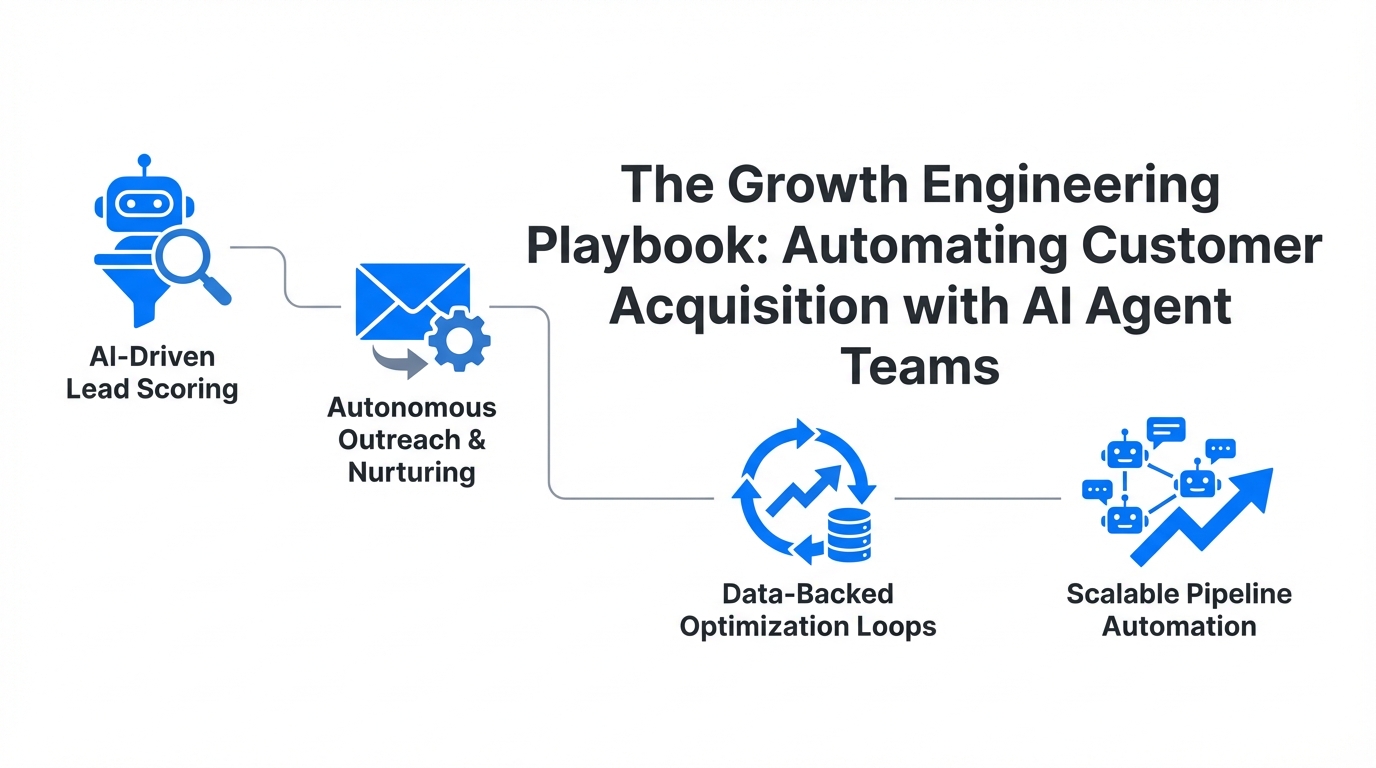
The era of manual growth hacking is coming to an abrupt end. In early 2026, the marketing landscape underwent a fundamental shift as agentic AI moved from a laboratory curiosity to the primary engine of high-scale distribution. Today, 92% of US-based developers and technical marketers use AI tools daily, with many pivoting toward autonomous systems that don't just suggest ideas, but actively build and manage acquisition funnels. According to recent industry surveys on dev.to, the transition from simple autocomplete to autonomous delegation is the defining trend of the year. This shift has birthed a new discipline: Growth Engineering.
Growth engineering isn't just about running A/B tests; it is about building self-correcting machines that find, engage, and convert customers with minimal human oversight. By leveraging frontier models like Claude 3.5 Sonnet, which currently boasts a 77.2% solve rate on complex real-world issues, marketers can now "spin up" entire teams of virtual agents to handle SEO, UI testing, and lead generation simultaneously. This playbook outlines the technical infrastructure and strategic frameworks required to build a 24/7 automated customer acquisition machine.
The Rise of Agentic Distribution: Beyond Marketing Automation Strategies
Traditional marketing automation was linear. You set a trigger, and an action followed. AI growth hacking in 2026 is non-linear. It utilizes what industry experts call "Vibe Coding"—a process where the human defines the objective and the "vibe" of the solution, while agentic systems handle the technical implementation. This trend is accelerating as platforms focus on Agentic AI: autonomous systems capable of cross-file planning and self-correction.
Instead of hiring a massive team to manage your automated customer acquisition, growth engineers now deploy "Agent Teams." This concept, often referred to as "swarming," allows you to spawn specialized agents for different tasks. For example, one agent might focus exclusively on technical SEO and site speed, while another monitors competitor pricing and a third generates ad copy for TikTok Ads Manager. These agents don't just work in silos; they can peer-review each other's work to ensure brand consistency and technical accuracy, as noted in recent agent orchestration research.
"The profession is being dramatically refactored; the bits contributed by the marketer are increasingly sparse as AI handles the heavy lifting of execution." — Insight adapted from Andrej Karpathy.Leveraging MCP (Model Context Protocol) for Marketing
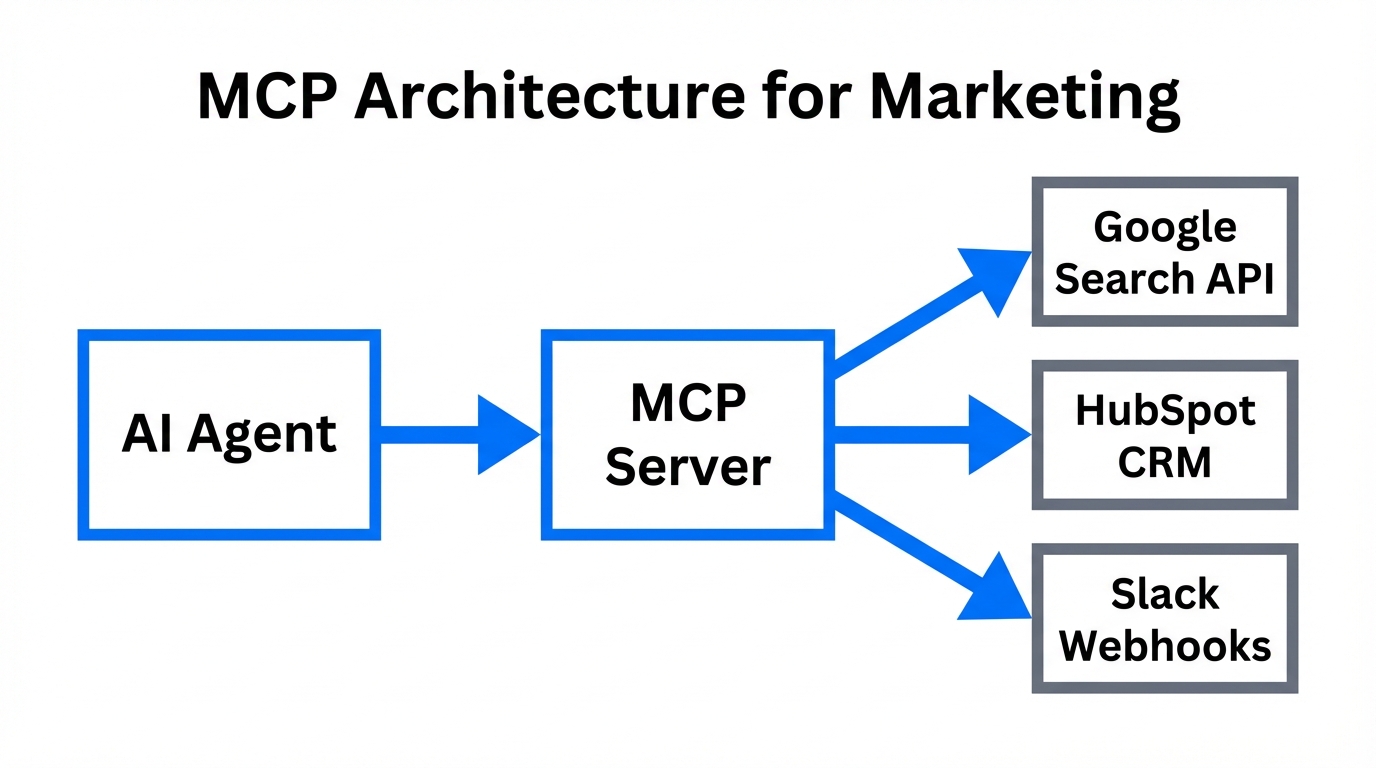
The real power of growth engineering lies in the Model Context Protocol (MCP). MCP allows your AI agents to interact directly with your entire software stack, moving beyond simple chat interfaces to direct action. For scaling distribution with ai, several specific MCP servers are becoming essential for the modern marketing stack.
- GitHub MCP: Used for managing landing page repositories, reviewing PRs for conversion-optimized components, and automating CI/CD pipelines for marketing experiments (Source).
- Playwright MCP: Enables agents to run browser automation. This is critical for end-to-end testing of acquisition funnels and scraping data from sources where no API exists (Source).
- Sentry MCP: Allows agents to pull real-time error logs and suggest immediate fixes for production bugs that are dropping conversion rates (Source).
| MCP Server | Marketing Use Case | Primary Benefit |
|---|---|---|
| Playwright | Browser automation & funnel testing | 99% accuracy in UI verification |
| GitHub | Content & Landing Page CI/CD | Automated deployment of growth experiments |
| Sequential Thinking | Complex strategy mapping | Eliminates "spaghetti logic" in acquisition funnels |
The Plan-Execute-Verify Framework: Preventing Spaghetti Logic
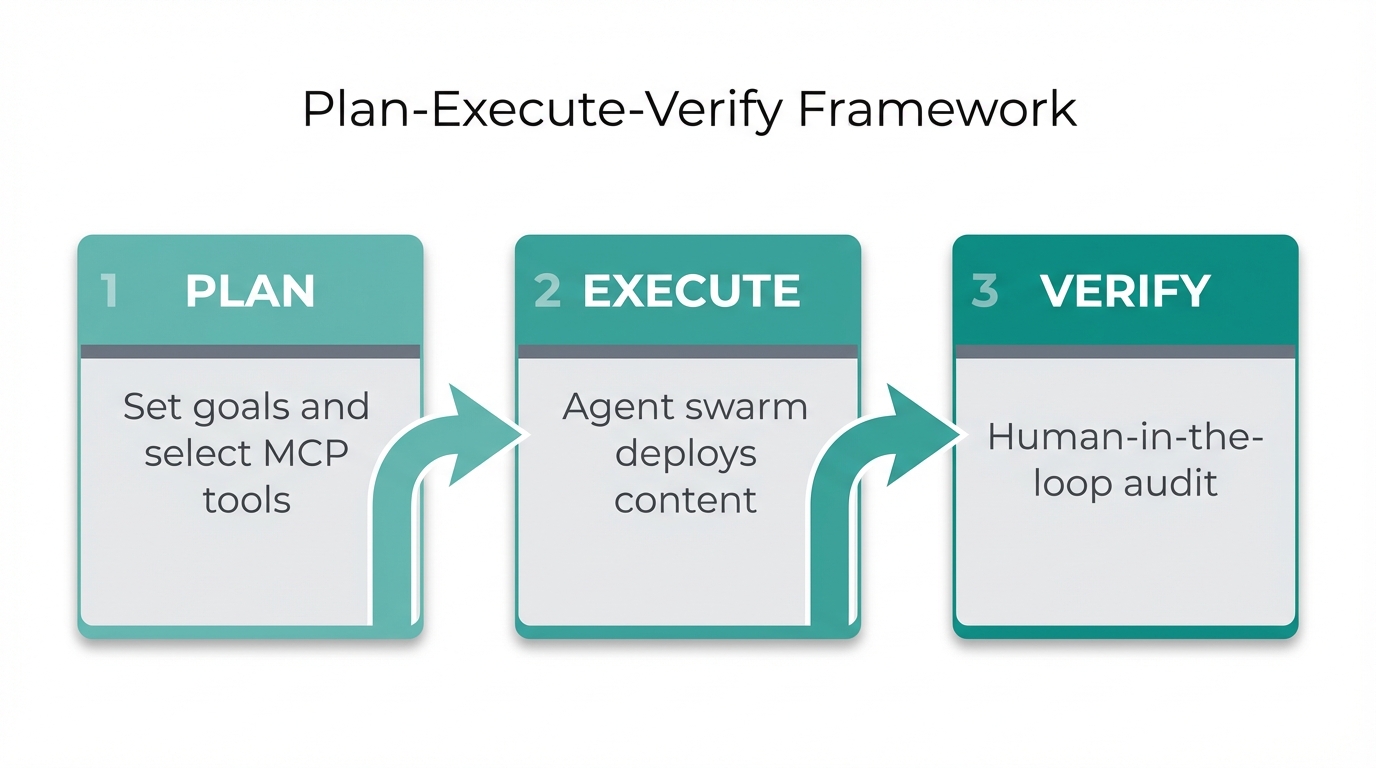
One of the biggest risks in ai growth hacking is the "Ask and Pray" approach. Simply asking an AI to "get more customers" often leads to fragmented, low-quality code or brand-damaging messaging. To avoid this, growth engineers use the Plan → Execute → Verify loop. This structured approach ensures that every automated action is justified and tested before going live (Source).
Step 1: The Plan Mode
Before any files are touched, the agent must enter a "Plan Mode." In terminal-native agents like Claude Code, this is often triggered by Shift+Tab. This forces the AI to describe its architectural approach. For a growth experiment, this means defining the target audience, the conversion event, and the tracking parameters in Google Analytics.
Step 2: Execution via Project Brains
Execution is guided by a centralized document, often called a CLAUDE.md or "Project Brain." This file acts as the infrastructure for context, containing the "Why" and "How" of your marketing strategy. By defining your brand voice and technical constraints here, you prevent instructions from degrading over time.
Step 3: Automated Verification
Never trust an agent blindly. The verification step uses tools like Playwright to simulate a user journey. If the agent builds a new signup flow, it must also build a test script that confirms the flow works on mobile and desktop without errors.
"AI is excellent at implementation but can be architecturally blind. The human must define the boundaries of the acquisition funnel."The 150-Rule for Growth Instructions
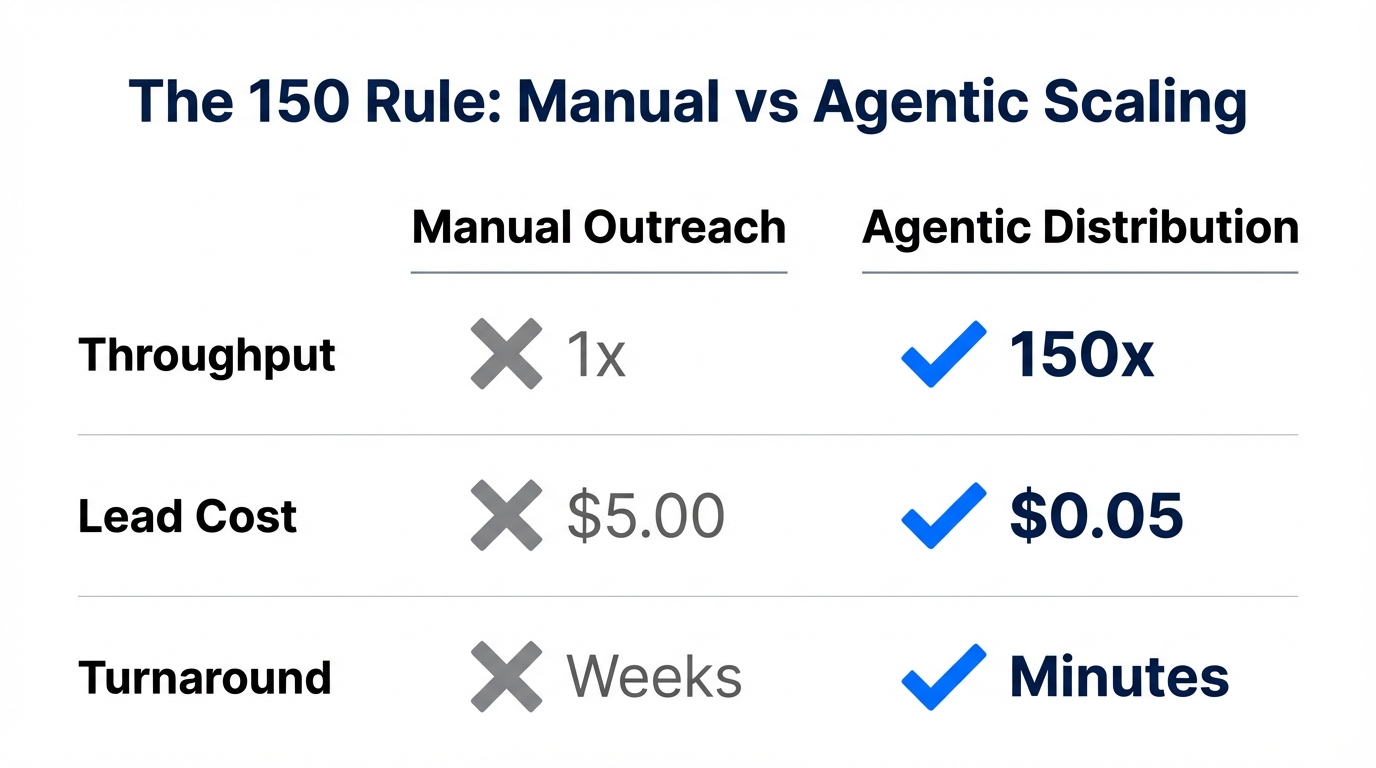
A critical technical constraint in automated customer acquisition is instruction degradation. Research indicates that frontier models generally follow about 150–200 instructions before their compliance begins to slip. This is known as the 150-Rule (Source).
To maintain high-quality output in your marketing automation strategies, keep your core `CLAUDE.md` file under 150 lines. Focus on high-level principles rather than exhaustive lists of commands. For example, instead of listing every possible UTM parameter, set a principle: "All outbound links must contain standard UTM parameters for source, medium, and campaign." This allows the agent to generalize and apply the rule correctly to new channels like LinkedIn or influencer outreach via Stormy AI.
Automating Production Incidents: Fixing Leaky Funnels
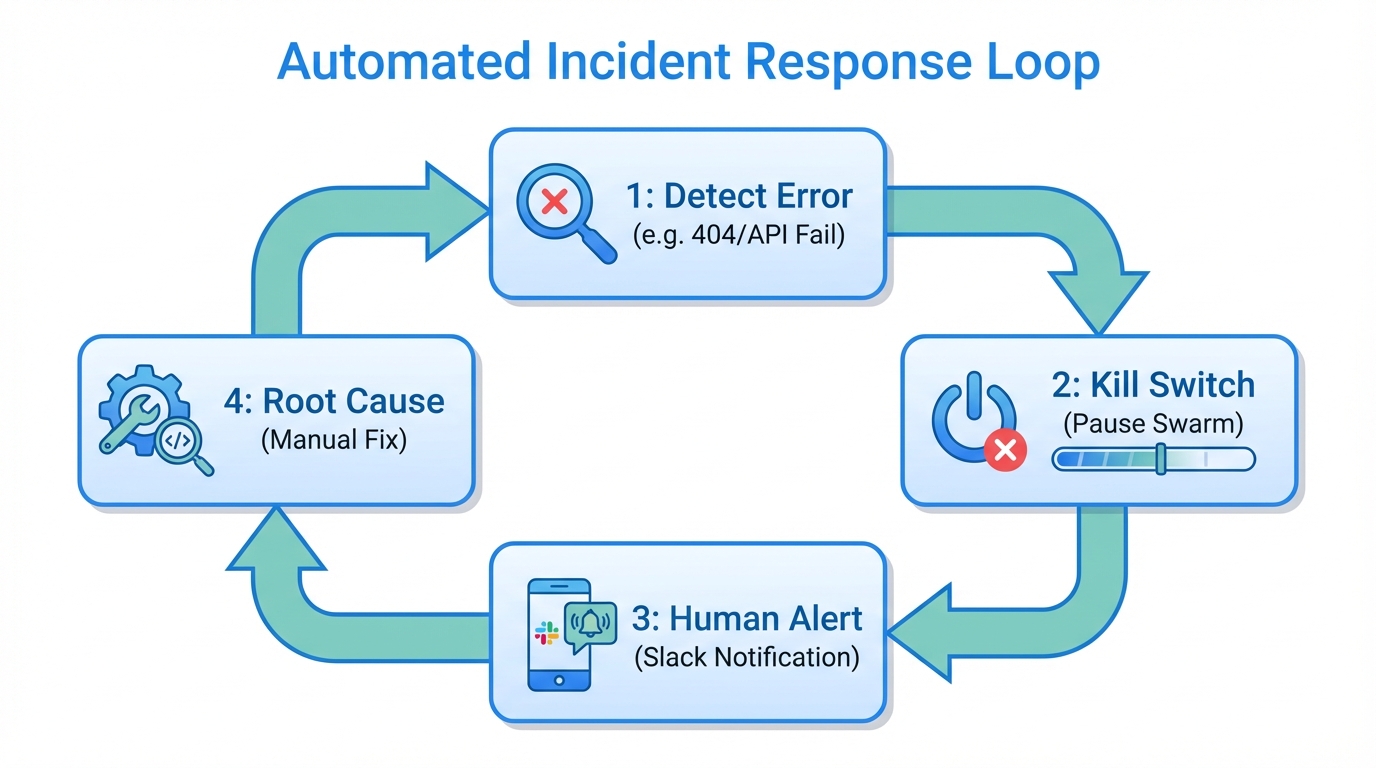
One of the most innovative uses of growth engineering is the automated resolution of production incidents. When a conversion-dropping bug occurs—such as a broken checkout button or a slow-loading landing page—it can take hours or days for a human team to notice and fix it. With an integrated stack, agents can handle this in seconds.
By connecting a Sentry MCP server to your agent swarm, the AI can monitor for 500-level errors or dramatic spikes in latency. When an issue is detected, the agent pulls the error logs, identifies the offending code, creates a fix, runs a test suite to ensure no regressions, and submits a PR—all while the marketing team is asleep. This level of ai growth hacking ensures that your automated customer acquisition machine never stops running due to technical friction.
For teams focused on scale, platforms like Stormy AI can be integrated into this workflow to handle the creator sourcing and outreach side, ensuring that while the technical funnel is being fixed, the top-of-funnel traffic remains consistent through AI-managed influencer relationships.
Avoiding the Pitfalls of Automated Growth
Despite the power of these tools, several common mistakes can derail a growth engineering initiative. Context bloat is a major issue; dumping an entire codebase or marketing history into a prompt destroys the AI's attention. Quality typically degrades once the context window reaches 20-40% capacity, not just when it's full (Source). Use commands like `/clear` between distinct tasks to keep the agent's focus sharp.
Additionally, security remains a paramount concern. Older versions of agentic tools have been known to expose API keys in debug logs. Growth engineers must ensure they are using the latest versions of their stack and regularly auditing the logs generated by their agent teams (Source).
The Future of the Growth Stack
The transition to growth engineering represents a shift from being a "user" of marketing tools to being an "architect" of marketing systems. By combining agentic AI, MCP servers, and rigorous verification frameworks, brands can achieve levels of scale and efficiency that were previously impossible. Whether it's using Meta Ads Manager for traffic or Stormy AI for creator discovery, the underlying system should be autonomous, resilient, and data-driven.
Start small by automating a single acquisition channel. Build your CLAUDE.md, implement a Plan-Execute-Verify loop, and witness the power of scaling distribution with ai firsthand. The age of manual marketing is over; the age of the growth engineer has begun.