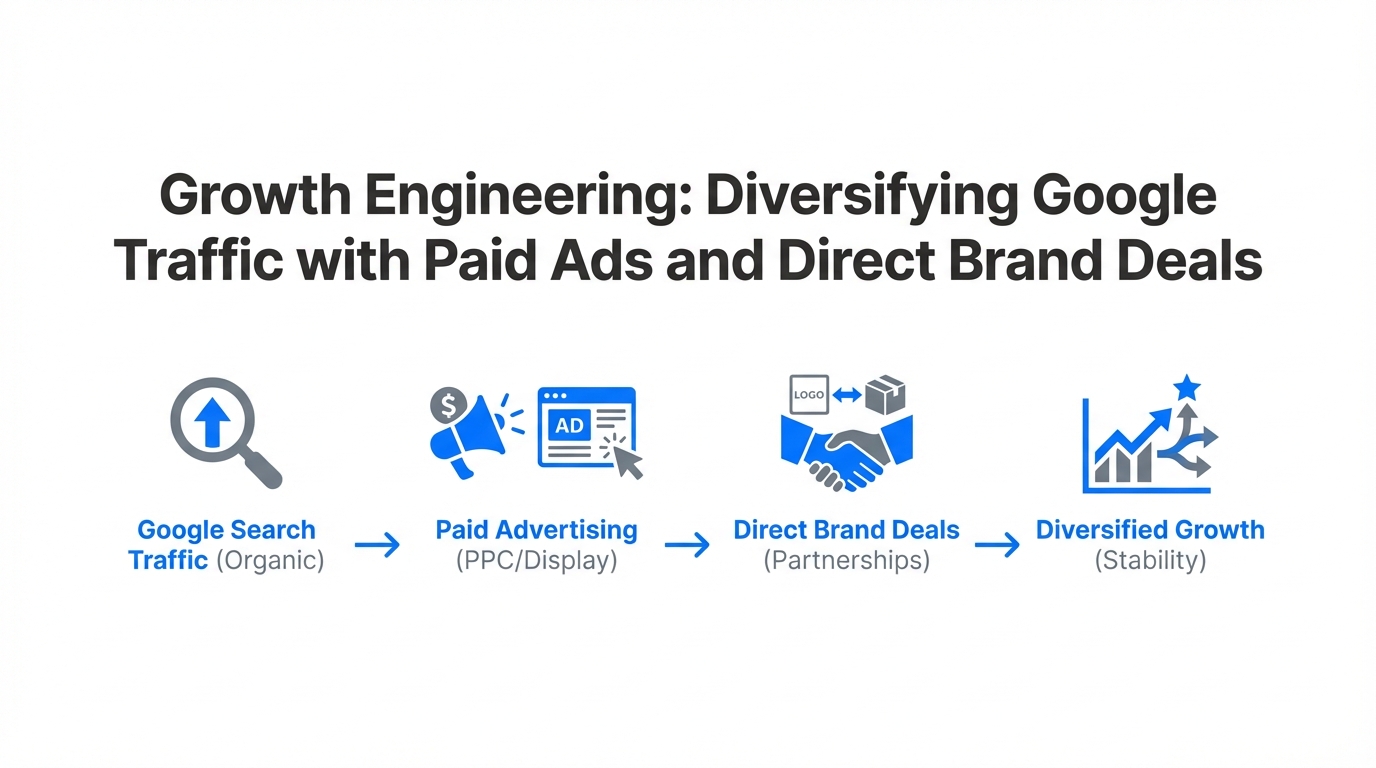
In the world of digital publishing, there is no sound more terrifying than the silence that follows a Google algorithm update. For years, the standard playbook for affiliate marketers was simple: find a niche, write SEO-optimized content, and wait for the search engine to send traffic. But as search results become increasingly crowded with massive publishers like Forbes and Healthline, and as AI-generated answers threaten traditional click-through rates, the old model is breaking. To build a resilient, seven-figure business, you have to stop thinking like a blogger and start thinking like a growth engineer.
Relying solely on organic search is a high-stakes gamble. Growth engineering is the practice of diversifying your traffic mix and building direct relationships that bypass the volatility of third-party platforms. By incorporating affiliate marketing paid ads and shifting from passive affiliate networks to direct brand partnerships, you can reclaim control over your revenue and scale your business 'to the moon,' regardless of what the next search update brings.
The Google Dependency Risk: Why One Source is Never Enough
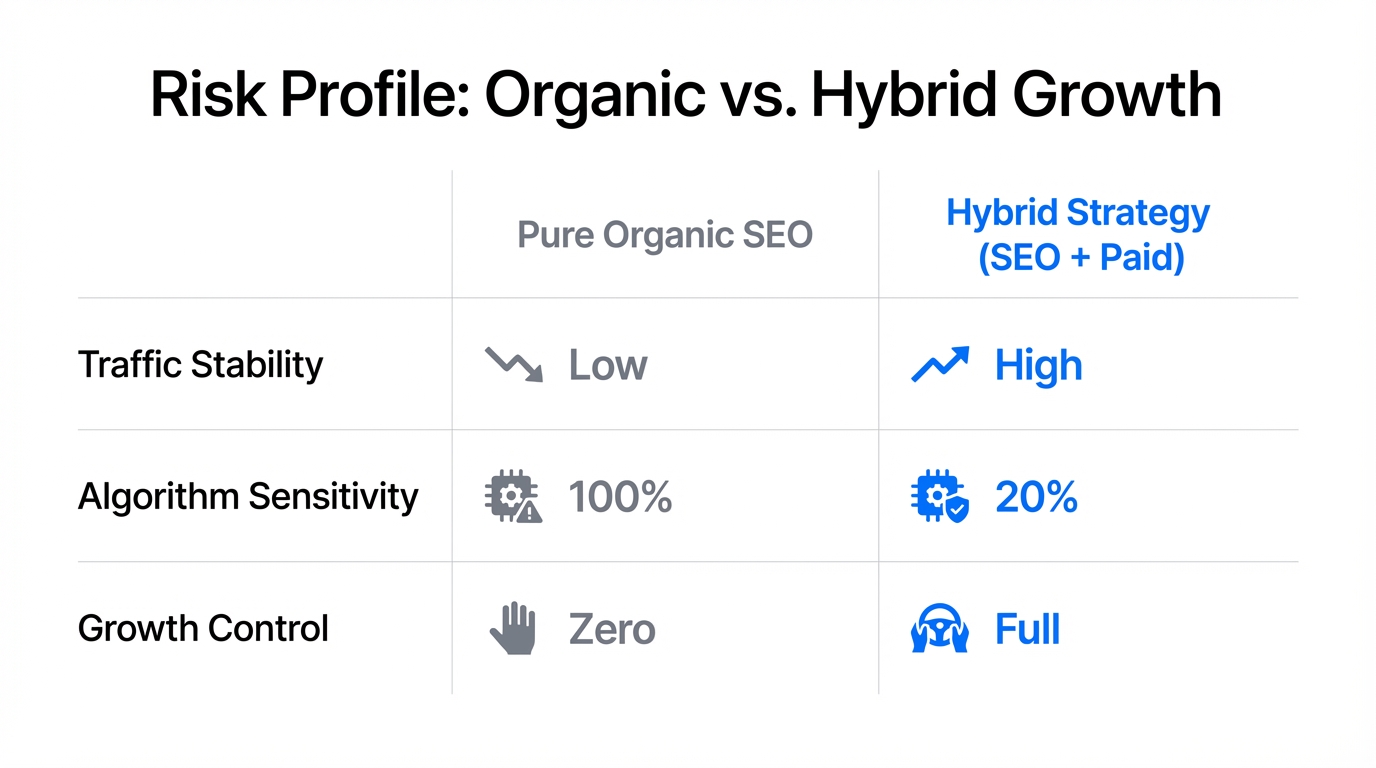
Most affiliate businesses begin with a heavy reliance on SEO. It makes sense: organic traffic is "free," high-intent, and relatively passive once you rank. However, the expectation that you will stay at the top of Google forever is a dangerous myth. The competitive landscape has shifted. You are no longer just competing with other niche sites; you are competing with global media conglomerates that have multi-million dollar SEO budgets.
When your entire revenue stream depends on a single algorithm, you aren't an entrepreneur; you are a tenant on rented land. A single tweak to a core update can wipe out 80% of your traffic overnight. Diversifying traffic sources is not just a growth strategy; it is business insurance. By expanding your horizons to include paid media and direct partnerships, you create a multi-channel moat that protects your income from the whims of a single platform.
From Affiliate Networks to Direct Brand Partnerships
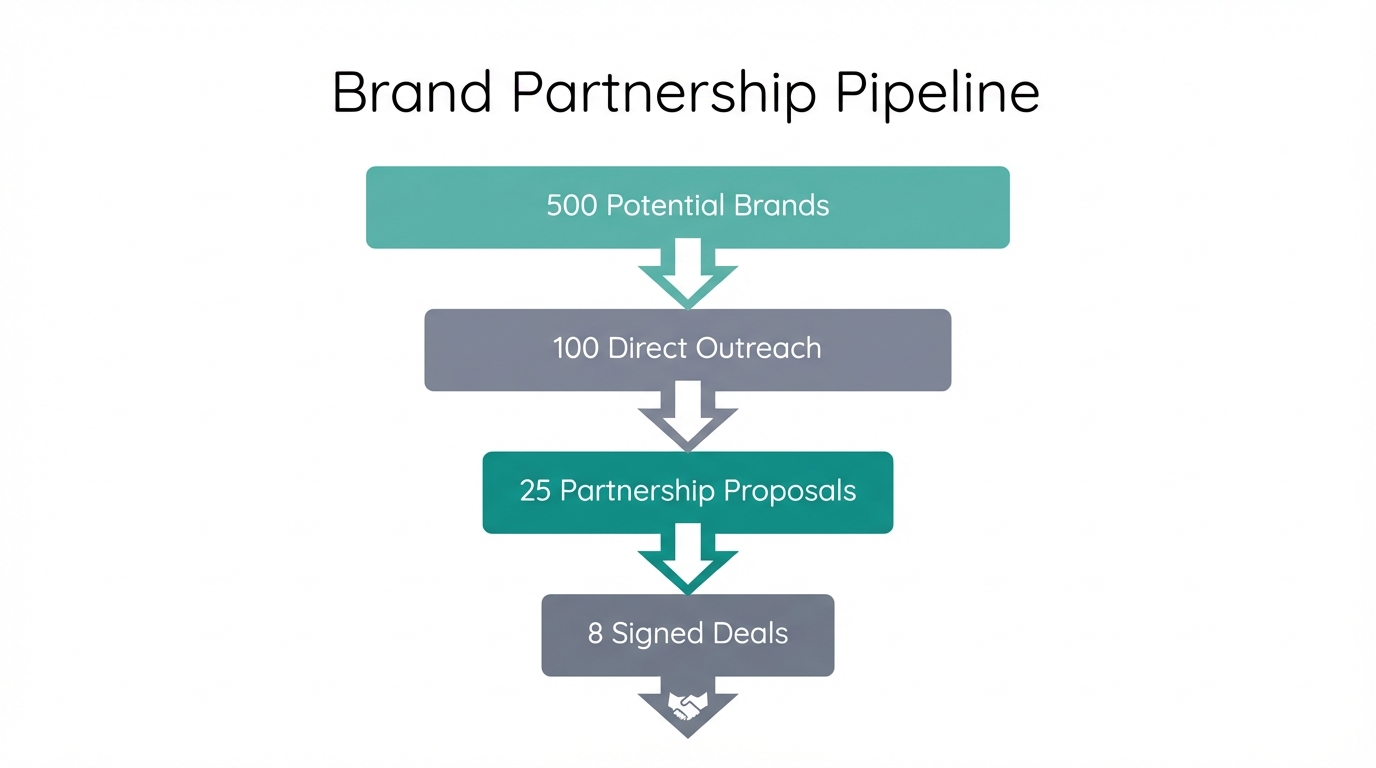
Early-stage affiliate sites usually start with networks like Amazon Associates or Impact.com. These are great for proof of concept, but they often come with low commission margins and zero communication with the brand. To scale to a million-dollar business, you must transition to direct brand partnerships. This is where brand partnership negotiation becomes your most valuable skill.
Direct deals allow you to cut out the middleman, leading to significantly higher payouts. When you work directly with a brand—especially in high-margin sectors like telehealth or wellness—you can negotiate custom commission structures, performance bonuses, and even upfront payments. More importantly, it opens the door for collaborative growth. You become a partner in their success rather than just another line item in their affiliate dashboard.
"The smart, innovative moment for us was the idea of just partnering with brands directly. It’s a compelling pitch because they name their price for the customers you are willing to drive."
| Feature | Affiliate Networks | Direct Brand Partnerships |
|---|---|---|
| Commissions | Standard/Low | Negotiable/High |
| Communication | None to Minimal | Direct Access to Growth Teams |
| Data Sharing | Limited | Granular Conversion Data |
| Stability | Subject to Network Terms | Contractual Security |
The 'Test Spend' Pitch: Getting Brands to Fund Your Growth
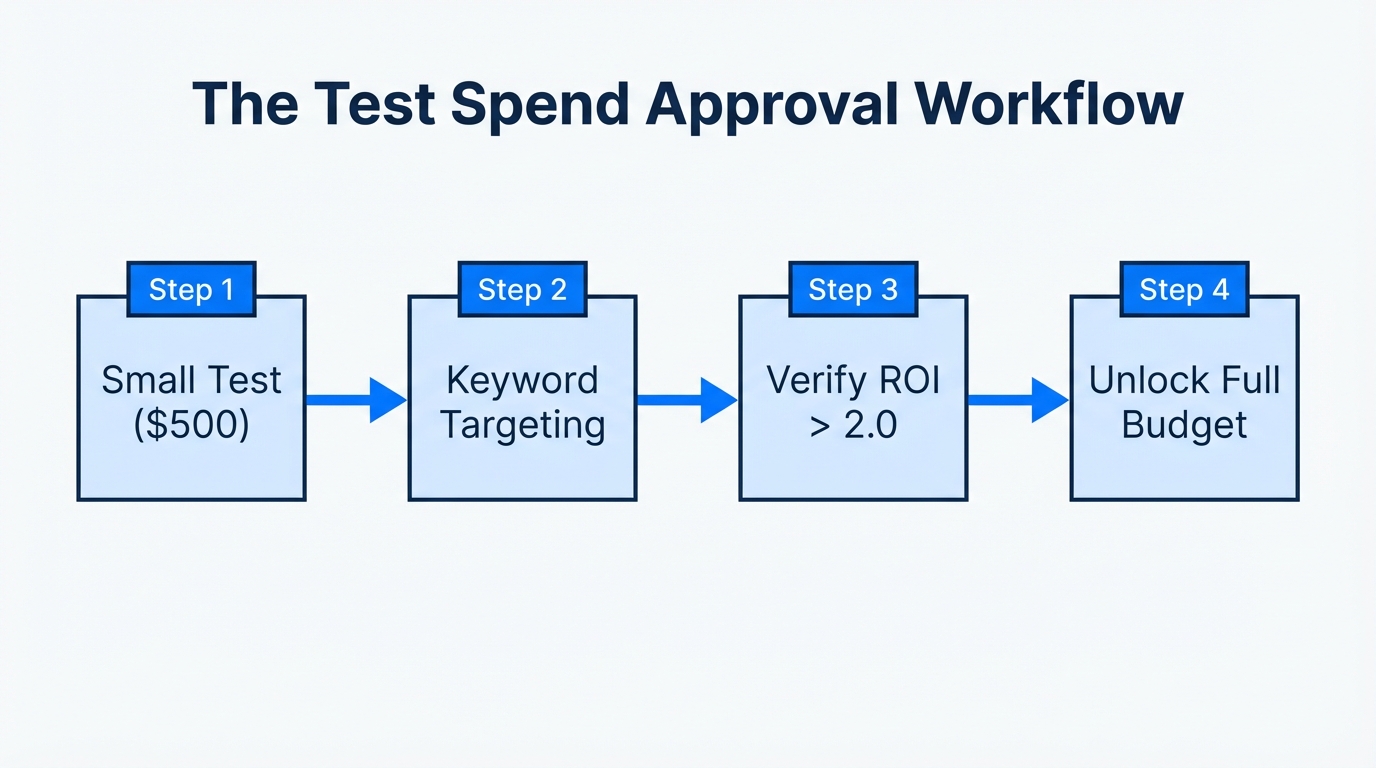
One of the biggest barriers to entry for affiliate marketing paid ads is the financial risk. Spending your own capital on Meta or Google Ads to promote an affiliate offer can be daunting. The growth engineering solution? Get the brand to fund your experiments through a 'Test Spend' pitch.
The pitch is simple: "I know you want more growth. I have a strategy to drive high-intent customers through paid media, which is outside our current organic scope. If you provide a test budget of a few thousand dollars, we will run the campaigns, handle the creative, and optimize for conversions. If it fails, we’ve learned something. If it works, it is scalable to the moon."
Most brands have dedicated performance marketing budgets for platforms like Meta Ads Manager or Google Ads. By offering to manage these campaigns on their behalf—linked to your high-converting content—you reduce their overhead while proving your value as a strategic partner. This turns you from a content creator into a performance marketing agency that also happens to own the media assets.
Scaling 'To The Moon': Using Paid Ads to Amplify Winning Content
Paid advertising is the fuel that makes the fire of affiliate marketing burn brighter. Once you identify a piece of content that converts organic traffic at a high rate, you have a proven asset. You don't need to wait for Google to send more people to it; you can buy that traffic. This is a core pillar of performance marketing growth.
Using platforms like TikTok Ads Manager or Apple Search Ads, you can target specific demographics that match your ideal customer profile. Because your content already provides value—such as a product comparison or a deep-dive review—the user experience feels less like an ad and more like a helpful recommendation. This often results in lower customer acquisition costs (CAC) compared to the brand's own direct-to-consumer ads.
As you scale these campaigns, managing the influx of brand relationships becomes a full-time job. This is where platforms like Stormy AI can streamline your workflow. When you are looking to find new brands to partner with or managing a portfolio of creators for UGC-style ads, Stormy AI’s creator CRM and discovery engine allow you to source and vet partners at scale, ensuring your paid media is always backed by high-quality, authentic content.
"Paid media is the ultimate lever. If you can make $1.50 for every $1.00 you spend on ads, you no longer have a traffic problem—you have a capital deployment problem."
Negotiating Performance-Based Contracts for Predictable Revenue
To move away from the volatility of monthly fluctuations, you need to negotiate performance-based contracts. These agreements should go beyond simple 'pay-per-sale' models. Consider tiered commission structures: the more volume you drive, the higher your percentage. This incentivizes you to invest more in diversifying traffic sources and scaling your paid spend.
When entering a brand partnership negotiation, focus on the following metrics:
- EPC (Earnings Per Click): Show them that your traffic is pre-qualified. [source: BigCommerce]
- LTV (Lifetime Value): Highlight if your referrals have a lower churn rate than their average customer. [source: Shopify]
- Exclusivity: If you are willing to feature them as the #1 choice in a category, negotiate a higher premium for that placement.
Effective management of these deals requires a robust backend. Just as you might use Salesforce for general sales tracking, using an AI-powered outreach tool helps you identify which creators or brands in your niche are gaining momentum, allowing you to reach out and secure direct deals before your competitors even know they exist.
The Growth Engineering Playbook: Step-by-Step
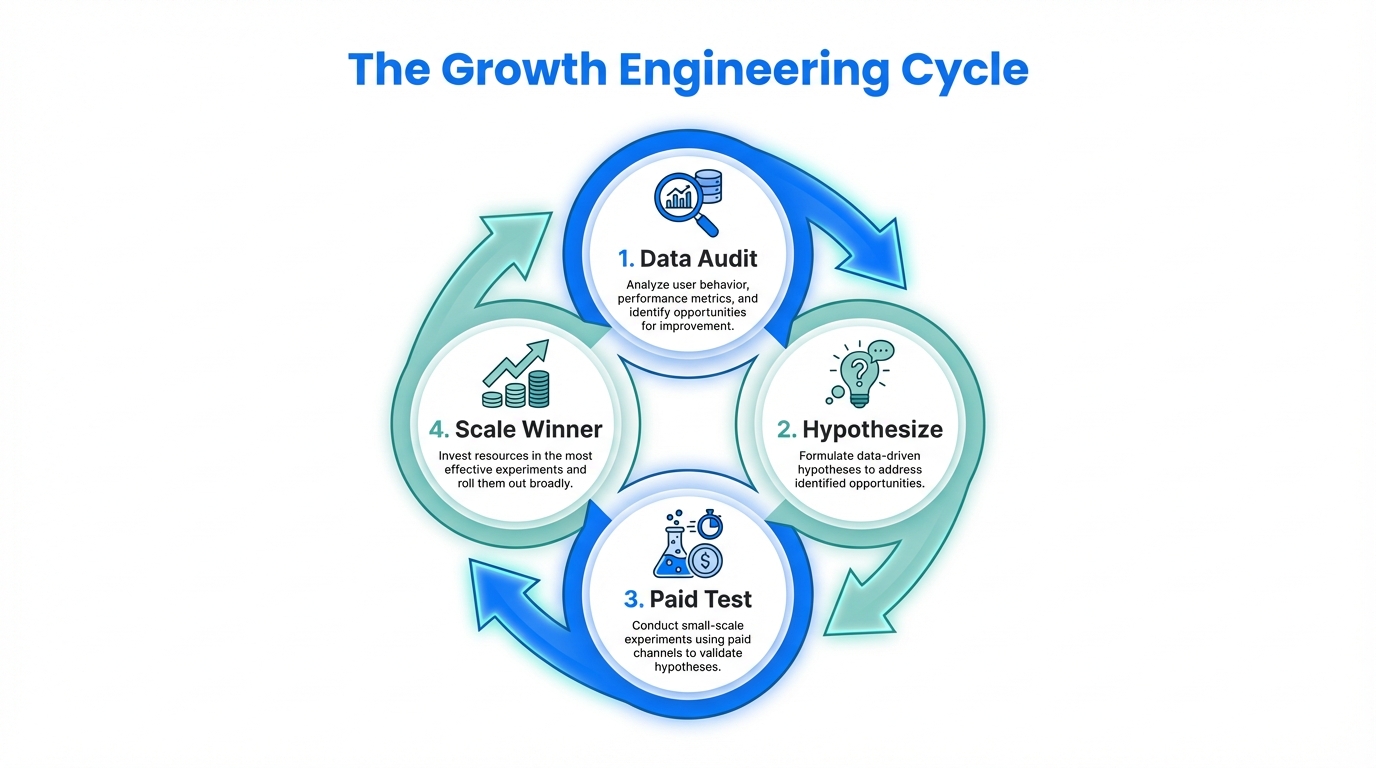
Transitioning from a traditional affiliate site to a growth-engineered media powerhouse doesn't happen overnight. Follow this sequential playbook to scale safely and effectively.
Step 1: Identify Your High-Intent Winners
Analyze your Google Analytics to find the pages that currently have the highest conversion rates. These are your prime candidates for paid amplification and direct deals.
Step 2: Reach Out for Direct Terms
Contact the brands you are already driving sales for. Present your data and ask for a direct partnership that offers a 20-30% premium over the network rate. Use this extra margin to fund your first paid experiments.
Step 3: Launch a 'Test Spend' Campaign
Start small on a platform like Meta or TikTok. Use UGC-style creative—which you can source from creators discovered on Stormy AI—to drive traffic to your review pages. Focus on achieving a positive Return on Ad Spend (ROAS) before increasing the budget.
Step 4: Formalize the Partnership
Once you prove that paid media works, move the brand to a performance-based contract. Ask for a dedicated budget or a 'fixed fee + commission' model to cover your management and ad costs.
Step 5: Expand the Portfolio
Apply the same model to new niches. By building a portfolio of sites, you create economies of scale. You can take one successful brand partner and feature them across five different niche sites, maximizing the value of every relationship.
The Future of Performance Marketing
The era of "set it and forget it" SEO is over. To thrive in 2024 and beyond, you must embrace the mindset of a growth engineer. This means being proactive, not reactive. It means building a business that uses organic search as a launchpad, not a crutch. By mastering affiliate marketing paid ads and becoming an expert in brand partnership negotiation, you insulate yourself from market shifts and unlock a level of scale that organic search alone can never provide.
The most successful entrepreneurs are those who see around the corners. Don't wait for the next algorithm update to tell you that your traffic is gone. Start diversifying traffic sources today, leverage AI tools to find the best partners, and build a performance marketing engine that is truly scalable to the moon.