Growth marketing has evolved far beyond the era of static PDFs and simple landing pages. Today, the most successful acquisition strategies rely on growth engineering tools—interactive assets like ROI calculators, personalized audits, and mini-SaaS widgets that provide immediate value to users. However, for many non-technical marketers, the barrier to building these tools has always been the requirement for deep coding knowledge or expensive engineering resources. Enter OpenAI and the emergence of ChatGPT Codex, a bridge that allows marketers to act as growth engineers without writing a single line of manual code. By leveraging AI to handle the technical heavy lifting, brands can now deploy sophisticated interactive marketing assets that drive distribution and conversion at a fraction of the traditional cost.
Why Interactive Lead Magnets Outperform Static Content
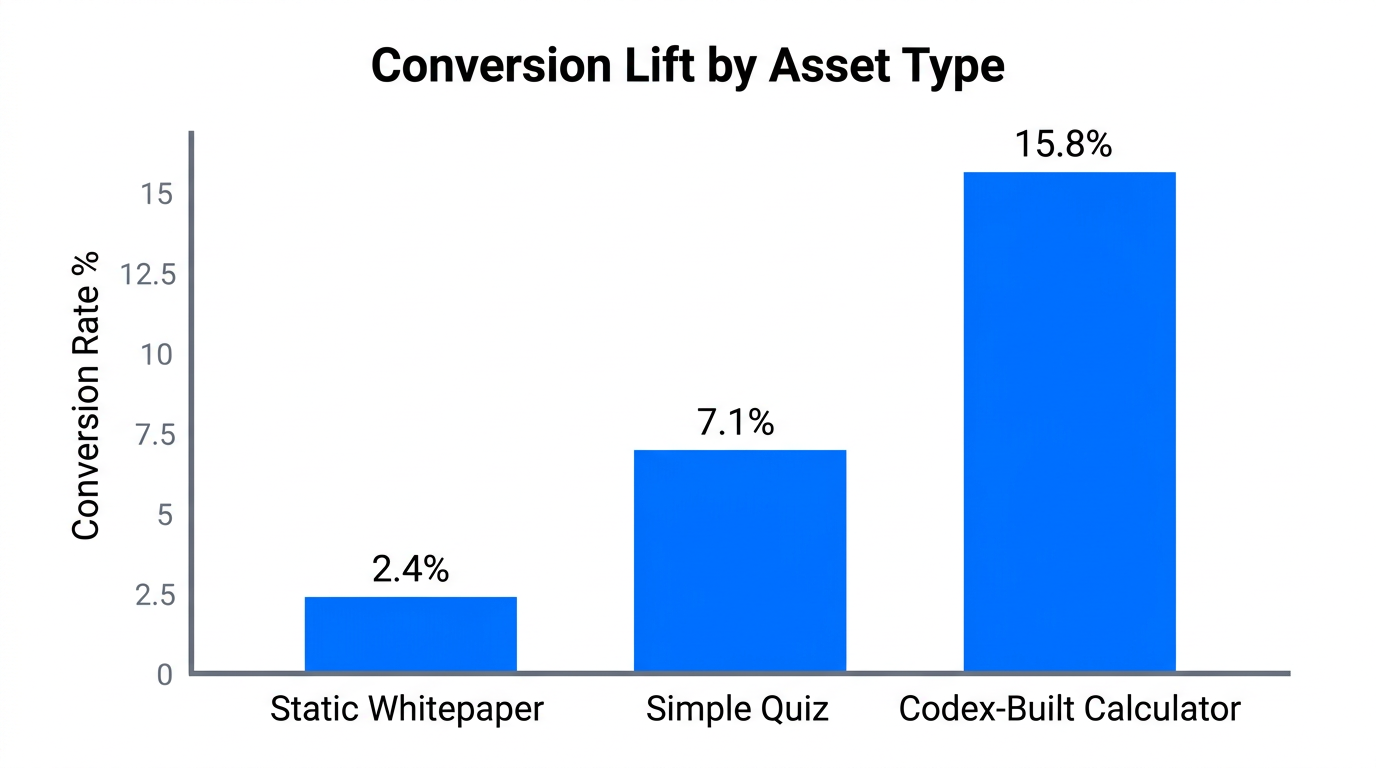
Static lead magnets, such as whitepapers and ebooks, are seeing diminishing returns. Users are increasingly fatigued by long-form content that requires significant time to consume. In contrast, interactive marketing assets provide instant gratification. Whether it is a custom quote generator or a tool that summarizes complex PDFs, these assets offer a utility-first approach to marketing. According to research cited by industry experts like Ben Tossell, the ability to iteratively add features to a live site allows marketers to pivot strategies based on real-time user behavior.
| Feature | Static Lead Magnets | Interactive Marketing Tools |
|---|---|---|
| User Engagement | Passive (Reading) | Active (Participation) |
| Time to Value | Slow (Must read/digest) | Instant (Immediate result) |
| Data Collection | Minimal (Form fields only) | Deep (Inputs/Preferences) |
| Conversion Potential | Moderate | High (Personalized experience) |
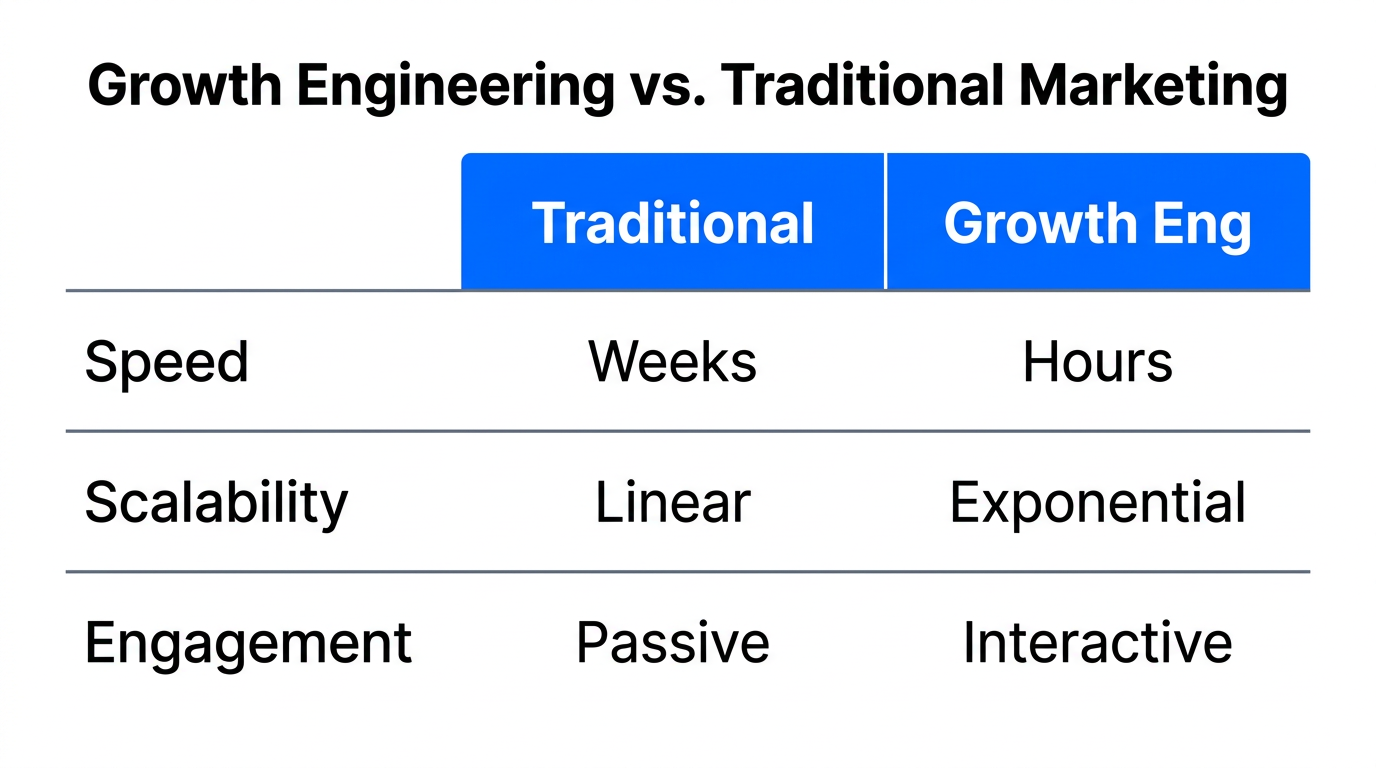
Building these tools traditionally required a development cycle that could take weeks. Using ChatGPT Codex for marketing, you can shorten this loop to minutes. By connecting your GitHub repository to a Codex environment, you can prompt the AI to add specific features, such as a new tab for toolsets or a dark mode switcher, and see those changes live almost instantly. This rapid experimentation is the core of modern growth engineering.
"The world of growth marketing is shifting from 'telling' customers about value to 'showing' them through functional, interactive utility."The 'Fork and Modify' Strategy: Leveraging Open Source
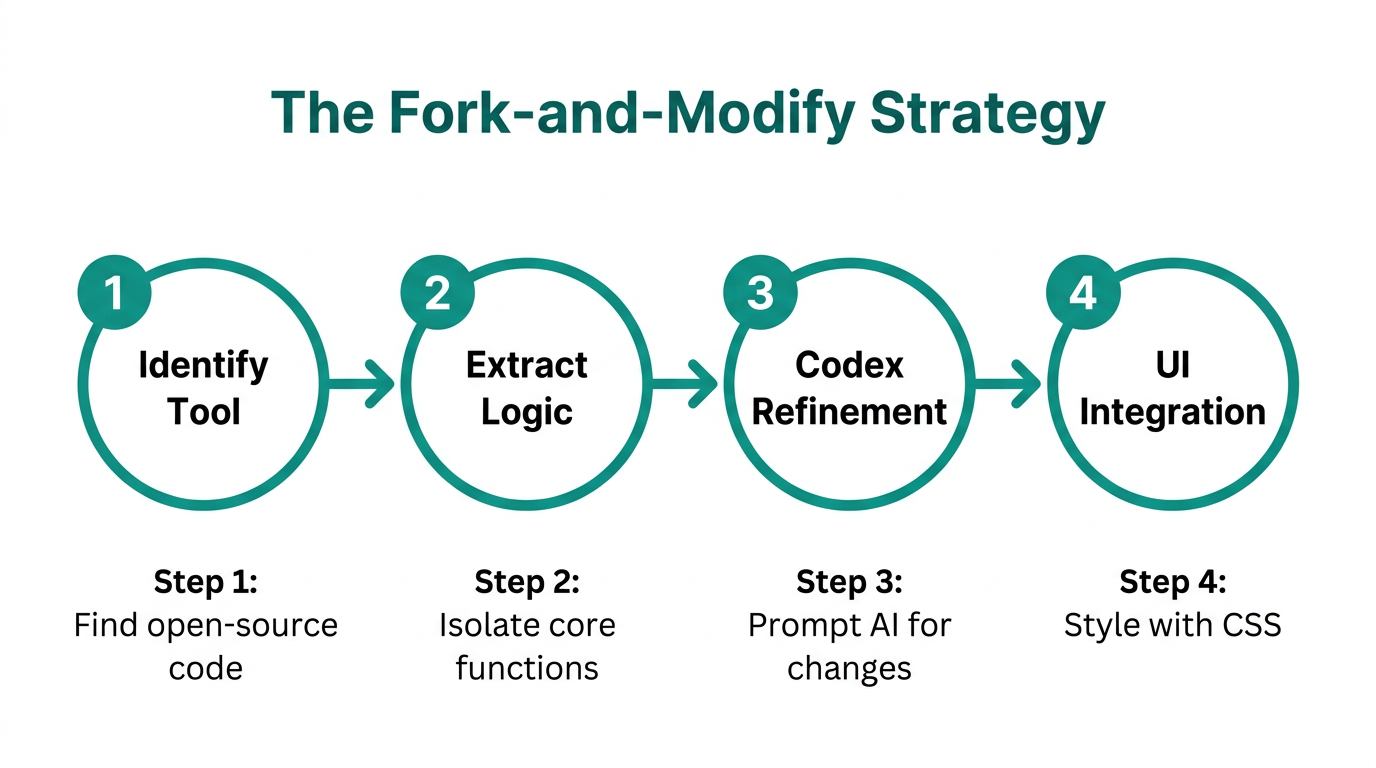
One of the most powerful ways to build lead generation tools with AI is the 'Fork and Modify' strategy. You do not need to start from a blank slate. GitHub is home to thousands of open-source projects that can serve as the foundation for your marketing tool. For instance, if you want to build a tool that summarizes technical documents for your niche, you can find a repository like Hassan's Smart PDF Summarizer and 'fork' it—creating your own copy of the codebase.
Once you have forked a repository, you can connect it to your Vercel or GitHub Pages account for deployment. From there, ChatGPT Codex acts as your senior engineer. You can give it tasks such as "Change the branding to match my site's CSS" or "Add an email capture field before the result is displayed." This allows you to take high-level engineering work and customize it for your specific growth goals. Tools like Bolt.new and Lovable offer similar prototyping capabilities, but Codex's direct integration with the raw code provides more flexibility for long-term scaling.
Setting Up Development Environments in ChatGPT Codex
To start building, you need to establish a workflow that connects your natural language prompts to your live web environment. This begins with connecting a GitHub repository to the Codex interface. For non-technical marketers, the process involves creating a 'project' or 'environment' within the Codex UI that points toward your site's main branch. This setup ensures that every 'task' you assign to the AI is grounded in your existing code base.
Step 1: Repository Connection
First, host your site or tool on GitHub. If you currently use a no-code builder like Carrd, you can often export the HTML/CSS and upload it to a new repo. Once connected, Codex can 'read' your entire file structure, understanding how your elements are styled and where your logic resides.
Step 2: Assigning Iterative Tasks
Instead of asking the AI to build an entire app in one go, use an iterative approach. Start by asking for a single button or a basic layout change. For example: "Add a pricing calculator next to the contact section that takes 'Ad Spend' as an input and outputs 'Estimated Leads' based on a 2% conversion rate." By keeping tasks small, you minimize the risk of bugs and allow the AI to perform internal testing before it suggests a change.
Step 3: The Deployment Loop
After Codex generates the code, it will prompt you to create a Pull Request (PR). This is a standard developer practice where changes are proposed before being merged into the main site. By reviewing these PRs, you can ensure that the interactive tool works as intended. If you are satisfied, you merge the PR, and platforms like Vercel will automatically deploy the changes to your live URL. This workflow allows you to maintain a professional development cycle while spending 100% of your time on marketing strategy.
Automating the Pull Request Loop for Rapid Growth
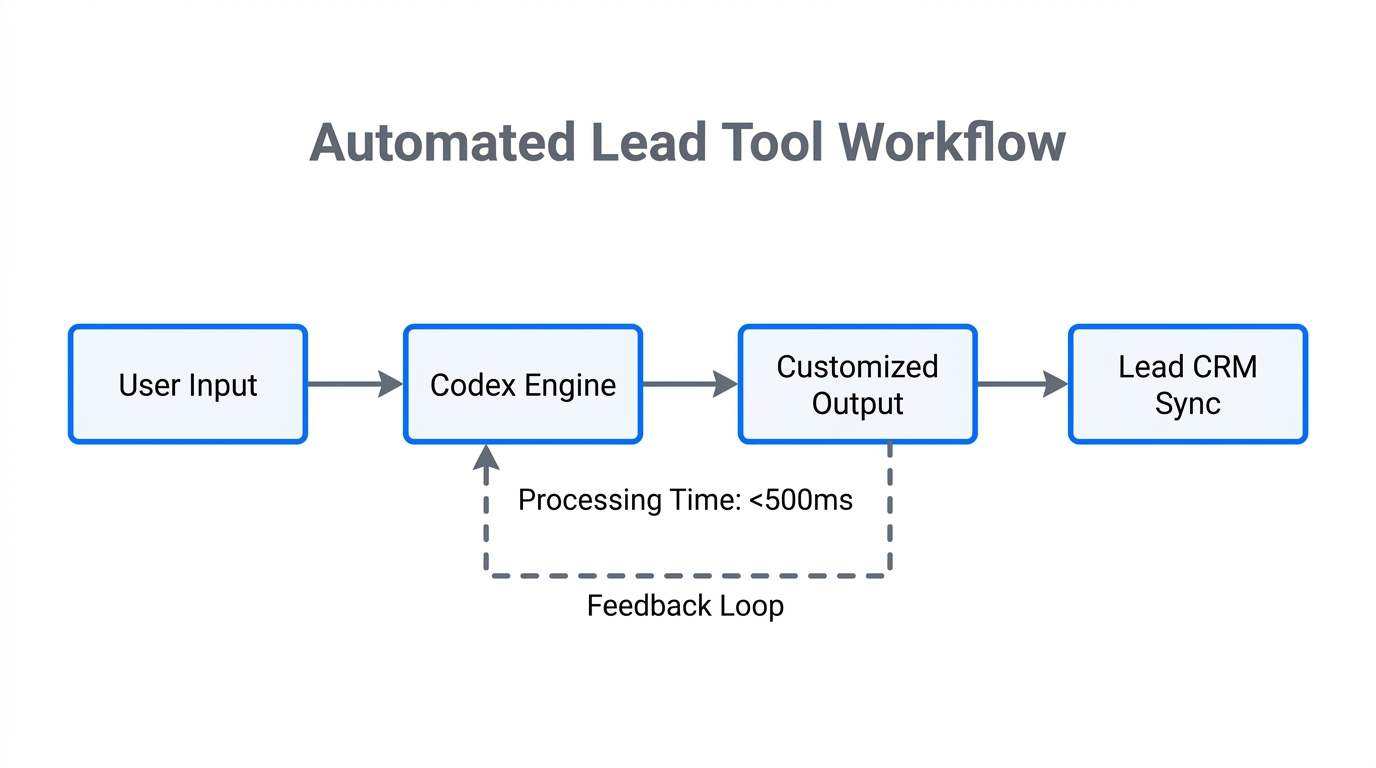
In growth engineering, the speed of experimentation is your greatest competitive advantage. Traditionally, if you wanted to A/B test a new interactive widget, you would need to wait for a developer to clear their backlog. With ChatGPT Codex, you can automate this loop. You can have multiple 'branches'—different versions of your tool—running simultaneously to test which features drive more sign-ups.
As your tool grows, you might need to integrate it with your broader marketing stack. For example, once you've built a custom calculator, you might want to use Stormy AI to identify niche creators on TikTok or YouTube who can demonstrate the tool to their audience. This combination of AI-powered creator discovery and custom-built growth tools creates a powerful acquisition flywheel. You can use Stormy AI to find influencers who specialize in the exact problem your new interactive tool solves, ensuring your distribution is as data-driven as your product development.
"The goal isn't just to write code; it's to create a delegated to-do list where the AI handles the execution and you handle the distribution."The 'Uit Hub' Trick for SEO Audits and Site Mapping
One of the most underutilized hacks in the growth engineering world is what insiders call the 'Uit Hub' trick. If you want ChatGPT to perform a comprehensive SEO audit or understand your entire site architecture, you can provide it with the full context of your repository. By changing the 'g' in 'github.com' to a 'u' (e.g., uithub.com/username/repo), you can often access a text-only, flattened version of your codebase.
Copying this entire site map into ChatGPT allows you to ask strategic questions like:
- "Identify all pages that are missing meta descriptions based on this code."
- "Analyze the internal linking structure and suggest five opportunities to boost my 'interactive tools' category."
- "Are there any redundant JavaScript files slowing down the page load speed for my lead magnets?"
This provides a level of technical SEO insight that usually requires expensive crawling software. By feeding your site architecture directly into the AI, you ensure that the tools you build with ChatGPT Codex for marketing are not only functional but also optimized for Google Ads and organic search traffic.
Your Growth Engineering Playbook
Ready to start building? Follow these sequential steps to deploy your first interactive marketing asset using ChatGPT Codex.
- Identify the 'Utility Gap': Look at your current funnel. Where are users dropping off? Build a tool that solves a specific calculation or data problem at that point.
- Setup GitHub: Create a repository and add a simple
README.md. If you have an existing site, host it here. - Initialize Codex: Connect your repository to ChatGPT Codex and create a new environment.
- The 30-Minute Rule: Keep your prompts focused on tasks that take less than 30 minutes of AI 'thinking' time to avoid session breaks.
- Merge and Deploy: Review the pull requests generated by Codex, merge them into your main branch, and use Vercel for instant hosting.
- Distribute: Once live, find UGC creators through Stormy AI to create walkthrough videos of your new tool to drive traffic.
Conclusion: The Future of the Technical Marketer
The line between marketing and engineering is blurring. By mastering growth engineering tools like ChatGPT Codex, you are no longer limited by your technical skills. You can build, test, and deploy interactive assets that capture more leads and provide more value than any static PDF ever could. Start small—perhaps with a simple personal site or a basic calculator—and iterate your way to a complex marketing machine. The tools are now in your hands; it is time to start building.