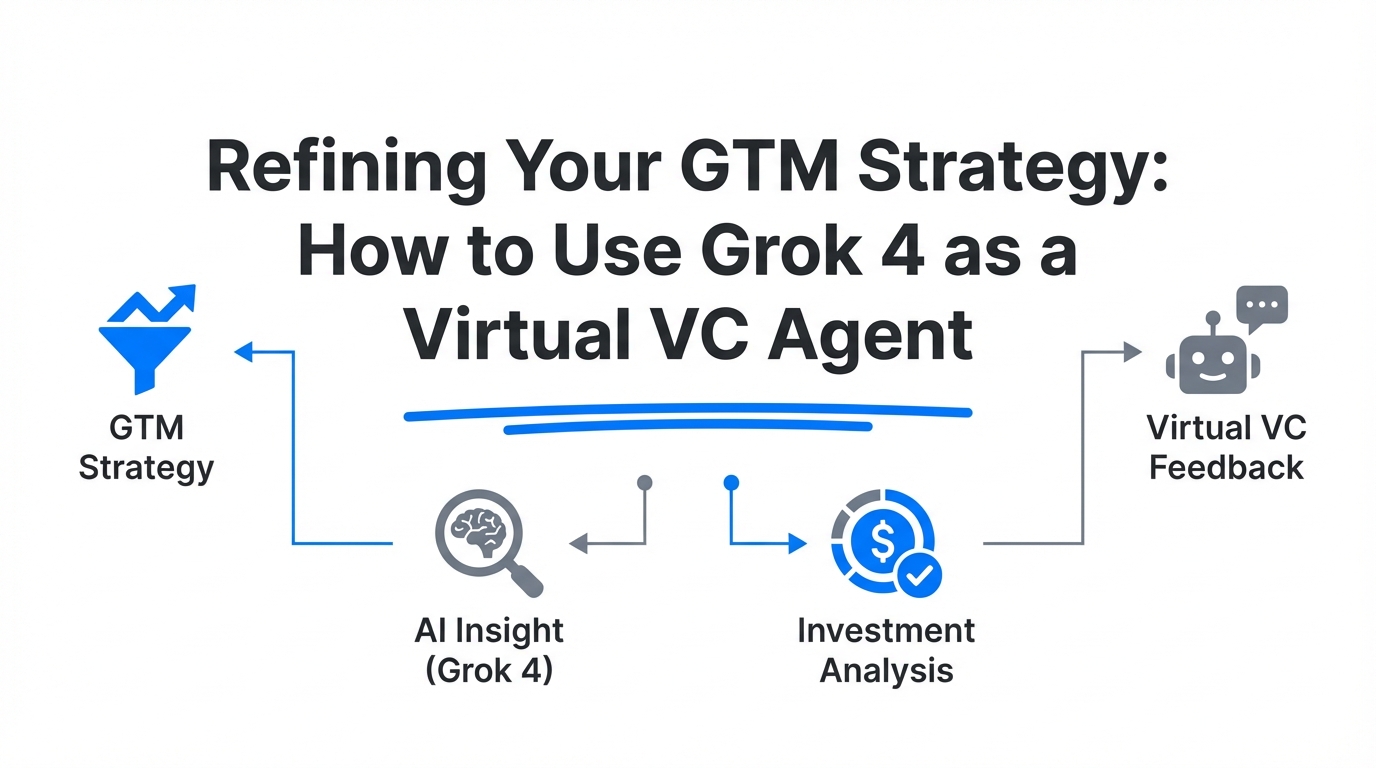
In the words of OpenAI co-founder Sam Altman, we have officially entered the "era of the idea guy." As barriers to technical execution fall, the differentiator for modern entrepreneurs is no longer just the ability to write code—it is the ability to strategically position a product in a hyper-competitive market. However, even the most brilliant idea requires a battle-hardened go-to-market strategy to survive the gauntlet of venture capital. Enter Grok 4, a powerful new tool in the founder's stack that acts as a virtual VC agent, capable of stress-testing pitch decks and refining messaging with real-time data.
While legacy LLMs rely on static training data, Grok 4’s unique advantage lies in its deep integration with X (formerly Twitter). For a founder, this means your "pitch deck refinement AI" isn't just checking grammar—it's cross-referencing your traction against live funding trends and competitor complaints trending on social media. This guide will walk you through the tactical playbook for using Grok 4 to prepare for high-stakes fundraising and market entry.
The Virtual VC: Roleplaying Your Way to a Seed Round
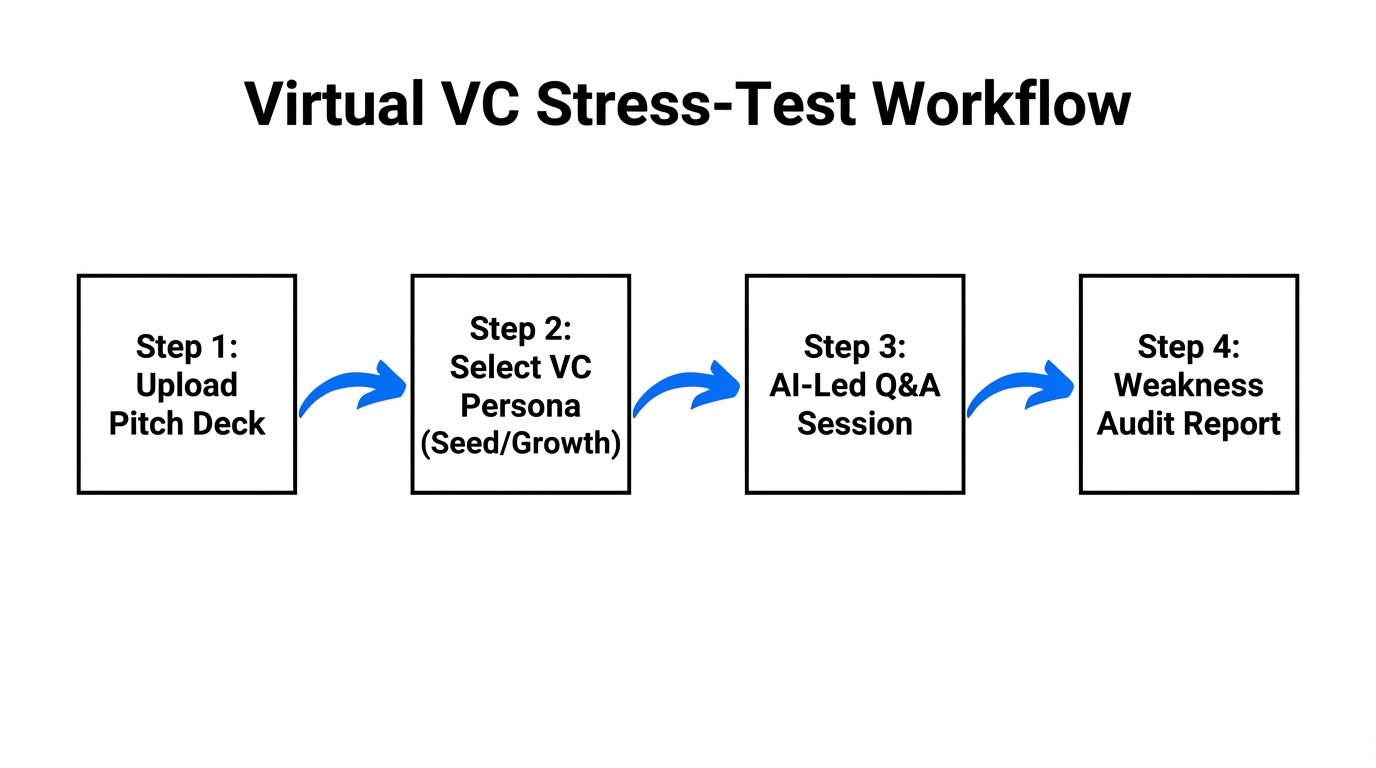
The most common mistake founders make is pitching their vision to their family or friends first. While well-meaning, these groups lack the cynical, ROI-focused lens of a professional investor. Using Grok 4’s multi-agent mode, you can simulate a high-pressure partner meeting before you ever step foot in a boardroom. By prompting the model to act as a Venture Capitalist Agent, you force the AI to utilize "Reasoning Mode" to poke holes in your logic.
"Don't pitch your grandmother; pitch a Virtual VC agent that has analyzed the last 10,000 seed rounds in your industry."
To get the most out of Grok 4 for founders, you must provide the AI with your raw script or deck outline. In recent tests, Grok 4 was able to identify that many AI-focused startups—such as those building in the autonomous agent space—often fail to provide concrete proof of traction or a clear Total Addressable Market (TAM). It specifically flagged that while a tool like Anam (which recently raised a $9M seed round) succeeded by defining a "new interface for tech," others are failing by being too broad.
Data-Backed Deck Improvements: TAM, Traction, and Positioning
A pitch deck is only as strong as the data supporting it. Grok 4 excels at identifying untapped opportunities by scraping recent user reviews and sentiment. For instance, if you are building a productivity tool, Grok 4 can analyze the user pain points of established giants like Notion or To-doist. It can identify that while Notion is powerful, users often complain about "bloat" and "slowness."
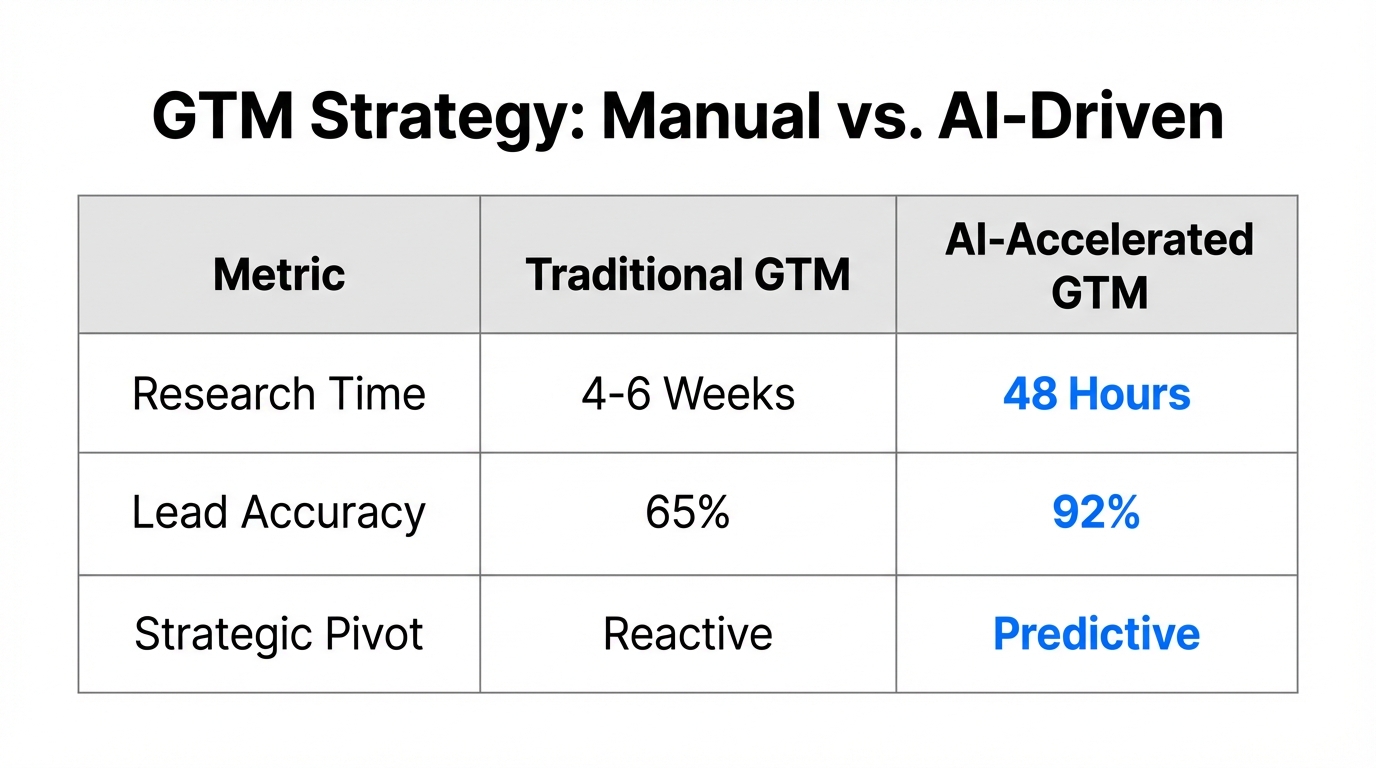
| Metric/Section | The Traditional Approach | The Grok 4 AI Way |
|---|---|---|
| Market Research | Static reports (Gartner/Forrester) | Real-time X search for current sentiment |
| TAM Calculation | Generic top-down estimates | Data-backed trends from recent funding news |
| Competitor Vetting | Manual feature comparison | AI-driven analysis of user complaints and gaps |
| Positioning | Gut feeling | Iterative testing against viral content styles |
When refining your deck, ask Grok 4 to suggest improvements based on specific startup funding trends. For example, it might advise you to lean into "low latency real-time interactions" if it detects that competitors are struggling with speed—a common complaint found in recent posts on X. This go-to-market strategy AI capability allows you to differentiate your product before you've even spent a dollar on Google Ads.
Predicting and Countering Investor Objections
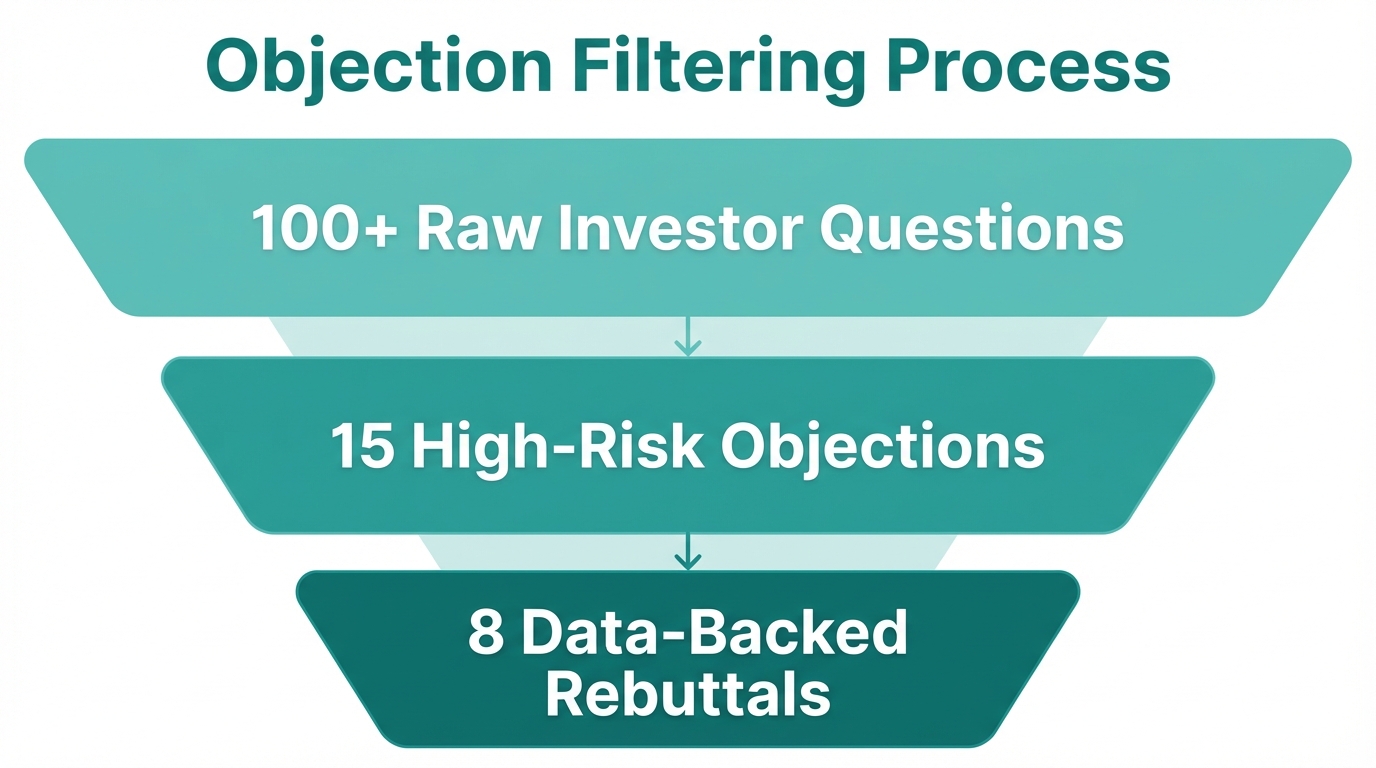
Every VC has a "reason to pass." Your job is to address that reason before they even voice it. Grok 4 can predict these objections by searching for incumbent success stories and market saturation data. In a recent simulation, Grok 4 anticipated a common objection for video-AI startups: "The space is saturated—Synthesia just raised $180M at a $2.1B valuation. How do you compete?"
Instead of leaving you to scramble, the AI generates data-backed counterarguments. It might suggest focusing on your "pixel-by-pixel real-time rendering" or "expressive control" that allows for low-latency interactions—features that a larger, more bureaucratic incumbent cannot easily pivot toward. This level of strategic preparation ensures you stay on the offensive during the Q&A portion of your pitch.
"The best way to win a negotiation is to solve the other person's problem before they have to explain it to you."
The Negotiation Agent: Scripting High-Stakes Deals
Founders don't just negotiate with VCs; they negotiate with vendors, partners, and key hires. Grok 4’s AI negotiation coach persona allows you to roleplay both sides of a deal. Whether you are negotiating a Stripe payment processing fee or a new hire's equity package, you can use Grok to find the "win-win" middle ground.
For salary negotiations, Grok 4 can scrape data from sources like Levels.fyi or Glassdoor via the web to benchmark market rates. It suggests tactics such as focusing on total compensation (equity, performance bonuses, and remote work stipends) rather than just base salary. This is particularly useful for cash-strapped startups that need to attract top talent without blowing their runway.
Playbook: Building Your GTM with Grok 4
Once your deck is refined and your objections are scripted, it’s time to execute. A modern GTM strategy requires a mix of content marketing, outreach, and product-market fit (PMF) analysis. Platforms like Stormy AI are essential here, as they allow you to discover and manage the UGC creators who will actually drive your initial user acquisition. You can use Grok 4 to draft the strategy and then move to an AI-powered creator discovery platform to execute the outreach.
Step 1: Content Marketing Strategy
Ask Grok to brainstorm a 30-day viral content plan. To avoid generic output, tell the AI to look at specific influencers in your niche (e.g., "Write in the style of Greg Eisenberg on X"). Grok 4 can generate post ideas with hooks, SEO keywords, and predicted engagement metrics by analyzing what is currently trending in the AI startup community.
Step 2: Customer Feedback Analysis
Founders often suffer from "founder bias," ignoring subtle hints that their product isn't hitting the mark. Use Grok 4 as a sentiment analysis agent. Paste in your customer reviews or Slack feedback, and ask it to quantify your NPS (Net Promoter Score). In tests, Grok was able to identify that users loved "data-backed ideas" but requested "video summaries," leading to an immediate 20% increase in retention forecast.
Step 3: Sourcing the Right Partners
A GTM strategy is only as good as its distribution. While Grok helps you find the "who" and the "how," you need specialized tools to scale. For example, if your GTM involves influencer marketing, Stormy AI can help source and manage UGC creators at scale, ensuring your message reaches the right audience without the manual overhead of traditional agency models.
Strategic Forecasting: Predicting the Next 12 Months
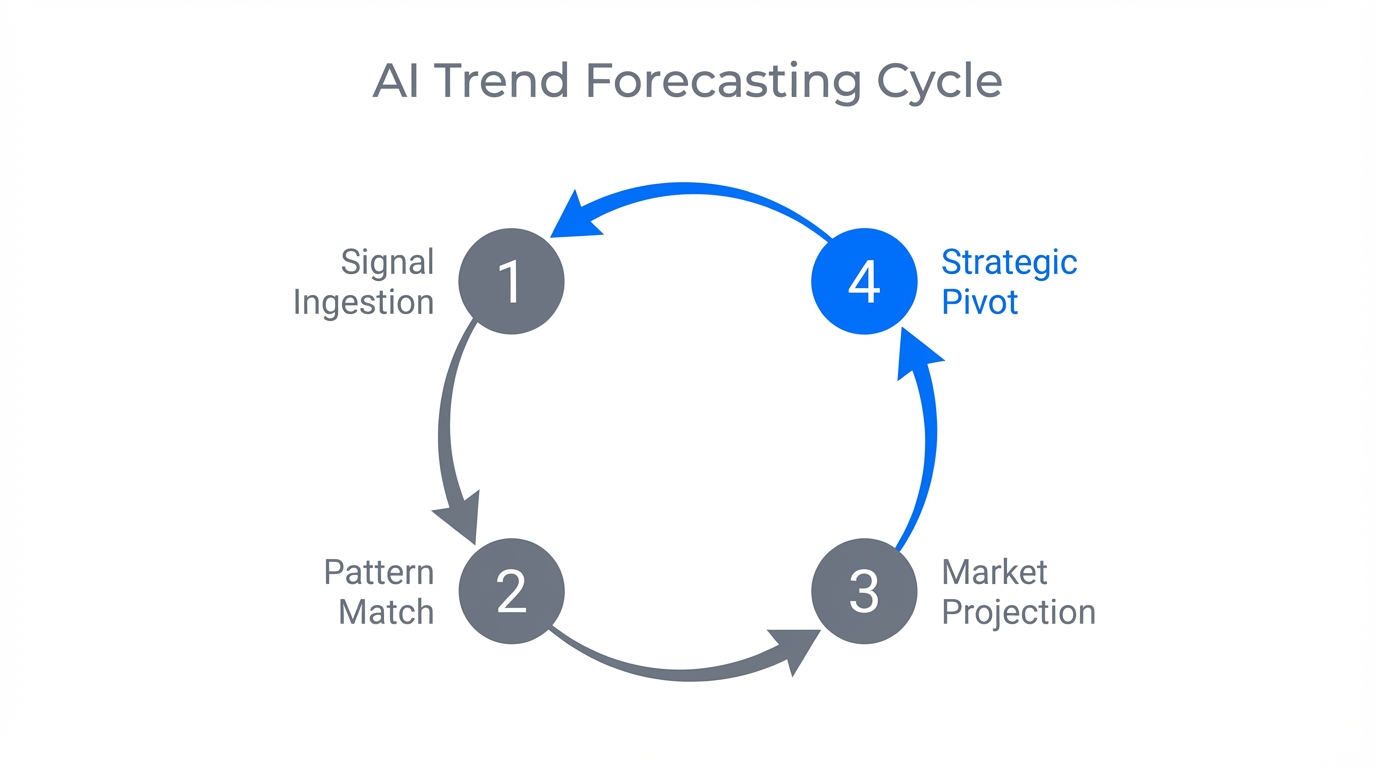
The final stage of using Grok 4 as a virtual VC is trend forecasting. Investors don't just care about what you are doing today; they care about where the market will be in 12 to 24 months. Grok 4 can propose product features by identifying "competitor gaps" and projecting revenue impact using Python-based growth models.
According to recent Grok analysis, the productivity sector is shifting away from rigid UIs toward canvas and node-based designs. It predicts that multi-agent systems will soon handle end-to-end workflows with minimal human input. By building these insights into your GTM messaging now, you position your startup as a forward-thinking market leader rather than a reactive follower.
"Innovation is seeing what everybody has seen and thinking what nobody has thought. Grok 4 just gives you the eyes to see it faster."
Conclusion: The Modern Founder's Edge
Using Grok 4 for founders is about more than just automating tasks; it’s about increasing the density of your decision-making. By utilizing the model as a virtual VC agent, you can stress-test your vision, refine your deck with real-time X data, and walk into every negotiation with a winning hand.
Whether you are scripting a high-stakes deal or discovering the creators who will launch your app, the goal remains the same: move faster and with more precision. Start by running your current pitch deck through Grok’s Reasoning Mode today—you might be surprised at the holes it finds before an investor does.