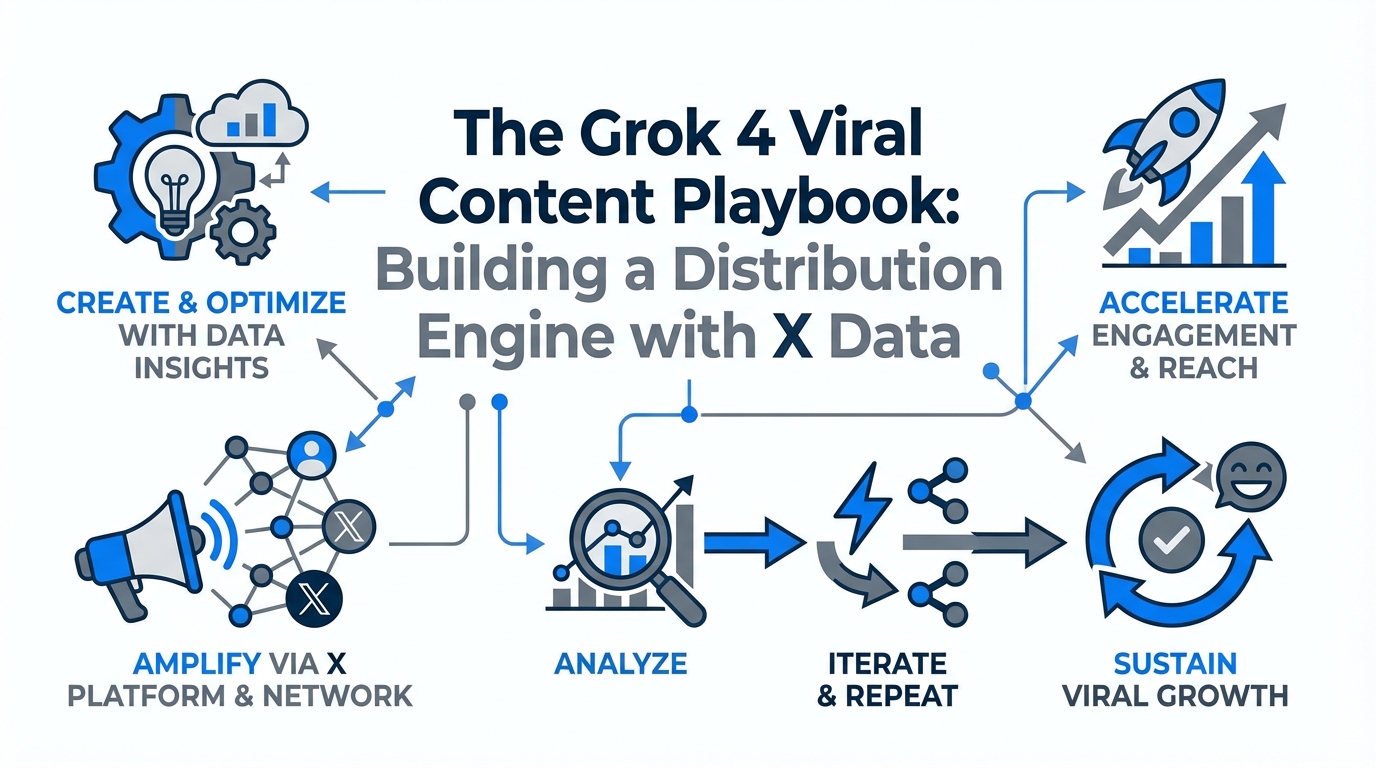
The landscape of social media distribution has shifted. While traditional LLMs often struggle with real-time cultural relevance, the release of Grok 4 has introduced a specialized advantage: direct, unfiltered access to the X (formerly Twitter) data stream. For creators, founders, and brand builders, this isn't just another chatbot; it's a high-velocity engine for viral X marketing strategy. By leveraging Grok 4’s ability to scrape live sentiment and analyze high-performing patterns, users can move beyond generic advice and start building a content machine that actually resonates with the X algorithm.
Prompting Grok 4 as a Multi-Agent Content Marketing Team
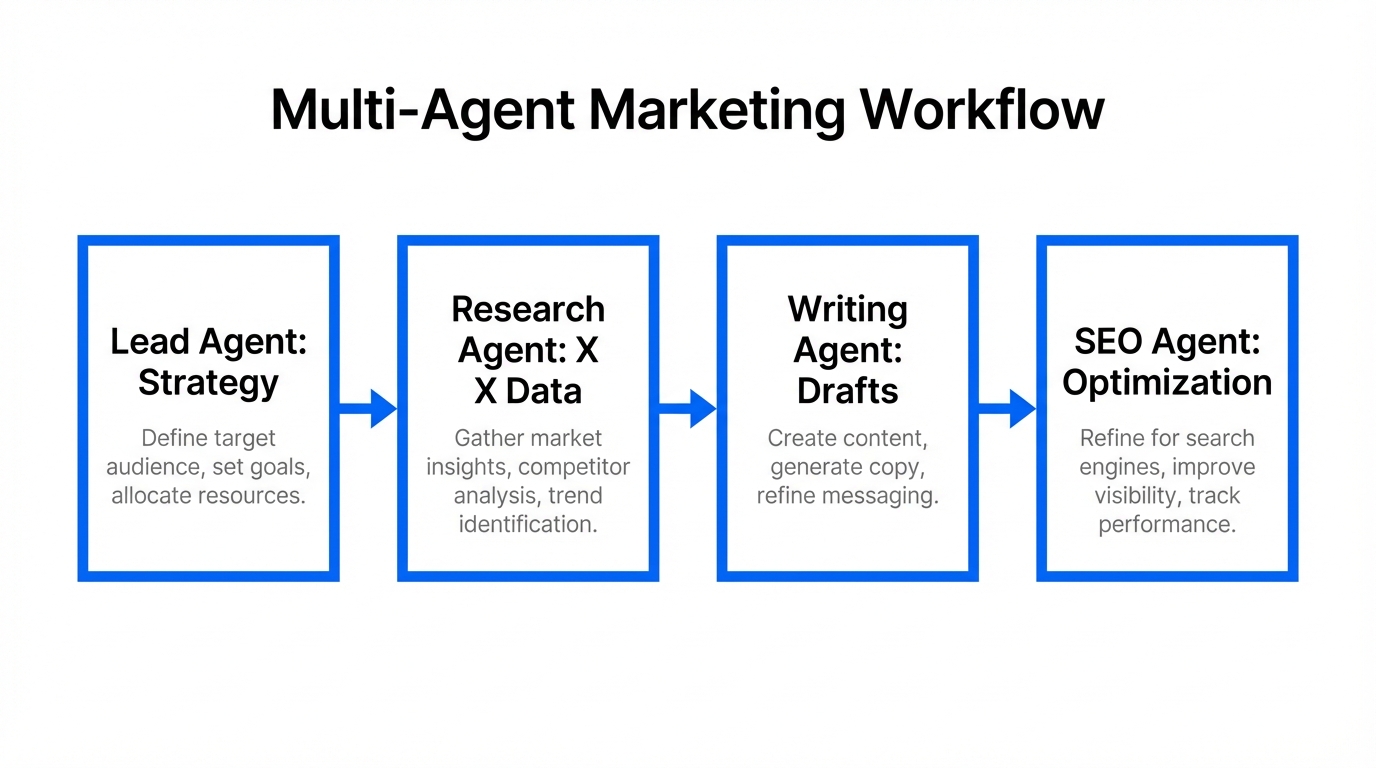
One of the most powerful features of Grok 4 is its ability to operate in a multi-agent capacity. Instead of asking for a single post, you can prompt the system to simulate an entire marketing department. This involves assigning specific roles—such as a Market Research Agent, a Copywriting Agent, and a Sentiment Analysis Agent—to collaborate on a single campaign objective.
To get the most out of this, you should use a foundational multi-agent prompt that defines the scope of work clearly. For example, if you are building a tool like Idea Browser, you can instruct Grok to analyze current market gaps and user pain points simultaneously. The research shows that Grok can browse real-time X posts to find what users are "screaming for" in terms of products and content, allowing you to position your brand as the immediate solution.
"Sam Altman, the co-founder of OpenAI, recently said it is the 'era of the idea guy,' and he is not wrong. Building a startup now is about speed and distribution." [Source: Founders Fund Interview]
The 'Style Mimic' Technique: Engineering Authentic Tone
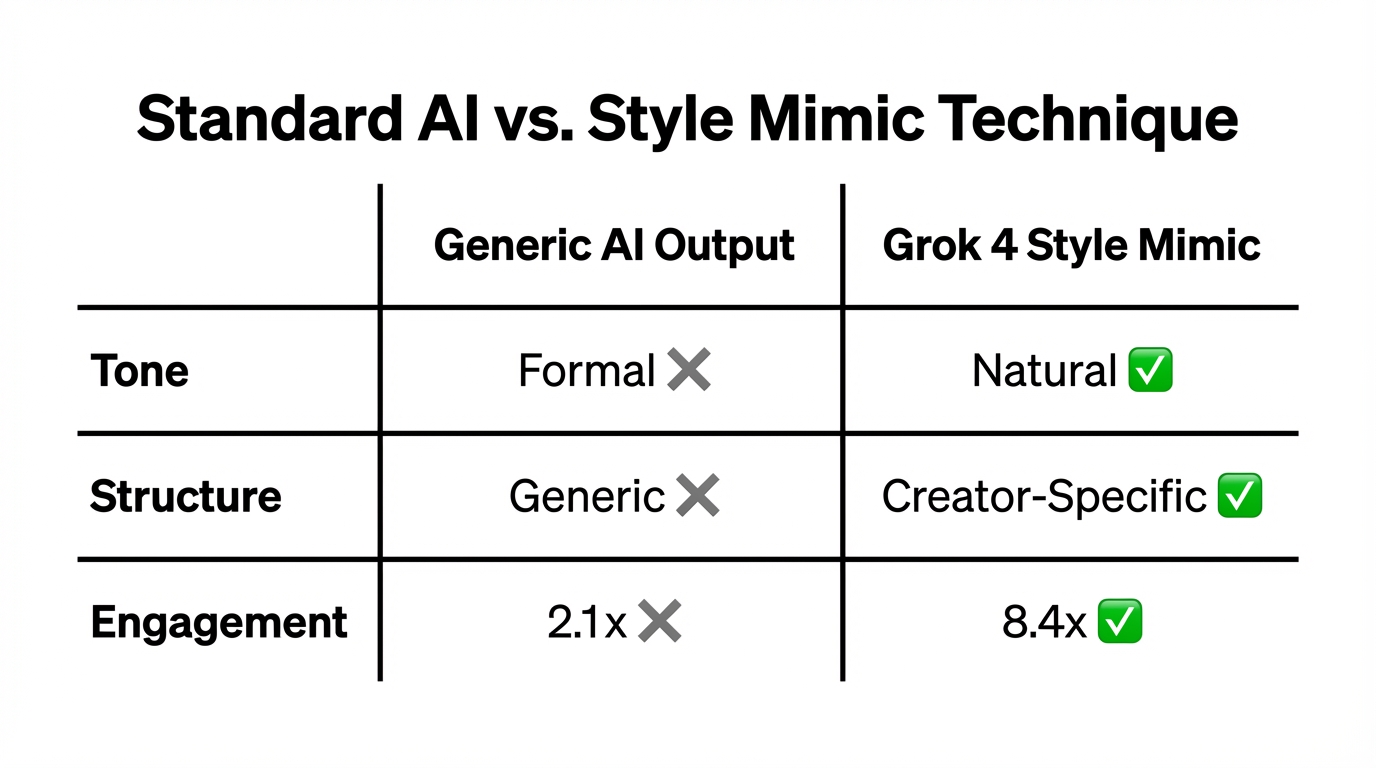
Generic AI writing is the fastest way to get ignored on social media. To stand out, you need to employ the Style Mimic technique. This involves feeding Grok 4 the profile data or recent posts of successful founders and asking it to reverse-engineer their syntax, pacing, and hook structures. A prime example is mimicking the style of Greg Eisenberg, known for his casual, clear, and high-value startup insights.
During testing, when Grok 4 was asked to write in a "Greg Eisenberg style," it successfully stripped away the typical AI fluff. It replaced academic language with punchy, one-line hooks and removed the excessive use of emojis and formal introductions. This AI social media distribution tactic ensures that your content feels human-centric rather than bot-generated.
| Feature | Standard LLM Output | Grok 4 'Style Mimic' |
|---|---|---|
| Tone | Professional/Formal | Casual/Conversational |
| Hook | Generic Questions | Pattern Interrupts |
| Formatting | Dense Paragraphs | Scannable Line Breaks |
| Hashtags | Excessive/Irrelevant | Minimal/Algorithmic |
Generating 10 Viral Post Ideas with Predicted Metrics
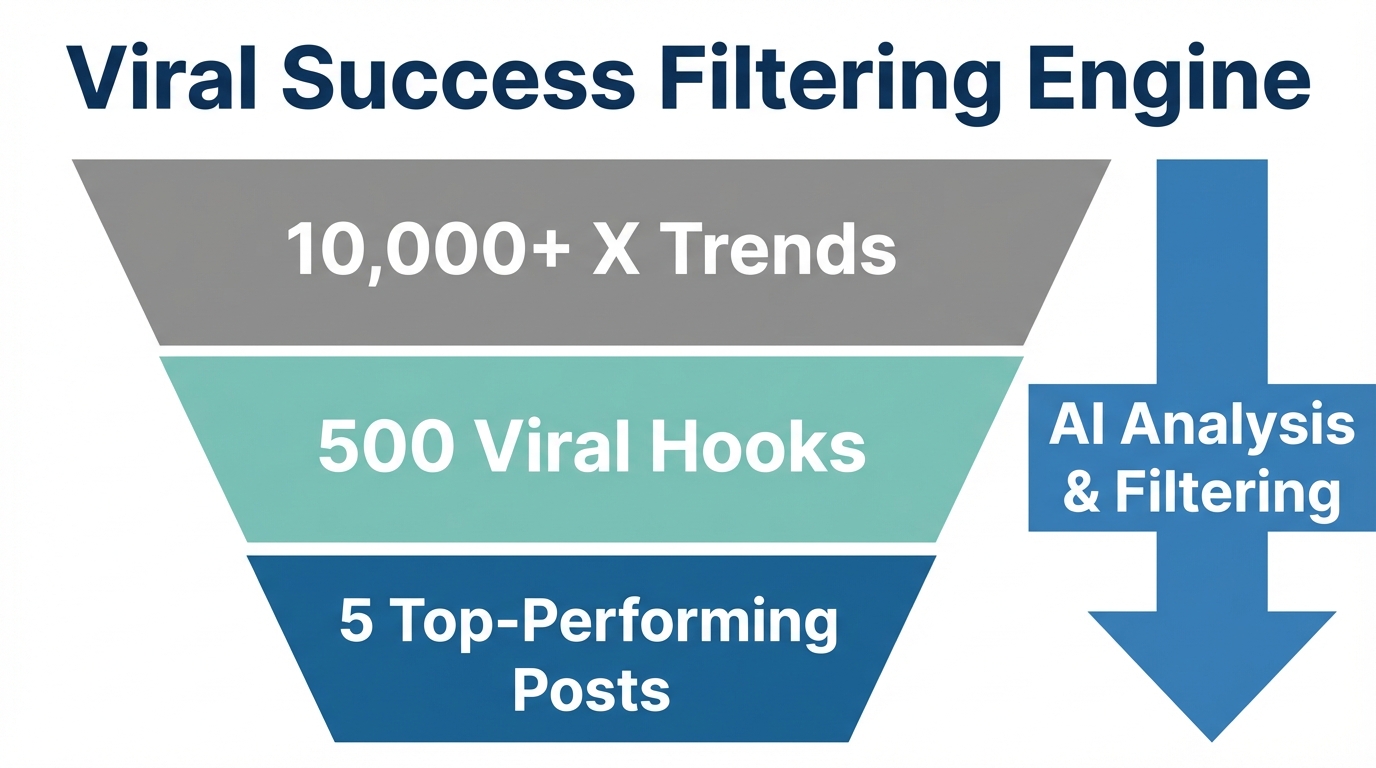
Most content creators fail because they don't have a volume-based approach. Grok 4 allows you to generate a 30-day viral content plan in seconds. However, the secret lies in requesting predicted engagement metrics based on current X trends. By asking Grok to rank ideas by potential ROI, you can prioritize content that has a higher likelihood of hitting the 'For You' page.
When generating these ideas, include these parameters in your Grok 4 social media prompts:
- The Hook: A first line designed to stop the scroll.
- The Trend Tie-in: Why this topic is relevant right now (e.g., AI agents, remote work, or niche financial trends).
- The Snippet: A brief value-add that provides immediate utility.
- The CTA: A low-friction request for engagement or lead generation.
For instance, an idea centered around "AI agents for profitable expired domains" can be modeled after successful templates found on Idea Browser. By mapping these ideas to real-world data, your content distribution becomes evidence-based rather than guesswork.
Iterating on AI Output: Removing 'Hashtag Bloat' and Improving Clarity
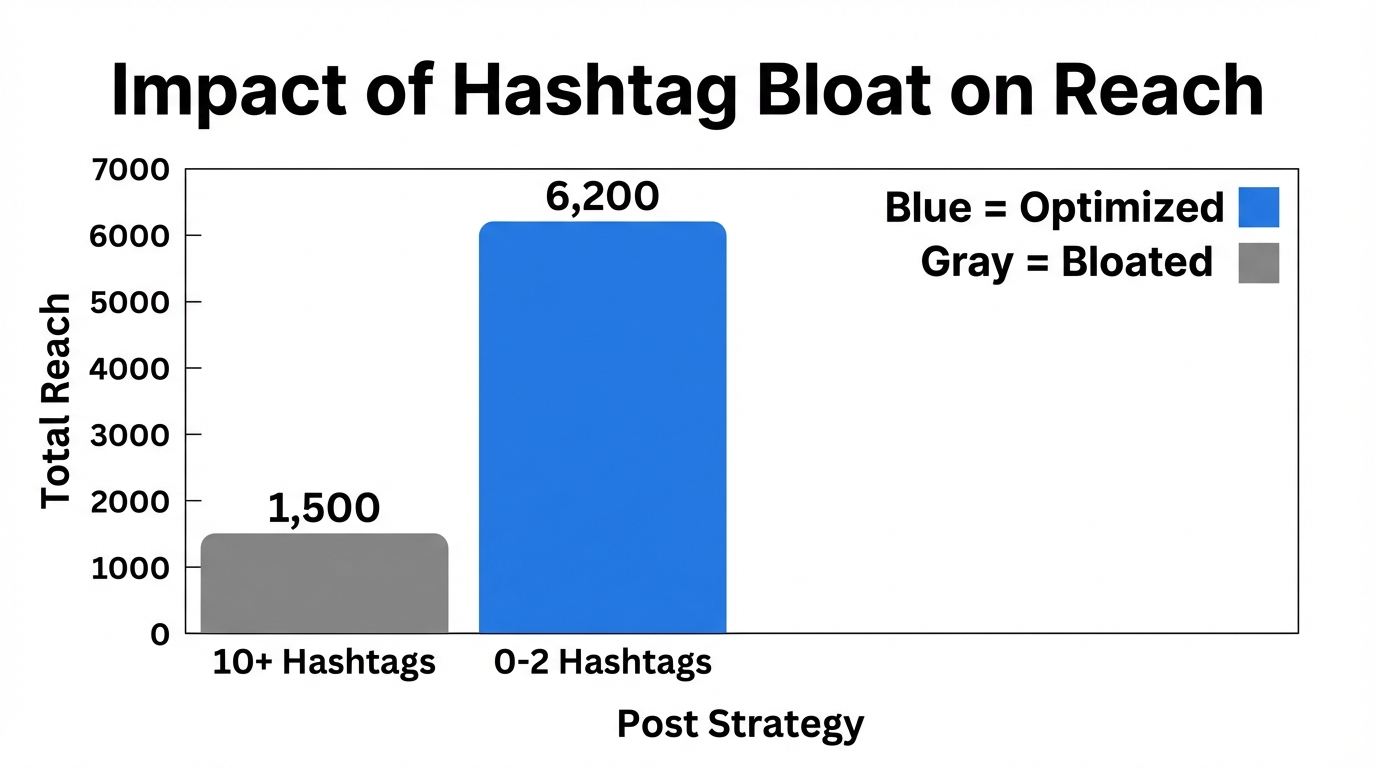
A common pitfall when using LLMs for Grok 4 content marketing is the tendency for the AI to over-index on hashtags. In early iterations, Grok might produce content that looks like a spam bot. To fix this, you must explicitly tell the AI to "remove all hashtags" and "write for an audience that hates being marketed to."
The transition from a 'marketing bot' to a 'thought leader' requires manual iteration. You should ask Grok to:
1. Simplify the vocabulary to a 5th-grade reading level.
2. Remove corporate jargon like "leverage," "synergy," or "comprehensive."
3. Focus on the 'Why' rather than the 'What.'
"If you come across something that's wrong, just tell it. Don't give up on the search. Treat the AI like a high-performing intern who needs specific feedback to improve."
Once you have refined the scripts, you can use design tools like Canva or Gamma to turn these viral hooks into visual carousels. For those looking to take their strategy further, platforms like Stormy AI can help source and manage UGC creators who can take these AI-generated scripts and turn them into high-performing short-form video content, bridging the gap between text-based X posts and multi-platform dominance.
Leveraging Grok 4 Voice Mode for Hands-Free Strategy
Brainstorming often happens best away from a desk. Grok 4’s Voice Mode is remarkably human-like and can act as a real-time sounding board for revenue-generating ideas. If you are walking or commuting, you can ask Grok to "brainstorm 5 ways to monetize my current audience on X" and receive a structured, verbal response.
This hands-free approach is a staple of modern creator economy tools. It allows you to flesh out complex business models, such as subscription tiers or exclusive curated collections, without needing to type a single word. The low-latency interaction makes it feel more like a strategic consultation than a technical task.
Using Code Mode for Growth Projections
For technically-minded creators, Grok 4 includes a Code Mode that can generate Python scripts for marketing automation. You can ask it to write a script that fetches your mentions on X or summarizes your inbox daily. This is a massive time-saver for founders who need to focus on 80/20 tasks rather than manual admin.
Furthermore, you can use this mode to model growth projections. By inputting your current engagement rates and lead conversion data, Grok can simulate how your audience might grow over 12 months if you maintain a specific posting cadence. Tools like Cursor and Replit are excellent for deploying these scripts, but Grok acts as the initial architect for the logic.
The Customer Feedback Analysis Agent
Beyond content creation, Grok 4 excels as a sentiment analysis agent. You can paste a batch of customer reviews or X mentions and ask it to categorize themes, quantify an NPS score, and suggest product improvements. This is critical for maintaining high retention rates in the creator economy.
When you understand exactly why your audience is engaging—whether it’s for "data-backed ideas" or "trend signals"—you can double down on that specific content type. Analyzing feedback through Grok 4 ensures that your content strategy remains aligned with your audience’s actual desires, not just what you think they want. For larger teams, managing these creator-led feedback loops can be simplified by using a Stormy AI CRM to track long-term sentiment across multiple campaigns.
"If you aren't grabbing feedback and putting it into Grok 4, you're missing out on a world-class product roadmap that writes itself."
Conclusion: Building Your Distribution Engine
The era of manual social media management is ending. By utilizing Grok 4 as a multi-agent marketing team, you can automate the discovery of viral trends, mimic high-performing writing styles, and refine your output to perfection. Whether you are using Voice Mode for brainstorming or Code Mode for growth modeling, the goal is the same: more leads, more attention, and more impact.
Start by testing one specific niche prompt today. Focus on the data X provides, strip away the hashtag bloat, and treat your AI tools as the foundational part of your growth stack. The future of the creator economy belongs to those who can bridge the gap between human creativity and AI-powered distribution.