When Jeff Cook and Rick Marini acquired Grindr for roughly $600 million, the asset was a paradox. It was an iconic brand with $100 million in revenue and $45 million in profit, yet it suffered from a dismal 1.8-star rating in the App Store. For many investors, a forced sale by the U.S. government (CFIUS) combined with toxic user sentiment would be a red flag. For Cook and Marini, it was the ultimate "glitch in the system"—an undermanaged asset with massive latent demand just waiting for a professional app growth strategy [source: Reuters].
Over the next 30 months, they executed a surgical turnaround that doubled revenue to $200 million and took the company public at a $2 billion valuation. This wasn't achieved through luck; it was a methodical application of the "Tinder Playbook," aggressive mobile app monetization optimization, and a total reset of the company's culture and tech stack. Here is the playbook they used to turn a 1.8-star app into a multibillion-dollar exit.
Identifying the 'Undermanaged' Goldmine
The first step in scaling app revenue is recognizing that low sentiment does not always equal a bad business. In fact, if an app is doing $100M in revenue despite a 1.8-star rating, it is a sign of incredible product-market fit. It means the utility of the app is so high that users are willing to endure a terrible experience just to use the service.
Grindr’s previous ownership had operated under a "black box" model characterized by rule-by-fear management and a decaying tech stack. By the time Cook and Marini stepped in, the engineering team was largely uncommitted, and only five people had equity or a clear vision for the company. This created a scenario where stable cash flow existed alongside massive operational inefficiency—the perfect target for a private equity-style turnaround.
"How are you doing 100 million of revenue and 45 million of profit with a 1.8-star rating? We look at this and we just see opportunity."The Monetization Audit: Optimization Over Invention
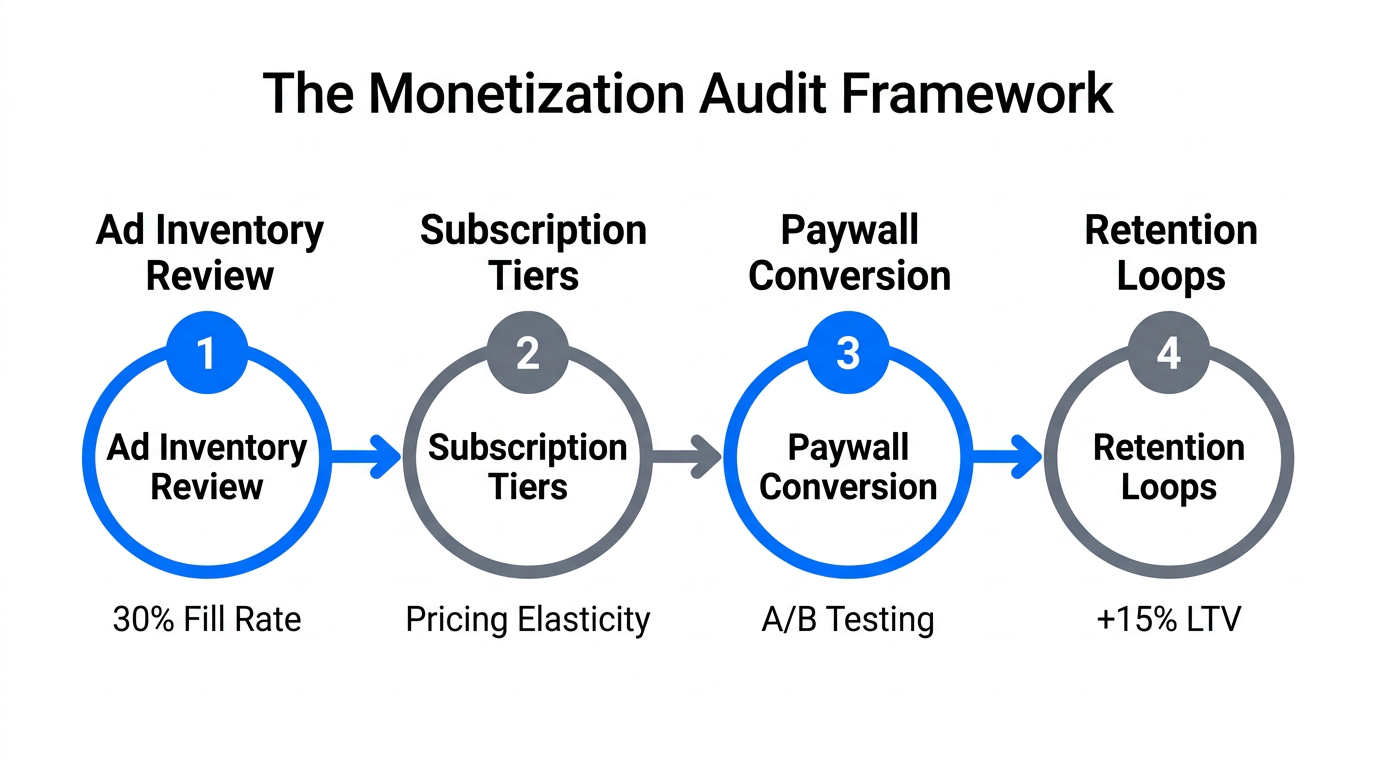
One of the most striking revelations from the Grindr turnaround was how much revenue was being left on the table through basic mobile app monetization failures. The team didn't need to reinvent the wheel; they needed to fix the plumbing. They initiated a total audit of the subscription business model and identified several low-hanging fruits:
- Buy Button Placement: Many screens didn't even have visible or intuitive buy buttons. Improving the conversion rate optimization (CRO) on the checkout flow provided an immediate lift.
- Localized Pricing Strategy: Grindr was using a uniform pricing model globally. They found they were significantly underpricing in certain affluent markets and overpricing in emerging ones. Localizing tiers based on purchasing power parity is essential for global scaling app revenue.
- Subscription Tiers: They introduced multiple tiers to capture value from "price-insensitive" power users who were getting thousands of dollars of value but only paying for a basic subscription.
| Monetization Lever | Legacy State | Growth Playbook State |
|---|---|---|
| Pricing | Uniform Global Pricing | Dynamic & Localized |
| Tiers | Single Premium Tier | Multi-Tiered (Entry to VIP) |
| Ads | Intrusive/High Friction | Incentivized or Removed |
| Checkout | High-Friction Flow | 1-Click / Optimized UI |
Implementing the 'Tinder Playbook'
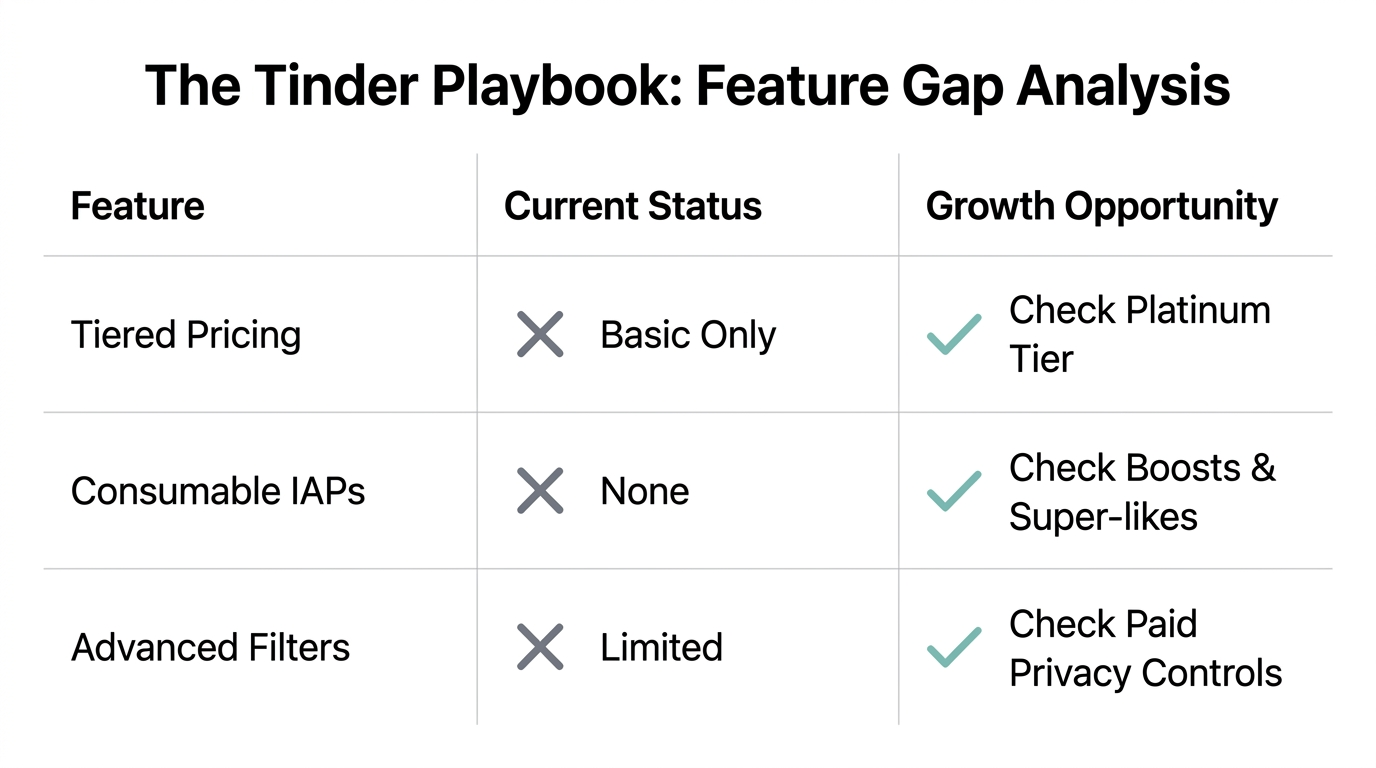
Success in the dating and social discovery space often comes down to feature parity with market leaders. While Meta Ads and organic growth were driving users, the product lacked the addictive monetization features perfected by Match Group. Cook and Marini looked directly at what was working for Tinder and ported those concepts to the Grindr ecosystem.
1. The 'Boost' Feature
They introduced a feature equivalent to Tinder’s "Boost," allowing users to pay a one-time fee to have their profile prioritized in the grid. This shifted the revenue mix from purely recurring subscriptions to a healthy balance of in-app purchases (IAP).
2. The Web Version
Grindr was purely mobile for years. By building a web version, they captured latent demand from users who preferred a desktop experience or were in environments where a mobile app was less discreet. This expanded their footprint without increasing customer acquisition costs (CAC).
3. Data-Driven Product Roadmap
The team used SEO and intent-based data to understand what users were searching for. This product led growth approach ensured that every new feature was backed by user demand rather than founder intuition. For instance, they doubled down on safety and health features like HIV status reminders that the community desperately wanted, which in turn increased brand trust and long-term retention.
"We knew if we just did the basic Tinder playbook things—boosts, better pricing, web version—we would be up 50%. If we did them well, we'd hit 100%."Why Removing Ads Can Increase LTV
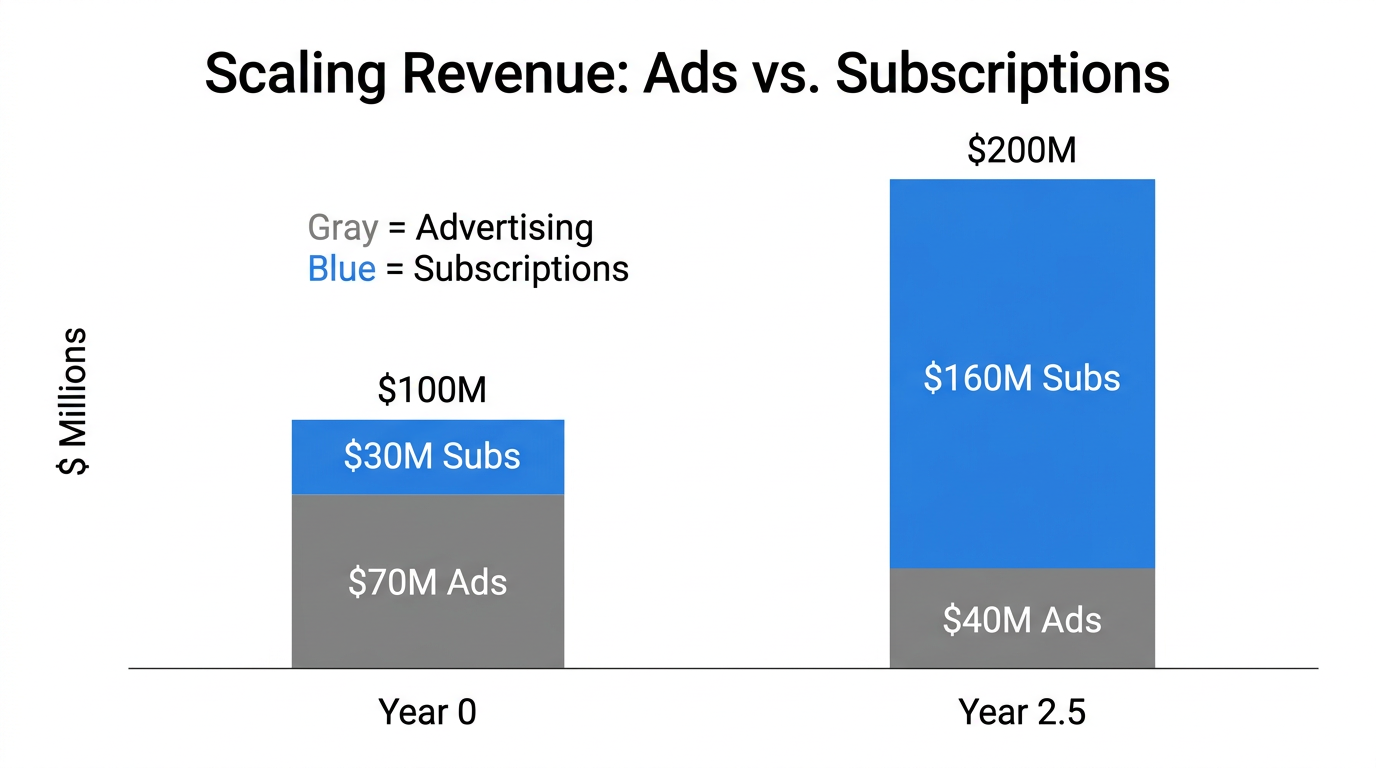
In a counter-intuitive move, the turnaround team initially reduced or removed intrusive advertising within the product. They recognized that while ads provided short-term cash flow, they were the primary driver of the 1.8-star rating and high uninstall rates. By cleaning up the UI, they improved long-term Lifetime Value (LTV) and retention.
When users enjoy a cleaner experience, they are more likely to convert into paying subscribers. The team gambled that the revenue lost from ad placements would be more than recovered by the increase in subscription conversions—a bet that paid off handsomely. Managing this balance requires sophisticated analytics tools like Mixpanel or Amplitude to track the exact inflection point where ad friction destroys user value.
Scaling the Growth Engine with Modern Tools
Once the product was optimized, the focus shifted to growth at scale. This required moving beyond traditional performance marketing. Modern app growth strategies increasingly rely on User Generated Content (UGC) and influencer partnerships to bypass the "blindness" users have toward traditional display ads. Platforms like TikTok Ads Manager have become the primary battleground for app installs.
For many developers, sourcing these creators at scale is the bottleneck. Using an AI-powered discovery engine like Stormy AI allows brands to find niche creators who resonate with specific communities—much like the LGBTQ+ community Grindr serves. By automating the vetting and outreach process, marketing teams can maintain a constant flow of fresh UGC to fuel their Apple Search Ads and social campaigns, ensuring CAC stays below the newly optimized LTV.
Rebuilding Talent and Tech Stack
You cannot scale a multibillion-dollar business on a "decaying" tech stack. Cook and Marini eventually had to fire 70% of the staff, including most of the engineering team. They replaced them with high-scale veterans from companies like Yahoo and Google who understood how to manage millions of concurrent users across 190+ countries.
They also focused on the mission-driven aspect of the business. By hiring from the LGBTQ+ community and focusing on safety (e.g., HIV status features and trans healthcare databases), they turned the company into a recruitment magnet. This "talent reset" was the foundation that allowed them to move from $100M to $200M in revenue without the app breaking under the weight of its own growth.
"The correlation between success and talent is not nearly the overlap you would think. It's about finding the right glitch in the system and having the discipline to fix it."The Path to a $2 Billion Exit
The Grindr story is a masterclass in risk-adjusted entrepreneurship. By focusing on a business with proven cash flow and clear operational deficiencies, the team avoided the "product-market fit risk" that kills most startups. They used a combination of debt financing (securing $200M from Fortress) and equity to create a 9x return for their investors.
As you look to scale your own mobile app, remember that the most significant gains often come from optimizing what already exists rather than chasing the next shiny feature. Whether you are managing a small subscription app or a global social network, the fundamentals of pricing, funnel optimization, and talent density remain the same. Pair these with modern tools like Stormy AI for creator CRM and sourcing to build a growth engine that is both sustainable and highly profitable.