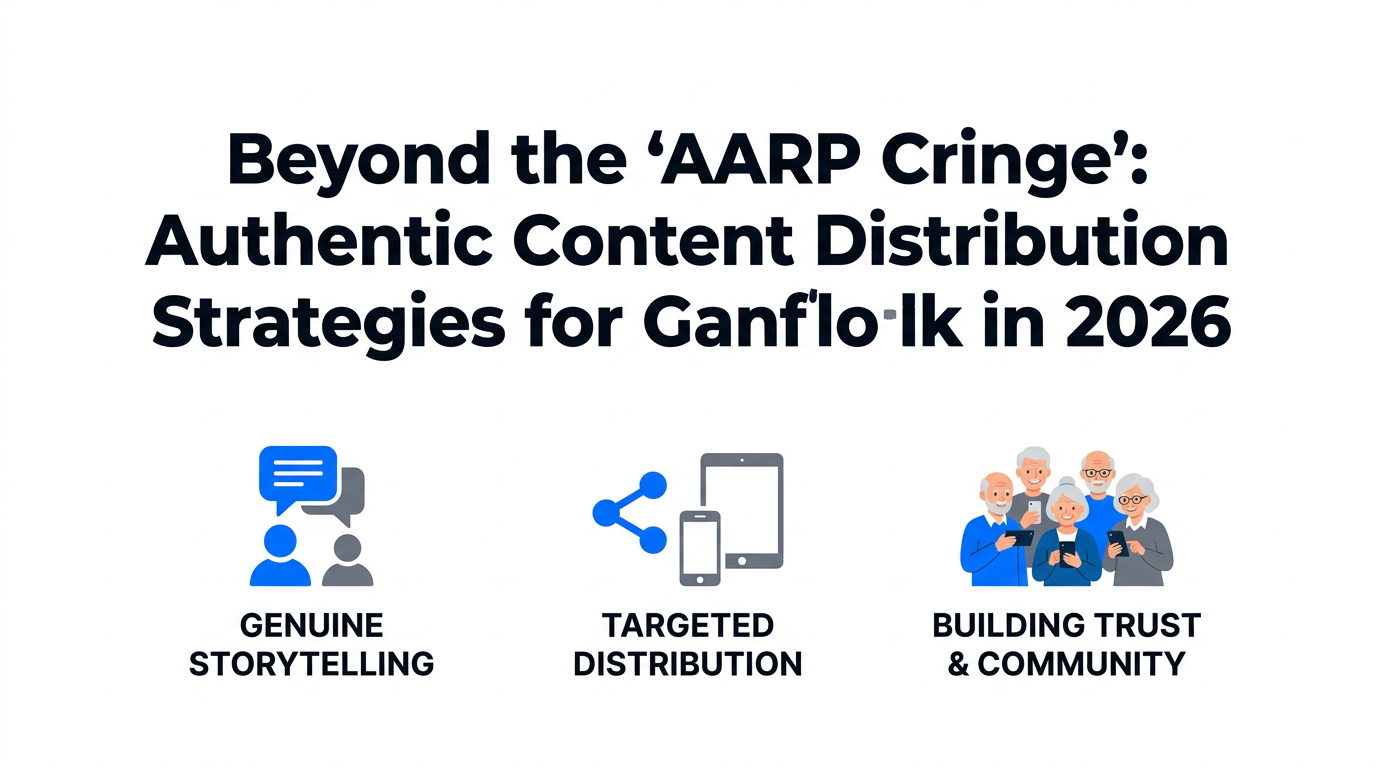
For decades, the marketing industry has been obsessed with the fountain of youth. Brands poured billions into capturing the attention of Gen Z and Alpha, often ignoring the demographic that actually holds the purse strings. But in 2026, the tide has officially turned. We are now in the era of the Silver Economy, a period defined by the World Economic Forum as a massive market opportunity where the most potent influencer distribution strategy doesn't involve a 19-year-old in a hype house, but rather a 70-year-old grandmother sharing recipes or fashion tips from her living room. The rise of the "granfluencer" represents a fundamental shift toward radical content authenticity and away from the algorithmic fatigue that has plagued younger creator circles.
The Silver Economy: Why 2026 Belongs to the Granfluencer
The numbers behind this shift are staggering. Baby Boomers (ages 60–78) currently hold 70% of all disposable income in the United States and are responsible for 55% of all national spending. Despite this, they have historically been underserved by digital-first brands. In 2026, savvy marketers are realizing that social media demographics are no longer skewed solely toward the young. According to the Pew Research Center, over 59% of Baby Boomers are now active on social media, spending an average of 15 hours per week scrolling through their feeds.
This engagement isn't just vanity; it's a reflection of trust. While younger audiences are increasingly skeptical of sponsored content, senior creators are viewed as more reliable and relatable. Data from industry analysts suggests that the global influencer marketing industry will reach $34.1 billion by the end of this year, with a massive portion of that growth driven by creators over the age of 50. This is the new frontier of UGC marketing 2026.
"Humans crave reliability and trust, a quality that senior creators naturally embody in a way that AI-generated influencers never will."Avoiding the 'AARP Cringe': Marketing with Vitality
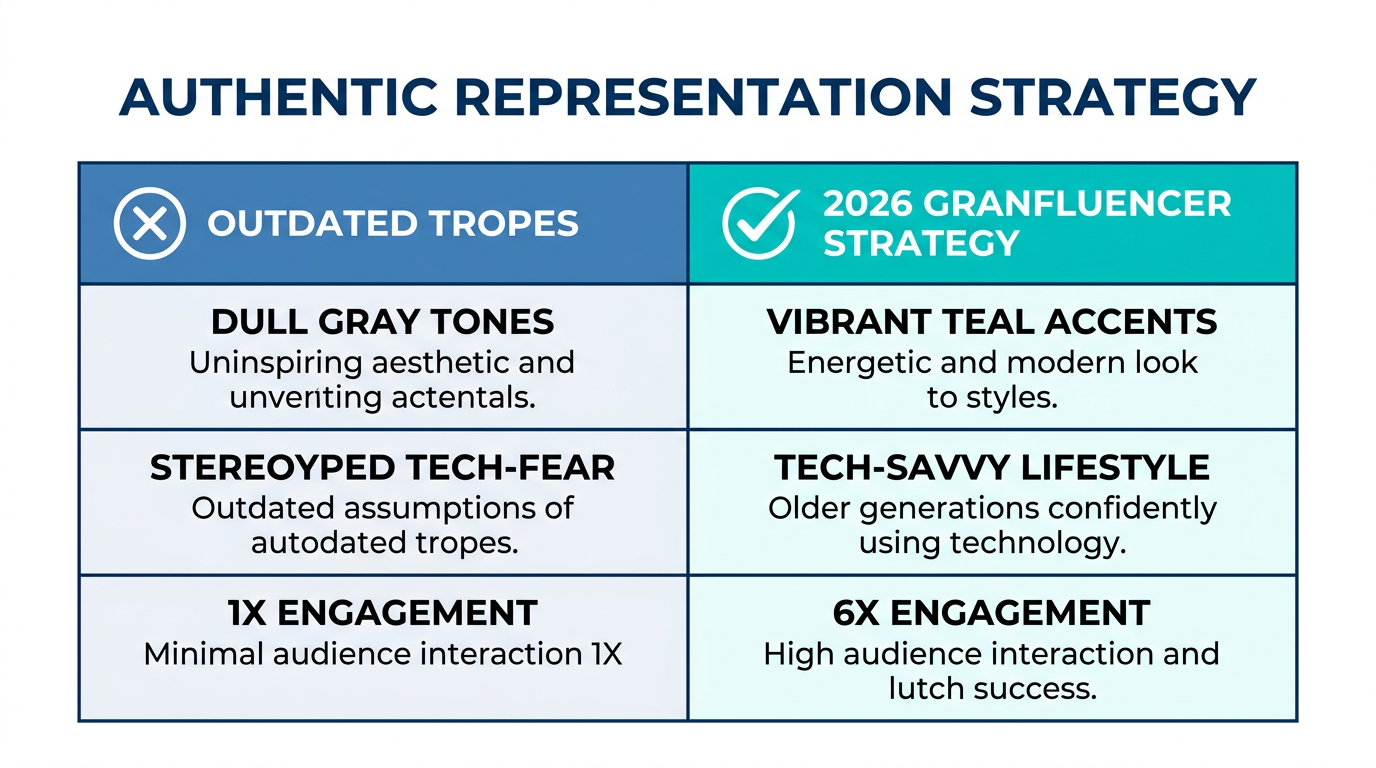
The biggest mistake brands make when entering the senior market is falling into the "AARP Cringe." This happens when marketing materials treat seniors as tech-phobic, fragile, or exclusively focused on retirement and healthcare. To succeed in 2026, your content must focus on vitality, humor, and expertise. Seniors don't want to be talked down to; they want to see themselves reflected as active, stylish, and knowledgeable participants in modern culture.
Take, for example, Grece Ghanem, a 50+ former microbiologist turned high-fashion icon. She has become the face of luxury brands like Gucci and L’Oréal, proving that style has no expiration date. Similarly, Grandma Droniak has captured over 13 million TikTok followers by using sharp humor and a "take-no-prisoners" attitude. These creators don't succeed because they are old; they succeed because they are authentically themselves, and their age simply adds a layer of hard-won authority to their voice.
Cross-Generational Marketing: The Buyer vs. The Gift-Giver
One of the most powerful aspects of working with granfluencers is the ability to execute a cross-generational marketing strategy. A single piece of content can effectively target two distinct audiences simultaneously:
- The Peers (The Buyers): Fellow seniors who see the creator as a trusted advisor for products that improve their lifestyle.
- The Younger Generations (The Gift-Givers): Gen Z and Millennials who follow granfluencers for their aesthetic or humor and end up purchasing products as gifts for their own parents or grandparents via platforms like Shopify.
A prime example of this is the Aura Frames x Charlotte Simpson campaign. By partnering with the 65+ year-old Simpson (known as @TravelingBlackWidow), the digital frame brand generated 6x more engagement than their youth-focused campaigns. Simpson’s content resonated with seniors looking to stay connected with family, but it also spoke to younger followers who realized the digital frame was the perfect holiday gift for their own less tech-savvy relatives.
"The power of experience offers a form of cultural capital that younger creators simply cannot replicate, making granfluencers the ultimate bridge between generations."Platform-Specific Distribution: TikTok vs. Instagram
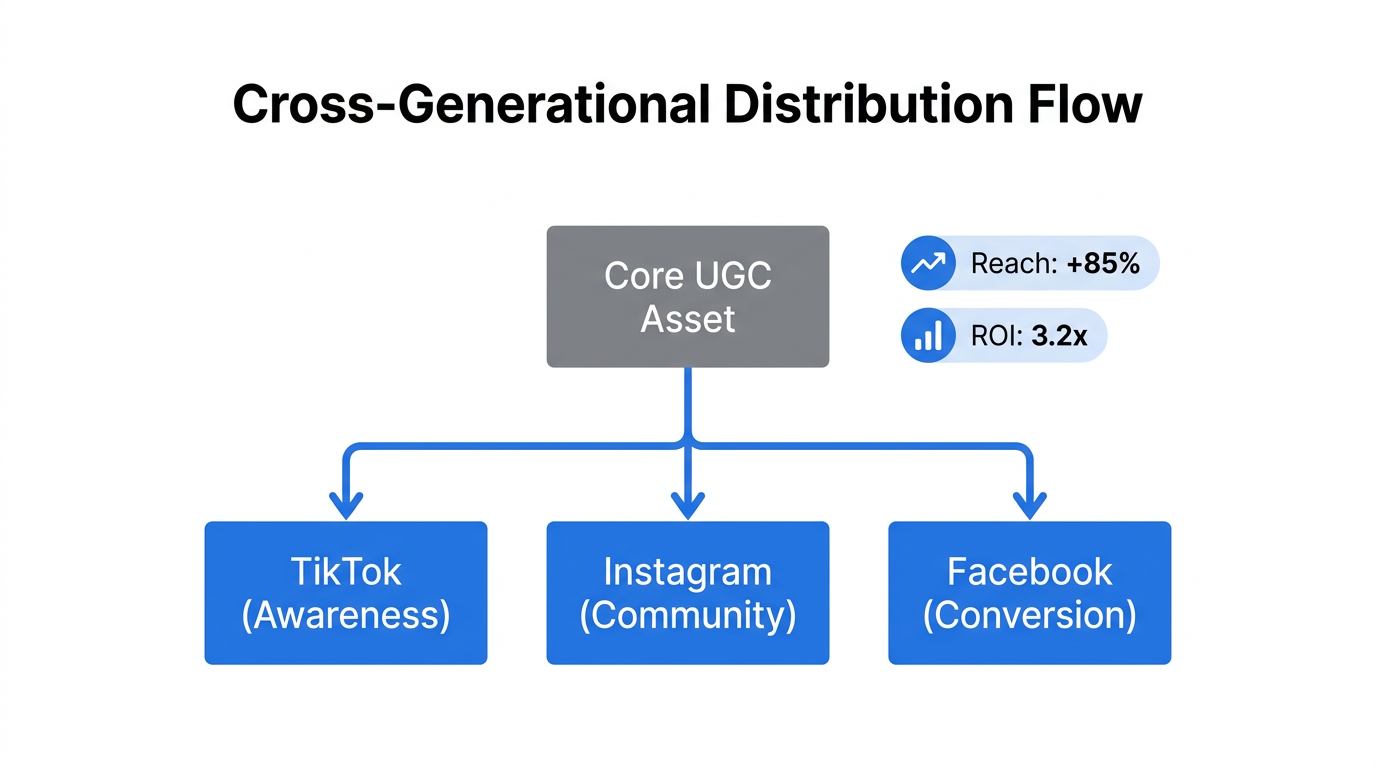
In 2026, a one-size-fits-all approach to influencer distribution strategy is a recipe for failure. The way a granfluencer interacts with their audience varies significantly by platform. When sourcing these creators, using an AI-powered engine like Stormy AI can help you identify which creators excel on specific channels and vet their audience demographics to ensure you aren't just buying "empty" reach.
| Platform | Content Style | Primary Audience Goal | Key Granfluencer Example |
|---|---|---|---|
| TikTok | Lo-Fi / "FaceTime" style | Humor, raw authenticity, and quick tips. | @grandma_droniak |
| Aesthetic / High-Production | Lifestyle inspiration, fashion, and home decor. | @brunchwithbabs | |
| YouTube | Educational / Long-form | Deep-dive expertise and storytelling. | Senior Finance/DIY Experts |
On TikTok, the trend has shifted toward "Lo-Fi" authenticity. Audiences want content that feels like a FaceTime call with a wise friend. Over-edited or highly produced videos often perform poorly because they feel like traditional TV commercials. Conversely, on Instagram, the focus remains on visual storytelling and high-quality aesthetics, where creators like Barbara Costello (@brunchwithbabs) use "mom hacks" and recipes to secure major partnerships in the home goods and healthcare sectors by blending domestic expertise with premium visuals.
The 2026 Granfluencer Playbook: How to Scale UGC That Converts
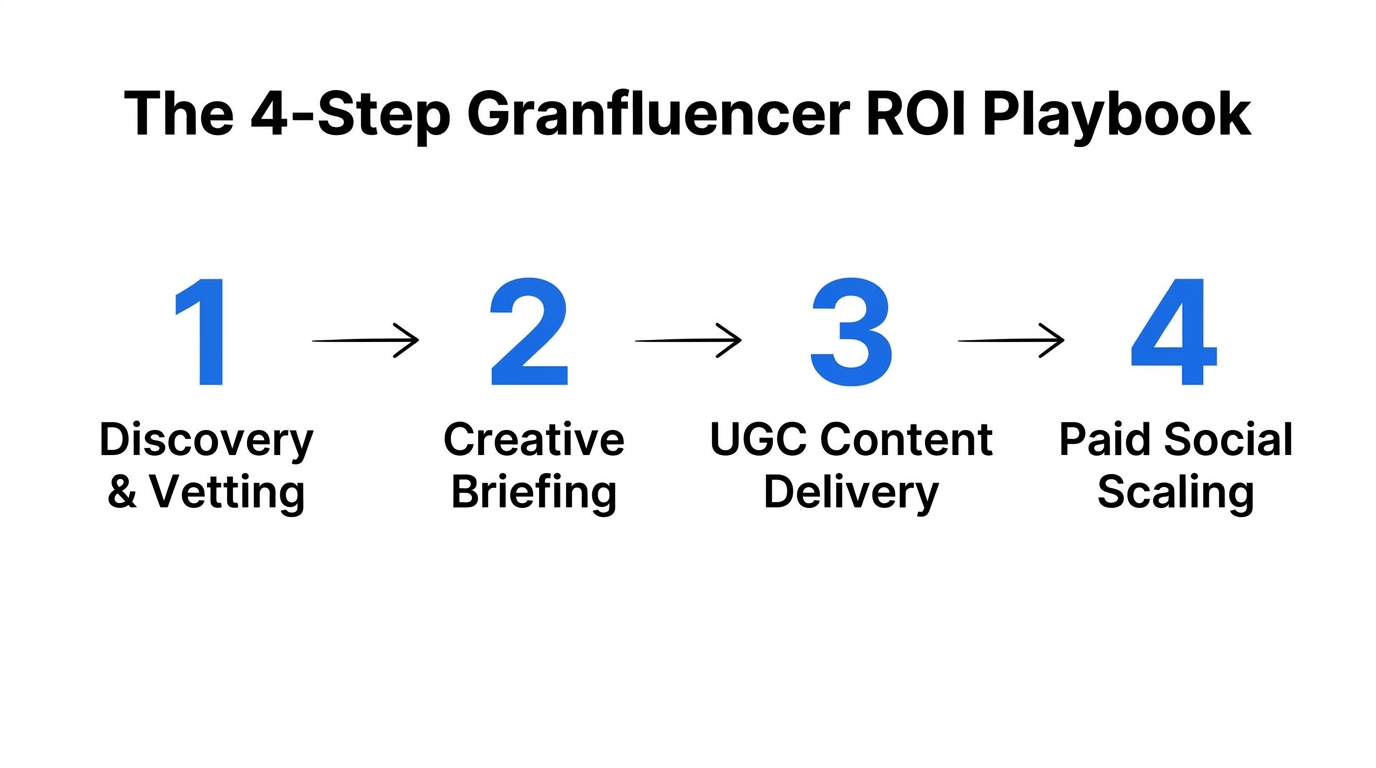
If you are ready to integrate senior creators into your UGC marketing 2026 strategy, follow this three-step playbook to ensure maximum ROI and brand safety.
Step 1: Prioritize Relevance over Reach
Don't be blinded by follower counts. A creator with 500k followers whose audience is primarily 18-24 year olds will not help you sell luxury skincare to 60-year-olds. Use an AI-driven platform like Stormy AI to verify audience authenticity and ensure the demographics align with your actual target buyer. Look for "expertise-driven" niches—seniors who dominate in financial services, wellness, or professional education often command higher conversion rates than general lifestyle accounts.
Step 2: Grant Creative Freedom
The fastest way to ruin a granfluencer campaign is to micromanage the script. These creators know their audience better than any agency does. Provide the brand guidelines, but allow them to use their own "voice." According to Hello Partner, campaigns where creators are given creative control see a 40% higher sentiment score. If the content feels forced, the audience will sniff it out immediately.
Step 3: Implement Hybrid Compensation
In 2026, the industry standard has moved toward Hybrid Compensation Models. Instead of just a flat fee, offer a base fee plus a 10-15% commission on sales. As noted by Impact.com, this aligns the creator's incentives with the brand’s performance goals, ensuring they are personally invested in the success of the campaign. This model is particularly effective for UGC marketing where the content is repurposed for paid social ads.
Leveraging Senior Creators for High-Converting UGC Ads
Beyond organic posts, the real value of granfluencers in 2026 lies in paid social distribution. Raw, unpolished video content from senior creators often outperforms professional studio ads in App Store Optimization (ASO) campaigns and mobile app marketing. Why? Because it doesn't look like an ad. When a user sees a senior creator explaining how a specific health app helped them track their heart rate, it feels like a testimonial rather than a sales pitch.
Brands should focus on capturing short-form video content that highlights a single problem-solution set. For example, a senior creator demonstrating how easy it is to navigate a new fintech app can reduce the "barrier to entry" for other seniors who may be hesitant about new technology. By distributing this content through Meta Ads or similar UGC-focused strategies, brands can scale their social proof rapidly across platforms like Meta and TikTok.
Conclusion: The Future of Authenticity
As we move deeper into 2026, the brands that win will be the ones that embrace the diversity of the creator economy. Granfluencers are not a novelty; they are a strategic necessity for any brand looking to tap into the $15 trillion Silver Economy. By moving beyond the "AARP Cringe" and focusing on authentic influencer distribution strategies, you can build a bridge between generations that drives both trust and transactions.
Success in this space requires the right tools for discovery and vetting. Whether you are looking for a nano-influencer for a niche health product or a global icon for a luxury campaign, platforms like Stormy AI provide the data-driven insights needed to ensure your partnership is built on genuine engagement, not just vanity metrics. It's time to stop ignoring the most powerful demographic on the planet and start creating content that actually speaks to them.