In 2026, the question for ecommerce founders is no longer whether to automate customer support, but how to do it without destroying your margins. With the global AI customer service market projected to reach $15.12 billion this year, according to Grand View Research, the shift from human-first to AI-first support is complete. However, as Gorgias has pivoted from a standard helpdesk to a full-scale "Conversational AI Platform," their pricing has evolved into a complex, outcome-based model that can either save your business or drain your bank account through hidden overages.
By the end of 2026, experts at Gartner predict that 80% of routine customer interactions will be fully handled by AI. For a scaling brand, this means your support bill is no longer tied to how many seats you have in your office, but how many problems your AI can solve autonomously. If you aren't careful, the $1.00 per AI resolution fee can compound with ticket overages to create what we call the "Starter Trap." This guide breaks down the financial math of Stormy AI and Gorgias working in tandem to keep your operations lean and your ROI high.
The Unit Economics of 2026 Support: $1.00 vs. $3.10
To understand if Gorgias AI is "worth it" this year, you have to look at the fully burdened cost of a human agent. In 2026, a human support representative costs an average of $3.10 per ticket, according to data from Minami AI. In contrast, a successful Gorgias AI resolution typically costs between $0.90 and $1.00. On the surface, this represents a 68% saving per ticket. However, these savings only materialize if the resolution is truly autonomous.
"The goal for high-performing ecommerce teams in 2026 isn't just a high resolution rate; it's hitting the $2.00 target Cost Per Message (CPM)."
As noted by Influx, if your total support cost (software + AI fees + human labor) exceeds $3.75 per ticket, you are likely over-staffing or under-utilizing your automation tools. The target for 2026 is a CPM of under $2.00. To reach this, you need a high-performing AI agent like Gorgias handling the front-end, while an AI ecommerce employee like Stormy AI handles the back-end inventory monitoring and supplier follow-ups to prevent the tickets from being created in the first place.
| Metric | Human Agent | Gorgias AI Agent | 2026 Target (Hybrid) |
|---|---|---|---|
| Cost Per Ticket/Resolution | $3.10 | $1.00 | $1.85 |
| Response Time | 12-24 Hours | < 30 Seconds | Instant (AI) / 2h (Escalated) |
| Scalability | Linear (Higher cost) | Infinite | Elastic |
Avoiding the "Starter Trap": The Double-Billing Risk
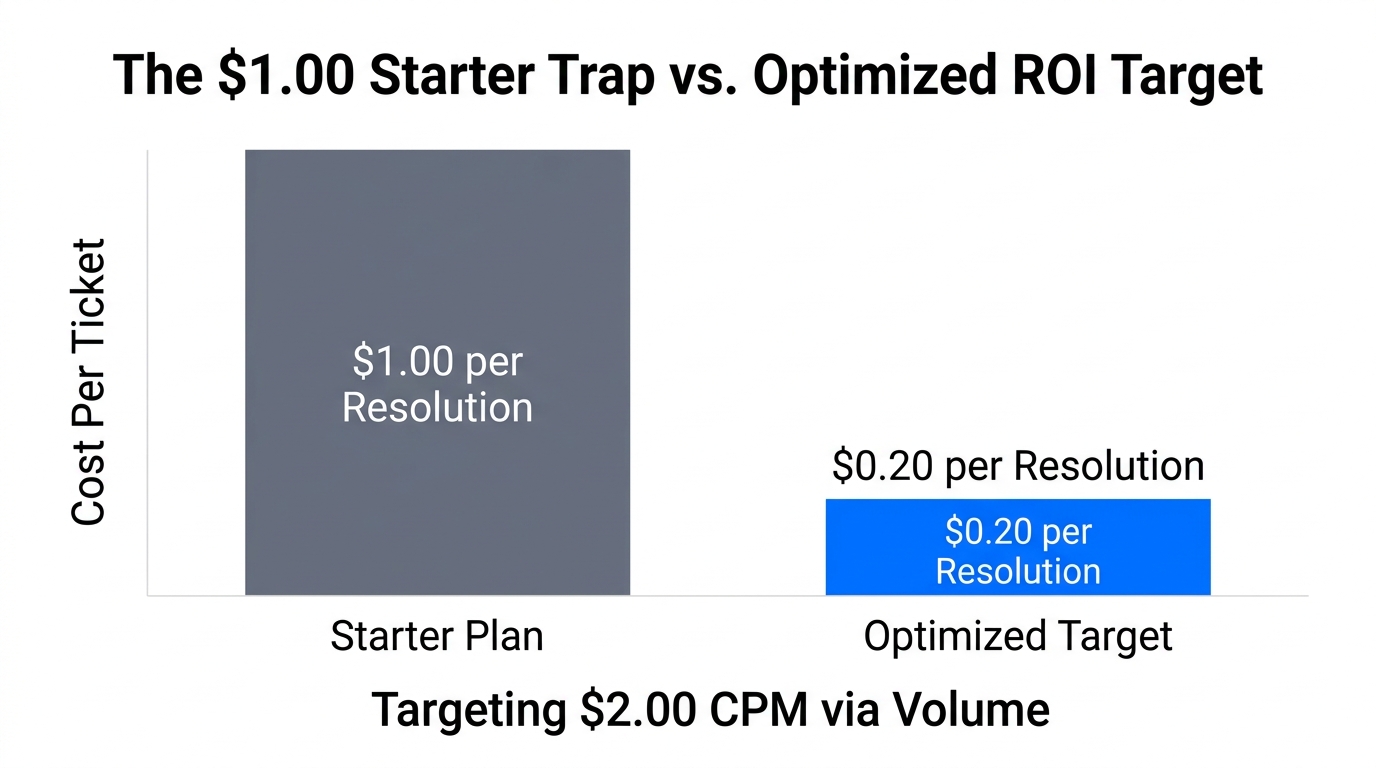
One of the most significant risks for small to mid-sized brands in 2026 is the Gorgias "Starter Trap." Many founders start on the $10/mo Starter plan, which includes 50 tickets. However, HelloRep points out that Gorgias’s outcome-based model essentially double-bills for automated resolutions. You are charged once for the ticket hitting your plan's monthly allotment, and a second time for the automation fee.
To avoid this, brands scaling past 100 tickets per month should move to the Pro or Advanced tiers early. While the base monthly fee is higher, the per-ticket overage cost drops significantly. Furthermore, if you are using Stormy AI to monitor your Shopify store for stockouts and late supplier shipments, you can proactively reduce the number of "Where is my order?" (WISMO) tickets by up to 40%, keeping you within your lower-tier ticket limits longer.
2026 Battle: Gorgias vs. Zendesk vs. Intercom Fin
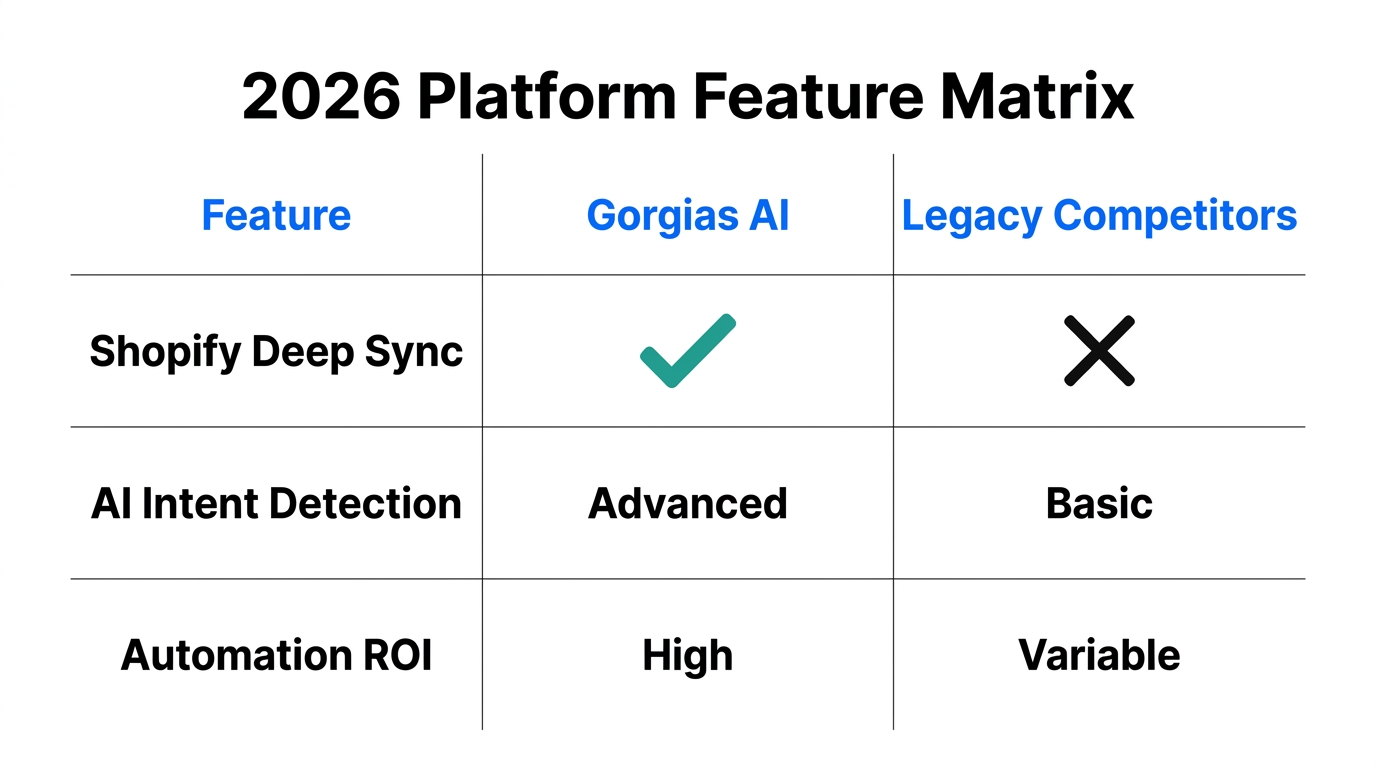
Choosing a platform in 2026 requires understanding the nuanced differences in how they charge for AI. While Gorgias is the gold standard for Shopify and TikTok Shop merchants, competitors like Intercom and Zendesk offer different trade-offs.
| Feature | Gorgias AI | Zendesk AI | Intercom (Fin) |
|---|---|---|---|
| Best For | Shopify DTC Brands | Large Enterprise | SaaS & Engagement |
| AI Pricing | $1.00 / resolution | $50 / agent / mo (Add-on) | $0.99 / resolution |
| Setup Effort | Low (1-click Shopify) | High (Professional Services) | Medium |
| Data Source | Help Center & Shopify API | Broad CRM/ERP | Help Center & In-app |
According to Sacra, Gorgias has reached nearly $72M in ARR because of its deep integration with the ecommerce stack. However, G2 reviews suggest that Intercom's Fin can feel "less bot-like" for complex B2B queries. For a pure ecommerce brand, Gorgias remains the winner because its AI can actually execute actions—like editing a Shopify address or processing a refund—rather than just answering questions.
How Stormy AI Optimizes Your Gorgias ROI
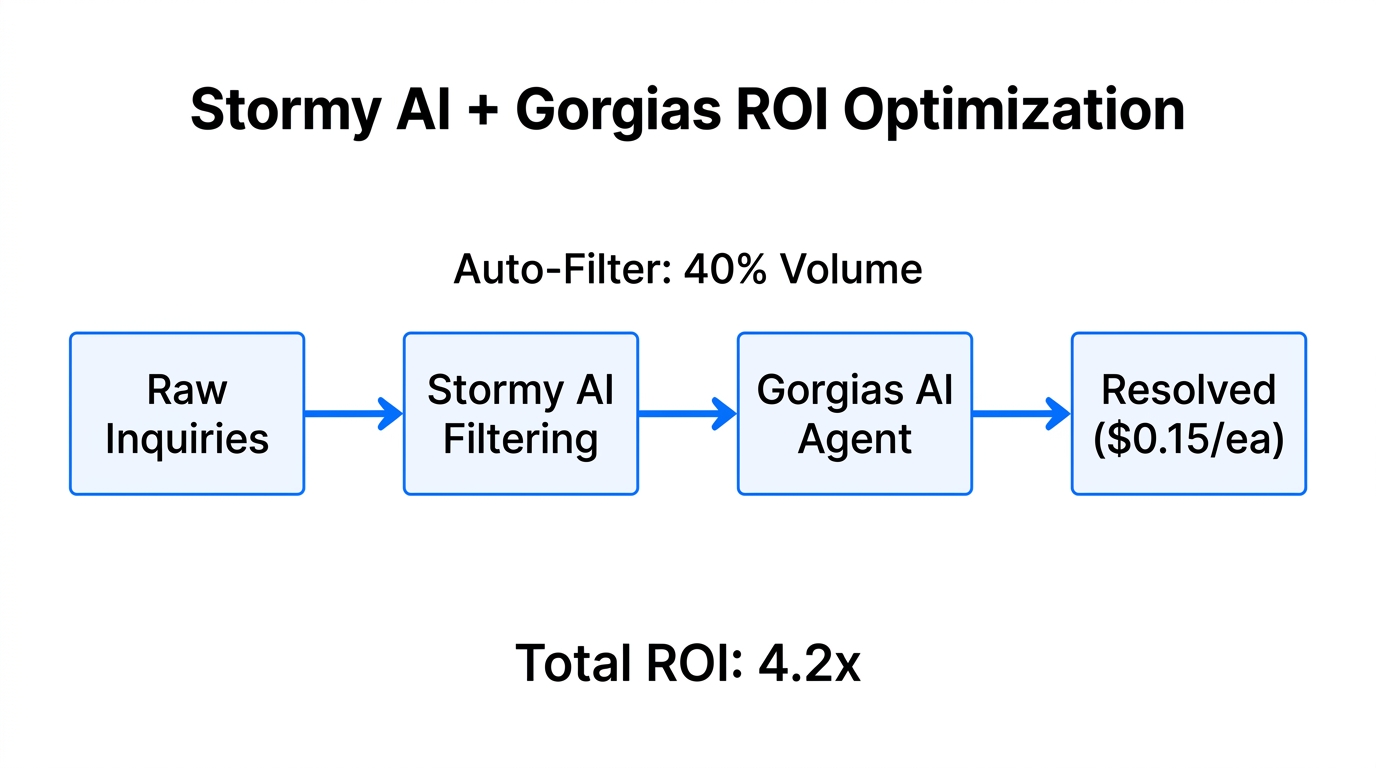
The most expensive support ticket is the one that never needed to happen. This is where Stormy AI comes in as your autonomous ecommerce teammate. While Gorgias AI is reactive (answering the customer when they complain), Stormy is proactive.
Stormy AI connects to your Shopify, Amazon Ads, and supplier spreadsheets. If a shipment is delayed at the port, Stormy AI wakes up, identifies every affected customer row in its spreadsheet, and drafts a bulk update. By the time the customer thinks to ask "where is my order?", they've already received a proactive update. This significantly reduces the volume of tickets that hit Gorgias, allowing you to stay on a lower-priced plan while maintaining high CSAT.
"2026 is the year of Agentic AI. Systems no longer just suggest help articles; they process refunds and edit tiers autonomously via API."
Furthermore, Stormy AI monitors inventory levels. If a product is about to go out of stock, Stormy can alert your supplier and update the Gorgias AI "Guidance" layer to tell customers the item is on backorder. This prevents the "hallucination trap" where an AI agent promises a ship date that the warehouse can't meet.
Implementation Playbook: Gorgias AI Agent 2.0
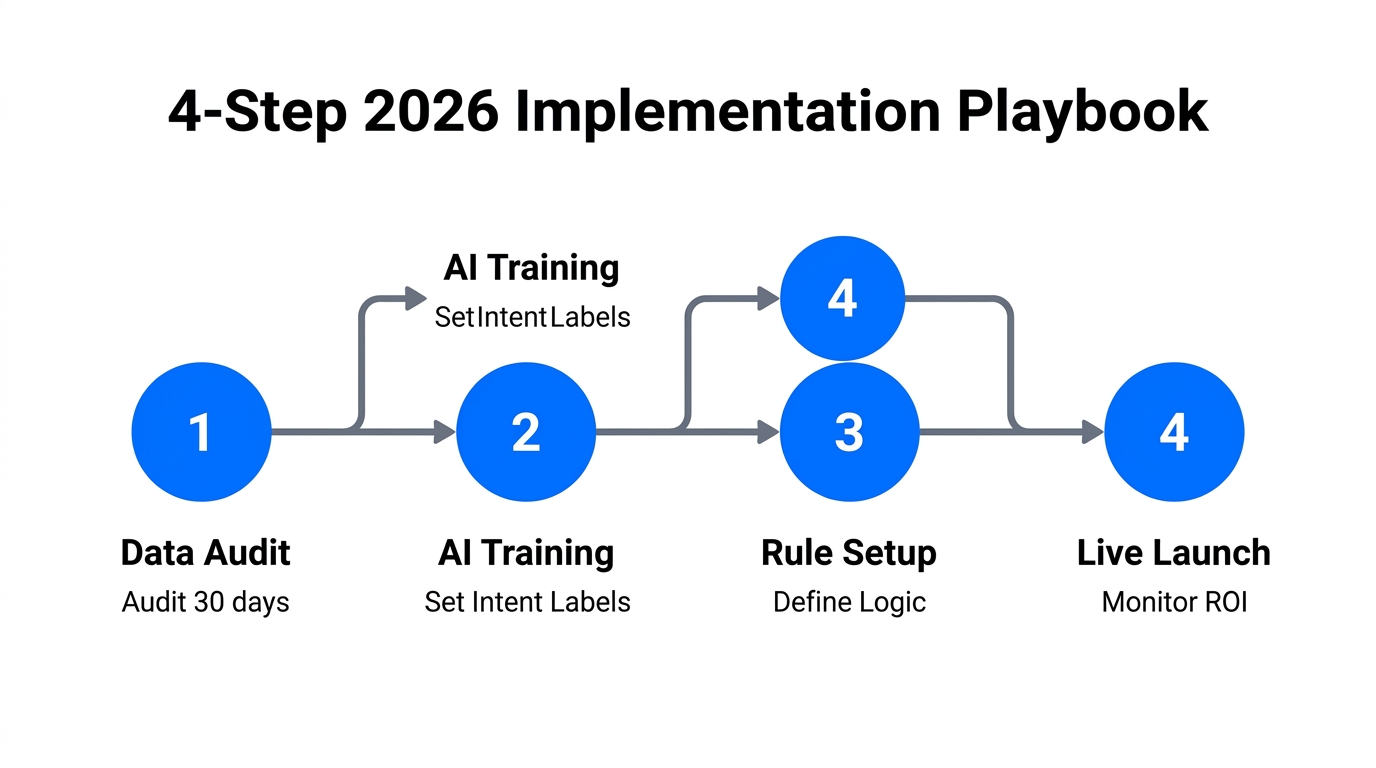
To maximize ROI and minimize Gorgias ticket overage fees, follow this 2026 practitioner playbook:
Step 1: Data Permissions & Deep Integration
Navigate to Settings > My Apps > Shopify. Ensure you have enabled **Update App Permissions**. This allows the AI to see the last 10 orders and customer history. Without this, the AI is just a glorified FAQ bot; with it, it is a resolution machine.
Step 2: Define the "Guidance" Layer
Go to the AI Agent tab. Write your instructions in plain English. For example: "If a customer asks for a return on a 'Final Sale' item, politely decline but offer a 10% discount code." This "grounding" is critical to avoid legal liabilities from hallucinations, a rising concern in 2026 as noted by experts on YouTube / NBH.
Step 3: Orchestrate Actions
Connect the AI to **Actions**. Select templates like "Cancel Order" or "Edit Shipping Address." In 2026, the Gorgias AI Agent 2.0 allows for intent-based discounting. You can set the AI to proactively offer a discount if it detects "exit intent" during a chat about product sizing, potentially increasing add-to-cart rates by up to 2.25x (Gorgias).
Step 4: The Simulation & Sandbox Strategy
Before going live, use the **Playground** feature. According to SaaStr, you should run at least 50 "Adversarial Tests"—trying to trick the bot into giving a refund it shouldn't. This step ensures your resolution fees are spent on valid interactions.
The Risks: Hallucinations and the "Cold-Start" Burden
Despite the high ROI, Gorgias AI in 2026 still has limitations. A major complaint on Reddit is the "Cold-Start" problem. Unlike some newer competitors, Gorgias cannot yet "read" your past 10,000 tickets to learn your brand voice; you must manually enter every piece of knowledge into Help Center articles or Guidance docs (Zipchat AI).
There is also the risk of "Perception Drift," a new 2026 metric identified by AnalyticaHouse. This tracks how automated support changes brand sentiment over time. While the AI is efficient, brands with the highest CSAT (4.6+) typically maintain an AI resolution rate below 20% (Influx). They use AI for the "boring" stuff (WISMO, address changes) and save human agents for high-empathy situations like damaged goods or complex styling advice.
"2026 will be defined by gritty, foundational work—simplifying tech stacks and improving data quality—rather than dazzling transformation." — Forrester Research
Conclusion: Building Your 2026 AI Stack
Optimizing your ecommerce customer support ROI in 2026 requires a two-pronged approach. First, deploy Gorgias AI to handle front-end resolutions at $1.00 per ticket, ensuring you move off the Starter plan early to avoid double-billing traps. Second, hire an AI employee like Stormy AI to run your back-office operations.
By having Stormy AI monitor your inventory, track supplier lead times in a live spreadsheet, and flag risks before they turn into customer complaints, you can reduce Gorgias ticket overages and keep your CPM near the $2.00 target. In the era of the "idea guy," as Sam Altman calls it, the winners are those who use AI agents to automate the messy back office, leaving humans to focus on brand strategy and creative growth.