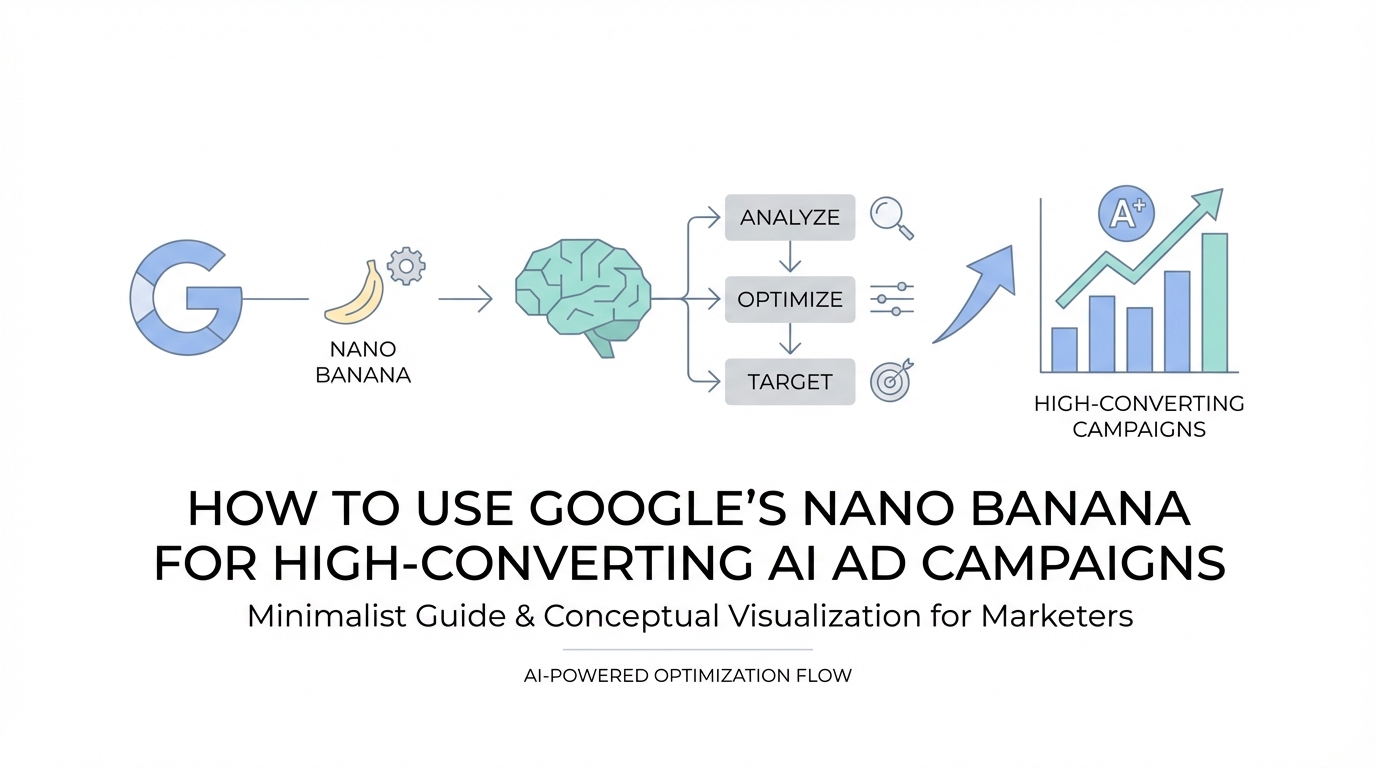
High production costs used to be the primary barrier to entry for world-class advertising. If you wanted a luxury magazine spread or a high-impact subway mural, you needed a six-figure budget, a creative agency, and weeks of lead time. That era is officially over. With the release of Google Nano Banana—the internal codename for the Gemini 2.5 Flash image model—brands can now generate, edit, and scale automated ad creative using nothing but plain English. This is not just another incremental update; it is a fundamental shift in how AI ad generation works, offering unprecedented control over product consistency and text fidelity.
Defining Nano Banana: Why Gemini 2.5 Flash is a Game-Changer
In the rapidly evolving world of artificial intelligence, Nano Banana has emerged as perhaps the most versatile tool for digital marketers. While previous models often struggled with maintaining the integrity of a physical product or rendering legible text, this model excels at both. According to Logan Kilpatrick, a senior lead on the Google AI team, the model is essentially "Photoshop without the learning curve." You can place products in new environments, keep characters consistent across frames, and edit specific sections of an image with simple natural language commands.
The speed of the model is its most significant product advantage. Most high-end generation experiences take 45 to 60 seconds, which kills the creative flow. Nano Banana is nearly instantaneous. This speed, combined with its low cost—roughly $0.04 per image—allows marketers to generate thousands of variations for A/B testing without breaking the bank. At Google AI Studio, developers and founders are already leveraging these capabilities to build "vibe-coded" applications that turn a single product photo into a multi-channel ad campaign in seconds.
Step-by-Step: Vibe-Coding Your Own Ad Generator
One of the most exciting concepts discussed by Kilpatrick is "vibe-coding." This refers to the ability to build functional software and creative tools by simply describing the "vibe" and logic you want to a model like Gemini 2.5 Flash. You don't need to be a senior engineer to create a custom ad engine for your brand. Here is the playbook to get started:
Step 1: Access the Build Tab
Navigate to Google AI Studio and head to the "Build" tab. This section is designed for developers to experiment with demo apps. It showcases the model's ability to handle interactive UI elements like image filters, retouching tools, and product placement canvases.
Step 2: Upload Your Product Reference
Start by uploading a high-quality photo of your product. For example, if you are marketing the new Pixel 9, upload a clean shot of the device. This serves as the "anchor" for all subsequent generations, ensuring that the AI knows exactly what the product looks like before it begins placing it in various scenes.
Step 3: Define the Ad Formats
Instead of manual prompting for every image, vibe-code a set of instructions. Tell the model: "I want to turn this product photo into five different ad formats: a luxury magazine spread, a subway interior mural, a rainy bus stop poster, a cafe table placement, and a social media asset for X."
Step 4: Iterate via Natural Language
If the first result isn't perfect, don't restart. Use the model's multi-turn capabilities to refine. You can say, "The subway looks too dark, make it a brightly lit modern transit station," or "Remove the logo from the center of the phone and place it in the bottom right corner." The model follows these instructions with high spatial awareness.
Visualizing Products in Real-World Environments
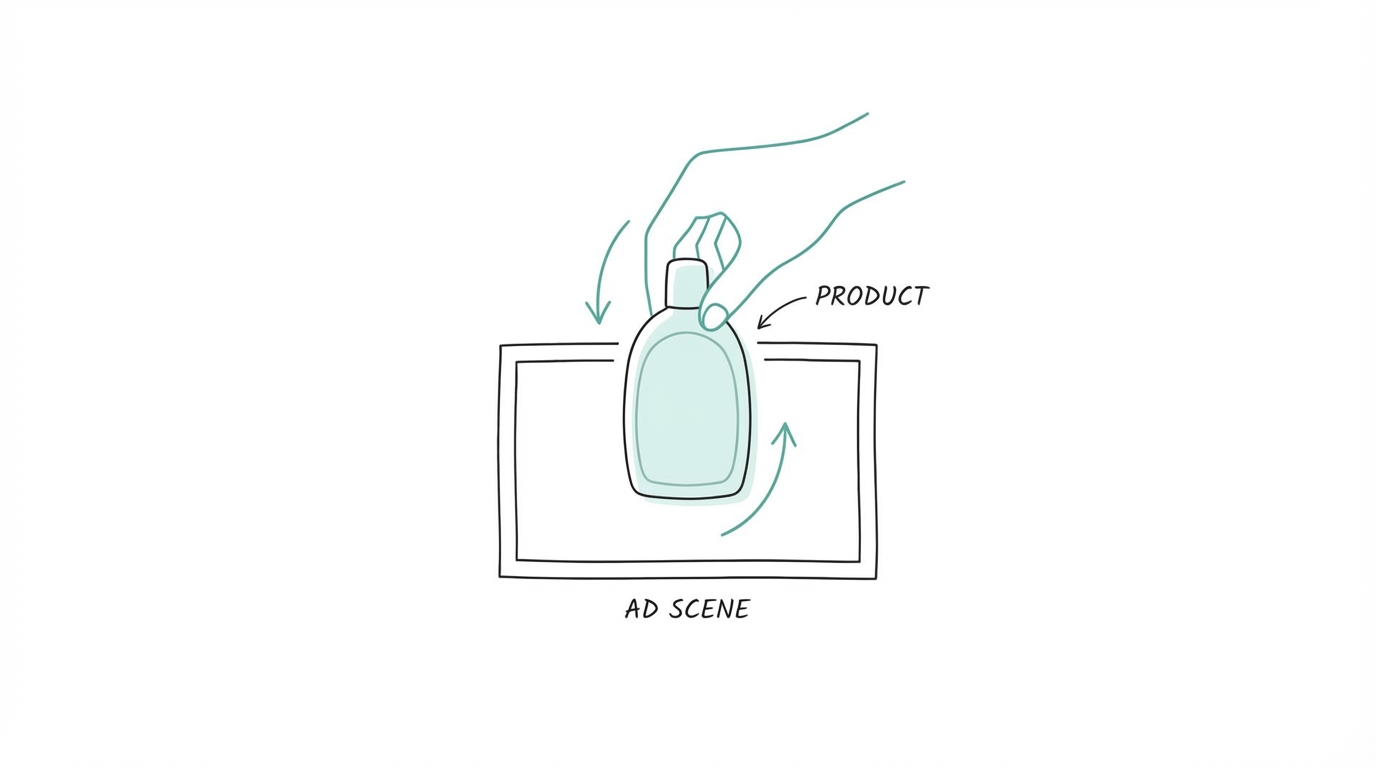
The core power of Nano Banana lies in its AI product photography tutorial capabilities—specifically, product-in-scene placement. Traditionally, getting a shot of your product in a "luxury magazine spread" required hiring a set designer and a photographer. Now, the model can fuse your product image into a high-fidelity environment while maintaining realistic lighting, shadows, and reflections.
For instance, placing a smartphone on a marble table in a library in London looks remarkably authentic because the model uses its world knowledge to understand how light interacts with surfaces. This allows smaller brands to create "scroll-stopping" content that matches the production value of Fortune 500 companies. You can even use tools like Idea Browser to find trending startup concepts and immediately generate the visual assets to validate the market demand before you even manufacture a prototype.
Embedding Marketing Slogans with High Fidelity
A common failure of legacy AI image models is "AI gibberish"—the strange, unreadable text that often appears in generated backgrounds. Nano Banana solves this. It features native support for embedding specific marketing slogans directly into the image. If you want a billboard that says "Pixel: The Phone for AI Nerds," the model will render that text accurately in an appropriate font and perspective.
You can even let the AI act as your copywriter. By prompting the model to "come up with a subversive slogan for a tech-savvy audience and embed it into a subway ad," you can generate creative that is both visually and linguistically aligned. This fusion of automated ad creative and LLM-driven copywriting is what makes Gemini 2.5 Flash a superior tool for performance marketers who need to move fast.
The Economics of $0.04 Ad Creative: Scaling A/B Testing
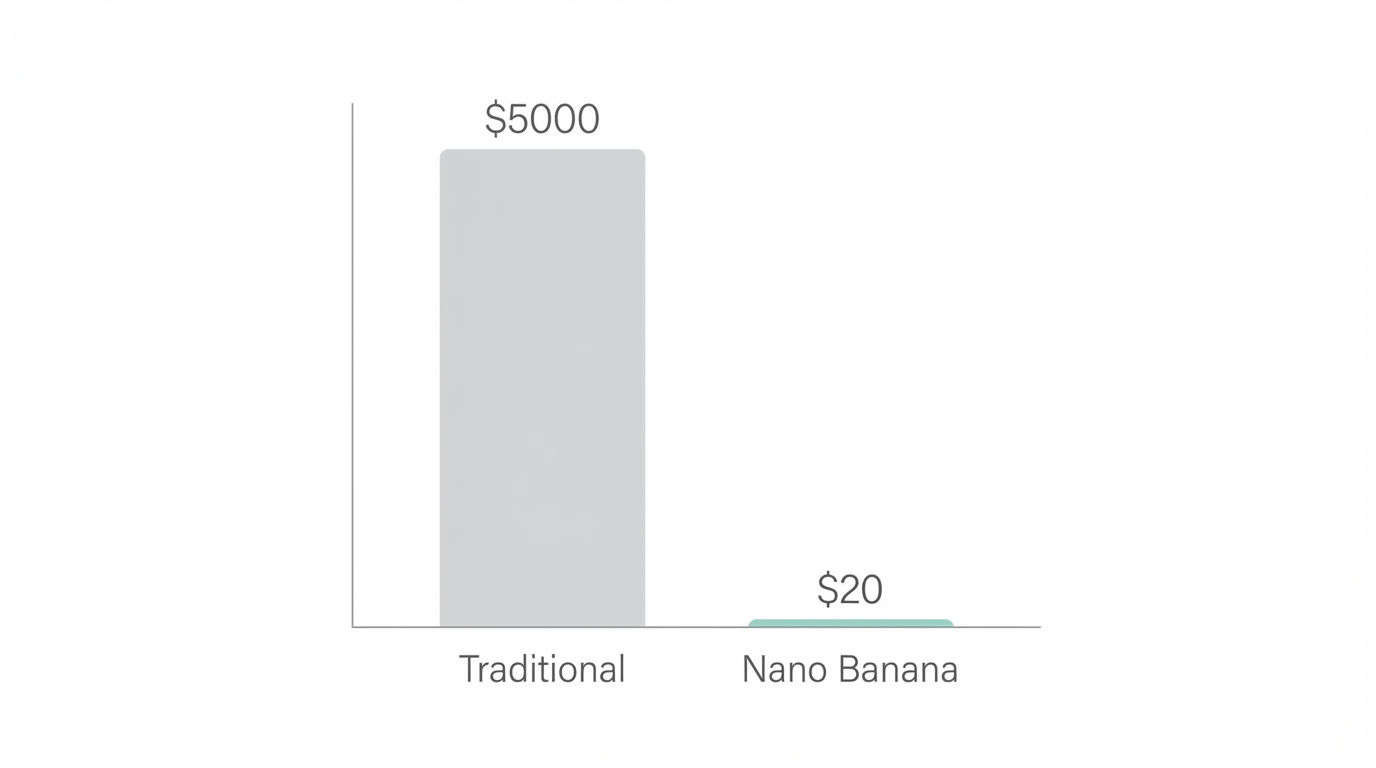
In digital advertising, the winner is usually the one who can test the most variables. Platforms like Google Ads and Meta Ads Manager reward high-performing creative with lower costs per click. However, A/B testing used to be expensive because every new creative required a human designer.
With Nano Banana, 1,000 unique ad images cost roughly $40. This allows for a massive scale of experimentation:
- Localized Creative: Generate ads featuring your product in different cities (e.g., a subway in New York vs. a cafe in Paris) to see which resonates with local audiences.
- Style Variations: Test a "street art mural" vibe against a "high-fashion minimalist" vibe.
- Slogan Testing: Run the same visual with 10 different marketing taglines to identify the highest-converting copy.
By lowering the cost of failure to essentially zero, brands can afford to be much more aggressive with their creative strategies.
Scaling Your Creative Strategy with Stormy AI
Generating the creative is only half the battle; the other half is distribution and management. While Nano Banana handles the visual assets, platforms like Stormy AI can help you find the right UGC creators and influencers to give those assets a human face. For example, you can use Stormy’s AI search to find fitness creators in a specific region and then use your generated AI backdrops as inspiration for the briefs you send them.

Furthermore, once your AI-generated ads are live, managing the relationships with the creators who promote them becomes a logistical challenge. The Stormy AI creator CRM allows you to track every interaction, negotiation, and payment in one place. By combining high-speed AI generation with an automated influencer outreach system, you can build a marketing engine that runs 24/7 with minimal human intervention. You can even use Stormy's Post Tracking dashboard to monitor how your AI-generated visuals are performing across TikTok and Instagram in real-time.
Mastering the Prompt: Best Practices for Gemini 2.5 Flash
To get the most out of Gemini 2.5 Flash image generation, precision is key. Logan Kilpatrick suggests a few specific strategies to avoid the common pitfalls of AI prompting:
- Single-Turn Precision: While the model is smart, it performs best with precise, single-turn instructions. If you want a complex edit, try to break it down into smaller steps rather than layering ten commands at once.
- Leverage World Knowledge: Don't just ask for a "room." Ask for a "mid-century modern living room with soft golden hour lighting hitting a velvet sofa." The model has deep world knowledge and will respond to these specific cues.
- Use the Interactive Tools: In AI Studio, use the "paintbrush" to highlight specific areas of an image you want to change. This is much more effective than trying to describe the spatial coordinates of a logo or an object.
- Vibe-Code Your Flow: If you find a specific style that works, save that prompt logic as a reusable template. You can eventually download this code and move it into a developer environment like Cursor to build a proprietary internal tool for your brand.
The Era of the Idea Guy
As AI tools like Nano Banana become more accessible, the value of "doing" is slowly being surpassed by the value of "thinking." As startup founders have noted, we are entering the era of the "idea guy," where the ability to conceptualize a brilliant campaign is more important than the technical skill required to execute it. By leveraging Google AI Studio and Gemini 2.5 Flash, you can turn those ideas into high-converting assets in minutes.
Whether you are building a SaaS startup, running a mobile app install campaign, or managing a legacy brand, the directive is clear: start playing with these models today. The competitive advantage belongs to those who can iterate the fastest. Use AI ad generation to produce your visuals, use Stormy AI to discover and manage the creators who will amplify them, and watch your conversion rates soar as you out-test the competition at a fraction of the cost.